Nominated for the Liebster Award

Last week while I was frolicking about New England and Canada, Siri Paulson nominated me for the Liebster Award, which I had honestly never heard of before. Siri writes about writing, books, and other interesting things, and I highly recommend following her. She puts a lot more work and thought into her entries than I do.

(No relation to the Apple AI. Or is there? Duh duh duuuuun…)

liebster-award

Here’s the rules for the award as per Siri:

1. Each nominee must link back the person who nominated them.

2. Answer the 10 questions which are given to you by the nominator.

3. Nominate 10 other bloggers for this award who have less than 400 followers. (I am…not actually sure I qualify on this.)

4. Create 10 questions for your nominees to answer.

5. Let the nominees know that they have been nominated by going to their blog and notifying them.

Here are the questions Siri left:

1. Star Wars or Star Trek?

You know, don’t you, Squiders? Trek, of course. There’s something about it that resonates somewhere. Or it might just be that I have literally been watching it since birth. Who knows? It’s not that I don’t like Star Wars as well–I especially enjoy the original trilogy, and a lot of the books–but if I have to pick one, it’s the one that boldly goes.

2. What’s your favourite item of clothing? Why?

I am especially partial to tall boots and sweaters. So hoorah for it finally being autumn!

3. What do you like best about blogging?

The captive audience. >_> No, no, I like that it forces me to write something a few times every week, especially if I’m in a spot in my projects, such as editing or submitting, where not much writing is being accomplished otherwise.

4. If you could live in another country, which one would it be?

I would very much like to move to Bavaria in Southern Germany, or northern Austria. We visited a few years ago, and perhaps it is just because it is the land of (some of) my ancestors, but I really liked it. The landscapes! The people! The culture! The ruined castles! Mmm, ruined castles.

5. Tea or coffee?

Tea. And even if I didn’t adore tea (perhaps too much?), coffee melts my stomach lining. Alas, it is too acidic for me.

6. Oceans or mountains?

Mountains mountains mountains. Give me a tall peak covered in trees, and I will be happy forever. This is probably in evidence on my Nature board on Pinterest.

7. What are you reading right now?

I’ve just started Murder With Peacocks by Donna Andrews. It looks like my favorite sort of cozy mystery, so I am excited for it. And I’m also reading The Moon Pool by A. Merritt, which is sort of Jules Verne-y science fiction. I am enjoying it quite a bit as long as I ignore the science bits.

8. Tell us a memory from when you were a kid.

When I was about 8, I convinced my younger cousins and sister that the spotlight in the sky (none of us, myself included, had any idea what it actually was) was a UFO coming to kidnap us. And when they ran off to tell on me, I hid so they’d think I’d been abducted.

I got in a bunch of trouble for that one, but I regret nothing.

9. Who’s your favourite superhero (or supervillain)?

I am not really a fan of the superhero subgenre, but I do like Batman (especially the Animated Series version), and I am currently fond of Thor, not just because he’s played by Chris Hemsworth (though that certainly helps).

10. Vampires, werewolves, or zombies?

I am not really a fan of any of the above. It’s not just because they’re done to death; there’s just something about them that doesn’t do it for me. If I had to pick one, I’d go werewolves. At least they’re not undead.

I’m not sure I know 10 blogs that qualify for the Liebster Award, but I will nominate a few here, to do as they please, and if you’d like me to add you on, please let me know and I shall. But I nominate:

1. Ian Dudley

2. Audrey Goshorn

3. Dianna Bell

Your mission, should you choose to accept it, is to answer the following:

1. What is your favorite ’50s-’70s era television show?

2. Why did you decide to start a blog?

3. Is this your first blog?

4. What’s the best book you’ve read in the last year?

5. Marvel or DC?

6. Kirk or Picard?

7. If a landsquid knocked on your door, would you give him a cookie?

8. How does it make you feel that it is already October?

9. Would you rather be attacked by ceiling turtles or a pack of telekinetic squirrels?

10. If you could have any animal in the world as a pet, what would it be?
The Music of Shards

A few years back (oh, 2009 or so) I started making novel playlists. These are songs that, somehow, evoke a character, a scene, or the overall story for me. A lot of times it’s related to lyrics, and I find that different stories tend to work better with different genres of music. For example, for my high fantasy stuff I listen to a lot of symphonic metal. With my urban stuff, I find a lot more dance music sneaks in.

Shards is a urban fantasy novel being released December 1st from Turtleduck Press. I made a YouTube playlist just for you guys, so you can listen to the whole thing, or you can pick and choose which songs you’d like to listen to.

Shards Playlist (whole thing)

  1. Good Girl (Carrie Underwood)
  2. Mi Amore (Velvet)
  3. DJ Got Us Fallin’ in Love (Usher)
  4. Chemistry (Velvet)
  5. You Give Love a Bad Name (Bon Jovi)
  6. Like a Prayer (Madonna)
  7. Take Me Away (Globus)
  8. Fix Me (Velvet)
  9. In This Light (Queensryche)
  10. If I Lose Myself (OneRepublic/Alesso)
  11. Fight For You (Jason Derulo)
  12. Higher Love (Steve Winwood)


I’m curious, do you feel like you get an impression of the story just by listening to the music, and if so, what is it? I’d love to know if your mind works the same way as mine or not.

With Great Technology Comes Great Responsibility

Good day, Squiders. I am out of town this week, and originally I was just going to abandon you to your own devices, but then a friend offered to guest post for me. So aside from this, you will actually get a real post on Thursday as well. You may thank Di for that.

Di is nicely setting up a new WordPress theme for me to use at Kit Campbell Books, which I think we can all agree needs it. Aside from that, she is also an aspiring author.

I be Dianna. I am coding a new theme for Kit’s site thingy. And because apparently ‘guest blogging’ falls under ‘coding new theme’, I am here to provide a blog post.

I stand by what I have said: I don’t write genres, I write ideas. However, of late my ideas have fallen into two genres, fantasy and sci-fi. I can’t explain why this is, but it is. And it’s making me realise how little I actually know about sci-fi, which, believe it or not, makes it a leetle hard to write it. Apparently there is much more than just ‘technology’ to it. Which makes me realise how little attention I pay to things in one sense.

Star Trek, for instance, has a bunch of technology and I could name a lot of it, but beyond obvious things, like transporters, I wouldn’t know what it does. Apart from what is important for the plot, I don’t think I could tell you what technology was used in Star Trek: Into Darkness. However, it’s not only Star Trek. Plenty of sci-fi books have been written, so they have stuff too. And I, regrettably, likely skimmed over it. “Oh, they have gizmo. Whatever.”

This is important. It says a little about me; I quite probably care more about the plot and the characters than I do about whatever technical gizmo the heroine is using. It can also say a little about the writers: they knew when to give details and when not to (although that is speculation because I can’t name a book).

Don’t overload your story with so many gizmos that all semblance of a plot and characters is lost. Please. If your story is becoming “This gizmo brought trouble, this gizmo got them out, but this gizmo interrupted them in the midst of celebratory shagging and of course, brought trouble, which other gizmo…” I would definitely rethink the story.

Use the accoutrements of sci-fi to enhance. Not dominate.

Dianna is a twenty-something girl living in Australia. It may be the future, but there are no robots–yet. She writes, she games, she reads. She blogs at Echoes of Dust, tweets at @moredibell and is okay with not being normal.

Troublesome Characters

Last week I was flailing around, trying to figure out what I should write about, and a friend on Twitter suggested I write about troublesome characters.

Here’s the thing, though. Writing is a highly complex art, with many necessary skill areas, and I firmly believe that everyone has some skill areas they are good at and some that they really have to work at to get to work.

I have never had a troublesome character in my life.

I assume that what she meant by “troublesome character” is the sort that I hear about from other people, where a side character takes over the plot by being ridiculously awesome, or characters decide to do something that goes against the plot, or where a character turns out not to have the personality necessary to get the job done.

I have absolutely no knowledge of any of these issues.

Now, before you stone me (and I know you’re considering it), I do have my issues. I have one character in the high fantasy trilogy I’ve been working on forever that one of my betas absolutely despises. He’s not a troublesome character–he’s not directly counteracting any of my plans–but for at least one reader he’s completely nonredeemable, which is a problem. And I’ve talked previously about my inability to tell how much description is the proper amount. And I think I may have finally figured out how to foreshadow at a proper rate.

But characters themselves? They spring into my head fully formed. They come with names and personalities. I have never had to do a character worksheet. Even when it becomes apparent on subsequent drafts that a character requires massive changes, I haven’t had issues switching over. I did a massive character overhaul on one of the characters–Lily–for my urban fantasy coming out in December, and if anything, the changes felt more right than the original character.

Do you have troublesome characters, Squiders? If you do, how do you teach them to behave? And what are your writing strong points, the parts that never give you issues (or at least, give you less issues than everything else)?

The Differences Between Urban and Contemporary Fantasy

As we touched on just barely during the Subgenre Study, while many people consider urban and contemporary fantasy to be synonymous, they’re not actually.

Examples!

  • Story 1 takes place in modern times in a major city. The story is both urban and contemporary fantasy.
  • Story 2 takes place in London in the 1800s. The story is urban but not contemporary fantasy.
  • Story 3 takes place on an isolated farm in modern times. The story is contemporary but not urban fantasy. (My story, To the Waters and the Wild, featured in The Best of Turtleduck Press, Vol I, is this.)

The reason the two are synonymous to most people is because, in most cases, stories fall into category 1 above. And you can argue that most modern settings–even small towns–can be interpreted as “urban” because of the growing omnipresence of technology, even in more remote areas, changes the feel of the location.

I’ve read a lot of category 1 and a few things in category 3, but I may be reading my first category 2 now. It’s Libby Bray’s A Great and Terrible Beauty.

It’s not that I haven’t read fantasy before that takes place in a historical setting and a city. But, as we talked about a lot throughout the Subgenre Studies, intent has a lot to do with perceived subgenre. For example, something like the Temeraire series could technically be considered urban fantasy in places, but it reads more like historical fantasy. And books like The Glass Books of the Dream Eaters could probably be considered urban fantasy as well, but it reads more steampunk. (Which, if one wants to get really into it, probably could be a subgenre of the urban fantasy subgenre. But then you get a little too “Yo I heard you like subgenres so I put subgenres in your subgenres” for me.)

This feels exactly like any YA urban fantasy you’d pick up anywhere. It’s first person present tense. It follows all the main urban fantasy tropes. The only difference is that it takes place in the late 1800s and there are occasional mentions of bodices. So, yes, it may be the first true case of an urban, but not contemporary, fantasy I’ve ever read.

What do you think, Squiders? Do you have examples of urban, but not contemporary, stories that you’ve read?

Creating New Worlds

I was out with some of the guys from my speculative fiction writing group the other night (and let me tell you how lovely it is to belong to a group where everyone writes science fiction and fantasy, though the members are mostly male and it skews toward scifi) and I overheard a conversation between two of the members about how much of a pain it is to have to create new worlds.

I was busy editing, so I didn’t say anything at the time, but now I say: So?

Yes, it’s hard to create a new world from scratch. To have to create cultures, species, animals, religions, gods, technology, magic. To create languages and mythology. To strike a balancing act between making your world believable and making it accessible to your readers.

Here’s the thing, though–any story, whether it’s set on a planet around a distant star or just down the street, needs world-building. Even if you’re working with the real world, you still need to choose settings, decide where buildings are  in relation to each other, set up utilities for your characters, choose their cultures and beliefs, etc.

There is the added benefit that you can call a chair a chair because everyone knows what a chair is, but you also run the risk of getting things–that your readers know–wrong, which will distract them from the story.

Besides, it’s fun to create new worlds. I love it. I write pretty evenly in high and urban fantasy, and there’s a special spot in my heart for the world-building necessary for the high fantasy. The landscapes, the layout of the land, new cultures and how they relate to each other. And, of course, the mythology. To be able to create a cultural and mythical background to explain why a culture functions they way it does–I live for that.

Besides, isn’t part of the point of writing or reading speculative fiction exploring strange new worlds and new civilizations?

The Importance of Antagonists

Someone on Twitter the other day was asking the Twitterverse at large whether or not their protagonists had antagonists.

Well, I certainly hope so.

What drives story? Conflict. And what causes conflict? Having obstacles that your main character/protagonist needs to overcome.

(Your main character and protagonist are usually, but not always, the same character. But that’s beside the point.)

An antagonist, from the Greek antagonist?s, is anyone or anything that acts in direct opposition to your protagonist. It doesn’t have to be someone doing something on purpose. It doesn’t even have to be a person. In fact, from scene to scene, the antagonist may change. Sure, the overall story will have a major antagonist, but in a small scene where your character can’t get the barista to understand their order, the barista is the antagonist.

A story without an antagonist has no conflict, and a story with no conflict has no plot.

People will invariably point out their favorite one-man piece of literature as an example of something otherwise, but having a single character doesn’t mean there’s not an antagonist.

It may be a fish, an island, or his own mind.

Remember what they taught us back in high school English? There’s three main types of conflict: Man vs Man, Man vs Nature, and Man vs Himself.

So any story worth anything had better have some sort of antagonist.

Otherwise it’s just someone sitting and twiddling their thumbs, and no one cares about that.

Disagree with me, Squiders? What/Who is your favorite antagonist?

Visualizing Characters

You know how you go to watch the movie-version of a book and you’re like, “This character doesn’t look anything like what I thought they would?”

That rarely ever happens to me. I don’t know why, but when reading, I don’t tend to form specific pictures in my head of the characters. Instead, I have a vague impression and that’s usually enough for me.

(Oddly enough, I do occasionally have moments of “Wow, that character looks exactly like I thought they would,” never mind that I still don’t have a specific picture in my head. Go figure.)

This is also true when I write. For some things, like shorts, I don’t even bother to form an appearance in my head. This may be because my shorts are almost exclusively plot driven, and it doesn’t matter much what the character looks like as long as they’re there and the story is going where it needs to go. For my novels, characters tend to again gain only a vague impression–in most cases, height, eye and hair color, hair length. Some characters have more characteristics, such as scars or glasses, but it’s not the norm for me.

I don’t know; I guess the essence of the character is more important than their appearance, and so I focus on that.

In the last few years, though, I’ve picked up making icons and covers and banners for my stories, both to procrastinate and to motivate. I’ve jumped onto Pinterest over the last few weeks (I know, I am horribly late to the party) and have been making boards for various stories. (You can see the one for Shards here, and I’m also working on one for my long-running serial here.)

And, while it’s never easy to find an image that evokes exactly what you want, I’ve found that it’s near impossible to find appropriate pictures for characters. Despite only having a vague notion in my head, I can be oddly specific with images. The Shards characters have proven particularly difficult over time as well. And your Pinterest searches have to get a bit creative. Sometimes you can be too specific, and find nothing that works. Sometimes everybody you find is too model-y, if you know what I mean.

(Searching for “pretty boys” is surprisingly worthless.)

What about you, Squiders? Do you form specific images in your mind for characters, whether you’re reading or writing? Does it bother you when an actor doesn’t fit your image?

The Potential of Things

I was out with my writing group tonight, and after the official discussion was over we were chatting about things, and the conversation somehow turned to M. Night Shyamalan. And there were, of course, the haters, but I actually really like him, and I’ll tell you why.

Sometimes the potential of something appeals to me so much that I adore something, even if there are a lot of issues with it. If a world or a plot point or an idea is strong enough, it can carry an entire book/movie/media of your choice for me. Like with Maria V. Snyder’s Study trilogy. Or Labyrinth.

Yes, that Labyrinth. It’s my favorite movie, but around all the movie’s good points, it misses a major opportunity in the whole Sarah/Jareth department. It uses the whole “the goblin king had fallen in love with the girl” as a plot point at the beginning, barely touches on it at the end, and ignores it in between. And there’s such potential in that relationship. Even when I first saw it as a teenager, I couldn’t understand why it was a plot point if they didn’t do anything with it. I even sought out the novelization in the hopes that it did something with the whole thing, but alas. (The novelization is not very good in general.)

(Also, as an adult, I realize that the reason was probably because a grown man and a teenage girl are a creepy combination, but why go there in the first place, then? Couldn’t the goblin king have taken the baby for another reason?)

The same thing goes for most of M. Night Shyamalan’s movies. Poor guy certainly didn’t benefit from Sixth Sense being such a game-changer. It’s impossible to live up to that hype, and no matter what he does, he’s never going to be able to surprise everyone the way he did the first time. That doesn’t mean that the other movies are bad. Personally, I love Lady in the Water, which such a perfect example of a dark fairy tale, and uses fictional mythology and folklore. It’s worth it for the mythology alone. (But then, I do love my mythology.)

As a teenager, I read a ton of Star Trek books. If you’re familiar with the Trek books, especially the Original Series ones, you know that they’re all over the place. There was no regulations on them at all. One of my favorites is called Black Fire, which even back then I could tell had horrendous writing, but the storyline was so awesome that I eventually also read the book in Spanish. (I was in a bookstore in Spain. They had the book, of all books. How could I resist? I also bought El Hobbit and Donde esta Wally?)

Maybe it’s just because I’m a creative type myself, but the potential is more important. If I can think about things, if I can map out story extensions or alternate endings, then that appeals to me much more than something that’s so complete that there’s nothing more to be done.

What do you think, Squiders? Do you love anything that most people write off? Is it more important to you to have a polished, perfect product, or something that stimulates you in other ways?

Friendship in Fiction

As you know, Squiders, I am a giant, tribble-carrying Trekkie, and occasionally I get lost on Trek-related tumblrs that then eat half of my morning. (Let us not talk about this morning.) But today I learned something about my very favorite fictional friendship, that of the trio of Kirk, Spock, and Bones.

It was a quote from Gene Roddenberry that basically said that since, unlike a novel where you have access to a character’s internal thoughts, everything on TV has to be visible, he took one perfect person, and split him into three parts: the authoritative, the logical, and the humanistic. So apparently Kirk, Spock, and Bones seem like one whole because they are, which is kind of poetic, really.

I’m a giant sucker for the nakama or found family trope, which is where a group of people basically becomes so close they’re willing to fight for and die for one another. Trek does this all the time, as do a lot of other scifi/fantasy television series. I feel like it’s easy to do it on TV–easy to put characters into situations, stretched out over seasons at a time, where they can grow into such camaraderie.

But here’s the thing. I fell in love with Kirk, Spock, and Bones from the Trek novels, not the show. (Though I do love the show. I just didn’t have a lot of access to it as a kid. Now it is free everywhere.) Part of this was because the novels assumed you already knew the relationship and just jumped right into it. But the fact is that it’s such a strong friendship that a lot of the plots directly flowed from it, proving time and again that these men truly cared for each other and the rest of the command crew.

And that got me thinking. You do see it in books too, though it seems to be more common in older fantasy than more recent novels. (This, I suspect, reflects the changing tide of the genre. Most fantasy used to be high epic fantasy–now we get a lot more urban fantasy where the conflicts are personal instead of world-changing.) Lord of the Rings is an obvious example. Harry Potter. Pretty much any series with a large, ensemble cast. I feel like it’s harder to do in an individual book, because it’s hard to reflect the necessary growth of the characters becoming a cohesive unit, though I’m sure it’s been done.

What’s your favorite fictional friendship, Squiders? Any recommendations for me (books or other media) with good examples of this trope?

Books by Kit Campbell

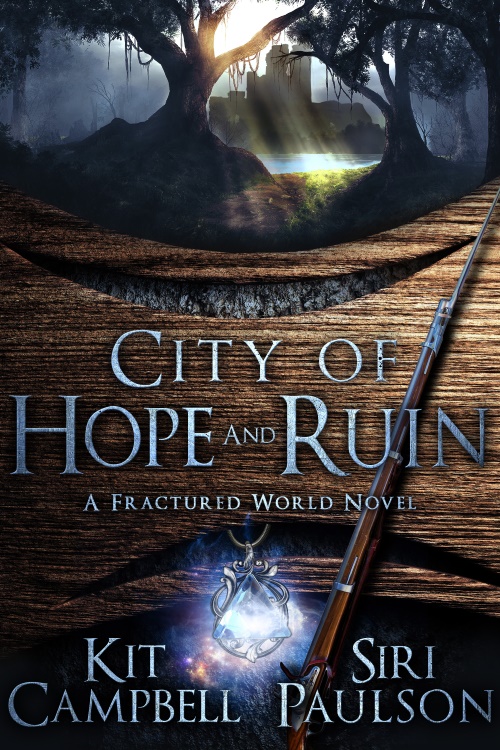
City of Hope and Ruin cover
AmazonKoboBarnes%20and%20NobleiBookscustom
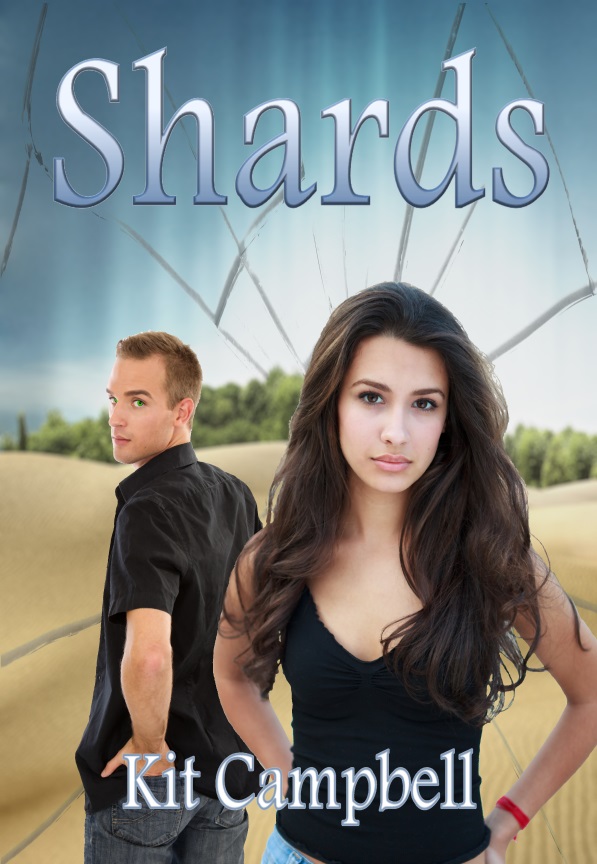
Shards cover
AmazonKoboSmashwordsBarnes%20and%20NobleiBookscustom
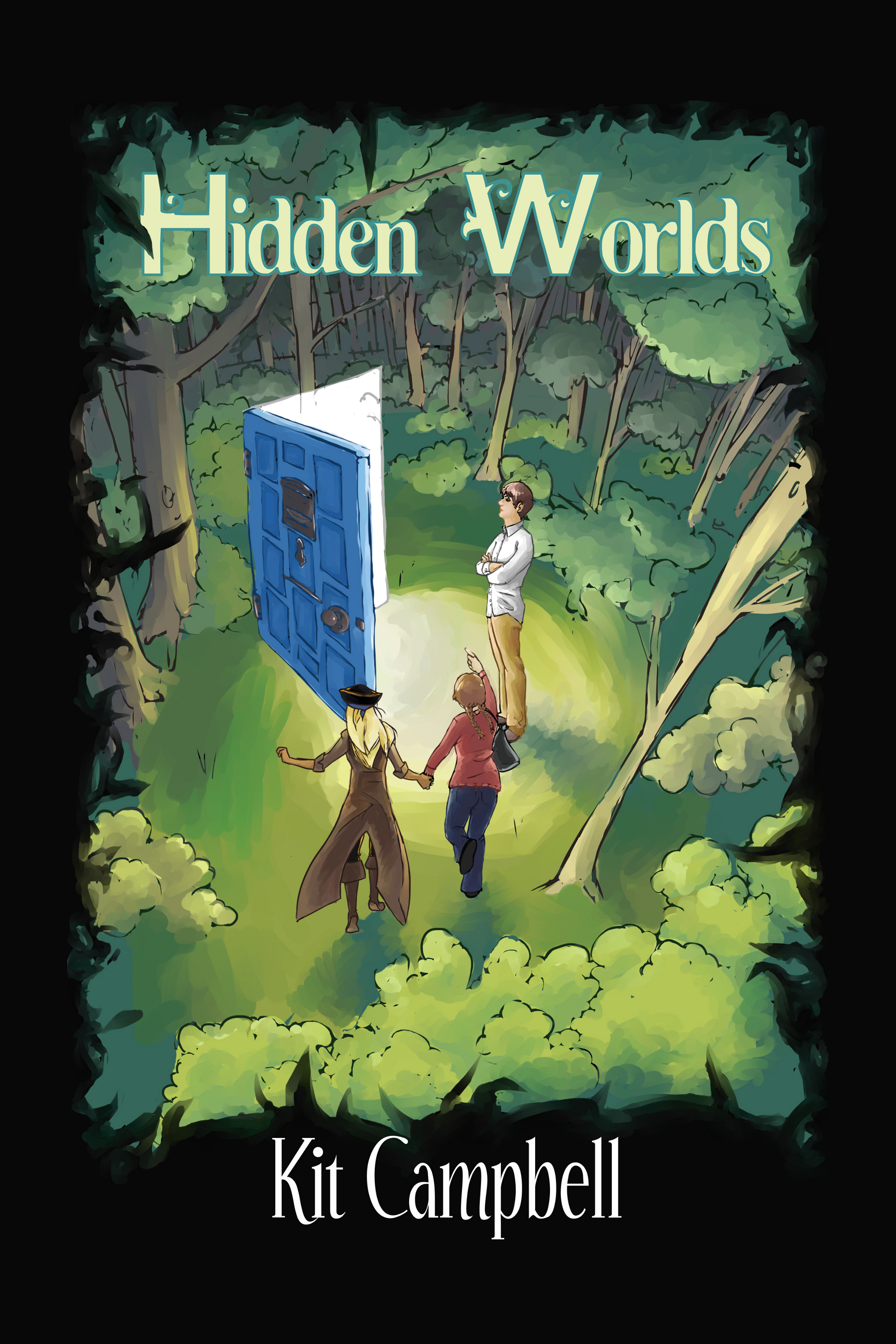
Hidden Worlds cover
AmazonKoboSmashwordsBarnes%20and%20NobleiBookscustom