Fantasy Race Series: Elves

Wrapping up our fascinating fantasy race series is KD Sarge, here to tell us about elves. Like faeries, elves are an extremely versatile race, with many different interpretations, from tall, ethereal creatures to small, trickster types. They tend to be associated with nature and have pointy ears. But I’m going to turn things over to KD so she can educate us.

Pretty Elves and Pointy Things

I love elves.

There. I said it. I’m that girl. I love elves, with their pretty hair and their pointy ears and their blood-covered swords–

Yeah. Those elves. Eventine Elessedil, old and wounded, trapped with a demon in Elfstones of Shannara. Cutter, taking on Madcoil, or any of the other foes that little elf took down with his little bitty shiny sword in ElfQuest. Rayek in ElfQuest, being a magnificent jerk. Movie-Legolas. I love reading the Lord of the Rings, but I didn’t really love Legolas until the movies. I know many fans complained about his stair-skating and oliphaunt killing, but not me. I loved it.

I guess I just love when pretty and bada$$ coincide. I’d like my butt-kicking with a side of eye-candy, thank you very much. So you can guess that when I write fantasy, I want to toss in elves.

It’s not as easy as it looks. Writing elves well is actually hard as heck. Why? Let’s take a step back—what makes an elf an elf?

I asked on Twitter. “I’m writing a blog post about fantasy genre–when I say “elf” what do you think of?” Answers included “immortal forest Vulcans!” and “Tolkien, ElfQuest, magic, nature, big ears, elegance, beauty, wisdom, forests and big old trees.”

Sounds like a good checklist to identify elves: magic, nature, big ears, elegance, beauty, wisdom, forests and big old trees.

I think many readers would point to Tolkien when asked about elves. The stories existed long before he came along, but Tolkien is the one who put the “Fair” in the Fair Folk. He made them Good People. He set the standard.

It’s a high standard. Of those who have read LOTR, who can’t close their eyes and picture Lothlorien? A flet, a mallorn, Galadriel? Yet, to me, there’s something missing. Tolkien’s elves are beautiful and mysterious—and hard to love. Though movie-Legolas is very much like book-Legolas, it took movie-Legolas (helped by Orlando Bloom’s face†, yes, but not solely BECAUSE of that face) to make me love him. This was also aided by having a most wonderful Gimli to play off.

And now I’m into “what makes a good elf?”

On the other end of the spectrum from Tolkien’s distant elves, Terry Brooks took readers into the elven city in Elfstones of Shannara and I’m not sure it was a good thing. In their home city his elves seemed awfully…human. Better organized, a good bit “greener” but yeah. Taken out of the forest they lost maybe too much mystery. I liked Ander Elessedil very much, but he never seemed like an elf to me. Eventine, fortunately, I’d met before.

But do you even remember the elf brothers in Sword of Shannara? Neither do I, because I didn’t research for this post. I wanted to talk about what worked and didn’t work for me, and my measurement was what I found memorable. My intensive research for this post was 1) years of reading fantasy and 2) checking if I had a question on how to spell a name or Elvish word.

“Elf” is one area where it’s too easy to rely on stereotypes. The writer says “elf” and the reader knows all they need to know. It’s an easy trap to fall into. Am I the only one who can’t remember the name of a single elf in Raymond E. Feist’s Magician series? I so incredibly loved parts of that series, but the elves, which ought to be a shoo-in for this particular reader, I barely remember existing except around what happened to Tomas. Magic, nature, big ears, elegance, forests—yep, it was all there. Just exactly elvish, so I forgot to pay attention.

Opposite of that, of course, are Wendy Pini’s Wolfriders in ElfQuest. I could spend the rest of this post and a few more days talking about them, because I remember and adore them all. But I’ll just mention that Nightfall is one of my favorite kick-butt ladies of all time, and get back to my point. Checklist. Thing.

You couldn’t call the Wolfriders elegant. And wisdom—well, Cutter spends most of his travels trying to collect a bit of that. His struggles and successes are marvelous, but still, not many would be asking him for advice. Magic—unlike the Sun Folk and to a greater extent the Gliders, the Wolfriders have very little magic. They have pointy ears, yes, but their huge old tree was burned down, and they had to leave the forest.

In ElfQuest, Wendy Pini took everything I knew about elves and gave it a twist. She populated an entire world with different kinds of elves who didn’t always trust each other, who did things differently, who grew and evolved on their own but still had a fundamental connection on a level that humans just don’t seem to get, that kept them all elves…I had to pay attention. And I loved it.

As the saying goes, I’ve got some big shoes to fill, but I think I’m better off taking my own route. When I sat down to write my own elves, I thought about elves I’ve loved, and why I loved them. The goal was to create a culture that was most exquisitely elvish—with a good twist.

It’s not easy, but it sure is fun, walking in my very own pair of elven boots.

†Full disclosure: I am very fond of Orlando Bloom’s face.


KD Sarge writes fiction in many shapes and sizes. Her Dream’verse novels are available through Turtleduck Press, but they are science fiction. Her elves have not yet been released up on an unsuspecting world, bwahaha. Find her at http://kdsarge.com, or follow her at http://twitter.com/KDSarge.

Death to Writer’s Block!

So, my friends, I am making my way through the edits of an urban fantasy novel of mine that’s being published this December. It’s due to my editor on August 1st.

(Don’t remind me of what day it is. Believe me, I know.)

This particular novel, in its initial form, was missing villain motivation and a logical progression in said villains’ modus operandi (jumping rather staggeringly from “let’s be friends” with the target to violence), so I’m having to insert in some scenes to have everything read more coherently. Luckily, most of these scenes are going well, but every now and then I run into one that just does not want to be written.

Writer’s block at any time is infuriating. When you’ve got less than two weeks to make sure your story is ready to go? Your nerves start to tingle and you seriously consider giving up the whole writing thing to hide under your desk for the rest of the day.

But, of course, that’s not an option, but it’s still not fun to stare at the same page for three hours.

I have two main courses of action for dealing with writer’s block, and the one I tend to use the most is to just push through it until it’s finished, no matter how long it takes. (The other is to go do something else and see if things percolate in the back of my mind. I find if something doesn’t percolate within a few hours, it’s probably not going to, and then it’s back to pushing through it.)

So, Squiders, in the interest of timeliness, do you have any other techniques that you find help you break through your block? Or, if you’re not a writer yourself, have you heard of techniques that creative-type people have told you work?

Time is, alas, of the essence.

Fantasy Race Series: Faeries

Moving away from the mysteries of the deep, this week we travel into another element and take a look at faeries. Fairies, fae, nature spirits, trickster spirits…faeries go by many names and more guises. They can be tiny, mischievous creatures, belong to rival courts, steal and replace children, blend in with humanity, etc. Faeries are one of the most versatile of fantasy races because the legends linked to them are so varied. Here to tell us a little bit about the fae is Erin Zarro.

The Magic of Fae

I’ve always been fascinated with the Fae.  They’re immortal, they can be tricksters, and they can glamour themselves to look like anyone, even a loved one.  (That part is a bit scary).  Some have wings, and some are monsters. They live in a magical, mystical place called Faerie.   I’ve been reading novels with Fae in them for years.  My first ever Fae book? Laurell K. Hamilton’s Merry Gentry series book one, A Kiss of Shadows.

My favorite Fae books?  Karen Marie Moning’s Fever series.  They are beautiful, dark, and just plain amazing.

I began writing about the Fae in 2005, when I began my yet-unpublished novel, Pirouette, which features a Fae princess who can communicate with the dead through dance.  In the Pirouette world, female Fae get their wings when they are grown by their true mate.  They also can do glamour and are, naturally, immortal.  They have a magic called vitae which is the magic of life.  The Fae in Pirouette have no court affiliation, except there are highborn, aristocratic, common, and of course, royal Fae.  The Fae have a Queen and a King, and live in a parallel world called the Varshella, which is roughly equivalent to Faerie.  Why did I give it a different name?  Because Faerie just seemed too common, and the Varshella is a parallel world to Earth (Erta, in the Varsi old language).  It isn’t in Faerie mounds.  It just is.  (Interesting tidbit about the name: the original name, waay back in 2005 when I was building the world, was Vehella.  I did some poking around online and discovered Valhalla, the place were Norse warriors go when they die.  I realized then that the names were too close and played with the letters a bit.  I finally arrived at Varshella, and the people are called the Varsi.  (It was either that or Varshellan, and I liked the look and sound of Varsi better).  But I digress.

My Fae also have specific rituals that they observe for various things.  There’s a mating ritual, betrothal ritual, a death ritual, and a ritual that honors their beloved fallen Queen Resanna, which is called Resanna’s Day.  And I suppose the growing wings ritual counts, too.

Royal Fae can shapeshift into leopards, too, to defend themselves.

So the Fae of Pirouette are somewhat close to the mythical Fae you read about.  My other Fae, the Fey in my debut novel, Fey Touched, are completely different.

When I set out to write Fey Touched, I was working with a book I’d written in 2003 for NanoWriMo called The Sacrifice, which had vampires, vampire slayers, and guardian angels in it.  It was my first finished book ever, and it was when vampires were still cool.  Now, nine years later, not so much.  So I set out to change them into something better (and more unique).  My first thought was the Fae, but even Fae are getting overdone (although I still love reading about them!).  So I was stumped as to how to make it different.

I remember the exact moment it hit me.  I was at work, doing something tedious, when I had this thought: what if my Fae were not mythical, but based in science?

Since I’m a huge science buff, this really appealed to me.  I decided that the Fey (note the spelling change) were genetically engineered humans, made to be immortal, faster, smarter, and healthier than their human counterparts.  I also decided, since I needed a regulatory force (Hunters!), they wouldn’t have souls because the scientists couldn’t replicate them.  So my Fey would need to feed from legal donors, but some of them turn into monsters who kill and drain the sousl from the humans.  These are called rogue, and the ones who hunt them are called Fey Touched.  This is because they have some of the enhanced genes of the Fey, but not all.  They also have souls.

There is no Faerie in the Fey Touched world, but there is the hereafter.

The Fey have clans and a Breeding Queen for each one.  The Breeding Queen is like a queen bee.  She mates with many males and needs to produce a new Queen, who in turn kills her for her position.  They also have a royal clan with a First Breeding Queen who rules over them all.

As far as glamour is concerned, my Fey have a form of it.  They use mana (life energy, or souls) to weave illusions.  The Fey Touched cannot.  Also, the Fey Touched have wings from having a bit of avian DNA.

There are rituals that the Fey and Fey Touched observe.  The Fey Touched burn their dead and do an aerial dance to honor them.  The Fey Touched worship Artemis, and believe that the falcon, their animal companion who is called during the ritual, carries the soul home to Artemis.

The Fey have a mating ritual of a sort, where the Breeding Queen must marry all males of the clan.

So that’s how I write my Fae.  They are distinctly different, but similar.  I enjoy playing with established stuff and making it my own.  I’m not done with the Fae yet!  They are so much fun to work with.

Erin Zarro is an indie novelist and poet living in Michigan. She’s married to her Prince Charming, and she has a feline child named Hailey who she’s convinced is part vampire. She loves all things scary and spooky, and is on a mission to scare herself, as nothing lately has scared her. She writes in the genres of sci-fi, fantasy, and horror. Her first published novel, Fey Touched, is a blend of sci-fi and fantasy. She is currently working on Book 2, Grave Touched, and is trying to stay out of trouble. Mostly. Her website is at http://erinzarro.com.

The Evolution of Social Media

You get this post thanks to Tumblr eating my morning. I don’t even have a Tumblr.

These days, everyone says you need to have a social media presence. Twitter! Facebook! A blog! It’s enough to drive a person crazy, and suck all your time away. (I’ve heard more reasonable marketing people say to pick one or two platforms, and focus your attention there so you can connect with people on a meaningful level without going insane.)

Tumblr is the new social media darling. Everyone I know has one. I was on Diane Duane’s earlier today. You can save anything that catches your fancy by tumbling it, adding your own commentary, or not. Obviously people out there post original content, and then you can see how many other people re-tumble (or whatever the proper term is) through the number of notes something gets. I know writers who put up ficlets, comic artists who preview comics or enhanced panels, and fan artists who post their work directly. But I admit Tumblr is beyond me. I don’t really get it. It might be because I don’t have one myself, but I have to wonder, does following someone’s Tumblr help you to get to know someone? Can you have a connection? Because, quite honestly, I use it for Star Trek macros, when I venture on at all.

(Feel free to explain Tumblr to me if you understand it, Squiders.)

But it got me to thinking about the evolution of social media, and how Tumblr is kind of the peak of said evolution, where you can share things with the click of a button, whether it’s your own content or somebody else’s. It’s the ultimate in stream of consciousness. A single person’s Tumblr can contain thoughts about sexual harassment in genre fiction next to a cute gif of a kitten next to Avengers fanart next to a bit of an interview with an author they like. Anything that appeals to that person can instantly be added in with little more than a thought. And the result is kind of an impression of a person without knowing anything about him/her.

I’ve been on the internet for almost 20 years now, Squiders (oh, God), and I can remember that the closest you had to modern “social media” then was either your own website or a mailing list. (My first website had a black background with neon green text–because there was some sort of movement happening to “save the electrons,” with the theory that dark backgrounds were somehow better for them but was no doubt a huge conspiracy someone thought up, along with the dangers of dihydrogen monoxide.) And then LiveJournal came along, and I spent a good many years there (and am kind of sad now, because it seems like, in the last year or so, everyone has left for Tumblr, though I admittedly hardly ever use mine anymore myself). LJ was kind of the first “blog” website.

And there was really two sorts of social media–connection sites, like MySpace or Facebook, and blogging sites, like Blogger or LJ or a gazillion others that I’ve forgotten. And then Twitter came along, and now everyone’s trying to integrate aspects of each other into themselves, whether it be games or hashtags or gifts or what have you.

It’s interesting, to remember a time before all that, before AOL offered unlimited time and when instant messaging was a big deal, and then look at where we are now, where we can share a thought before we’re even done thinking it.

(Seriously, though, Squiders, explain Tumblr to me.)

Fantasy Race Series: Mermaids

This week we veer away from the undead and the angelic and look into a race with that generates more of a splash. Ah, mermaids, temptresses of the sea. Sometimes they frolick through the waves, sometimes they lead sailors to their deaths. Here to tell us all about the children of the sea is Anne Marie, who is a lovely person and provided her own media to go with this post. This is a woman who knows what she’s talking about.

Mermaidswaterhouse56

“Far out in the ocean the water is as blue as the petals of the loveliest cornflower, and as clear as the purest glass. But it is very deep too. It goes down deeper than any anchor rope will go, and many, many steeples would have to be stacked one on top of another to reach from the bottom to the surface of the sea. It is down there that the sea folk live.”

~ Hans Christian Andersen, The Little Mermaid, 1836

And so begins the first story about mermaids that I ever read, but certainly not the first time I’d heard of such mythical beasts. The truth is, I can’t remember how old I was when I learned how to swim. The truth is, since that day — whenever it was — I’ve wanted to be a mermaid, so when Kit asked me to write a post about mermaids I thought it would write itself. But how do you extricate yourself from something you’ve wanted to turn into? (I’m a grown ass woman, and to this day the first thing I do when I jump into the water is hold my breath, dolphin kick, and pretend. And every time I take a bath I imagine the scene from Splash with Daryl Hannah and that gorgeous orange fishtail.)

The first written account of a mermaid comes from Assyria more than three thousand years ago. The goddess Atargatis (she’s like if Stargate and Atlantis had a baby — ha) fell in love with a lowly mortal and killed her lover by accident. She fled to the water and turned herself into a fish. This transformative property is part of why I fell for the myth, and I’ll discuss this in more depth.

It’s interesting to note that almost every culture has mermaid lore. The Irish have merrows. In Slavic mythology, she’s known as a rusalka (terrifying and undead!). The Chinese have a golden mermaid. The list goes on and on. This doesn’t even touch on the mermaid lore in comics. He doesn’t have a tale, but Aquaman was always a favorite of mine as a kid. Telepathy with dolphins? Yes, please!

Mermaids in YA literature are popular, but I wouldn’t say they’re really trending. Their appeal is supported by programs on Animal Planet like Mermaids. The idea might be hokey for some viewers, but it’s possible that a simian gave up on land and returned to the ocean. After all, there is strong scientific evidence that leads us to believe that’s how whales, dolphins, etc. evolved.

As a side note: A mermaid is not a siren. A siren is a half-bird, half-human woman that lured sailors to their deaths in Greek mythos. A number of popular “mermaid” YA books are actually about sirens. In fact, the word for mermaid in French is “la sirène” and in Spanish it’s “la sirena”, which appear to be interchangeable terms, but don’t confuse the two types of creatures. They’re not the same thing at all, well, except for the fact that they’re always depicted as beautiful half-women.

Why do millions of viewers and readers find themselves inexplicably drawn to these creatures? For me, it’s the otherness. It’s the idea of transforming from something as sea clumsy as a human into something sleek and able to breath underwater. In Han Christian Andersen’s pinnacle fairy tale about mermaids, the littlest one longed to be human. I believe the reverse to be true, especially in our teenage years. We want to be in control. To be free. What a better way to be free than the transformative properties of gills and fins?

No matter the creature, so many YA fantasy books are filled with “ordinary” teens who discover they’re supernatural creatures, or fall in love with supernatural creatures, or have to hunt supernatural creatures. Who wouldn’t want to learn on their sixteenth birthday that they’re special? I hoped I’d grow up and have powers like an X-Man. Or a mermaid. Or be able to fly. I’m still hoping flight is a latent power I’ll tap into someday.

The popular trend of turning mermaids from beautiful half-fish-women into ugly monsters that bite and drown pleases me. Films like “Harry Potter and the Goblet of Fire” and “Pirates of the Caribbean: On Stranger Tides” depict these darker creatures with aplomb. The horror fan in me responds to anything with teeth and claws. In fact, my only mermaid story to date, La Belle Dame sans Merci, has a taste of just such mermaids. Also, Nazis and Keats.

Kit asked me to include some mermaid books, but the problem is that I haven’t read that many. I’ve been avoiding them so I can work on my own spin on this popular “tail”. However, everyone needs to read Han Christian Andersen’s “The Little Mermaid”! You might also enjoy The Mermaid’s Mirror by L. K. Madigan. It’s a lower-YA with a nice twist.

What are your favorite tales about mermaids from myths?

AM2

Anne Marie was born in Denver, Colorado and grew up in Aurora. She attended the University of Colorado for a BA in English Literature, where she fell in love with folklore and myths from around the world. She adores languages, great white sharks, and the impossible. Her work usually includes two of those three things. She currently lives in Aurora with Brody (her beloved and mischievous beagle). She posts themed short stories at Cimmerian Tales. Follow her on Twitter @annemariewrites.

Her most recent short story, La Dame à La Licorne, was published by Euterpe YA, an imprint of Musa Publishing. Buy it from Amazon, Barnes & Noble, or Musa Publishing.

Mermaid picture above is “A Mermaid” by John William Waterhouse, 1901.

Fantasy Race Series: Angels

Going in a completely different direction this week, we’re leaving the undead behind and are looking in a more heavenly direction. Angels in fiction can be good or bad, can answer to a higher power or have fallen from grace. Here to tell us all about angels is Tamela Buhrke, author of the Watcher series and general angel expert.

Angels Among Us

Did you know that nearly eighty percent of Americans believe in angels?  That’s almost the same percentage of Americans who believe we landed on the moon.

So angels have a strong influence over our culture.  They’ve announced the coming of important events.  They guard the gates to heaven.  Bad ones even guard the gates of hell.

Most importantly, we know that anyone who is anyone has a guardian angel.  Eighty percent of Americans can’t be wrong.

But in the couple of decades, angel culture has gone terribly wrong.  No more halos and harps for these winged bad boys.  Now angels are sporting black feathers and getting tattoos.  The more emo versions are moping around in trench coats, hiding their wings in shadows and pining after human demon hunters.

These angry, sullen creatures aren’t just at war with fallen angels.  They are jealous of the favors God has bestowed upon humanity.  Most of them are eager to bring on the apocalypse.   A few even think God is dead and it’s their turn to rule earth.

Which leads me to speculate that the thing all angels have in common is an unwavering belief in their own righteousness.  They know what needs to be done and they do it—regardless of it being wrong or completely narcissistic.

My characters are mostly nephilim, human-angel hybrids, but they communicate with angels. My protagonist, Andi, was raised as a human and only recently discovered her true origins.  So she has few delusions of her own grandeur.  She trips and falls and gets back up again.  She tries not to tell others how they should live.

This pisses off her fellow nephilim, who have a serious case of angelic self-righteousness.  She soon uncovers the bad boy side of her own people.

The fun part is that self righteous people/creatures are easily manipulated.  Just tell them how right they are and then slip in some ideas on how you think they can be even more right and you’re wielding your own personal weapons of righteousness—flaming swords and all!

And with much tripping and falling and confusion, Andi will discover that it’s not her angelic side that saves the world.  It’s the compassion of her human nature.

You see, as long as we believe that perfect creatures roam the world, saving us from ourselves, we run the risk of forgetting that we are the ones in charge.

Because isn’t it humans that will ultimately determine the fate of humanity?

Nah, eighty percent of Americans can’t be wrong.


Tamela Buhrke is author of an urban fantasy series called The Watcher Series.  The first two books of the series, Angel Unraveled and Angel Unprepared, can be found on Amazon.  Her third book of the series, Angel Unleashed, is set to release the beginning of August.  She is currently working on a paranormal thriller series to be released this fall.

Howl’s Moving Castle Readalong: Castle in the Air

I’m changing the name of the readalong for clarity’s sake. Also, whereas we read Howl’s for a direct comparison to the Enchanted Forest Chronicles, we’re basically reading the rest of the Howl series just because they’re fun and we can.

I hope, Squiders, that you didn’t have as many issues as I did trying to track down Castle in the Air. I checked multiple library systems, including the Kindle Lending Library, several used bookstores, and several not-used bookstores (we had that conversation already). I finally had to buy it off of Amazon.

(All the libraries have the third book, The House of Many Ways, but now I am wondering if I should just buy it so I have the whole set.)

Ah, Castle. I think, the first time I read it, I was just reading Diana Wynne Jones books because I never had until Miyazaki’s Howl’s Moving Castle came out and I didn’t realize it was related at all until, you know, near the end when you suddenly have Sophie and you’re a bit confused about what just happened. I think it’s more confusing if you don’t know that the books are related before hand. And I suspect it is even more confusing if you haven’t read Howl’s previously.

I have complaints. Whereas Howl‘s plays on the traditional fairy tale tropes, Castle tries to do the same with your Arabian-Night styled tropes, and I feel that instead of twisting the cliches, it just falls prey to them. There’s your typical genies and magic carpets and djinns and sultans, and maybe the twist is supposed to be that a lot of them are enchanted people, but it doesn’t quite work out.

Also, the plot feels kind of hodge-podge. Like she had this idea for the story of Abdullah and Flower-in-the-Night but couldn’t quite get it to go by itself, so she mixed in elements from her Howl’s world and kind of stuffed things wherever they would go.

(Also, I could remember from the first reading that the carpet and the genie were Howl and Calcifer, but I couldn’t remember which was which, and I guessed the other way around from how it actually was, because it seemed to me that Howl would like to be flattered with pretty language and that it would just piss Calcifer off.)

(Also, Prince Justin apparently can’t go more than two feet outside of Kingsbury without getting enchanted.)

And I am annoyed that Sophie, despite being an excellent mother as a cat, suddenly is all timid and incompetent when faced with a human baby. Nrrrgh.

There are things I liked, though. I like the end rather a lot, and I like that the princesses are reasonable, useful people instead of just being in the way or being helpless. I like how everyone had to work together to get rid of the djinns. I like Jamal and his dog. And I like the epilogue.

…so apparently I only like the last quarter of the book. Hm.

What did you think, Squiders? Do you feel like the book was successful at its attempt to be a twist on the Arabian Night stories?

We’ll read The House of Many Ways for the end of July. I haven’t gotten around to reading that one yet, so I’m interested to see how it goes. I’m hoping it gives us more of a look at how Howl can cross from our world to Ingary and back again.

Fantasy Race Series: Vampires

This week in our series, we’re going to explore vampires. Love them or hate them, prefer them sparkly or deadly, they’ve been around for a long time and no doubt will be around for a lot longer. Here to tell us more about the undead blood suckers is Margaret Libby, who has seen more than her fair share of vampires and the havoc they wreak.

Vampires

Blood-drinking creatures are a feature in mythology worldwide, from the Greek vrykolakas to Gaelic faery spirits to Mesopotamian Lilitu. The most famous of these, though, are the vampires, popularized by fantasy and paranormal authors since the days of Bram Stoker and his famous Count Dracula.

Vampires, mostly due to Stoker but also with some help from Byron and some of his fellow Romantics, have a reputation for being a little more cultured than their fellow undead. Where zombies are shambling wrecks and werewolves are instinct-driven beasts, vampires are often intelligent and manipulative, or even romanticized (we might be able to blame Byron for that one). Today, in a world that is post-Interview With a Vampire, not to mention post-Twilight, vampires in the fantasy genre are diverse, but for the most part they have three things in common: they’re undead, they can’t go out in the sun, and they drink blood.

That gives some structure, but fantasy authors can and do play around within that framework very easily, and it makes vampires incredibly versatile. They can be everything from terrifying horror-movie creatures (like in the movie Thirty Days of Night, where the vampire’s inability to go out in daylight is the point the whole concept hinges on) to sympathetic and romantic (many of Stephenie Meyer’s vampires, who are superpowered and stay out of the sunlight because they sparkle, not because they turn to dust as common mythology has it) to just as diverse as regular human, with complex cultures and social structures of their own (the supernatural world in the Sookie Stackhouse novels by Charlaine Harris/the TV show True Blood), to soulless but not categorically written off (Spike and Angel in the TV show Buffy the Vampire Slayer). They can even be parodies of their own stereotypes, like Otto Chriek in Terry Pratchett’s Discworld (though in all fairness, everything is a parody of its own stereotype on Discworld).

Half the fun of writing about vampires is getting to play around in that sandbox and see exactly where along the spectrum you want to write them, and what you want to do with them. When I ended up writing about vampires, I chose to keep their human personalities after death—the soul, you might say—and kept them sympathetic, if sometimes dark (I figure it’s hard to be cheerful when you’re functionally immortal but weren’t actually born into a species that expects to live forever). It’s all down to personal preference, and down to what part you want them to play in your story and your world. Vampires are useful for their versatility, if a little overused these days, and given their appearance in mythologies all over the place, they make a good addition to a world.

What kind of vampires to you like to read and write about, Squiders?

If you’d like to read (or watch) a little more, these are a few of my favorite things that feature vampires:

Sunshine, by Robin McKinley
The Truth, by Terry Pratchett

And if you have a lot of time on your hands, give Buffy the Vampire Slayer a watch.

Margaret Libby tells me that someday she might actually get around to putting a blog together. For now, you can twitterstalk her and encourage her to do more writing, because she rocks.

The Descent of the Brick-and-Mortar Bookstore

Well, Squiders, we’ve all seen it. First the little bookstores died when the big box bookstores like Barnes and Noble and Borders came in. And then even Borders went under, and the industry generally despairs of there being physical bookstores in as little as twenty, ten, five years.

I’m beginning to think it’s self-perpetuating.

The Terror and I headed over to my local B&N this morning. (I’m not going to lie, Squiders, I’m having the worst time finding a copy of Castle in the Air for our readalong this month. I checked two different library systems–both of which had Howl’s and The House of Many Ways, go figure–the Kindle Lending Library, my local used bookstores. Nothing. I’m going to have to buy it off the Internet, which brings me back to the point of this post.) I have not been in my B&N for probably over a year. (This is, admittedly, because I am trying not to acquire new books until I dequire some of the ones I already own and not because I dislike B&N.)

I didn’t recognize the place.

My first thought was, “Where are the books?”

The whole middle part of the store is now dominated by a Nook display. It was huge, with at least three employees working it, and shelves of who knows what (because I was afraid to go in lest I get a sales pitch). Nooks, maybe. Fake mock-ups of ebooks. I don’t know. The right side of the store is dominated by a very busy Starbucks, and there was stationary and maps and little gifts. When I made my way back to the children’s section, there was not a book to be found. Instead, there was a giant toy section, happily attended by several children playing with the displays.

(I did eventually find the children’s books, now relegated to the back, left corner.)

I know that bookstores are diversifying to stay afloat. I mean, you can’t find one that isn’t also a coffee shop to save your life. (I can’t really fault them that. I love coffee shops.) But it becomes a problem when you have to cut your book supply to the point where people can’t find the books they’re looking for.

If you want a recent best seller, great. They have those. But this isn’t a rare book I’m looking for. It’s a book by a best-selling children’s author, where the third book in the series is only a few years old, and it was nowhere to be found. In fact, they didn’t have a single book by Diana Wynne Jones in the entire store. It’s not like it’s out of print or so old everyone’s forgotten about the series. But alas, my brick-and-mortar store couldn’t accommodate me, and so I will have to go online.

You cut down on the books to make room for diversification, but then you don’t have the books people want, so people buy less books, so you have to get rid of more books to diversify some more…

…you see where I’m going?

Books by Kit Campbell

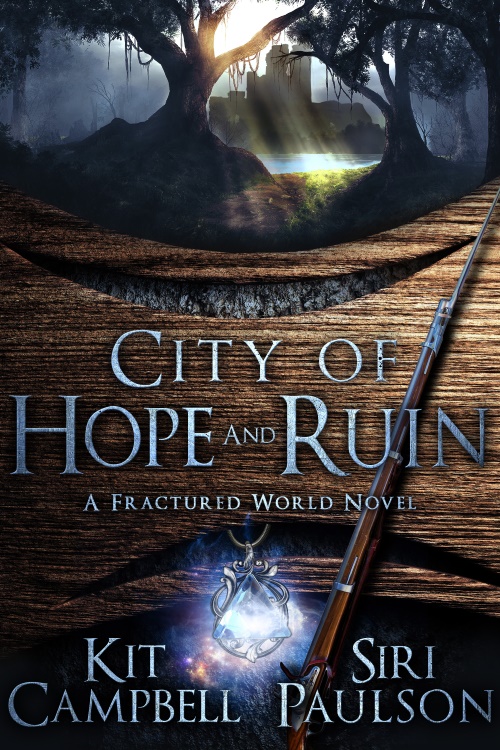
City of Hope and Ruin cover
AmazonKoboBarnes%20and%20NobleiBookscustom
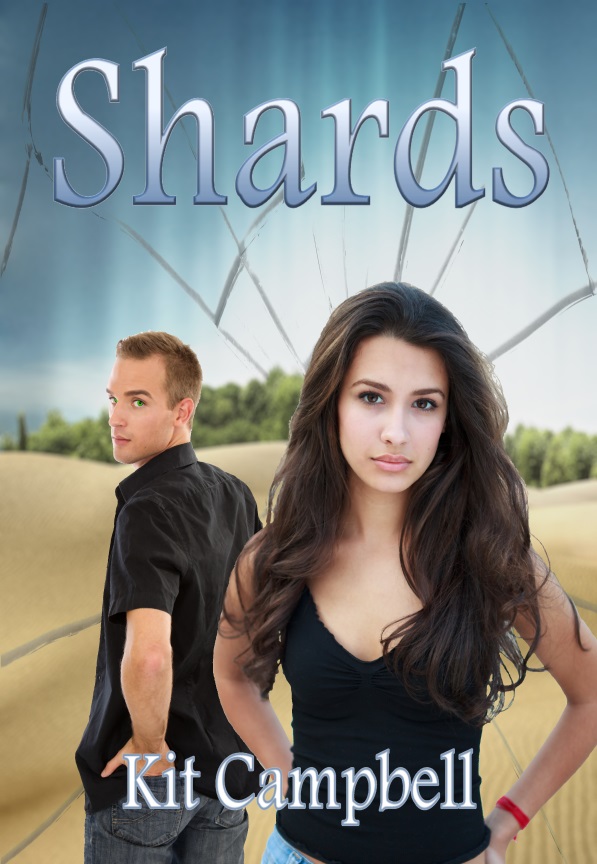
Shards cover
AmazonKoboSmashwordsBarnes%20and%20NobleiBookscustom
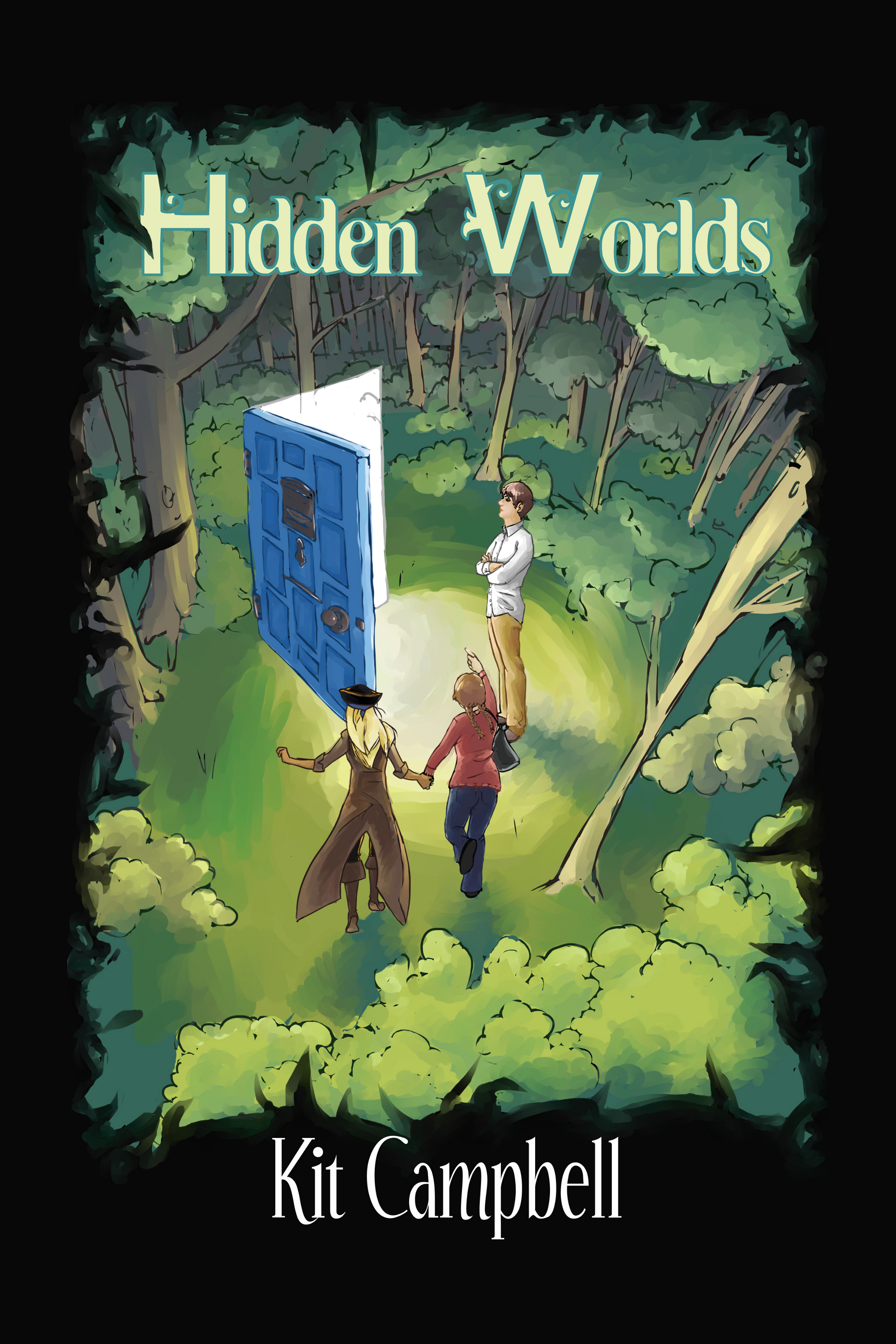
Hidden Worlds cover
AmazonKoboSmashwordsBarnes%20and%20NobleiBookscustom