Fantasy Race Series: Zombies

Starting us off today with both the series and the end of the alphabet are zombies, undead creatures who can infect the living to create more of their own. Zombies are the race to go to, these days, now that we’ve exhausted vampires for the time being. Zombies can be created through magic, through science, through disease, and here to tell us more about the undead menace (do you have your contigency plan ready for when the zombie apocalypse comes?) and how he’s twisted the cliches for his own use is Charles Muir.

Bringing the undead to life

My zombies began as most zombies do, by being dead. And as with most zombies, mine were bad at being dead. And they continued to be bad at being dead. On the plus side, that worked for my ragtag group from O.o.M.f.H. (Organization of Mercenaries for Hire), who needed things to try and kill.

My zombies evolved, devolved, and outright changed from draft one to draft ten. I tried the proper Haitian style zombie control via potions and juju, to the standard “it just happened, deal with it” style zombie, to the latest incarnation for the new age: nanite-controlled, hive-mind zombies.

Infection is via the bloodstream, primarily via a dart gun or syringe, so bites and scratches aren’t too much of a worry. Nanites self-propagate, akin to the Star Trek Borg, but don’t add any implants or unnecessary body mods. Stages start from infection, which effectively kills any living host by consuming the brain and replacing with a computer. Each zombie is then linked to all other zombies, world-wide via a wireless link and managed via a host of controllers in the HQ of E.V.I.L. (Extraordinarily Villainous Individuals League). Full infection takes 48 hours. Up to 12 hours to fully kill the body, then 24 hours to fully convert the brain, and another 12 hours to fully adapt the corpse via nanite-replaced blood.

How does one kill the already dead?

General consensus has been: remove the head and any zombie is effectively no longer a threat. Few writers ever seems to address the necessary clean up afterwards. The bodies still contain infectious materials. Cremation is a viable method of eradicating the infection, although such methods are generally hard to come by in apocalyptic scenarios.

Zombification prevention would logically involve self-defense training, firearms training, and investment in some defensive clothing that allows for movement but will prevent being eaten. If infection is through bodily fluids, generally saliva or blood, then having tear resistant clothing at the least is ideal. You don’t need to be bullet proof (although it wouldn’t hurt), but ballistics nylon-level fabric is your best bet for surviving a hoard of shambling bodies craving your grey matter.

And for those that do become infected, depending on incubation time, your options are either isolation, kamikaze, or acceptance. Isolation prevents infecting more people. Kamikaze is going out with as many infected as possible. And acceptance is biting all your friends so you’re not alone in becoming an undead abomination.

Charles Muir is a writer of sci-fi and fantasy novels infused with excessive sarcasm and author of informational works such as Word Ninja-148 pages of tips, tricks, and testimonials to get your writing written. Word Ninja is available in print and digital at: tinyurl.com/WordNinjaBook
The Fantasy Race Blog Post Series and Miscellaneous

First off, Squiders, an announcement: starting Tuesday, I’m going to be running a series of posts (on subsequent Tuesdays) about fantasy races. I’m really excited about this one, because I’ve got the posts from the people who know the best: the people that choose to write them.

It’s really interesting to see why authors pick which fantasy staples they want to include, and how they change them to twist cliches and fit the story they want to tell. We’ll start with zombies next Tuesday.

Secondly, twitter led me to this post by Chuck Wendig about sexism and misogyny in writing and publishing. (I admittedly don’t regularly read Chuck’s blog, but I have always found it insightful when I do end up there.) The emphasis is sort of science fiction and fantasy in some places, especially the posts Chuck links to.

This is kind of one of those elephant in the middle of the room topics that people like to pretend isn’t there most of the time (along with the fact the covers tend to be “white-washed,” i.e., that even though the main character may be some minority, a white person is put on the cover because marketers apparently think that people only like to read about white people, or something). I admit I don’t think about it very often myself, so I’m interested to see what you guys think about the topic.

I’ve seen posts on the internet about women “ruining scifi,” and I occasionally run into that sort of people at conventions or other nerdy things (to which I say “Bah” because women have totally been into scifi forever), but it seems to be a small, vocal minority consisting mostly of angry older men. Other than that, it hasn’t seemed to affect me much. It may be because I’m just a small fry right now, doing indie and small press stuff. I have full control over things like my cover art. I may find, as I start reaching wider audiences, that this will become more apparent.

Anyway, thoughts, Squiders? Have you had negative sexist experiences, either as a reader or a writer? Do you feel like anything is changing, for good or bad?

Why Don’t Writing Groups Write?

So, back when I lived in California, I had a lovely group of people that I would write with. We’d go to a coffee shop, get a drink, maybe get a pastry (I am partial to chocolate pumpkin bread. Mmm), and we’d catch up for a few minutes, and then we’d write. For two or three hours at a go. And maybe we’d discuss techniques or craft or processes, or help someone with a plot issue, but the main point of the activity was to get something done, whether it was a new short story, editing an old novel, or fighting through a query letter.

We moved back to Colorado almost three years ago now, and I’ve yet to find a group whose point is doing rather than talking. I did have a Wednesday night group going for a bit, but while we sometimes got writing done, mostly we just socialized. And I’ve tried group after group, and they’re all either critique groups–which is good if you’ve got something written, but no good if you haven’t–or are craft groups, which is where people sit around and talk about how to write.

I dislike craft groups a lot. It’s not that I think I know everything about writing and don’t think I have anything left to learn. I don’t think that can ever be true of a writer. I just find that I tend to have a lot more experience than the other participants, and we spend a lot of time going over basics, or whoever’s leading’s trying to push their particular style on everyone, or we spend a lot of time working on activities designed to teach us how to do whatever, and I really really hate spending perfectly good writing time on writing exercises.

I despise writing exercises. I cannot learn through writing exercises and they make me extremely grumpy.

Every now and then I try to round up people who I feel are at a similar level to me, or at least write the same genre, and try to get a writing writing group going, but thus far it’s amounted to nothing.

What’s a girl to do? (Aside from sending the Landsquid to kidnap people, because I understand that’s frowned upon by society.) I have a lovely online group, but it’s very different to sit in a chatroom and write with people instead of doing it in person. (For one thing, your chatroom is not going to catch you if you’re off playing video games instead of what your should be doing.)

I’m going to try out a new group tonight–I found them at DCC, actually, when I stopped to talk to one of the other small presses, and while they alternate craft and critique meetings, I’m hoping I can at least network and maybe find some people up for writing. Also, the craft ones seem like they don’t always have a set topic, or someone presenting necessarily, so maybe they’re more discussion group-y, and I would be okay with that.

What do you look for in a writing group, Squiders? Have you had luck in your area?

I Haven’t Seen the New Star Trek Movie and I’m Starting to Get Upset

Squiders, the Star Trek movie has been out for two weeks. Do you know what the last Trek movie I didn’t see on opening day/night was? Generations. Or possibly the Undiscovered Country. It was some time in the mid-90s.

Now, I understand that I am an adult now and I have responsibilities that must be taken care of instead of watching movies, but this is starting to get ridiculous.

The biggest stumbling block is, of course, our new addition to the family. And despite the fact that all sets of grandparents repeatedly tell us how happy they are to watch him at any point in time, the fact remains that I sit here, on the internet, trying to avoid spoilers.

You’ve been on the internet. You know how impossible that can be, especially when you are friends with fellow nerds, all of whom either don’t have children or have better babysitting set-ups.

Now, I don’t mind people talking about it. I’ve gotten pretty good at avoiding spoilers. And I’ve been kind of lukewarm about the movie. But at this point, with the amount of times we’ve tried to go see the movie, it’s starting to feel like a bad comedy.

I’m hoping, fingers crossed, that things finally align and we can go either tomorrow or Saturday, but at this rate the movie will probably be out on video before we can get there. (We still haven’t seen the Hobbit, mixed reviews and all.)

Suggestions, Squiders? Not really a big deal, I know, and yet…

Denver Comic Con in Review

So, this past weekend we had the good fortune to go to Denver Comic Con. It’s in its second year; we didn’t go last year due to me being hugely pregnant at the time.

The con had some issues–they got 50,000 people and were apparently not expecting nearly that many. But after waiting in a 2-mile long line to get into San Diego Comic-Con one year, I’m pretty lenient when it comes to con lines.

(Also, they’ve got a lot of unused space that they could be using for things like anime and movie rooms, but hey.)

My biggest complaint is that there was a number of empty tables in the artist alley, and I’ve been waiting for eight months for a table. I was going to set up one for Turtleduck Press, but alas.

Other than that,I had a great time. The panels we dropped into were interesting and entertaining, and there were quite a few about books and writing which, to be honest, are most of the ones I hit at conventions. (I do occasionally go to TV show-related ones, mostly scifi and Trek related.) And I got to do some writing networking, which is always a plus, including talking to people who had publishing presses similar to TDP. So hoorah for that.

There were a lot of people dressed up too, which I think is great. I used to be fairly into cosplay myself. (And maybe I shall be again? There were a lot of families are dressed up together.) Sadly, we couldn’t stay for the costume contest.

Right, overall thoughts. DCC went fairly well for a new con going through growing pains. They could use some better registration/line control, more use for their space, and better table allocation, but what they had was good, the people were friendly and helpful, and there was still a lot to do and see. Plus I got to network, catch up with people I hadn’t seen in years, and talk directly to some companies I have previously only seen on the internet.

I’m definitely going to go again next year, and if you are in the area or are looking for a good, reasonably-priced con, I recommend you do the same.


The Enchanted Forest Chronicles Readalong: Howl’s Moving Castle

First off, if you’ve come from a link somewhere to tell me that Howl’s Moving Castle isn’t part of the Enchanted Forest Chronicles–yes, thank you, I know.

For people who’ve been along for the ride, this month we read Howl’s by Diana Wynne Jones to see the same genre (in this case, fairy tale satire) presented from another point of view. (Also, this is one of my very favorite books and I always appreciate a good excuse to pull it off the shelf again.)

Whereas both the EFC (as I am now calling it, as I am sick of typing out the whole thing) and Howl’s purposefully twist fairy tale tropes, they do so in different manners. Both have main characters that run contrary to some trope. In the EFC, Cimorene is a princess who hates doing princess things. Mendanbar is a king who despises formality. Morwen is a young, pretty redheaded witch with non-black cats (and a major subplot of the third book is her non-traditional witchiness). In Howl’s, Sophie knows any adventures she attempts will go wrong because she’s the eldest of three siblings, and so she doesn’t bother looking until adventure finds her.

However, both stories are completely different in feel. Both stories have magic at their core, yet the execution is completely different. Also, Howl’s has a link to the real world which is explored just enough to drive you crazy trying to figure out how things work.

I have to say, after reading both, that I like Howl’s better. I think it’s a better crafted story and, while it’s based on fairy tale tropes like the EFC, there’s enough original concepts in there to make everything more interesting. (This may be because Diana Wynne Jones was further into her writing career than Patricia Wrede even though all the books came out at the same general time.) In fact, I enjoyed it so much that I’m going to extend our little readalong to the next two books in the series, Castle in the Air and The House of Many Ways. (I’ve read Castle before–it’s not as good as Howl’s, sadly, but I haven’t read the third, so that should be exciting for everyone.)

If you didn’t read Howl’s with me–you should. It’s a fun read–the characters are interesting, the banter is fun, the plot is original (how many hero/ines spend the majority of a story ninety years old?), and the magic is intriguing.

For those of you who watched the Miyazaki movie (in general or for comparison with the book)–the plot line starts out the same, and then wildly diverges about the time Sophie goes to visit the king. I adore both, but they’re very different animals in the end. Also, Miyazaki makes it an anti-war statement. The man is quite creative about getting his morals into children’s films, not that that’s necessarily a bad thing.

So! Castle in the Air for the end of June. I’ll see you then, Squiders! And, as always, your comments and questions are welcome in the comments.

The Pros of a Day Job

When I tell people what I do, they say, “Oh, that must be nice, doing what you love for a living!” Well, Squiders, now that I’ve worked both sides of the line, I’m here to tell you why you shouldn’t be quitting your day jobs anytime soon.

(I will preface that if you can make enough money from selling your fiction to do that full-time, more power to you. This post is not for you, you lucky bastards.)

“But, Kit,” you say, “you get to write and edit all the time. That must be awesome!”

Here was my day, Squiders. I wrote a 1000+ word article which required about three hours of research. I proofed and content edited about 30 pages of a novel. I proofed and formatted about 20 pages of a formal report. And then I got a headache from staring at the computer too much.

The problem with doing writing and editing as a job is, well, it becomes a job. I spend all my time chasing down rogue commas, and, when I finally–if I finally–get time to work on my own projects, I’m already worn out from editing and writing and I’d rather do almost anything else.

Your day job may not be your passion, but here’s some things you get out of having one:

  • You can focus on something else for awhile. Your subconscious mind will work through plot issues and craft prose for you while you work, and when you get to writing, you’ll be ready to go.
  • You may not get to write as often as you like, but it’s almost always a pleasure when you do.
  • Steady income! Important for supplying yourself with chocolate and plot ninjas.
  • Your co-workers secretly think you’re cool.
  • On that note, you have co-workers (probably) and don’t have to have “water cooler” conversations with the dog.

Your brain likes to compartmentalize things. I’ve found that now, since I do all my freelance work on my desktop, it’s almost impossible to write fiction here. Believe me, your brain thanks you for letting it do other things every now and again.

Disagree, Squiders? Anyone else work in writing/editing and have any thoughts on the matter?

Working Past the Beginning

So I’m finally getting to work on my chainsaw edit, but, like all my stories, I started in the wrong place and have to write a new beginning. (I know, I know, I’m so backwards. Most people start too early, I always start too late. Go figure.)

I was really excited about getting to work, so I sat down, got out my new outline, started to type, and…was unimpressed.

Beginnings suck. For some reason, they always feel bad. Either they don’t work the way you plan, or you feel like you’re writing crap, or, especially in a first draft, your characters just aren’t jelling.

And then you get frustrated. And you either give up, or you keep trying to rewrite it until it doesn’t suck, and either way, it is a huge time suck.

Here’s a secret…your beginning doesn’t have to be perfect.

So, how do you get the motivation to move on?

You tell yourself whatever you need to. Tell yourself that you’ll come back to it, that it’ll read better when you’ve got a little distance. Tell yourself that you can have a cookie. Tell yourself that your family will still love you.

Tell yourself that you can come back and fix it after you’ve written the rest of the story and know what the beginning should be.

Me, I’m not worrying too much right now. Yes, this is a second draft and I know what my beginning needs to be, but I’m still keeping my options open. Aside from the straight opening, I also have flashback and in media res openings if the straight one doesn’t work.

Don’t let your beginning get you down. There’s so much story awaiting you, if you let yourself get there.

Tips for New Freelance Editors

I’ve been working as a freelance editor for almost two years now, and I found myself wandering to the coffee shop a few days ago, mulling over things I’ve learned and what I wish I’d known when I started. So I thought, hey, maybe other people’d like to know–I know how unhelpful a lot of the websites out there can be–and so this post now exists.

1) Ask for a sample before you give an estimate.
This I learned the hard way. I had someone come to me and offer less than I would normally take for a 150K word novel with the promise of more work in the future, and I mistakenly said yes because at the time I wasn’t getting a lot of novels and would have liked the repeat business. Because this was someone who’d written several books, I also gave them a short turnaround time because I assumed they understood basic grammar and punctuation. Oh my god, mistake. By taking a look at a few pages–and I recommend this for any project longer than about 25 pages–you will be able to see how much work needs to be done, thus being able to set an acceptable rate and time estimate for the project.

2) It’s okay to stay local.
95% of the freelance work I do is local. There’s tons of freelance job websites out there that either list jobs they found on places like craigslist or allow people to list jobs that they want people to bid on, such as at Elance. At the beginning, I tried all of them. But I’ve found it’s been much more beneficial to advertise locally. First of all, people prefer to work with someone close to them. They know that, if needed, we can meet in person or, if they need to reach me by phone, we’re probably on similar schedules. Plus it’s allowed me to significantly limit the amount of time I need to spend looking for new business on a weekly basis.

3) You can raise your prices as necessary.
When I first started, my rates were pretty cheap. Part of that was that I didn’t know what I should be charging (a lot of websites told me $30/hour, but I didn’t think anybody was going to go for that), and part of it was that after lurking about on websites, like the above-mentioned Elance, I didn’t think people were willing to pay for this sort of thing. (Now I know that the people on Elance are delusional.) You can see what you competitors are charging and adjust your rates from there. And, as you become busier and get more experience under your belt, you can raise your rates to reflect that.

4) Don’t take on more than you can handle.
Freelance work is very hit or miss. Some months it’s like the middle of the night, when even the crickets are silent. Some days you have five people email you for quotes, and then not a single one of them hires you. Sometimes, you suddenly have three big projects on your hands and you’ve got to juggle all of them. The temptation is there to take on any projects that come your way, just because you don’t know where the next one is coming from. But know your limits. Know how many hours you can put in in a day before your brain turns to mush. Know how many different storylines you can keep straight before you start confuse one story for another. Each project requires your full attention, and if you start getting sloppy because you’re trying to do too much, it’s going to be hard to get any jobs at all.

Well, I hope that helps someone out there. Now, back to work.

Turtleduck Press is Open for Submissions

Turtleduck Press, an independent publishing co-op specializing in science fiction and fantasy, is now open to submissions for people wishing to join.

Information about TDP, membership perks, and submission guidelines are available here.

While you’re looking at the submission information, you’re welcome to have a look around the rest of the site. Of particular interest may be our monthly free shorts, as well as the novels and anthologies we have available for sale.

Basically, myself, Siri Paulson, KD Sarge, and Erin Zarro have been having a grand time with TDP over the last three years, and we want to share the wealth and fun. If you think you’d be a good fit, please send a query our way!

And let me know if you have any questions about anything.

Books by Kit Campbell

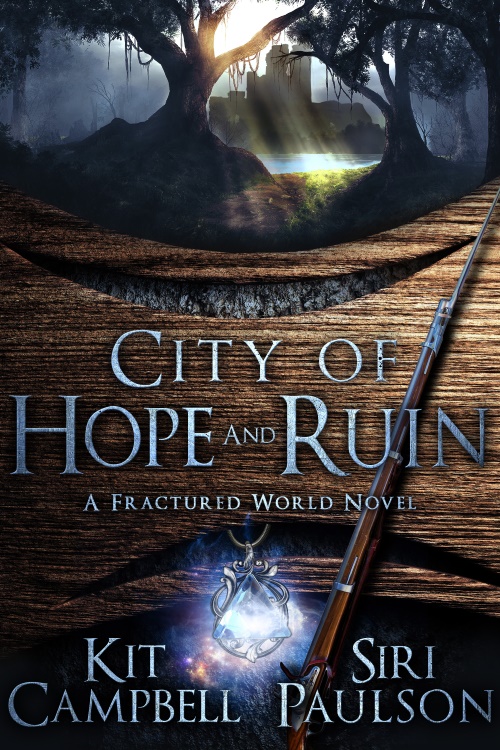
City of Hope and Ruin cover
AmazonKoboBarnes%20and%20NobleiBookscustom
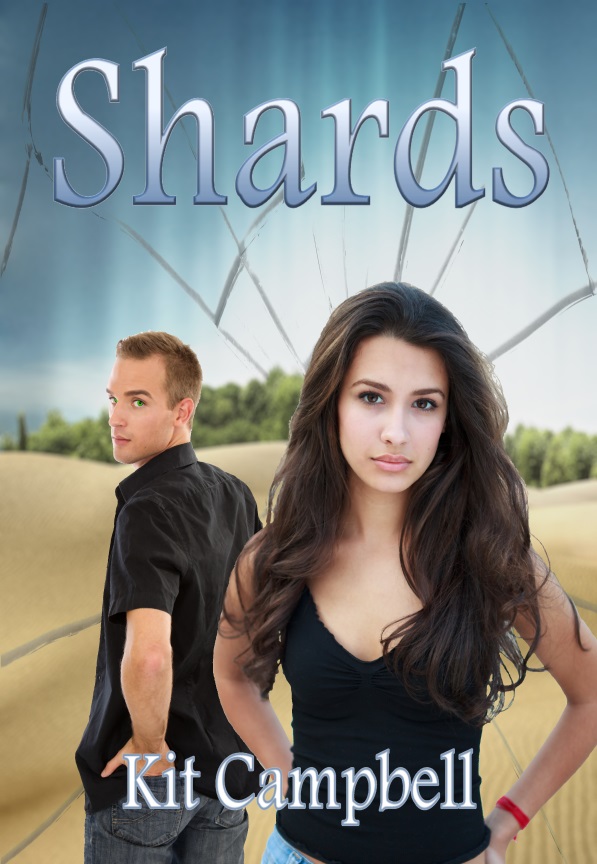
Shards cover
AmazonKoboSmashwordsBarnes%20and%20NobleiBookscustom
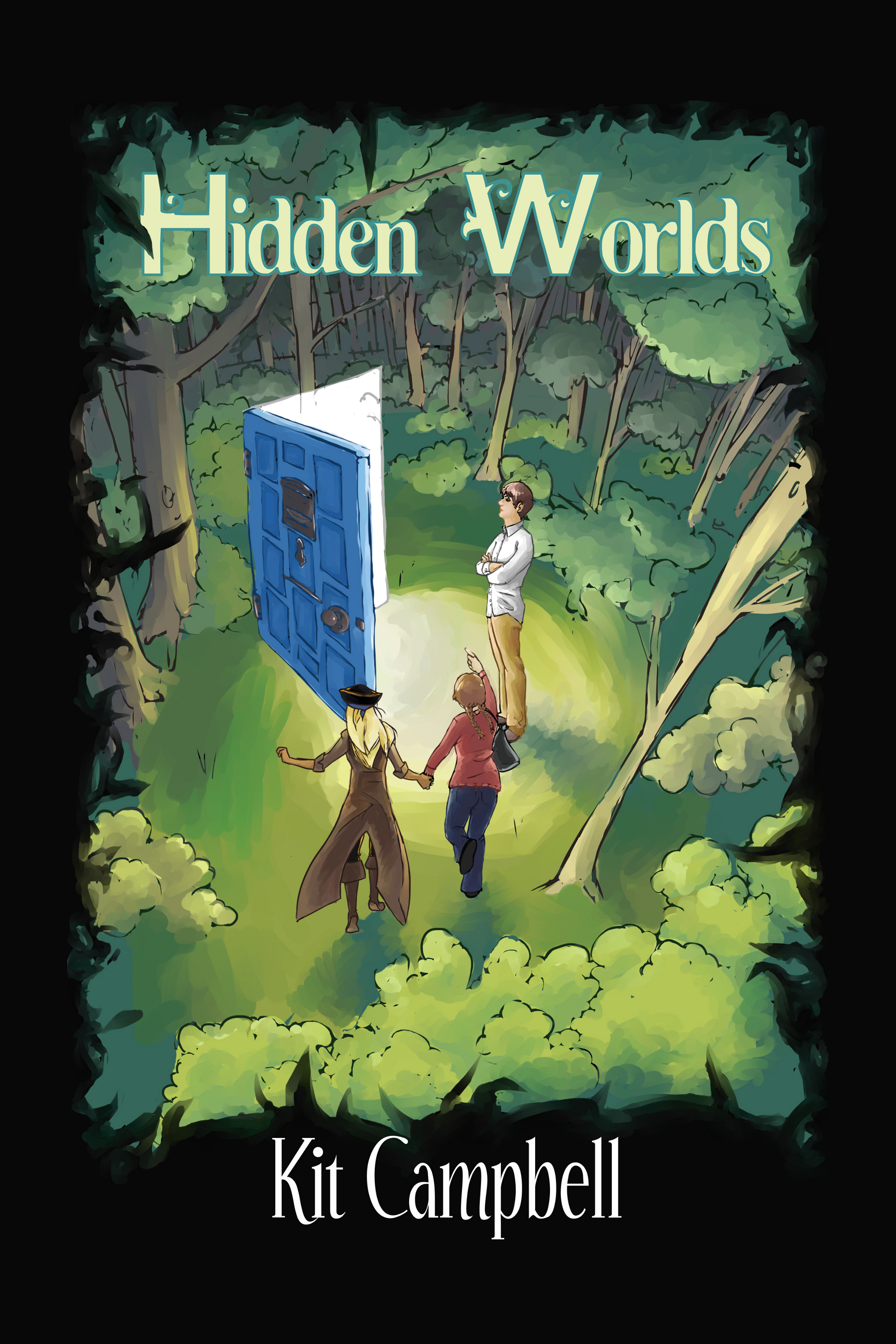
Hidden Worlds cover
AmazonKoboSmashwordsBarnes%20and%20NobleiBookscustom