Oh, Distractions

Guys, I cannot focus on anything. Well, I mean, I can, because things must be done, but it’s kind of like being a kid at the end of the semester, knowing that summer is coming, and if you can just get through the last few assignments, you’ll be free, free BWHAHAHAHAHA

And that’s where the analogy falls apart, because, sadly, I am adult and I am never free.

But! My work is actually really fun this week, and if it wasn’t for nervous excitement, I would be quite pleased. I’m finally getting to dig into my edit for Shards, which feels lovely after so much plotting and prepping and making sure my characters were adding things to the story and making sure my chronology made sense and blah blah blah. And all my freelance editing work is on novels, and on novels where people understand how to tell a story, so that is lovely and not stressful as well.

But! This is the second paragraph I’ve started that way! Tomorrow! Tomorrow, my indie publishing co-op Turtleduck Press is opening for submissions!

And this is very exciting; when we started three years ago (!!!) we weren’t sure we ever would, but we’re having so much fun, and I’ve been so impressed with the work we put out, both the monthly shorts and the novels, and I’m super excited to hopefully find someone who fits, and then there will be even more awesome to go around.

But, on the other hand, it’s terrifying. If you’ve ever stepped foot into some writing communities, you know that they can be brutal on publishers, and while we’ve done our homework and done all the legal stuff and the procedural stuff (and are, technically, not a publisher), I also live in fear that we’ve somehow managed to commit some sort of heinous sin against the worldwide writing community and that we will have our heads mounted on pikes next to everyone else who’s messed up.

So the result is that my nerves are all a-tingle, and I’m excited and hopeful and fearful and anxious all at once.

So! You will see a formal announcement from me on Thursday about submissions, and until then I shall flail about like Kermit the Frog and distract myself with work and Deep Space Nine.

(And don’t be confused if you go to TDP and don’t see a submission page up. We’re going to spring it on the world all at once tomorrow.)

eeeeeeeeeeeeeeeeeee
No Happily Ever After

So, as has been mentioned previously, I’ve been making my way through Star Trek Deep Space Nine over the past few months. (I’m currently moving into the later part of Season 3. I am looking forward to Worf showing up next season.)

However, I’ve noticed something that’s really bothered me, and that’s that Chief O’Brien and his wife fight almost every scene they’re in. Maybe because I was just a kid when I watched DS9 the first time I didn’t notice, but Holy Sepulchre, Batman, they never stop. It’s unhealthy, really. It makes me uncomfortable.

That got me to thinking. In the whole of Trek, the O’Briens are one of the few married couples that 1) are main characters, 2) have both characters onscreen, and 3) one of them doesn’t die. With it being such a minority, why have them be so unhappy? Yes, yes, I know conflict = drama, but at this point I’m wondering why they just don’t get divorced because it seems like everybody would be happier.

Anyway, I was brainstorming other scifi, trying to think of happily married couples, and the best I’ve got is Han and Leia in the books, and I admittedly haven’t read a Star Wars novel since I was 14 so maybe I missed things there too. Everyone else I can think of seems to be more of background characters.

I can think of a single example in a fantasy novel, Dragonsbane, and even then, the relationship’s not…normal.

If a character has parents, they’re not safe either. So many main characters are missing a parent for some reason, whether they disappeared, were murdered, have been separated in order to keep the kingdom safe, etc.

I don’t know. It seems to me like you could keep the level of tension and drama pretty high and still let a character have a spouse. Not all aspects of life have to be terrible to keep a reader/watcher interested.

What do you think, Squiders? Can a married couple be happily married and still allow enough conflict? Do you have examples of where it’s done successfully? (Speculative examples, preferred.)

Fighting With the God of Thunder

I’m working on what I call my chainsaw edit of a paranormal romance novel (where I look at the overall structure of the novel and make all major changes to plot, character, flow, etc.) and I’ve found myself running into some issues with a side character.

But not just any side character–this particular one is Thor, God of Thunder.

I don’t particularly like writing side characters. I think they’re hard to do well and they complicate things. I like to stick to important characters (this isn’t necessarily main characters–it’s pretty much any character that is present throughout the story and directly affects things) and background characters.

When I originally wrote this book, Thor was unplanned. For that reason alone, it was necessary to look hard at him to see if he was affecting the plot in a negative manner. But he’s not, and he’s fun, and I rather like him a lot, so after careful consideration, I’m going to keep him.

Of course, you can’t just have a character in a book because you like them, however. So I’ve been working at integrating him into the plot. This has been slightly difficult. I need him to be important enough to justify his being there, but not so important that he’s pulling things away from the main characters and/or making major modifications to the plot at this juncture.

I may have finally figured things out, however. I hope to start any necessary rewrites next week, so we’ll see how things go.

Have you ever had a character that didn’t quite fit the first time through? Did you take them out or leave them in? Or can you think of a character in a book/movie/TV show/whatever where you’ve wondered why they were there?

Fiction in the Forward

Forwards are odd bits of a book. You don’t see them a lot in fiction works, but when you do, it tends to be in books where the author is purporting to have “found” the manuscript somewhere and, through whatever means, is now sharing the manuscript with the masses.

Let’s take The Princess Bride. Excellent movie. Better book. If you read the book (which I highly recommend), you are treated to a long introduction by William Goldman about how his father (who was from Florin himself) used to read the story (written by one “S. Morgenstern”) to Goldman when he was a child, and he got his own son a copy but his son said it was boring, and when Goldman went to read it himself, he discovered his father had only read him the good parts. So The Princess Bride is just the “good parts” of Morgenstern’s story.

Except, of course, Morgenstern, his story, and the country of Florin don’t exist. (The deception actually goes deeper than that. Wikipedia informs me that Goldman doesn’t even have a son–just two daughters.) Goldman made it all up to enhance the story.

(He does it quite masterfully, too. I was pretty sure neither Morgenstern or Florin existed, but the longer he went on the less sure I became, and I did eventually take to the internet to make sure I wasn’t crazy.)

Goldman is probably the best example. I’ve read other stories where people attempt to do the same thing–make up something in the forward to enhance the story–but usually it doesn’t work as well. Sometimes it reads tacked on, like the author didn’t bother to put enough thought into it to make it at all believable.

All the examples I can think of involve “found” manuscripts. I read the first book of a mystery series starring Jane Austen, where the author said she found the “diaries” among some correspondence to Jane’s sister. And I recently finished The Legend of Broken where the author had “found” the manuscript and some accompanying notes by some 18th century historian or some such. (He actually had extensive end notes from this historian, explaining word etymology and historical customs and blah blah blah, and it made it read like a textbook. I had to bypass them completely to enjoy the story, and I felt bad because he put so much work into it, but honestly. Bleh.)

House of Leaves is another example, though at least the narrator’s story eventually blends into the found manuscript.

Most of the time, I think making up something in the forward reads like a gimmick, or doesn’t ring true. How do you feel about it, Squiders? Any really good or really bad examples you can think of?

(But, seriously, go read The Princess Bride.)

The Enchanted Forest Chronicles Readalong: Talking to Dragons

Well, Squiders, here we are at the end of the Enchanted Forest Chronicles. The elaborate plan set up at the end of Calling on Dragons has been executed, Mendanbar has been freed, the wizards have been vanquished, and everyone is going to live happily ever after. (Or are they? Duh duh duuuuun…)

(I mean, I assume they are, because this is the last book. I kind of wish Ms. Wrede would revisit them, however. I imagine there’s rather a lot you could do with the next generation. I mean, assuming Daystar and Shiara do get married, what if there’s some sort of incompatibility between fire-witch magic and the Enchanted Forest’s magic? And so forth.)

(Moving on.)

Now, if at any point during this you say to yourself, “What the heck is she talking about?”, I want you to know that there’s two versions of this book. You see, this book was written FIRST. So you can actually think of (and, in retrospect, they kind of read this way) the other three books as prologues to this book. So she wrote the book, then went back and wrote the other three, and then changed this one to line up better with the other three. If, for some reason, you have a pre-1990 version of Talking to Dragons, you have the original and quite honestly I’m not sure what the difference is. So! I apologize if things don’t line up.

I am torn about this particular book. On one hand, I like it better in some regards. I like the story, the idea that the main character has no idea what he’s doing, because if he did it wouldn’t work. I like Daystar and Shiara (and I really like the name Shiara). But on the other hand, it doesn’t flow well from the other three, and I’m sure that’s because it was juryrigged at the end to fit into the rest of the series.

Cimorene seems really out of character at the end and it really, really bothers me. She seems to be pushing marriage on Shiara and Daystar and for someone who fought against her own so much, it rings really false. Morwen and Telemain continue to be awesome, though they don’t get a lot of screen time. (Page time?) Some of Morwen’s cats from Calling on Dragons seem to still be alive as well, even though it’s been 17 years. I mean, cats can live into their twenties. Maybe witches’ cats get added benefits, who knows.

So! Did you enjoy the series? Final thoughts, anyone?

We’ll be reading Howl’s Moving Castle next to see how a different author handles the whole fairy tale satire thing. If you’re highly motivated, you can also watch the movie, and then in the comments we can discuss how the two are nothing like each other but, yet, are both awesome.

The Allure of a Good Sea Yarn (And Why the High Seas are Like Space Travel)

I think I’ve mentioned before, Squiders, that I don’t really like historical fiction. It’s my least favorite genre. That’s not to say that it can’t be well done, and, indeed, I have read some very good historical fiction in my time (Pillars of the Earth is one of the best books I have ever had the privilege to read), but, in general, it rubs me the wrong way and I tend to avoid it.

That being said, in the last few years I’ve discovered that there is a particular subgenre that does appeal to me, and it is that of high seas adventure. Apparently all I need to float my boat, pun intended, is a well-researched story that takes place on a tall-mast ship, whether the ship is navy or merchant or pirate.

I suspect these stories appeal to me because they have direct correlation to science fiction (or, more likely, science fiction has direct correlation to them. It is probably arguable as to which came first, because some of those early creation stories and mythology have some very interesting and unexpected allusions.).

A lot of military science fiction is directly based off the Navy, after all. Even Star Trek is. It makes sense, after all. When you look at the armed forces, which has the most experience living for months/years at a time in a craft that spends most of its time in an inhospitable environment that could kill you if you stepped outside? I like to think of living on a starship as the space-equivalent of living on a submarine.

Anyway, the books tend to have a lot of tropes that cross over to science fiction, such as exploration, dealing with new cultures/animals/places, battles against dangerous enemies in an unforgiving environment, having to work together to survive, etc. And I suspect part of me appreciates all the technical terms. Sure, a mizzen-mast is a real thing where a flux capacitor is not, but they both trigger the same technobabble part of the brain.

What do you think, Squiders? Am I way off mark?

(Also, do you have any books to recommend? I am slowly making my way through the Hornblower series and I like them rather a lot.)

Writing Communities: Pros and Cons

I can’t help it, Squiders. I love bulleted lists. It is a horrible addiction, and I swear that I am searching for help so that one day, hopefully soon, I can be free of their indented glory.

If you’re a writer and on the internet, you’ve probably come across a writing community. They do tend to be everywhere, from social media such as LinkedIn and Twitter, to individual websites, to special “invite-only” communities where you have to meet some criteria to get in. You could have a different one for every day of the week–or month–if you really wanted.

It’s hard to know which one is right for you, and it’s entirely possible that you could belong to one forever and then realize, over time, that it’s not providing what you need anymore. So, is it worth it?

To the bulleted list!

Pros

  • Other people who understand you and what you’re going through
  • People who can offer advice and are willing to work through issues with you
  • Support system
  • May offer challenges and contests to help you practice and try new things

Cons

  • Can be highly distracting and a time drain
  • Like all organizations, there will probably inevitably be drama
  • May not get the support you need or may be at a different stage than everyone else
  • May find it hard to break into established groups

How do you feel about writing communities, Squiders? Are they essential or a distraction? Any that you’ve found useful over the years?

Anthologies: Pros and Cons

Ah, anthologies. I love to write for them. I am usually disappointed when I read them. It boggles the mind.

Just to make sure we’re all on the same page, an anthology is a collection of stories from different authors that all center around a theme. I just finished one where the theme was “fantasy tropes turned on their heads,” for example, though they called it something else. Basically, someone says “I want to put together an anthology about strong women with swords,” people submit stories that fit the theme, the editor(s) picks the ones they like, and then they publish the anthology.

(Themes can be any number of things, from clear cut things like “pirates” to completely arbitrary things like “I think this famous person may have been influenced by these stories” or “the best whatever of the year.”)

I love to write for them because I like the exercise of writing to a prompt, especially if it’s a little out of my comfort zone. I tend to not like reading them because by the time I get used to a story/character/voice/whatever, that particular story is over and it’s on to the next. It makes me grumpy.

The exception, for me, seems to be Shared World anthologies. Shared Worlds still are multi-author works, but the world, and in some cases the characters, are the same from story to story. Sometimes one story directly flows into the next. (Examples of this include the Thieves’ World anthology series, the Star Trek Corps of Engineers series, and Turtleduck Press’ Seasons Eternal.) Since I’m left with something to hold on to, I don’t find these as jarring.

Anyway, I promised Pros and Cons.

Pros

  • Show many different authors’ interpretation of a theme
  • Stories tend to be short, allowing for easy breaks in reading
  • Can find new authors to try out


Cons

  • No commonality between stories makes it hard to transition
  • Open interpretation means stories can seem completely unrelated
  • Story quality may vary and you might not find any voices you like


How do you feel about anthologies, Squiders? Love them, loathe them (either from a reading or writing point of view)? Any to recommend?

Los Alamos: Kind of Creepy

I try to keep this blog mostly on topic, as you know, Squiders, but sometimes I wander. Today is one of those days.

My family and I went down to New Mexico for a long weekend this past weekend. We set up headquarters in Santa Fe, and on Sunday we headed out into the desert to go see Bandelier National Monument (still trying to make that National Parks pass pay–we’re up to $71 out of $80) because apparently every seven years or so I like to climb around in cliff dwellings, and we thought we’d swing by Los Alamos on the way back.

Now, because we’ve worked in defense, Los Alamos is kind of a household name around these parts. But if you’re unfamiliar, Los Alamos National Laboratory is where we created the atomic bomb. To this day, it still does research on nuclear energy/weapons, energy in general, and assorted other things. It is also massive and, for the most part, classified. There’s actually a road that goes through a bit of the lab that we took from Bandelier to the town and there was a guard house and they checked our IDs and everything.

Los Alamos the town was founded for the scientists during WWII. It was top secret and its existence wasn’t revealed until after the war. All mail for the town went to a PO Box in Santa Fe, and scientists traveled under false names and referred to Los Alamos as “The Hill” or “Site Y.” That part’s all very cool, actually. And all the streets in town are atomic bomb-related: Trinity, Oppenheimer, Atomic.

So why was it creepy? Because there was no one there. Los Alamos itself is very clean and has a lot of new-looking buildings, including a giant library and a science museum. It has great parts and lots of shops and…there was no one out walking. This was a beautiful, sunny Sunday. It was 70 degrees out.

I saw a handful of cars, a few people at the museum, the guard in the guardhouse…and that was it.

Now, no doubt there’s a perfectly reasonable explanation for this. Wikipedia tells me that White Rock on the other side of the lab is technically the same town as Los Alamos, and there was plenty of people there, so maybe most people live there. It’s a little off-season for tourists. Maybe most of the shops and the library are closed on Sundays so there’s no reason for residents to venture out.

Who knows? I just found the combination of the history of the town, the gigantic secret laboratory, and the lack of people to be fascinating.

Rewatching Favorite Scifi Shows

First off, I want to apologize for being so hung-up on science fiction lately. I can’t help it. I have a bit of an addictive personality, so I get fixated on things and it’s hard to break away to other things. Rest assured, I shall probably get sick of it soon, and then we can do all fantasy all the time instead for a while.

(If it helps, I am reading a fantasy anthology at the moment called Fantasy Gone Wrong. The quality of the stories varies wildly, like all anthologies, unfortunately.)

I’ve been rewatching Star Trek: Deep Space Nine lately. (Hereafter known as DS9.) It’s not really my fault. Literally all my friends are watching it right now, and it’s one of my very favorite TV shows, so I thought I’d watch it too. I’m a few episodes into season 3, so we’re starting to get episodes dedicated to the overall arcing Dominion plot mixed in with the occasional very strange character-based episodes.

(You know, I feel Sisko is a bit forgotten in the whole land of character-based episodes. Hm.)

Anyway.

It’s always interesting re-watching a show. When the show is new to you, everything is a surprise. (Well, hopefully, anyway.) You don’t know where things are going to go, what character twists are going to happen, whether those two characters you ship are ever going to get together.

When you re-watch, you may not remember everything that happened, but there’ll be episodes where you know the ending before you get there, where you know what the twist will be at the end because you know how the overall plot goes, even if you don’t remember the specifics. You anticipate new characters and plot points because you know they’re coming.

The mystery is lost, but it’s sort of like coming home to an old friend.

I admit I’m not much of a re-watcher. There’s so many series I hope to get to eventually. And something like DS9 is a big time commitment. But it is interesting to watch a show go from its inevitably awkward beginning to a well-oiled machine, to remember how subplots unraveled and foreshadowing was mixed in.

Any favorite shows you’re watching at the moment, Squiders? Any that you like to go back to again and again? Or do you prefer to move ever forward, leaving old shows in your dust?

Books by Kit Campbell

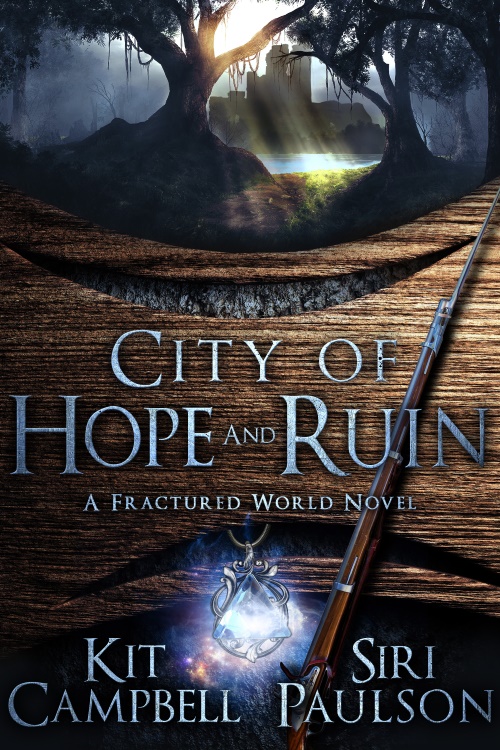
City of Hope and Ruin cover
AmazonKoboBarnes%20and%20NobleiBookscustom
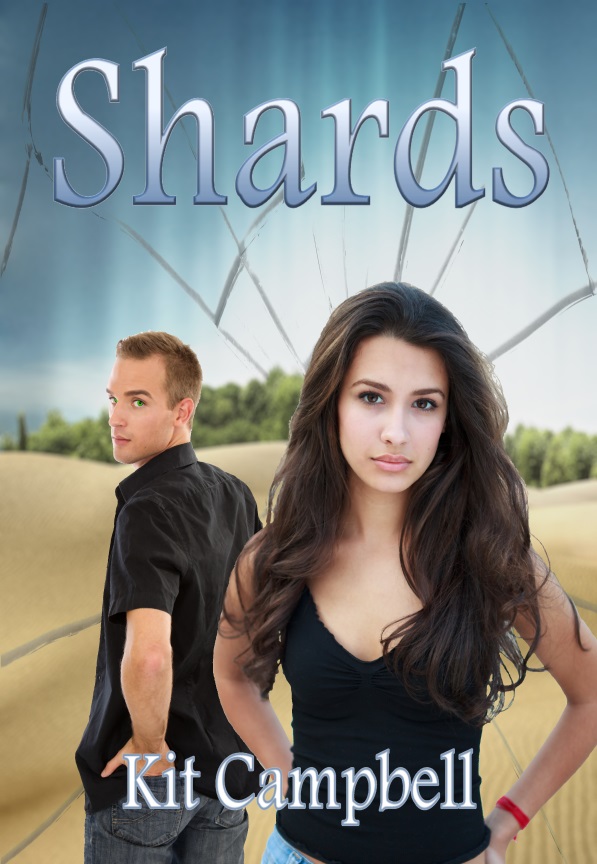
Shards cover
AmazonKoboSmashwordsBarnes%20and%20NobleiBookscustom
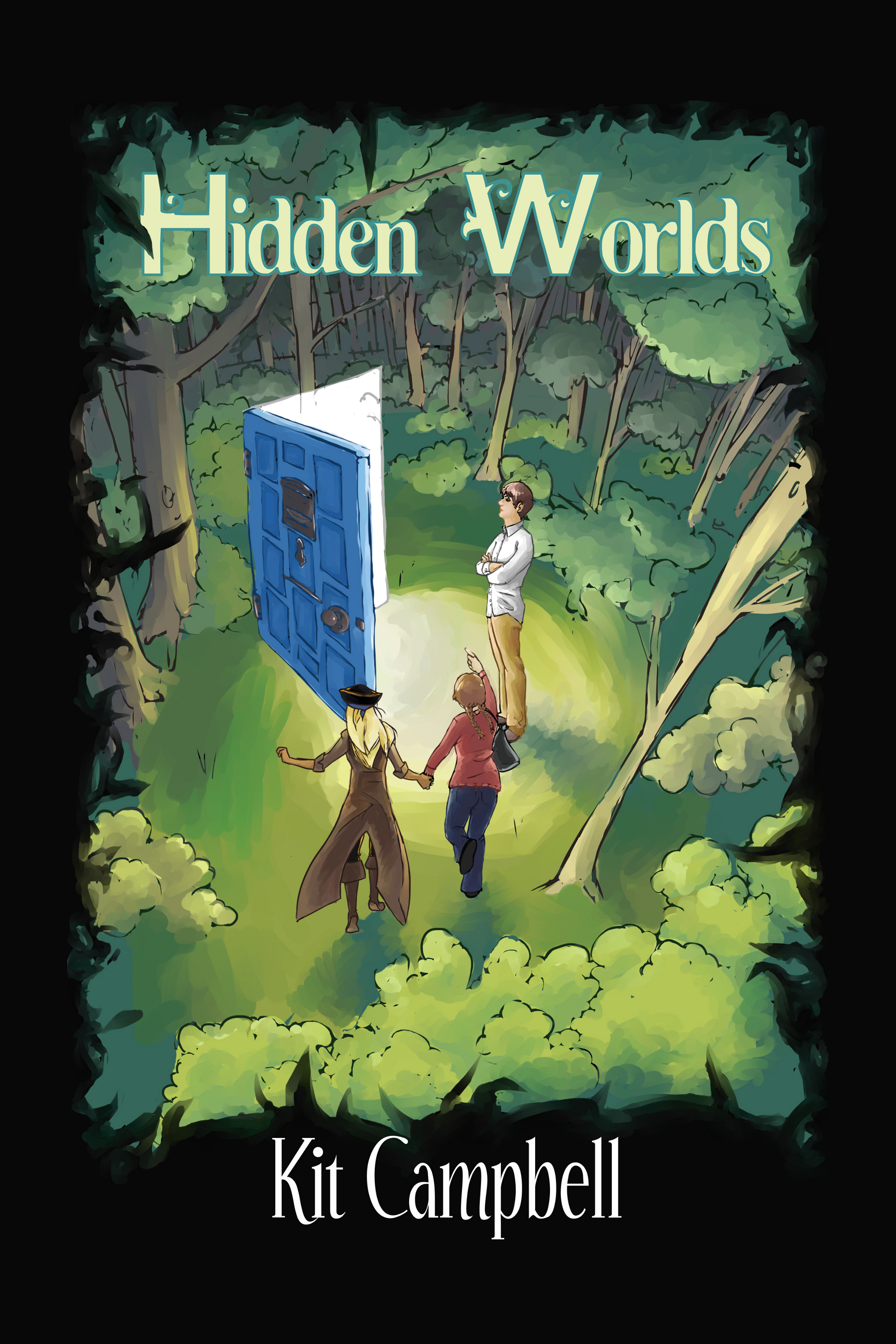
Hidden Worlds cover
AmazonKoboSmashwordsBarnes%20and%20NobleiBookscustom