The Year of Accountability

Well, Squiders, if you’ve been around the internet at all over the past month (and I’m sure you have), you’ve seen the goal posts. Posts that tell you how to choose goals, how to stick to your goals, how to pick realistic goals, etc.

Those are all wonderful, important things.

But what I want you to do now is think of one ABSOLUTE THING you want to do this year. The one thing where, even if everything else falls by the wayside, if you get it done, it will be a good year. Something like: I want to edit my novel and start submitting it to agents. Or: I am going to finally finish that family cookbook so I can give it out at Christmas. Or: I am going to read the entire works of Mark Twain. Something big.

Not that goals like “I am going to write 300 words a day all year” aren’t good. They’re just not appropriate here. We’re talking Big Picture items.

Got your goal in mind? Your Number One Must Do?

Good.

Now tell me about it, here in the comments. If you have a plan forward or a date it MUST be done by, include that. Then, give me some way to keep track of you. Link me to your blog or website, or your Twitter account, and I will stop by periodically to check up on you and your goal.

Sometimes, all we really need, in order to get something done, is someone who cares.

Have at it, Squiders! I am here for you.

Magic Doesn’t Solve Everything

Despite being one of my very favorite sayings (“Why does blah blah blah?” “Magic.”), magic must, unfortunately, make sense.

This means if you are creating a world where magic exists, there has to be rules, and the rules must be consistent and make sense (in the context of your world).

This, Squiders, is called a Magic System.

The good news is aside from the making sense and being consistent thing, your magic system can be pretty much anything.

And you don’t have to explain to your audience how the magic system works and what its rules are. Like a lot of backstory, as long as you know, it’s all good.

So, if you’re working on putting together a magic system for your story/webcomic/video game, what have you, here are some questions you might ask yourself:

  • Who can use magic? Why?
  • Can magic be taught? Is it hereditary?
  • How does magic manifest (for example, is it elemental)?
  • Are there magical beings, and how does their magic differ, if at all?
  • How has technology compensated for the level of magic (for example, a world with high magic probably has low technology, since there’s no reason to reinvent the wheel)?
  • How has magic affected society, culture, politics?
  • What are magic’s limits (what can’t magic do)?
  • What is the source of magical power (tap into mana, etc.)?
  • What are magic’s costs?

This last question is something that’s come up in more recent fantasy. If you look at older fantasy, a lot of times there’s no consequences of using magic, no limits, etc., but in the gritty story era of today, magic has costs. In some cases, the bigger the spell, the more energy it drains, or you may draw life out of nearby creatures, or something along those lines. Magic becomes more interesting when there’s the risk of something going wrong.

Any additional questions you would include in generating a magic system, Squiders? Anything you feel I’ve left out? Any magic systems (yours or ones in the media you consume) that you really like?

Diversity is Good, But It’s Okay to Stay Home

Are you wine connoisseurs, Squiders? My husband and I watched Bottle Shock this weekend, which is the story of how California wines rocked the world by beating out French wines in a blind taste test back in the 70s. (In as much as any Hollywood “based on a true story” is based in actual truth.)

Which got me to thinking, because nowadays the California wines are pretty full of themselves. When we lived in the San Francisco Bay area, it was lovely because we were halfway between two major wine regions: Napa/Sonoma to the north, and the Central Coast to the south. We drank a lot of very good wine. But then we moved home to Colorado, and you can’t get a lot of those wines here, and what you can tend to be their lower end, more generic stuff.

So we looked into Colorado wines.

Let me tell you what California wines think about Colorado wines. (I bet you can guess.)

But the thing is, Colorado wine isn’t worse than California wine, it’s just different. Sure, the big red grapes–zinfandel, cabernet (sauvignon — the franc’s pretty decent, actually), syrah, and pinot–don’t grow well here. I’ve yet to have a really good Colorado big red that didn’t import their grapes from California. But Colorado excels at gewurztraminer, reisling, fruit wines, mead and a ton of grape varieties I had hardly heard of out in California, like petit verdot, carmine, frontenac, mourvèdre, and lemberger.

(Mmmm…lemberger.)

I could go on all day about wine, but that doesn’t really have anything to do with the point of this blog, so I’ve created an analogy for you.

Good wine comes from all over–Chile, Peru, Australia, New Zealand, Germany, France, Italy, Spain, California and, yes, even Colorado. Picture each type of wine as a genre of book. You can try a multitude, get a full experience out of them, see the world, as it were.

But it’s okay to stick close to home, to become intimately familiar with what those that are local. And each of us has a genre that they return to, time and time again, that means something special and occupies a place in our hearts.

And, you know, sometimes what we need changes, and it’s okay to change that “home” as well.

From Fanfiction to Publication

There was a discussion question posted in one of my writing communities recently that read something like, “Do you feel that 50 Shades of Gray being published is a victory for fanfiction?”

(In case you’ve been living under a–admittedly lovely–rock, you probably know that 50 Shades started out as Twilight fanfiction.)

Quite honestly? No. If anything, I think it may actually hurt fanfiction a bit. I admittedly have not read the books (and do not plan to), but when I hear other people talk about them, the conversation goes a little like this:

Person 1: Wow, this is terrible writing.
Person 2: Well, it was fanfiction.

(The latter said with a bit of a sneer.)

It’s not as if this is the first bit of fanfiction ever published. People make a living writing stories about other people’s characters, whether it’s Sherlock Holmes, Elizabeth and Darcy, or one of the many, many novels that go along with a multitude of television shows, movies, video games, and roleplaying games.

(I’ve read a lot of Trek novels. If those do not qualify as published fanfiction, nothing does.)

Ignoring those and focusing on thinly-veiled fanfiction, I find it hard to believe that none has ever been published before 50 Shades. I suspect most people just don’t bring it up. And then, there are authors like Cassandra Clare who were huge in fanfiction (I’m pretty sure you don’t get bigger in the fanfiction arena than Cassandra Clare, who wrote as Cassie Claire in the Harry Potter and LOTR fandoms) that have since moved on to have very successful original publishing careers.

So what is the publication of 50 Shades a victory for? Well, the author and the publisher. But fanfiction was fine on its own before it.

What do you think, Squiders? Have you delved into the infamous trilogy? Did you like it? Do you feel like it helps or hinders fanfiction as a whole?

An Endless Font of Inspiration

I think, Squiders, that all creative types, especially writers, sometimes hit a point where they worry that they’ve run out of ideas. That they’ve reached the end of useable ones. That their best work is behind them.

(I admit that I feel this way about this blog sometimes, but here we are, two and a half years later…)

Then, luckily, the feeling passes.

It is, however, always a bit disconcerting to go through. I find it’s best, when the mood hits, to think about where you are, and where you’ve come from. Sure, maybe you’re not getting anything right this second, but how long have you been working on things? The first story I can remember writing, I was 8. It’s been two decades–twenty years–now, and if I haven’t run out of ideas yet, why should I ever?

And if you’re really, truly, not getting anything, look at what you’re doing. Are you reading, experiencing, learning? Inspiration can lurk anywhere, from the latest scientific or archeological find written up in National Geographic to the person you see walking down the street, a haunted look in their eyes. How did they get there? What makes their heart ache? What will the effects on society be because of this new discovery?

Hey, that dream you had last night was kind of funky. Maybe there’s something there. Your friend has posted a photo of a forest on facebook that is so perfect it looks fake. What would live there? What secrets do the trees hide?

The fact is, most creative types are also inquisitive types. So many ideas can come from asking questions, and then making up the answer yourself. What if? What if? What if? And the fact of the matter is, there are always more questions. There are always more answers. Your inspiration is out there, as long as you keep one eye open for it.

(If nothing else, you might try diagramming things you like. This is a free association activity, where you write down things that appeal to you as they come to you. My list includes things like mirrors, hidden portals, old keys, labyrinths, ancient places, overgrown forests, etc. And then you can choose a few and combine them into different story ideas.)

What’s your no-fail source of inspiration, Squiders?

Announcing the Enchanted Forest Chronicles Readalong (plus a bonus!)

Hoorah! Our first of the year. You’ll notice, Squiders, that we’re changing from re-reads to readalongs. I want people who have never read the particular series we’re working on to feel welcome to join in.

To start ourselves off for the year, we’re going to be reading through Patricia Wrede’s Enchanted Forest Chronicles which, if you are unfamiliar with them, are fantastic examples of fairy tale satire (and have also been a major influence on my own writing). There’s four books: Dealing with Dragons, Searching for Dragons, Calling on Dragons, and Talking to Dragons.

These are YA books, so they read pretty fast.

When we get to Calling we’ll discuss whether or not to add in a related collection of shorts, The Book of Enchantments. There’s at least one in there that is directly related to the series (and involves an enchanted frying pan, if I recall correctly), but I worry that it may be too hard to find. Feel free to let me know here if you’d like it included or not.

Also, as a bonus and to compare fairy tale satires and another of my very favorite authors (and an influence), we’ll read Diana Wynne Jones’s Howl’s Moving Castle at the end.

(There’s two sequels to Howl’s: Castle in the Air and House of Many Ways. Right now, I’m leaning towards not including them, but if everyone really likes Howl’s I’m open to it.)

(And yes, Miyazaki made a movie of it–which is also excellent–but not really at all similar unless you count that some characters have the same name and there is a castle. That moves. Miyazaki put an environmental turn on it, which is really not surprising if you look at the rest of his work.)

So! If you want some fun, excellent fantasy once a month for the next however many months, jump on board! We’ll do discussion of Dealing with Dragons on January 31st.

Which is a Thursday.

Things Sure Do Go Around the Internet

I can see why creative peoples get a bit nervous about the internet. There’s really nothing to stop someone else from taking what you’ve created–if you’re lucky, it will at least circulate with your name attached to it.

It is both a blessing and a curse. Your work spreading helps you reach a wider audience. And spread it does, oh yes. Which is why agents and publishers and whatnot caution you against putting entire manuscripts online if you intend to have them traditionally published.

Oh no, Kit, I hear you say. No one is paying attention to my tiny corner of the internet except a few friends and my mother.

When I was in middle school (so, late ’90s), instead of studying for my math final I wrote a story about the Evil Teachers’ Association (ETA for short), a diabolical group flying through the galaxy, invading people and, I don’t remember, forcing them to take math tests or something. (They were punny. For example, the math teacher’s ship had pi fighters, which were impossible to get a lock on, and the science teacher’s ship was The Graduated Cylinder.)

It proved to be so popular among my peers and teachers that I ended up writing several installments over the next year (into the beginning of high school). The ETA was headed by my eighth grade social studies teacher, whom I will call Mrs. E, whom I liked rather a lot but did not put up with any crap whatsoever.

Each new installment would be emailed out to my friends, but then, one day, I found one of the people I liked the least in my grade handing out copies at school. I had no idea how he’d gotten a hold of them, but I imagine my friends emailed it to their friends, who emailed it to their friends, ad naseum, until apparently the entire ninth grade had access to them.

Life’s hard enough to control at 14 without your stories migrating on their own. I asked people to not forward the stories on, and, shortly thereafter, I stopped writing them.

But Kit, I hear you say. Even so, your story had a limited distribution among a closed population. My little blog isn’t like that.

The internet is a lot bigger now than it was fifteen years ago, Squiders.

If you want a different example, try this on for size. I am a huge Trekkie. For many years, I did Star Trek roleplaying on the internet, including running my own ship for about five years. (The Excalibur. And I’ve done extensive worldbuilding on a scifi series that I can use the characters and plotlines from that in, whenever interstellar adventure scifi comes back into vogue.) On the Excalibur, we had an email newsletter that came out a few times a year, which would include a current roster of the ship, summaries of our recent missions, lists of promotions, etc., as well as song parodies, character art, and short stories the crew would write/draw and submit.

Years later, I found a story I wrote for the newsletter (distributed only to the crew) on a general Star Trek fanfiction site. To this day, I have no idea how it got there, or even why it was posted, since it included no known characters and would have made no sense to someone outside the crew. It still had my screenname attached to it, but man, that one confuses me.

(I checked before I wrote this, and the site is gone. Probably for the best.)

My point is, very few things on the internet can be controlled. Sometimes this is a good thing: it brings you new traffic, new fans, new friends, new experiences. Sometimes this is bad. So think about things before you post them.

Have any stories of wandering projects, Squiders?
What Did I Read in 2012?

Each year I keep track of what I read, genre and publication year, and what I thought of each book. And then I do nerdy statistics with said data.

Books read in 2012: 52
Change from 2011: -1

Of those:
11 were Fantasy
9 were Science Fiction
6 were Mystery
5 were Nonfiction
5 were Science Fantasy
3 were Romance*
2 were Children’s
2 were General Literature
2 were Horror
2 were Thrillers
1 was Chick Lit
1 was Gothic
1 was Historical Fiction
1 was Paranormal
1 was Young Adult**

*includes all subgenres of romance
**genre YA is included with the genre

New genres: Gothic, Thrillers, Chick Lit, Children’s

Genres that went up: Science Fiction, Mystery, Science Fantasy, Romance, Horror
Genres that went down: Fantasy, Nonfiction, General Literature

Pretty good spread, if I do say so myself.

27 were my books (5 were ebooks, 1 I originally got from the library but later bought)
18 were from the library
7 I borrowed from friends or family

Average Rating: 3.44

Top Rated:
The Return of Sherlock Holmes (4.5)
Parable of the Sower (4.3)
Catching Fire (4)
Dark Companion (4)
Elantris (4)
Lieutenant Hornblower (4)
Many Waters (4)
The Secret Circle II (4)
What the Lady Wants (4)
Your Best Birth (4)

Special mention for The Darkest Road and Anna Dressed in Blood, both of which got a 3.9. Still no 5’s, but it’s nice to see that most of my top books this year are in my favorite genres.

Most recent publication year: 2012
Oldest publication year: 1886
Average publication year: 1988
Books Older than (and including) 1900: 3
Books Newer than (and including) 2000: 27

Let me know if you’re interested in seeing the full list.

Happy New Year!

Well, Squiders, another year has come and gone, and, thankfully, the world has yet to end, so we can look forward to plenty of landsquid-y shenanigans here at ye olde blog(ge).

Every year, WordPress nicely puts together a year-end summary for me over at Where Landsquid Fear to Tread, my main blog location. You can find this below if, like me, you enjoy statistics. (And, if you don’t, I’m not sure you’re going to like Thursday’s post either, when I do my year-end reading recap.)

(Just FYI, the stats are only for Where Landsquid Fear to Tread, and do not take in anything that happens here at Kit Campbell Books.)

Here’s an excerpt:

600 people reached the top of Mt. Everest in 2012. This blog got about 3,800 views in 2012. If every person who reached the top of Mt. Everest viewed this blog, it would have taken 6 years to get that many views.

Click here to see the complete report.

What did you like most about 2012 (both here on the blog and in real life)? What would you like to see more of? More re-reads/reviews, Landsquid stories, drawings, genre essays? Let me know.

The Landsquid and I shall just be over here in the corner, enjoying some tea and Cheez-Its for now.

Time Quintet Re-read: An Acceptable Time

Well, Squiders, here we are at the end of our re-read. I hope you’ve had a good time of it, and stay tuned for our next one, to be announced some time in the next few weeks. And it you hadn’t read the Time Quintet yet, I hope you enjoyed the books.

To be perfectly honest, I thought there were only four books in the series, but I did a Google search in the process of posting about the re-read and lo! there were five books.

I admit I don’t read much L’Engle outside of these books. I read A Ring of Endless Light last year and I didn’t really like it, so I think it’s the combination of science and religion that I like. She does it somewhat masterfully, really. To paraphrase something Bishop Colubra says in this book, it doesn’t matter if you believe in God, but he does, and that’s okay. Characters are religious or not, nephilim and cherubim exist, “El” talks to Noah, but none of it is in your face.

All right, onto An Acceptable Time. Maybe it’s just me, but I feel like characterization isn’t really one of L’Engle’s strong points. All of her main and peripheral characters are essentially good-hearted people who do the right thing, whether or not they are a native person from three thousand years ago or a modern person. I’m not sure, if you took Polly out and replaced her with Meg, that you’d see any real difference in the story.

Zachary’s an ass. He was one in A Ring of Endless Light too.

Let’s see. It’s nice to see some continuity between this and Planet, with the People of the Wind, though there is no mention of dark planets or IT or anything of that nature. (And now that we’ve gotten all the way through without returning to IT at all, I’m a little disappointed. Maybe if she’d tied IT to the events in A Wind in the Door a bit, I’d be less annoyed.) And the part in the past, if you ignore the ability of all the characters to learn languages rather quickly, is interesting.

I did have a bit of an issue with the “modern” day part, however — specifically how disbelieving the Murrys are about the whole idea of time-travel. They were there for A Wrinkle in Time and A Wind in the Door. They know things like this happen, even if they’re completely unaware of the events of Many Waters  and A Swiftly Tilting Planet. I’m not sure why so many characters are suddenly so closed-minded.

(Also, did something happen to Charles Wallace? Polly mentions that he “would have liked” the changes to his bedroom early in the book, and then he’s not mentioned again, hardly, though Meg, Calvin, Sandy, and Dennys are.)

All right, onto the discussion questions. As always, feel free to ask your own in the comments.

1. Madeleine L’Engle is sometimes accused of being culturally insensitive when it comes to the People of the Wind. Would you say that this is true when it comes to this book?

2. Polly is staying with her grandparents to be homeschooled, but Charles Wallace and Meg were not allowed to be homeschooled earlier in the series. Why do you think attitudes towards this have changed throughout the series?

3. While most of the “modern” day characters have been seen in other books, why do you think Madeleine L’Engle chose to include the character of Bishop Colubra?

4. Time travel throughout the series is rarely set up so that the time traveler returns to his/her own time without some noticeable passage of time (the only exception being Sandy and Dennys in Many Waters). Why is it important for time to pass in both times?

5. Many of the characters in the past have nature based names such as Cub, Eagle Woman, Winter Frost, Dark Swallow, yet the main characters do not. Why the difference in the naming scheme?

Books by Kit Campbell

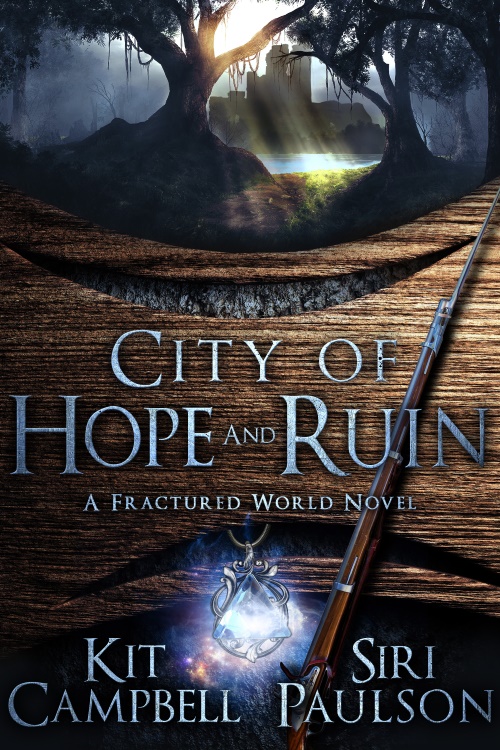
City of Hope and Ruin cover
AmazonKoboBarnes%20and%20NobleiBookscustom
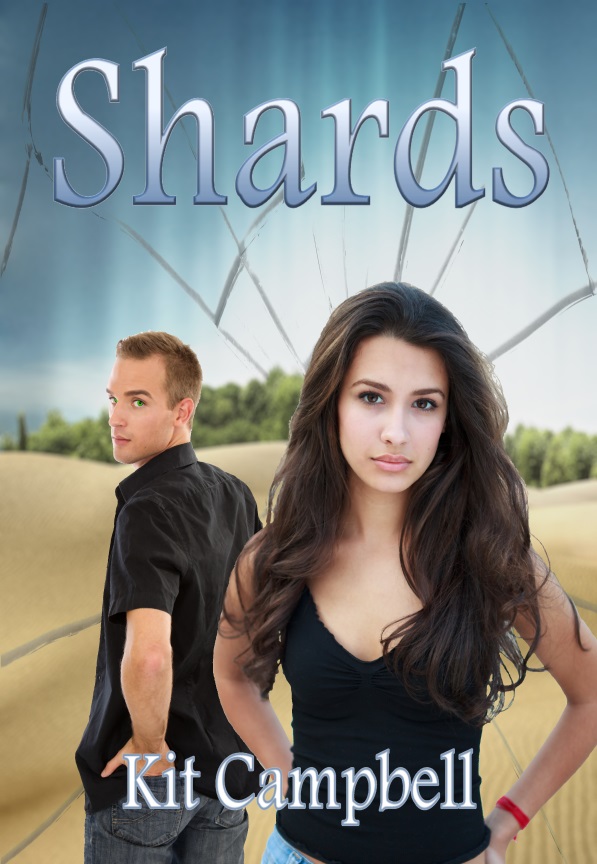
Shards cover
AmazonKoboSmashwordsBarnes%20and%20NobleiBookscustom
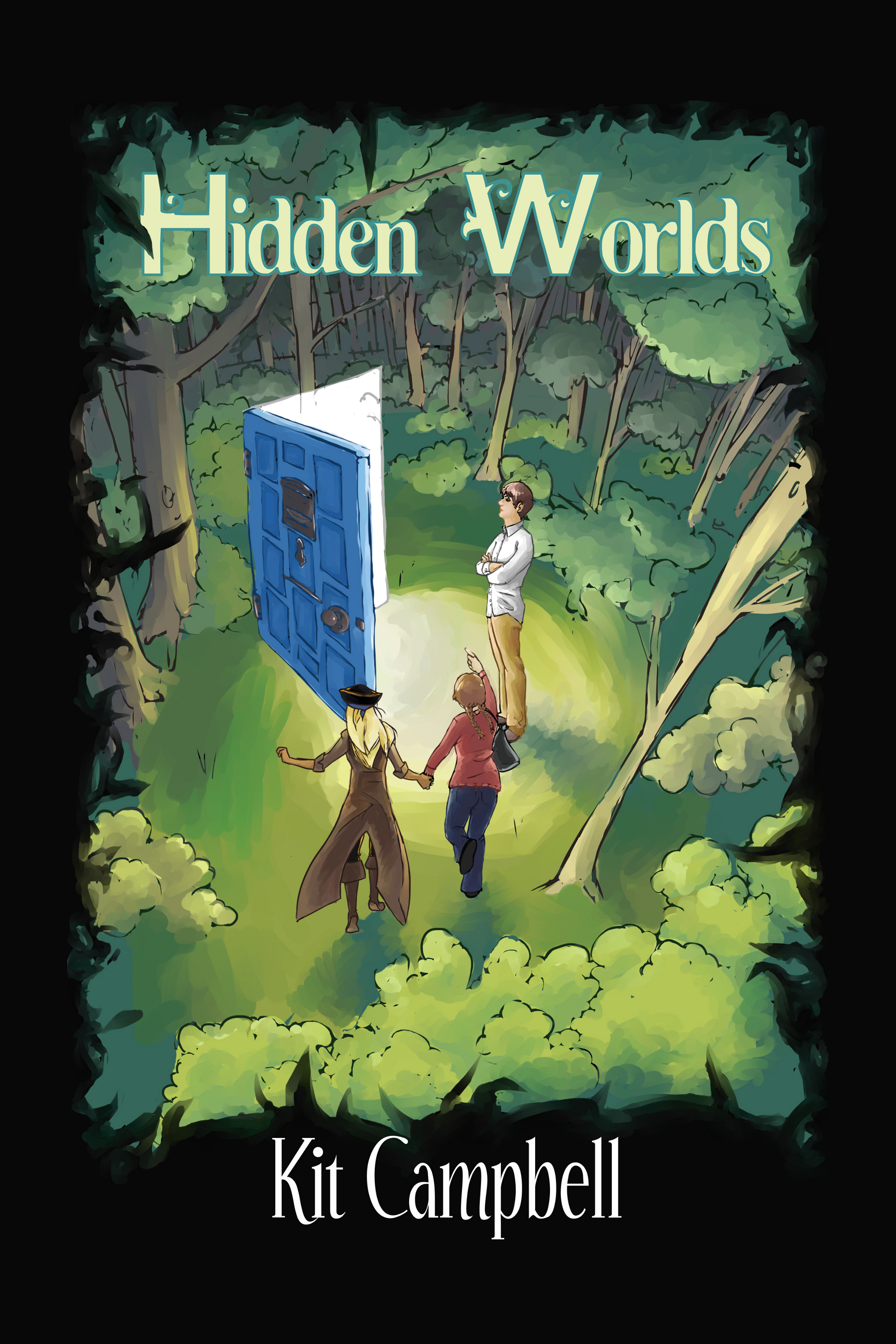
Hidden Worlds cover
AmazonKoboSmashwordsBarnes%20and%20NobleiBookscustom