Adventures in Old English

First, I want you to go here and then tell me if you have any idea what’s being said.

That, my friends, is Old English. If you were belaboring under the misconception that, say, Shakespeare is Old English, you now know better. You’re welcome.

(I know this seems like a very random topic. But I was discussing high school English over at Turtleduck Press and was reminded that this is a thing because my junior English teacher gave us Beowulf in the Old English and was like, “Enjoy!” and then let us flail for ten minutes before she told us it was a joke.)

Isn’t it ridiculous? Look at those funny letters we don’t have anymore. It’s completely unreadable. (The end of the Wikipedia article on Old English has the opening of Beowulf next to the modern translation for comparison.)

…and now, an hour later, I have finally escaped from Wikipedia, where I have learned much about language structure but mostly been confused by the number of categorizations of word types and sounds and so forth. I literally have no idea what some of this means. Here, someone decipher this for me: “Middle English [a:] (?) fronted to [æ:] and then raised to [??], [e:] and in many dialects diphthongised in Modern English to [e?] (as in make). (The [a:] in the Middle English words in question had arisen earlier from lengthening of short a in open syllables and from French loan words, rather than from original Old English ?, because the latter had in the meantime been raised to Middle English [??].)” (From the Wikipedia article on the Great Vowel Shift. Also, I apologize – I keep trying to fix the question marks, but apparently the symbols they keep replacing are beyond this website’s ability to handle.)

Long story short, Squiders, I went in to try and figure out how we got from Old English to Middle English, and from there to Modern English (Shakespeare is Early Modern English, by the by), and it turned out to be a very long and complicated answer with lots of linguistic terms that I apparently lack the capacity to understand. (So it’s probably good that I got a degree in aerospace engineering and not linguistics. Ha! In this case, rocket science is the easier path. I have yet to figure out why some verbs are “strong” versus “weak”–besides endings–and that’s probably a fatal error.)

From what I can glimpse, Old English, in use between about 450 to 1150 AD, or CE, or whatever you want to use, was a Germanic language brought over by the Angles and the Saxons. It was largely a regular, though complex, system (apparently having 12 different articles – we have, like, two now). It, like Modern English, also borrowed words from other languages, mostly Old Norse and Latin in this case. Then the Normans invaded in 1066, bringing their own language, which was used as the “polite” language of the day and eventually got mixed in and so forth. Also, several of the more complex bits of Old English got simplified.

So Middle English (examples next to the Modern English translation on the Wikipedia page) starts at the invasion and goes until about 1470, when the printing press was invented and everything was standardized. (This is, apparently, why some of our spelling is so strange. Apparently the standard spelling comes from Middle English and has not been changed, while pronunciations have. Middle English pronounces all their consonants and vowels.)

Also, Middle English stole a whole bunch of words from other languages as well, which is why English is the Most Complicated Language in the world. (It’s not really. I even looked it up, and it’s not even in the top 10. Perhaps we shall go with Most Confusing instead.)

Huh.

Well, Squiders, I have forgotten where I was going with all this, so I think I’d better just stop. You’re welcome to go at it yourselves on Wikipedia, but BEWARE.
The Dangers of Being Informed

So, like most of you, Squiders, I love to read. I love a drizzly afternoon with a book in my lap and a cup of cocoa close at hand. I love visiting new places and meeting new friends.

And, also like most of you, Squiders, I have a gazillion books floating around that I have yet to read. They come from a variety of places — gifts, second-hand stores, garage sales, new releases that I couldn’t wait for. They are everywhere, just waiting to be read.

It is my hope that I will eventually get to all of them. But I probably won’t, for one simple reason: new books keep coming out.

And I, like a good reader/writer, keep track of trends and so forth by subscribing to publisher’s newsletters and so forth. And they tell me about their new releases, and they sound fantastic, so I keep checking new books out from the library and I never get to the gazillion I have floating around the house.

My husband is this close to banning me from the library. (I put another book on hold yesterday. Don’t tell him.)

Tor is by far the most evil. They send out a couple of different newsletters — one has articles by authors (which I read and like, and then go read the author’s new book) with giveaways (oh, I so hope I win this month’s — they are ghost stories, eeeeee) and the other has free short stories and excerpts, and then enough awesomeness to make any scifi/fantasy fan go into rapture: re-watches of television shows, re-reads of book series, news on books and movies and related media, articles about science fiction and fantasy, etc. I would like to go live in that newsletter.

So, alas. I dare not give up my newsletters. But maybe I should be a little less impulsive about new books, no matter how awesome they sound.

Time Quintet Re-read: A Wind in the Door

When I first read this book as a kid, I remember coming out of it being slightly confused about what had just happened.

I still feel that way. I think it’s the end. The inexplicable wind that blows the door open. Is it supposed to show that Progo is still with them, in some form, or something of that ilk?

Symbolism has never really been my strong point.

So, anyway. It’s kind of like a more grown-up version of the Magic School Bus. (Now, children, we’re in Arnold’s Charles Wallace’s mitochondria! Do you note the difference in DNA from its host cell? Who knows what DNA is?) I know the point is to show that no matter how big or small something is (and we kind of dealt with “big” in Wrinkle), everything is interconnected and important, but I really liked the Magic School Bus when I was little.

I did learn (re-learn) about mitochondria, though, so hoorah. And Meg seemed to have grown quite a bit since the first book, though she does get a bit whiny at points.

I do kind of wish we’d connected the Echthroi (Greek for “enemy,” by the by) back to the Black Thing from Wrinkle somehow, or talked about it at all. Progo has one off-hand comment about dark planets, but other than that, the topic is not breached at all. Are there two evil forces at work in the galaxy? Does one work for the other? In what way? The Black Thing seemed more about control than destruction.

I also found the chronology confusing. The book was published in 1973, but the moon landings are several (decades?) in the past. I guess she’s trying to go near-future, but aside from the moon landings, she doesn’t try to age anything to make it seem futuristic at all. The environment seems perfectly entrenched in the decade it was written.

All right, onto the discussion questions.

1. How is Xing yourself different (and therefore better) than the Echthroi Xing you? Do you think it hurts as much?

2. Madeleine L’Engle invented the fictional farandolae as an essential component of this story. Why do you think she needed an additional level of depth past mitochondria?

3. What do you think it means that even a garden snake can be a Teacher?

4. Progo refers to himself as “practically plural.” What do you interpret this to mean?

5. The Echthroi appear to be something, so how is it that they can create nothing?

As always, feel free to bring up your own points and questions in the comments.

And read Many Waters (which, if memory serves me, is my favorite) for October 30th.


I Love Ghost Stories But Wouldn’t Want to Be In One

(Due to unforeseen circumstances, the discussion of The Wind in the Door will take place next Tuesday, October 2nd.)

My husband recently came home. “Guess what?” he said. “They’re having a paranormal party!”

“They’re having a what?” I said.

“A paranormal party.”

“And what is that?”

“I don’t know,” he said.

The next day he’d done some research. “They’re having it at the mansion,” he said. “There’ll be a team of ghost hunters, and they’ll have an equipment talk and demonstration, and then everyone’s invited to do a ghost sweep of the mansion. This is awesome. Let’s do it.”

“No,” I said. “Are you kidding me?”

He stared at me. “I don’t understand. You love those ghost hunting programs.”

Normally, Squiders, I love to try new things. And I do love ghost stories and ghost hunting programs. But I’ve been a bit edgy about ghosts recently. You see, I don’t know if I believe in them or not. I don’t know if I believe in the paranormal at all. The ghost hunting shows are somewhat living vicariously for me, because I know what I would do if I did go ghost hunting: I would sit in a dark room and psych myself out, because I have an overactive imagination, and it does terrible things to me when I let it go unchecked.

As an example: when I was in third grade at Catholic school, we used to play Bloody Mary in the dark bathrooms after school. Everyone’s familiar with Bloody Mary, yes? Good. Anyway, I figured there was no way I was actually going to summon Bloody Mary, because that seemed stupid, so I ditzed around instead, but then there was this glow in the corner, and it started to expand, and to form a human-shape…

…I was out of there faster than you can say “Oh God Almighty WHAT IS THAT.”

Did I really see something?

I don’t know, but I know better than to push things.

(Also, I’m still on edge about the nursery and the cat staring at the corner of the ceiling and my child watching things moving that I cannot see…)

My husband thinks I’m being silly. And maybe I am. What do you think, Squiders? Do I suck it up and go for the experience? Do I trust my gut and stay home?

I cannot guarantee I will listen to you on this one.

Ideas: Face Off and Hot Set

I know I’ve been talking a lot about television lately, and I apologize. It’s just that I’m spending more time in front of ye olde boob tube these days because of changes in my life and so I think about it more.

Running low on creative ideas? (Never, I know. Hear me out anyway.) SyFy (or, as I like to call it, All Ghosts All the Time) has two shows that run back to back on Tuesday nights: Face Off and Hot Set. These are reality competitions. Face Off is a special effects make-up competition, and Hot Set is a movie-set competition. On both, competitors have three days to meet the goals set by the challenge for the week. On Face Off, people are eliminated each week. Hot Set has new teams each week.

Whoop-dee-doo, Kit, you say. You said something about ideas?

Well, Squiders, you know story ideas can come from anywhere. And you can think of these shows as writing prompts. Much like a sentence or a word can be used to generate ideas, the beginning of each show gives the contestants a creative problem to solve. A make-up or set prompt.

And, Squiders, you can take their prompts and use them for stories just as easily. And it can work for all genres, though, of course, science fiction and fantasy are highly represented.

And the shows are representative of creativity as a whole: the idea that many people, when presented with the same idea, will execute it completely differently. That you are the only one that can tell your story.

Anyway, give them a look if you get a chance. I watched an episode of Face Off last season because I had nothing better to do, and now I’m addicted.

Warp Travel: Back in Style

Back in June, we discussed why interstellar travel has fallen out of favor.

NASA, however, has once again proven they are awesome and given hope to all us interstellar travel fans who hope to see it more popular in science fiction again.

Last week, NASA announced that they’d figured out a way to significantly cost the amount of energy necessary to travel faster-than-light, bringing it into the realm of possibility. And they think they’ll be able to cut it even more with just a little more work.

(NASA: the only place you can work with a freaking warp drive.)

That’s right, a warp drive, just like in Star Trek, where space-time is warped around the ship, which is contained in a warp bubble. (Little did they know what they were proposing was actually plausible. Or maybe they did. I don’t know.) Unlike the Enterprise, however, the ship would be football-shaped, encircled by a large-ring that did the actually space-time bending.

There are several articles on this lovely lovely news, one of which can be found here. In fact, you’ve probably already read one, because this was a featured news story on my phone.

So join in me in rejoicing, Squiders. Interstellar travel is not dead, and it never should have been deemed so.

(My apologies for the total lack of a post on Tuesday. I wish I had an excuse. I don’t, but I do have a terrible memory.)


Modern Day Adaptations

Here’s a quick question, Squiders – is there a way for you to like a post without looking at it? Because sometimes a post will get more likes than it’ll get views in a certain time period, and I don’t know if the view thing is just delayed, or if there’s another way to do it. Assuage my curiosity.

Onward.

Modern day adaptations are all the rage right now. This is where you take source material (usually at least 100 years old) and modify the characters and plot to fit into the cultural and societal norms of today. It’s fairly common, and the more beloved the source material, the more adaptations you’ll find.

(You’ll also occasionally find fantastical adaptations, or science fiction adaptations, of these same stories. These are more awesome but less common.)

There’s many ways people do this. Let’s take Pride and Prejudice, because I can think of three modern day adaptations off the top of my head (and in three different types of media! Score). First, there’s the Lizzie Bennet Diaries – a currently on-going series of vlogs presented on YouTube. (For those familiar with the book, they’re about up to the party shortly before Bingley vacates the area.) This is a very true adaptation, with the plot more or less exactly following that of the book. Second, there’s Lost in Austen, a British mini-series that mixes the modern day with the original source material. And third, there’s Imperfect Bliss, a recently-published novel that is loosely based off of the original source material.

Like all things, some of these things are good and some are bad. And anything is fair game. Wizard of Oz, Sherlock Holmes, Jane Eyre, you name it. Of the three above ways to do a modern day adaptation, I admit I’m not very fond of the “loosely based” option. They don’t tend to be adaptations as much as vaguely related, i.e. something about the original inspired the creator of the new work in some way, and that’s about it. But they’re always marketed as a modern day adaptation, and then they’re not and it annoys me.

By that definition, my high fantasy trilogy is a modern day adaptation of Star Trek. (Hm.)

To me, if you’re going to bother to do an “adaptation,” part of the fun is the challenge of trying to take things that don’t fit in our modern society (to continue with the P&P example, the fact that a woman has to marry to be successful in life) and changing them enough so they make sense to both modern readers and the original intent of the story. Or, when you’re mixing the source material with modern day sensibilities, to see how modern people react to the story, and vice versa.

What do you think, Squiders? Do you like adaptations, or are they sacrilege to the original work? Any you would recommend?

Things That Go Bump in the Night

Oh, Squiders, how I love ghost stories. And I love horror ala Poe or Lovecraft. But this love comes with a price. You see, my husband and I normally read in bed right before we go to sleep.

You see where I’m going with this.

Night is rarely silent. There’s animals outside, cars going past, houses settling. My cat likes to open and close the hallway cabinet doors which, at first, sounds like someone is in your house opening and closing doors until you realize what it is. That cat is going to drive me crazy someday.

And yet, despite my overactive imagination, I read these things right before bed anyway.

I tell myself it all isn’t real, but I’ll notice movements out of the corner of my eye (which is invariably a car passing outside or, once, my own reflection in a mirror, yay). We’ve had a recent addition to the family that means I’m up at odd hours, and while I’m dealing with that, my cat will come in and stare intently at one corner of the ceiling, and the new addition will talk to himself when he’s alone.

Everything is creepier at 3 am.

I tell myself that I need to stop reading horror right before bed. Or at night at all, actually. Sometimes, if it’s late enough and dark enough, I can’t even watch my beloved ghost hunting shows without freaking myself out. And, sometimes, after enough false starts, I will put that book down and wait until sunlight.

Until the next book, at least. And then the pattern starts all over…

(In case you’re wondering, I’m currently reading Girl of Nightmares by Kendare Blake, the sequel to Anna Dressed in Blood.)

On the Proper Punctuation of Emoticons ;)

So, my mother was recently filling out some online forms and called me for the “proper” punctuation of a smiley face: how far did it need to be from the sentence that proceeded it? Did there need to be a space between the colon and the parenthesis, and did she need to include anything else?

Admittedly, my mother is a recently-retired English teacher and, since the colon and parenthesis are both units of punctuation, she assumed that there must be some sort of emoticon rule that she was unaware of. Punctuation is, after all, a major component of grammar.

It got me to thinking – are there “rules” to emoticons? Has some prestigious institution out there written down how a smiley face must be formed to be proper? If they have, I’ve never heard of it.

In fact, emoticons seem to be personal. Whether they require a hyphen nose or not comes down to someone’s preferences, best I can tell. (I’m a no-nose emoticon user myself.) In fact, even more likely than the rules being out there is someone who has sat down and analyzed people’s personalities based on how they put their smileys together. A nose means you’re an extrovert, and not leaving a space between a word/sentence and the emoticon means you live your life in the fast lane, or some nonsense like that.

Will there ever be official emoticon rules? Arguments between nose purists and artsy no-nose types? While it is true that emoticons are pictures and not words, it could be argued that they are as much a part of the communication as the words that they follow or precede. They’re a somewhat desperate attempt to add tone in a world where communication is increasingly digital and meaning may be misconstrued by the reader – a winky face to let someone know you’re joking, a smiley face to soften the blow of harsh words, or an appalled face ( D: ) when no words will come.

What do you think, Squiders? Are there rules to emoticon form? Will there ever be, and will people follow those rules?

Books by Kit Campbell

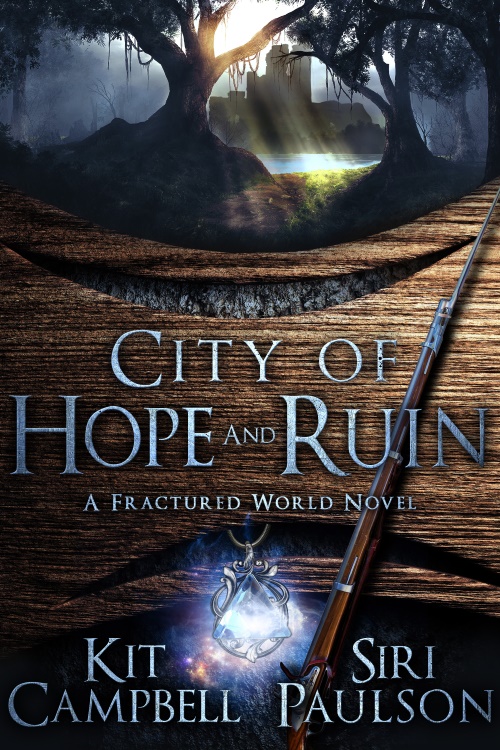
City of Hope and Ruin cover
AmazonKoboBarnes%20and%20NobleiBookscustom
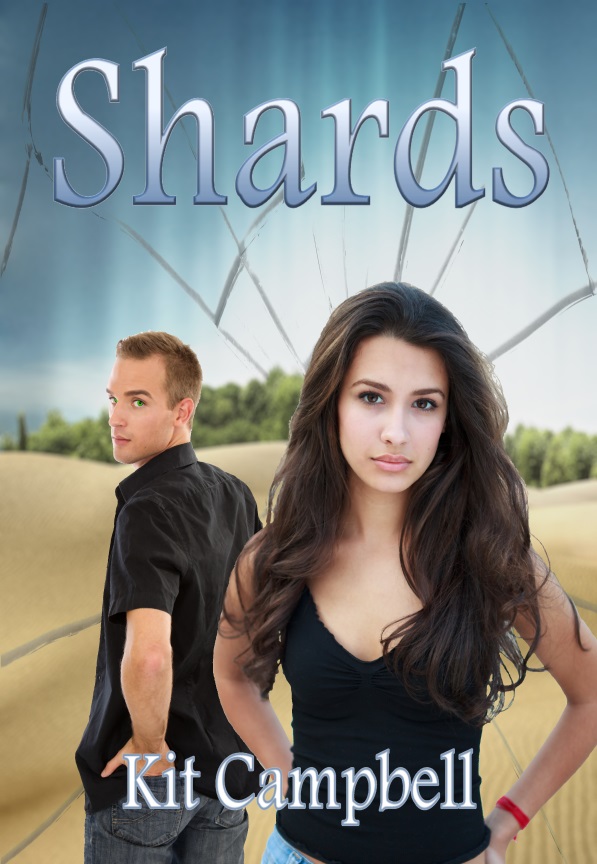
Shards cover
AmazonKoboSmashwordsBarnes%20and%20NobleiBookscustom
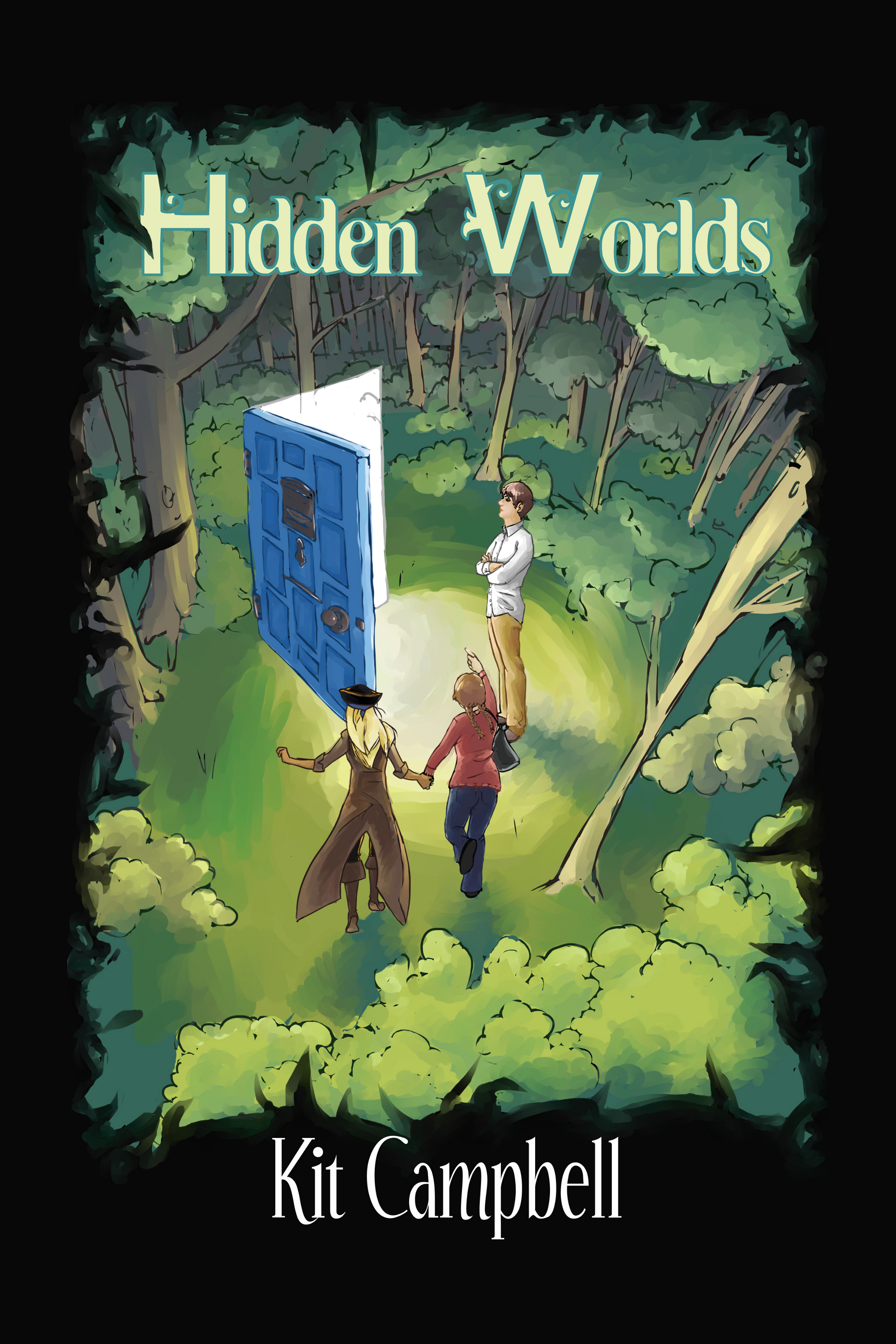
Hidden Worlds cover
AmazonKoboSmashwordsBarnes%20and%20NobleiBookscustom