The Problem with Side Trails

Good evening, squiders! How’s your April going? Mine is full of volunteer commitments, but luckily I’ve got the biggest of those behind me at this point. Still more, but the stressful ones are done.

So, as we all know, for spring break, I was like, oh, I’ll switch over to Deep and Blue since I’m not going to have as much focusing time, and get that done, and then when the break is over I’ll head back to the Book 1 revision.

And here we are, three and a half weeks later, and we are still on Deep and Blue. I think I’m done now–I came up with the fourth iteration of the book description tonight, which is the final outstanding thing, and I’ve had a couple people look at it, and I’m declaring it Good Enough.

(I posted the cover earlier, but here it is again, just cuz.)

Deep and Blue cover

I should know by now that my “oh, I’ll just work on this for this short time period” plans almost always take longer than expected. I mean, not always–sometimes I can take a week off of a big project to do a smaller one–but more often than not. Am I bad at estimating how much time something is going to take? Sometimes. Sometimes, like this particular case, where I’m waiting on feedback, it’s out of my control.

(I did write a side scene on Book 1–basically a behind-the-scenes of what other characters are doing. It won’t ever go into the book but it helps me to explore other characters’ motivations so I know how they’ll react to things or why they’re doing things the way they are. Also read over a couple of other ones that I’d written earlier.)

Anyway, I am declaring Deep and Blue ready to go, and tomorrow we’ll read back over Book 1 thus far (to remind myself where I am and what I’m doing) and then dig into the meat of Act 3, where new chapters are needed and a surprising amount of work needs to be done. Yay.

Also, I need to edit chapters 20-22 from the critique marathon feedback and send them out to my in-person critique group. Probably do that first.

Here’s the final book description for Deep and Blue:

When the surface became unlivable, humanity retreated under the waves. 

In the underwater city of Haven, oceanographer Kaeri has been given her first assignment: a coveted spot on the team working to return the people of Haven to the surface. 

No friends. No family. An opportunity to earn her place. 

Not quite ostracized but never welcomed, Kaeri has never belonged. Something about her parents, though no one has ever explained what. And though she has become a respected scientist, people still shy away from her in the corridors, their conversations dying away. 

The new job is a chance to change all that. But before she can begin, strange things start happening. Shadows flit across the security cameras. Doors to airlocks and power generators unlock themselves. And people, across the city, are being attacked by something invisible. 

If Kaeri can save Haven from these mysteries, people will have to accept her. But digging into Haven’s secrets may bring answers that were better left alone.

~*~*~*~

So. Refocusing. Moving forward. Deep breaths all around.

See you next week, squiders!
Promo: The Caretaker by Regina Wixon

Good morning, squiders! I’ve got a book for you today! You guys know I love a good Gothic, and this one sounds great! Give it a look!


Haunted Historical Mystery Series, Book 3


Paranormal Thriller

Date Published: February 25, 2024


A blizzard rips through the Black Hills of South Dakota, as journalist Rachael embarks on a journey to Hawthorne House, a remote inn located deep in the frigid wilderness. As the storm rages on, Rachael finds herself caught in a gripping tale of mystery and intrigue, unsure of what lies ahead in the enigmatic world of the treacherous snow-covered landscape and the sinister forces that lurk within Hawthorn House. The icy snowstorm blurs the lines between reality and imagination as Rachael uncovers secrets and revelations that challenge her perception of the caretaker and the true nature of Hawthorn House.


About the Author

 Regina endeavors to take her readers on a journey around the United States to be fascinated by our country’s history in a series of chilling books she hopes you will love. She blends a captivating blend of mystery, historical intrigue, and paranormal elements, her gripping novels, weaving together tales of secrets and revelations that span centuries. Her stories often delved into the hidden depths of history, uncovering long-forgotten mysteries and unsolved crimes that haunted the past. It was the paranormal twists that set Regina’s work apart, adding an extra layer of intrigue and suspense that kept readers eagerly turning the pages until the very end. She continues to explore the darker corners of the human experience through her captivating storytelling.

Thank you for reading and please leave a review. Her next book will be coming out in the summer of 2024, The Haunting of York Hall. Any questions or comments? Please visit her wheebsite at reginawixon.com. or follow her on Facebook where she will keep you updated on upcoming books. Questions? Please email her at regina.wixon@gmail.com – She’ll be happy to hear from you!


Contact Links

Website

Facebook

Twitter


Purchase Link

Amazon


RABT Book Tours & PR

Revisiting Writing and Networking

Good afternoon, squiders! Sorry for abandoning you all week! I wish I had a good excuse but I don’t.

I did finish the final edit for Deep and Blue today. It has a publication date now (May 1) and is coming along–just needs to be formatted and the book description needs some tweaking.

(I gotta say, working on marketing material is always so frustrating. I showed the book description to some friends to be like, hey, would you pick up this book? And they generally were like, yeah, it sounds cool! Good job! And then I posted it to a writing community, who pulled it apart and hated all of it. Probably the solution is somewhere in the middle, but it is very disconcerting to have such varied reactions, and I do sometimes wonder if writing communities feel the need to fix things that are perhaps okay as is.)

(Or maybe they know what they’re talking about! Who knows!)

(Anyway.)

(I just want all the Deep and Blue stuff done so I can go back to Book 1! Also I changed a character’s name in the middle and no one, including me, noticed and it was published serially like that, so that’s embarrassing.)

I talked a few weeks ago about potentially going to Pikes Peak Writers’ Conference to network and so forth, and ended up talking myself completely out of it through writing said blog post. I poked around a bit more at writers’ conferences before deciding that they really weren’t what I was looking for (and going farther afield didn’t fix the networking issue), and then I spent some time looking at writing residencies.

Writing residencies sound great, in theory! In some cases you pay, and in others they pay you, and you go somewhere for anywhere for a week to a few months, and all you do is write (and in some cases, maybe teach a class or prepare a piece for wherever you’re staying).

But, of course, I have the small, mobile ones (though at least the bigger, mobile one is not so small anymore). I did find a few retreats that do allow you to bring your whole family (including one only a few hours away!) but arguably if you bring your kids you’re not getting the whole immersive experience that a residency advertises. But, yeah, the ability to just go off on my own for a while without the rest of the family is not really a thing, at the moment.

Also, in almost all cases (but especially for ones where you stay for free or they pay you), there is an application process. And I just can’t see most of these places digging through all these applicants and being, “Ah, yes, this fantasy/science fiction/horror writer is providing the right level of prominence and art that we look for in our program.”

(And then I looked around to see if there was anything specifically for speculative fiction, and aside from fancy workshop programs like Clarion or Odyssey, the answer was no, and those are also quite long and very expensive, and there is an application process for those as well, and you have to apply months and months and months in advance. So yeah.)

So I shelved that idea.

And then I moved onto writing retreats. A retreat is not unlike a residency, where there is an amount of time dedicated to writing. But unlike (some) residencies, there are other writers there, and they tend to be shorter, normally a few days to a week.

I think this is the right solution for right now. It has the networking, it has the writing, and hopefully it will be sort of relaxing. (Plus they will feed me, always a plus.)

I found two happening relatively nearby, happening in the next two months. I did some research and picked one, for the end of May.

Of course, now my spouse is saying he might need to take a business trip over those days.

Sigh.

Anyway, how are you, squiders? Done a writing retreat before? (Or a residency, for that matter?)

Spring Interlude

Howdy howdy, squiders! How’s it going? We’re on spring break this week so all our routines are out of sync, joy of joys. (I did teach the small, mobile ones how to play ERS, Oh Hell, and Hearts, though. Essential life skills.)

Because of the break, I’m putting working on the Book 1 revision on temporary hiatus. Just for this week. But I did manage to get that new chapter I was pondering outlined. It took longer than I would have liked. Everything with this revision requires so much baggage, ugh.

As part of outlining, I went into Book 2 (which took an annoyingly long time to find) to check a couple of things, which is always a bit of a bad idea, because I tend to get caught up in the story and read more than I mean to (and sometimes I get so caught up I go through Book 3 as well, though I managed to avoid that this time). This time, everything that’s wrong with Book 2 really threw me, for some reason.

Book 2 is the oldest of the drafts–according to my notes in the document, I wrote it in 2011, which is forever ago, and so the writing in general is just old. And I’ve done two more revisions on Book 1 since then, so it’s out of date in many places, plot and characterwise.

But still, a problem for future!Kit.

This week we’re working on getting Deep and Blue ready for publication. I made a cover in January, so I’m doing the final edit and working on the book description this month. I think I’ll release it through Kindle Unlimited for now and go wide later in the year.

DnB was originally released as a serial on Turtleduck Press, so there is some clean up to be done in between the sections (unlike Across Worlds with You, I didn’t write it all at once, so there is some summary at the beginnings of the sections that needs removing) and also some weird phrasing, and I think I may have found a plot issue (easy to fix, just need to remove a mention of something, so it’s just deciding which is the right place for the remaining mention to stay).

The book description is, of course, one of the hardest parts, and despite all the years I’ve been publishing and the number of books and anthologies I have worked on, it never seems to get any easier. At some point, surely, this should be a honed skill. But it is not.

Alas.

If I can get the edit and the description done this week, the last step is doing the formatting (ebook only at this point in time, so easier than print) and uploading everything. I love formatting–it’s very relaxing, the left side of brain loves it–but I may put that off til April, because I do need to do some coordination with the rest of Turtleduck Press about publication dates and all that jazz.

Still, it’s nice to work on something else for a minute, and I do really like this story, so it’s been fun to read back through it again.

Happy Spring, squiders! See you next week!

Enter Act Three

Well, squiders, I started this blog post three days ago, and then we got two feet of snow, which apparently not only shut down school and work and all that jazz, but also my brain and my productivity.

Digging ourselves out, both literally and figuratively.

I’m in Act 3 of my revision for Book 1 of the trilogy now, which I expected to go fairly smoothly–it does need a new scene, and there’s a point of view issue in one chapter that needs to be fixed (I switched a scene from one POV to the other and did a bad job cleaning it up)–but I was wrong.

Oh, goodness, was I wrong.

I’m on, I want to say, the fourth major revision of this particular story. Originally at the end of Act 2, one of my viewpoint characters dropped out and we didn’t get his again until the very end of the book. With the last revision, I did a major overhaul on this character and added his viewpoint into Act 3. But in general, the structure of Act 3 has remained the same since the second draft (and to be fair, the first draft was so bad and so distant from the current drafts it maybe should not count).

I’ve run into a couple of issues I was not expecting.

The first is that because the structure essentially has not changed, the writing is old. I suspect I didn’t do much re-writing the last go around (aside from POV switching) which makes the writing in this section about ten years old. Awesome.

The second is that the changes I made in Act 1 has made it so the book has alternated viewpoints each chapter perfectly. No character bunching. Until now. And part of me is like, well, if I just add in one more chapter, I can fix this and the POV switching will be perfect until the end of the book.

(Books 2 and 3 are, if I recall, all over the place with POV, but that is a problem for future!Kit.)

Now, of course, one should not put in a chapter just to have a POV pattern, but I do think I have stuff I can put into it that would be interesting and useful. Of course, I also need to spend some time brainstorming, and with everyone home I’m finding it a little hard to think, but I think I shall lock myself in a room in a bit.

Then, of course, there are the problems I was expecting. I did figure out a few days ago where to put the new scene (and how to rearrange some of the existing chapters, viewpoint wise, because the next…three chapters are very long and could probably be broken up a bit), and the viewpoint issue in that rewritten chapter with the POV change should be pretty straightforward too.

I’m pretty sure I went into this revision thinking all the problems were at the beginning. And maybe it wasn’t until I fixed those issues that these at the end became apparent.

Oh well. On we blindly stumble. I am almost done and I cannot wait.

See you next week, squiders.

WriYe and Revision

Happy Friday, squiders. How’s your March going? So far I have been extra productive in all my goals except writing (and exercise, though that’s cuz I’ve had a cough for a month. I finish my antibiotics today, though, and in theory I could start back up. Except, at least for me, when I’m out of the exercise habit I always find it hard to get back into it).

March’s WriYe prompt is: Reduce, Reuse, Recycle – The R’s of Revision.

Apt, as I’m still deep into my revision. About 90K in, in fact, which is madness in of itself.

A lot of people use editing and revision interchangeably, but if we want to be really pedantic about it (and, alas, I love being pedantic), “editing” is the physical fixing–the typos, the grammar, the making sure the facts stay the same throughout the whole story. Revision is the act of changing the content of the story, or rearranging the plot, and things along those lines.

So typically one does their revision(s), and then the editing gets done last step before publication.

I’ve never heard of the R’s of revision before personally (and, as aside, I hate putting apostrophes in plurals, even if Rs looks weird and is potentially confusing), but let’s go through them anyway. I do like the metaphor.

Reduce

People say they write lean or fat, which essentially means that in their first draft they either write too little or too much. Most people who do either are aware of the fact, and know they need to add or remove words when they do their revision. Someone who writes too lean may need to add in descriptions or subplots, whereas someone who writes too fat may need to remove them instead. Arguably overwriting is more common than underwriting, with people including things that are unneeded or bogging down the story.

So I’m going to say the Reduce is cutting out things that your story doesn’t need. Loose threads that didn’t go anywhere, characters who aren’t helping the plot, that three page description of the beauty of the sunset. Streamlining the story into its most efficient self.

(I used to be both a lean and a fat writer, depending on the story, but as time has gone on my first drafts tend to be about the same as the final.)

Reuse

This one is pretty self explanatory. You should definitely reuse stuff from older drafts if it still works. Though I do find that even if it’s not changing substantially, it may need to be reworked to match the writing style of the rest of the current draft.

Recycle

If we look at Reduce, Reuse, Recycle in its original meaning, reduce is using less packaging so there’s less to throw away/recycle, reuse is, uh, reusing something (such as using plastic tubs as storage containers, or using fabric grocery bags instead of single-use plastic), and recycling is breaking something down into its base self and then using that to make something new. (Or a new version of the same thing. I imagine you can make aluminum cans indefinitely.)

So, in a revision context, recycling could be taking elements from your story that aren’t working and putting them into your Little Darlings stable, or whatever you call the place where you put story elements without a home. A side character that’s threatening to derail your current plot could make a main character for another, for example.

Although, on some level, each draft, especially one where you’re doing major work on characterization, plot, or some other core element of the story, could be considered recycling. You’re taking the story you have and “recycling” it into a newer and hopefully better version of itself. Taking the story down to its base parts and rebuilding it into the same story again.

Yeah, I dig this metaphor.

What do you think, squiders?

Used Bookstore Finds: The Elvenbane by Andre Norton and Mercedes Lackey

Good morning, squiders. Hope you’re doing well!

I finally finished The Elvenbane, which I think I started two years ago. Do you ever do this? There wasn’t anything wrong with the story–and I did enjoy it in the end–but sometimes I just put a book down and then…take forever in picking it back up. If I pick it back up. It’s different than a conscious decision to not finish a book for whatever reason.

I’m not 100% sure where I picked up the book, but it has a pink dot on the side, so maybe Goodwill?

Title: The Elvenbane
Author: Andre Norton and Mercedes Lackey
Genre: Fantasy
Publication Year: 1991

Pros: Great worldbuilding with several distinct cultures
Cons: Older fantasy format with lots of viewpoints

I do want to say that I’m not against having a lot of viewpoints–high fantasy tends to do this, even today–but I’m not wild about including viewpoints we only see once. Maybe we just…don’t need to see what that person is up to.

ANYWAY, The Elvenbane is principally the story of Shana, an elf/human halfbreed who is found and raised by dragons. The dragons live in caves in the desert, keeping their existence a careful secret from the elves who run the rest of the world (both dragons and elves consider the humans to be animals) so they can live in peace. They can shapeshift, so occasionally some of them go among the elves/humans to see what they’re up to/cause trouble, including spreading a prophecy about the Elvenbane, a half breed who will destroy the elves. (As such halfbreeds are prohibited.)

There’s a lot going on here, and while the book is in limited third (so only one person’s head at a time) there’s a lot of different types of characters. As I said, there’s a number of single chapters from some characters’ viewpoints (and a lot of those almost feel like unfinished threads–like they were throwing things at the wall to see what would stick) which I didn’t particularly care for, and sometimes other characters get lost.

Something interesting I noted is that a lot of the action happens offstage. Like, a viewpoint will end with the lead up to something happening, and then the next viewpoint will be reacting to that thing having happened. In some cases it made me feel a bit robbed, but in general it worked okay, mostly because the battle or the fight or whatever was skipped is not really the point of the story, you know? Not sure how to explain that.

I did enjoy it though, and apparently it’s the first book of a three book series (the fourth was planned but never published due to Andre Norton’s death). I don’t think I’ll read the rest of the books–I feel like we left things in a good place, and I had no idea there were any more books until I started this blog post.

I think I picked this book up because Andre Norton and Mercedes Lackey are both SFF greats who I’ve heard of but have read very little by. I wonder how they went about writing together. I’m always very interested in how other authors handle collaborations.

Have you read The Elvenbane, squiders? What’s your favorite Andre Norton and/or Mercedes Lackey book?

Pondering the Writers’ Conference

Howdy, squiders. I didn’t forget you this week.

I was recently discussing my lack of in-person writing groups, and how I’d like to do some networking, and it was suggested I go to our local writers’ conference to see who I can find.

(I do have my in-person critique group, itself a spin-off of an in-person group I joined a little over ten years ago. When I joined the group was quite healthy, consisting of 15-20 people of varying levels of experience, from award-winning traditionally published authors to people who had never completed a draft, and we met every other week for a few hours to discuss storycraft. The guy running it left, and over time it dwindled away and is now essentially defunct. I had another in-person group that met once a month, made up of people who all were actively publishing or trying to, but it didn’t really survive COVID in the same capacity. Also the person leading that one moved away, in what is apparently a trend.)

While writing is mostly a solitary activity, having a writing community is almost essential, I would say. Even the great writers of older ages had friends or groups they met with. CS Lewis and Tolkien were infamously friends, after all. Writing communities can give you feedback, help you hone your craft, hold your hand as you try new or difficult things, and pick you back up after disappointments. They can also provide opportunities for publication that you might not have otherwise had. I can think of at least two anthologies that I have stories in because people from my writing network reached out to me.

So it always helps to do some networking and connect with other writers.

So the big writers’ conference ’round these parts is Pikes Peak Writers Conference, hosted yearly in Colorado Springs. I’ve gone three times previously, in 2011, 2012, and 2017. In general it has been a useful experience, with a wide variety of panels and opportunities to connect with editors and agents. It could be, in theory, a good place to make new writing friends, people who are focused on bettering their craft and getting their work out into the world.

But I find myself leery of the idea. The conference in 2017 was not a good experience for me. I found several of the panels repetitive, telling me information I already knew. I had several disappointments trying to connect with agents, and got so frustrated at one point I may or may not have laid on the floor of my hotel room and cried.

In retrospect, I have to wonder if my experience there led to some of my trepidation about working on my main project in the years that followed.

There are other considerations as well. The conference is not cheap, and in previous years I have gone with–and shared hotel costs–with friends. I took a look at the agents and editors on the conference’s website, and not a one is looking for speculative fiction. If the panels were repetitive seven years ago, will they be more useful now, because it has been seven years, or will it be more of the same?

And, perhaps the biggest consideration of all, do I trust myself to actually try and make friends? I have traditionally stayed pretty close to the people I came with, and perhaps other people I know from other groups or places, and I suspect most people do travel in groups. Will I talk to new people, or will I just sit in the corner and be useless?

I’m leaning towards no, this isn’t the right answer. I might look at the other local writers’ conference, Colorado Gold, in the fall, but it’s on a bad weekend so also may not be doable. I’ve never been to that one, so if nothing else, it would be something new.

I could also look farther afield, and consider writers’ conferences in other states, but that doesn’t help me network with other local authors. (I don’t think I’d do a virtual conference at this point–they rarely have ways for you to connect with other attendees.)

So, alas, I think it’s not the answer. I shall have to think of something else to do.

See you next week, squiders!
WriYe and Hacks

HaHA we have broken the romance cycle!

For this month’s WriYe blog prompt, we have: List of “writing hacks” you swear by (and some you wish would just go away).

Now, squiders, for the life of me, I can’t think of any writing hacks. So I did a search to see what I could find. This garnered me a mixture of grammatical things, productivity hacks (arguably not the same thing), and a lot of “show, don’t tell.”

Though I am reminded of the time (Nano 2019, maybe?) where I read something that said using Comic Sans made things flow easier, and so I typed my whole novel in said Comic Sans, not necessarily because it was working (though the first draft did flow great–but I suspect that had more to do with my outlining than anything else) but because I was worried that if I stopped it would break my mindset somehow.

(That’s an idea, though–maybe I should write different genres in different fonts. Or maybe the whole idea is silly.)

(Also, seriously, screw these writing hacks lists. This one honestly lists point of view as a hack. That’s not a hack, that’s an essential part of a story.)

(I also enjoy this one that has “Use metaphors” as a hack immediately after “eliminate unnecessary expressions.” Make up your mind.)

For the sake of argument, let’s say there’s not any writing hacks. Writing is hard. Every story has its own hurdles and something like “eliminate every other speech tag” isn’t going to do anyone any favors.

I can get behind the productivity hacks, though arguably those aren’t “hacks” either. It’s surprisingly hard to find the right definition of “hack” on ye olde Interwebs, but I did find “the act of attempting to manipulate outcomes based on orchestrated actions.” Basically, a way to force the outcome you want in a predictable manner.

Hahahaha none of this is predictable. Creativity is, alas, not predictable. You can take steps to improve your chances–practice, read widely, take classes, etc. But I wouldn’t consider those hacks.

But the productivity, sure. My brain has some neurodivergent shenanigans it gets up to occasionally, and so “tricking” it into doing what I want to do can be useful from time to time. I like making lists, because it gives me a way to remind myself what I’m supposed to be doing.

Other things, like Pomodoro, don’t really work for me. (I can usually get through one Pomodoro, but then I get distracted during the break and never come back to it.) Writing sprints can be helpful, but only if I’m in the right frame of mind, and then I either get into the flow (and so don’t come back at the end of the sprint) or lose my focus during the break between sprints.

So basically what I’ve learned is that if I stop, I’m not coming back, and so those techniques are no bueno for me.

With productivity hacks, they’re really personal. What works for me may not work for you, and vice versa. I do like to try new ones from time to time, to mix things up, in case I could be doing better than I am. Usually not, but hey, it doesn’t hurt to try.

What about you, squider? What are your feelings on “hacks”? Favorite writing and/or productivity ones?

Why Must We Ruin Everything with Drama?

Good afternoon, squiders! First things first, SkillShare finally got back to me about my class (a MONTH and two tickets after I emailed them that I had fixed it, so not wild about their support) and it is fixed and live. It’s here, if you’re interested. It’s about Genre.

So, a few weeks ago, the smaller, mobile one and I started watching The Traitors, which is a game show on NBC which is essentially Among Us in Real Life. (It, like many other shows, is the American version of the British show, which is in itself based off another show. Dutch, maybe?)

(And, of course, Among Us is based off other, older games like Werewolf and Mafia.)

It plays very much like Among Us. There’s three “traitors” hidden among the “faithful” (like the imposters and crew), everyone works together to complete missions (like the tasks), there’s a round table each night where everyone votes someone off (like the meetings in Among Us), and if a traitor is still in the running at the end of the game, they win no matter what (same as in Among Us).

We blew through Season 1, which I really enjoyed. There were 20 people, half of whom had been on other reality shows, and half of whom were just normal people. I got into the strategy and the game play and was invested in who was going to win.

It made me nostalgic for the depths of lockdown, when I could play Among Us for an hour or so every day with my friends. Now we never play at all because everyone’s busy, and they’ve changed the game anyway so it’s not quite as psychological as it used to be.

Season 2 is currently airing, so we gave ourselves a few days to revel in Season 1 and then started Season 2.

Oh, squiders. Oh no.

For Season 2 they decided they’d do only reality show people. And it is awful. I’m not a reality show person. I don’t see the appeal in watching loud people be mean to each other. The normal people in Season 1 tamped down the stupid drama from the reality people. There was still a bit, but it wasn’t bad and it wasn’t that annoying.

But with Season 2 it’s everywhere. I want to watch the game, not the drama. Did we need the drama? Arguably no. It’s stupid and it’s petty and it is annoying, and the game is getting lost. If I wanted to watch drama I’d watch the other shows, you know?

And the parts I liked–the strategizing and trying to guess what people were going to do, especially in response to the twists the show throws in–are also getting lost. And there’s been some neat twists in Season 2, like the traitors having to murder someone in plain sight! But I can’t even appreciate them around everything else.

Maybe it’ll get better. Maybe as we have less and less players the drama will die down a bit and we’ll focus more on the game. Or not.

I have to wonder–is this season doing better than the last? Did other people want more drama? Who decided this was a good thing?

Alas, squiders, alas.

Are you a reality TV person? Are you watching The Traitors, and if so, what is your opinion on this season versus the last? Feelings about drama in game shows in general?

Books by Kit Campbell

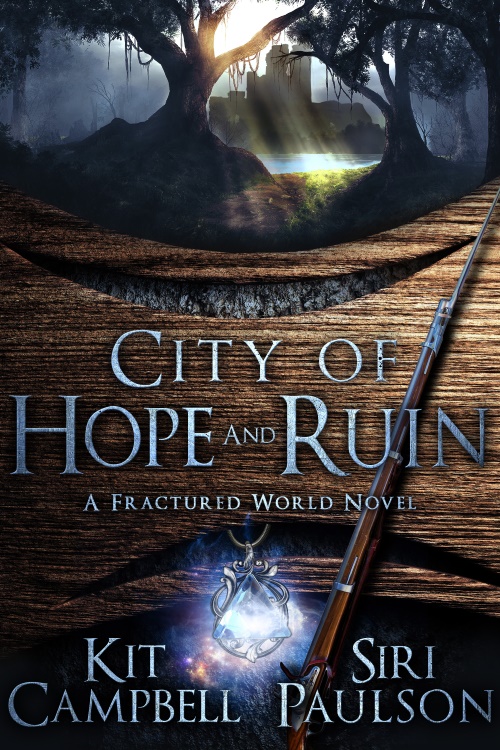
City of Hope and Ruin cover
AmazonKoboBarnes%20and%20NobleiBookscustom
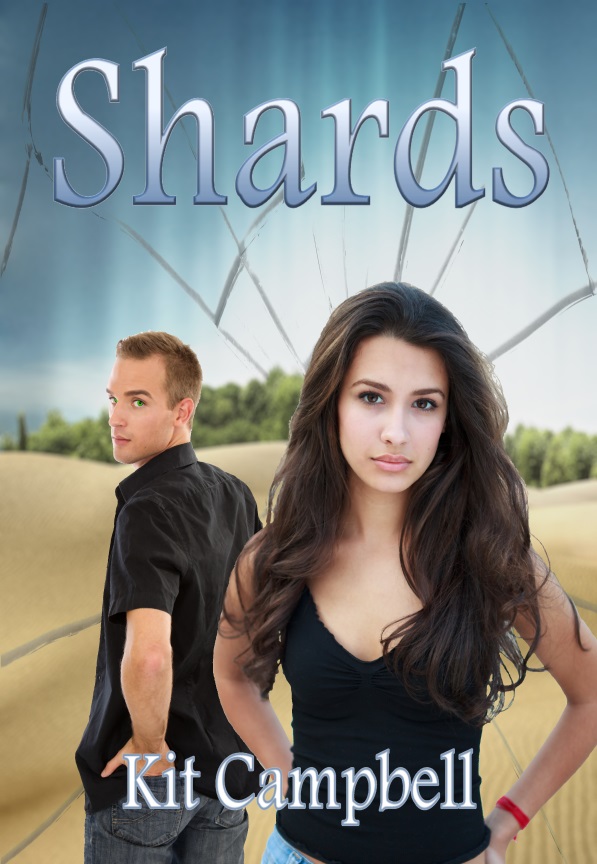
Shards cover
AmazonKoboSmashwordsBarnes%20and%20NobleiBookscustom
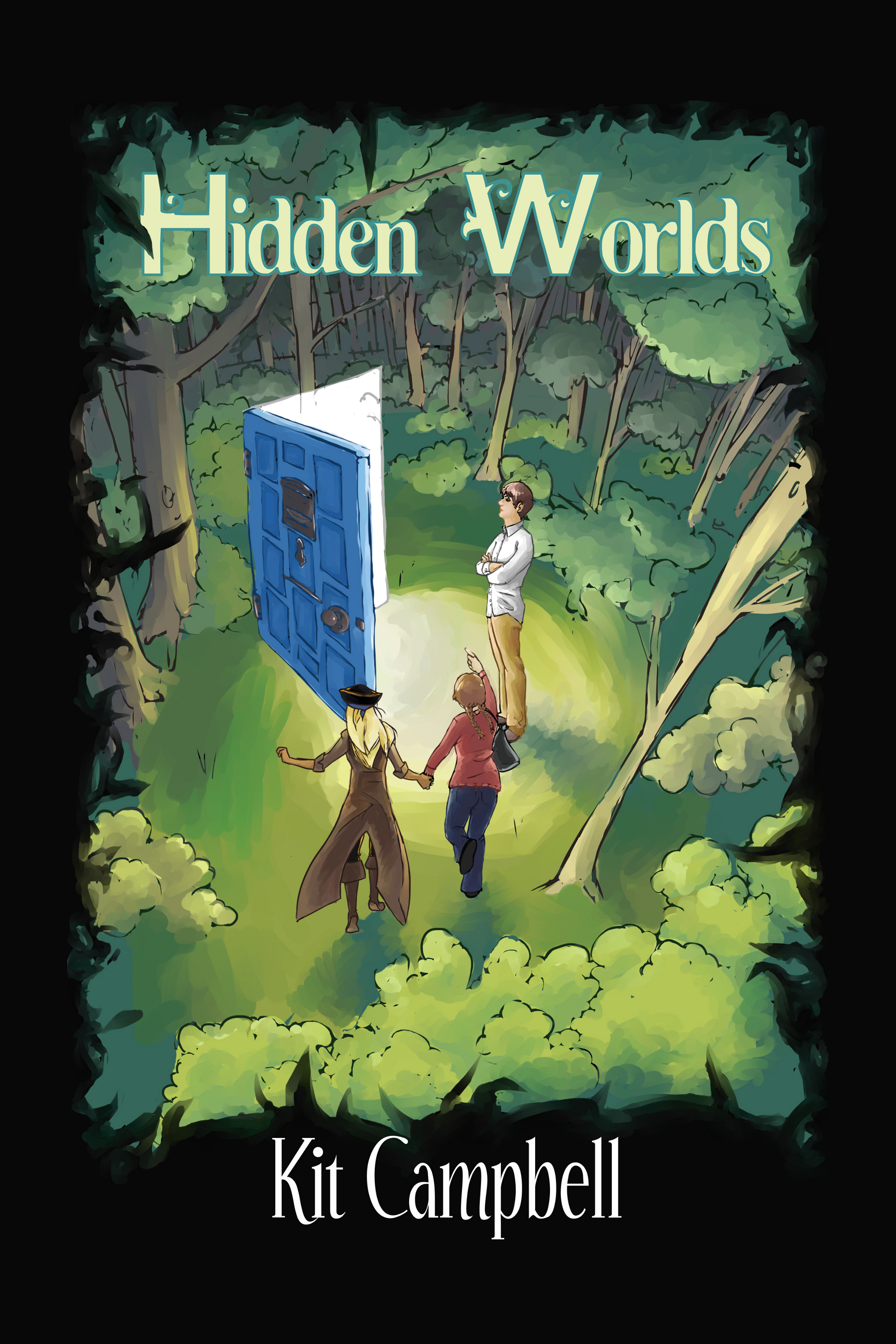
Hidden Worlds cover
AmazonKoboSmashwordsBarnes%20and%20NobleiBookscustom