Write Your Query First

So, generally people look at novel writing as a linear process: Step 1, write the novel. Step 2, edit the novel. Step 3, submit the novel. So you write the book, make it pretty, and then worry about how you’re going to sell it. For those who have never thought about selling a novel, the query is the pretty letter you send an agent or editor telling them what your book is about in an attempt to grab their interest so they sign you and you get lots of money.

(I’m lying about the money.)

But, it turns out that writing your query BEFORE you write your novel can actually be helpful.

Don’t look at me like that. I’m not crazy.

Here’s the thing. Queries force you to take your plot and smoosh it down into a few paragraphs. It forces you to pull out what’s most interesting about your story and what your main themes are.

These are important things to know. And if you know them before you get 50,000 words into a novel and realize you have no idea where you’re going or why, you’re going to be able to write a more cohesive book that makes sure to focus on what you feel is important.

But Kit, I hear you saying, I’m a pantser. I don’t know where my book is going before I start it. How can I possibly write a query first?

Well, it’s a little harder for you, but not impossible. After all, there’s something that pulled you to start writing that particular story. Can you put what that is into words? Aside from helping you realize what’s important to the story, it might help you hold on to whatever it was that got the juices flowing.

Just something to think about, Squiders. Have a good weekend.

Obligatiory Hunger Games Post

I think this is required these days. You read the Hunger Games, either the first book or the entire trilogy (and/or read the synopses online or watch the movie) and make a thoughtful post about social commentary. Well, you’re not going to get that here. Best I’ve got for you is that I cannot name anyone Gale for the next five years.

(And a friend of mine said she’d name a son Peeta except it would be too obvious, so she said she’d name him Peter instead and pronounce it in a bad British accent.)

Anyway. I am not generally a trendy reader. I do eventually get to most runaway best sellers, sometimes even before their movies come out, but I generally let the hype go on for a bit before I bother unless it’s something that sounds extremely thrilling. I picked up Harry Potter right before Goblet of Fire. I read the Twilight series after the first movie was out. Da Vinci Code I was relatively early on, for me at least, though I read Angels and Demons first (and it is the better book, by far).

So, Hunger Games. YA dystopia. Dystopia can be very hit or miss for me. Sometimes you get ones where you feel like the author is smacking you over the head with their message. I dislike that. And, since it’s modern YA, it’s first-person present tense which I generally dislike a lot, but luckily Katniss is less annoying than most teenagers when you’re in her head.

Having read the whole trilogy now, I find myself trying to analyze why exactly it’s so popular. It has a lot of similar themes to other YA and YA dystopias I’ve read. That’s not to say it wasn’t enjoyable, because I did like (most) of it, but it’s not on, say, Harry Potter levels of epicness. (I’m sorry, the plotting, foreshadowing, and characterization in the Harry Potter series is on a level of its own. I would like to grow up to be JK Rowling.) And, to be honest, Mockingjay is…not fun.

I know a lot of people who really hate Mockingjay, in fact. I can see why. The plot flows logically, but the main character is powerless for most of it, which makes the reader (in Katniss’s head) feel powerless, and most people don’t like that.

I think the strength is Katniss, honestly. She’s strong, self-sufficient, and while she does have the requisite love triangle going, it doesn’t consume her thoughts and she doesn’t act like an idiot over either boy. I’m not saying she reacts well to everything the trilogy throws at her, but, for the most part, she’s a positive role model and someone whose head I don’t mind being in.

So, hm. Would I reread the books? I don’t think so, at this point. I enjoyed the first two a lot, but I didn’t like the last one. Would I recommend them to friends? Sure, why not, especially if said friend doesn’t typically read science fiction.

I admit I occasionally spend some time trying to figure out what districts would be where. I think District 4’s got to be the gulf coast, and maybe District 7 is the Pacific Northwest? (Actually, from the description, it seems like the Capitol has to be, oh, Salt Lake City, or the general area, which makes me wonder if there’s some sort of social commentary about Mormonism going on, but that’s probably just in my head.)

What did/do you think about the Hunger Games, Squiders? I’ll go ahead and say spoilers are allowed in the comments, so beware if you haven’t read the books and intend to at some point.
Don’t Encourage the Ceiling Turtles

I had several friends over yesterday. There’s a room upstairs where I’ve painted sharks and squid and fish and seagulls, and one friend said I should have painted turtles on the ceiling.

Two problems: One, I have popcorn ceilings. It would be the lumpiest ceiling turtle of all time.

Two, ceiling turtles need very little encouragement to move into your home. We’ve talked about how they like french fries, but the truth is that ceiling turtles are kind of dumb. If you place fake turtles on the ceiling, painted or no, real ceiling turtles think there are already ceiling turtles there.

Sometimes this works in your favor. Ceiling turtles have occasionally been known to be territorial, and sometimes if they think you already have an infestation, they will move on, looking for a free home in which to wreak havoc.

Mostly, however, when the “resident” ceiling turtles do not react aggressively to the new arrivals, the new ceiling turtles will assume they are welcome and make themselves at home.

Be wise, my friends. Ceiling turtles are not to be messed with. Do not give them a reason to enter your house or take up residence on your ceilings.

And popcorn ceilings suck to paint.

The Lure of Alpaca Poetry

One of the nicest things about having a wordpress blog is that it tells you what search terms people are using to end up at your site. I get a lot of people looking for information on specific subgenres, quite a few hits on the Grammar Week articles, people looking specifically for me (blog name, my name, book name), and the writing craft ones seem fairly popular as well.

But the search term that gets people here most often? Alpaca poetry.

I admit this amuses the heck out of me. (The Landsquid is less pleased with this turn of events. Though admittedly “landsquid” is pulling in a substantial amount of hits itself.)

(Although, the search term that is currently amusing me the most is “fear of plesiosaurs.” I don’t even what.)

So what is it about the fuzzy and evil Alpaca (and their poetry) that not only makes the Alpaca Poetry post one of the top three most viewed here, but makes people actually search Google for it?

Is it that their propensity to steal top hats? The fact that they look dashing in a monocle and an evil mustache? Their ability to wreak havoc with their sheer adorableness?

I vote for their innate ability to be hilarious in almost all situations. The Landsquid thinks the Alpaca is merely googling himself. (If so, he does it an awful lot.)

What do you think, Squiders?

Evil Laugh Alpaca(P.S. My tablet is working again.)

Are Writing Conferences Worth It?

It seems like a lot of people have been living somewhat vicariously through my writing conference experience. I am one of only a few of my writing friends who have ever been to one.

That part’s not rocket science. Writing conferences are expensive. It’s hard to justify spending so much money all at once. Well, maybe not if you’re a millionaire. And if you are, we should be friends. Yeeees.

(For those of you who are wondering how much writing conferences cost, well, it’s in the multiple hundreds of dollars, not including hotel or airfare if it’s not in your home town.)

So, are they worth your time and money? The answer is: maybe.

1. Beginners
If you’re a beginner writer, I would tell you to save your money for later. The conference may have panels aimed at beginners, with explanations of how plot or characterization work, but I’ve found that until you’ve got at least a completed first draft under your belt, a lot of it goes over your head. Writing is the best teacher at this point, figuring out how your personal writing style works and where your problem spots are. Wait.

2. Intermediate
These are people who have a few books under their belts, perhaps have sold a short story or two. If this is you, you will probably find a conference helpful. You know where your weak spots are, so you can attend workshops aimed at helping those areas. Plus, if you’re getting ready to start submitting, you can learn how to write or have your queries and synopses critiqued.

3. Those Who Are Submitting
The single most-useful thing about a conference is it allows you to interact with agents, editors, and published authors, all of whom are willing to give you a hand. And, in the cases of editors and agents, listen to your pitches. It gives you the opportunity to either bypass the query process or, when you do query, maybe have made an impression before hand so the agent/editor kind of remembers who you are.

4. Published Authors
I am not traditionally published, so I cannot tell you if attending a writers’ conference (as an attendee, not a workshop-leader) is useful or not. I’m going to lean towards no – you already have an agent and/or editor, and they probably tell you where your weak spots are.

5. Indie Authors
I’m going to go on “depends” for this section. Self-publishing and indie publishing is generally becoming more accepted, so whether or not you run into militant traditional people varies. It is a good way to network, but it might be easier (and cheaper) to find a critique or writing group in your area. But if you’re looking to improve your writing craft, it’s probably worth it.

Your mileage may, of course, vary.

Learning to Write

Over lunch this past weekend, my stepmother mentioned to me that she’d been talking to someone in college who had decided he wanted to be a writer and wanted some advice on becoming one.

Well, there’s really only one way to become a writer. You have to write.

You can read writing books, take creative writing courses, and plan out stories all you want, but until you sit down and start writing on a regular basis, it’ll never happen.

You may understand, on some level, how putting together a story works, but until you try it yourself, you won’t get it. And sure, some of the stuff at the beginning will probably be terrible. You may look back in five years and want to burn everything.

As Stephen King said, it takes a million words of crap before you get any good at it.

So, if you want to be a writer, just start writing. You don’t need an English or a creative writing degree. (Some people even say that you shouldn’t get a creative writing degree if you want to write fiction, but your mileage may vary. I have two engineering degrees so I have no opinion on the matter.) You don’t need to read every writing book known to man (of which there are more than you can read in one life-time anyway) – and you shouldn’t, anyway, since they don’t work for everyone. You don’t need to deconstruct your favorite novels to see what makes them tick.

What you need to do is be able to sit down and complete a story, start to finish, without getting bogged down by details and frustrations that can be fixed in rewrites.

If you want to be a writer, write.

End of story.

The Return of the Sky Shark

All was quiet in the vale where Landsquid lived. For now, at least. You see, Landsquid’s neighbor and arch-nemesis, the Alpaca, would be over shortly. There was some sort of sports competition to be watched and, out of principle, they would pick opposing sides and insult the other’s intelligence over their choice. They didn’t much care which sport or what teams; they just liked to argue.

It kept things interesting.

Landsquid had just started setting out mugs for cocoa on the coffee table – though he didn’t know why it was called that, he never served coffee on it – when there was a commotion at the front door. Landsquid paused, glancing at the clock. It was still quite early, but perhaps the Alpaca thought it would put an interesting spin on things to come over prematurely and then complain about Landsquid’s poor hosting.

Darn that alpaca and his devious ideas!

Landsquid purposefully ignored the door and filled up the cocoa mugs. But then he got to thinking that perhaps the Alpaca would then accuse Landsquid of not being neighborly enough to open the door, and so he wandered over and threw the door open, preparing to blast his enemy with a polite, “Oh, I’m so sorry, I was in the shower.”

However, it was not the Alpaca. It was Turtleduck. Poor Turtleduck – half-duck, half-turtle, and all an aberration of nature. She had to work to stay on her two feet as the mild wind from the door rocked her shell. “Finally!” she said. “I’ve come to warn you!”

“Come to warn me!” echoed the Landsquid in surprise. “Surely Alpaca’s not up to his usual tricks right now – it’s game day!” Though perhaps the Alpaca thought it would shake things up to not show up at all, and instead steal all the top hats from the local millinery. But he rather hoped not; Landsquid always looked forward to game day.

“Oh, no,” said Turtleduck. “He was watering his begonias. But the Sky Shark has been seen in the vicinity again!” Here emotion overwhelmed Turtleduck, or at least her legs, and she tumbled onto her rump and disappeared into her shell.

The Sky Shark! Terror of the Skies! It was said that it lurked in the clouds and the treetops, just waiting for unsuspecting woodland creatures to come into range. It could smell blood from a million miles away, and it never stopped hunting.

“What will we do?” moaned Turtleduck.

“Well, come inside,” said Landsquid gently, tucking Turtleduck’s shell under one tentacle. “We’ll stay inside and let the authorities handle it. You can join Alpaca and me for the game. Who are you going to root for?” Landsquid wasn’t quite sure who was playing – or what – and hoped she wouldn’t ask.

“The authorities? Which authorities?”

“Oh, you know,” replied Landsquid, who didn’t actually know what an authority was but thought that it sounded good. Perhaps they ran sports. “Now sit down, have some cocoa, and make yourself at home while I call Alpaca and tell him to stop watering his begonias.”

The Sky Shark could wait until after the game.

Why I Occasionally Want to Punch Science Fiction in the Face

I know what you’re thinking. You’re thinking “how do you punch a genre in the face?” The answer is: with great force.

I love science fiction, don’t get me wrong. I am fond of several different subgenres, from space opera (or fantasy in space, as I like to call it) to dystopian to even the occasional hard science fiction tale. But science fiction tends to have a rather lofty opinion of itself at times.

Not always, mind you. There are plenty of scifi tales out there that are poignant, thought-provoking, and well-written without being obnoxious. But then there are some of the others.

Science fiction believes – rightly, in many cases – that it is its job to show us how our actions in the present day will affect the future. This can be a few months from now to several (hundred) years out. Will our blatant commercialism led to us being known only be barcodes? Will our inability to properly manage our resources cause all-out war between countries desperate for fuel? Will we be forced into the darkness of space because we’ve made our planet unlivable?

And so forth.

That’s all well and good. But sometimes you come across science fiction that so strongly believes in its own message that it: a) beats the reader over the head with the message, usually including some trippy metaphor; b) becomes so bogged down in details that its unreadable; or c) feels the need to become utterly incomprehensible, because its message is too important for the average plebian to understand (or, as I somewhat lean towards, the author doesn’t quite know what his/her point is and so buries it in strange imagery).

A lot of it feels so forced. I’ve read novels where I’ve been riveted and, then, in the last few chapters, everything devolves into some metaphor that makes the whole thing incomprehensible and, worse, irrelevant. I’ve seen movies where the director or whoever feels the need to be so experimental with their camera angles that it’s impossible to tell what’s happening.

Kevin J. Anderson said something along these lines at PPWC – that if he had to pick something to never see in science fiction again, it would be stories that are purposefully inaccessible to the average reader.

And come on, Squiders. When someone’s being a pretentious lout, don’t you want to punch them in the face too?

PPWC and Genre Panels

I seem to be having a bit of an issue getting back into the swing of things post-conference. Brain overload, perhaps? Anyway, my apologies for this entry being so late. Hopefully everything returns to normal tomorrow.

PPWC was a good time again. Learned a lot. As always, a lot of the things are things I already know, subconsciously, but it’s nice to have them pointed out on a level where I can realize what exactly I’m doing and why. And, of course, it’s always nice to spend time talking to everyone.

I will almost always choose to go to a craft workshop over a genre one, but I did manage three genre panels this weekend: a fantasy/paranormal one, a mystery one, and a science fiction one. Part of it is because I like to think I’m fairly well-versed in my genres of choice (see last year’s Subgenre Study series), and part of it is because a lot of the craft panels are applicable to a wider variety of stories. Adding conflict or emotion is just as important in a thriller as a romance as a fantasy.

I hate to say it, but I found the fantasy/paranormal one to be mostly useless. Part of the issue of being on top of things, I guess. But I did learn two things: 1) It is hard to sell a YA paranormal (or dystopia) currently, and 2) Epic/High fantasy is on the way back up. I followed up on the YA paranormal note with an agent later in the day, and she said that the issue is that publishers snatched a whole bunch up all at once and just don’t have any room in their lists for the genre for a few years. On the other hand, let me tell you how excited I am about epic fantasy making a come back. I’m sure we can thank George RR Martin for that fact, but GLEE.

The mystery one was lovely. I do not write mysteries (well, except that one time. We don’t talk about that time.) but I love reading them, especially cozies. (A cozy is where the “detective” is an other-wise normal person who, for whatever reason, finds themselves in the strange position of solving a crime.) But they were lovely, and the notes they gave about red herrings and misdirection will be useful for any genre, as long as you want a little bit of confusion. (And, you know, maybe I’ll give it another go sometime.)

The science fiction one was good, as well. Not just because the panelists got into a fight over the political structure of the Federation (“It’s a communist meritocracy!”), though I admit that sweetened the deal. It was nice and intimate, since 95% of the people at the conference were at Donald Maass’s world-building workshop. And I am not as up on science fiction as I am fantasy. It confirmed some things that I had suspected – such as the near impossibility of selling space-based science fiction (especially space opera) at the moment. The current scifi climate is focused on environmental thrillers and dystopias. Also, a publisher on the panel noted that it was a hard sell for ?any? adult science fiction at the moment; almost everything coming out is YA or children’s.

So I guess I should hold off on that science fiction series I’ve been planning for a while longer.

Last year I came out of PPWC feeling energized and motivated – this year I feel mostly tired and a little discouraged. Not really sure why.

Pikes Peak Writers Conference This Weekend

Last year, I went to my first writers’ conference – Pike’s Peak, down in Colorado Springs, CO. To summarize, I was terrified that I was either unprepared or would come out of feeling dejected, but I had a lovely time, learned a lot, and promised to go again.

So we are.

I made a list of things to do different this year, last year:

  • Register early so I can get pitch appointments with people who represent my genre
  • Try to get the panel critique instead of the individual critique
  • Bring earplugs and shoes that are not boots
  • Get business cards earlier than the day before (where Ian and I were, literally, at Kinko’s at 10 PM)

For the most part, I have done all of the above. I got the pitch appointment I wanted and the panel critique (though, alas, at 8:30 am Friday morning – very first thing). There is a circumstance I am not talking about here on ye olde blog that means I am staying at my sister-in-law’s instead of stuffing in a hotel with three of my friends, so the earplugs and not-boots are less necessary. And I ordered my business cards last week. They are supposed to get here today. Not the best, but still earlier than last year.

On the other hand, I still feel unprepared. The book that I’m pitching this year is not as ready to go as the one I pitched last year (that one’s in ABNA at the moment). I hoped to be further through my edit than I am, but alas, I am not. I’m far enough for pitching and first-page critiques, but if I ?do? get partial requests, well, there is yet more polishing to be done.

I don’t know what workshops I want to go to, and I need to figure out when I’m heading down. I need to pack. I need to print out all sorts of things and wonder why UPS has yet to bring me my business cards. Instead I will probably run around for a bit, flailing wildly and babbling incoherently. Somewhere out there, there are writers who have been ready for weeks.

I dislike those people.

Wish me luck, Squiders. Oh, and by the by, no Friday update here as I’ll be busy learning (and possibly panicking). But except fairly regular tweets from the conference itself, assuming there’s decent wifi.

Books by Kit Campbell

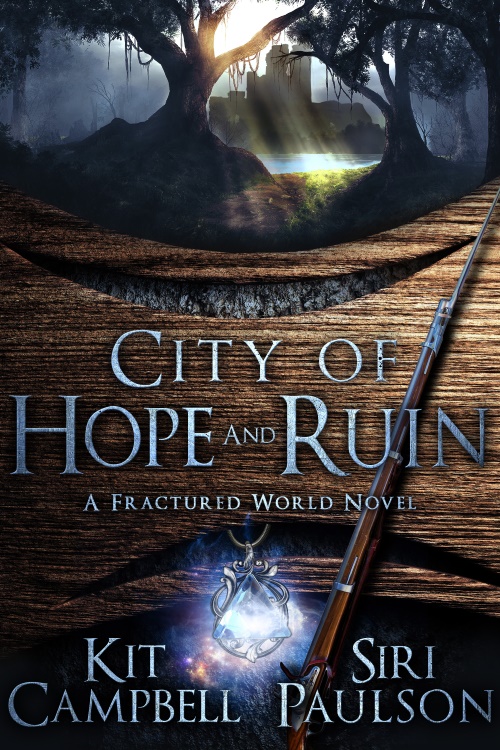
City of Hope and Ruin cover
AmazonKoboBarnes%20and%20NobleiBookscustom
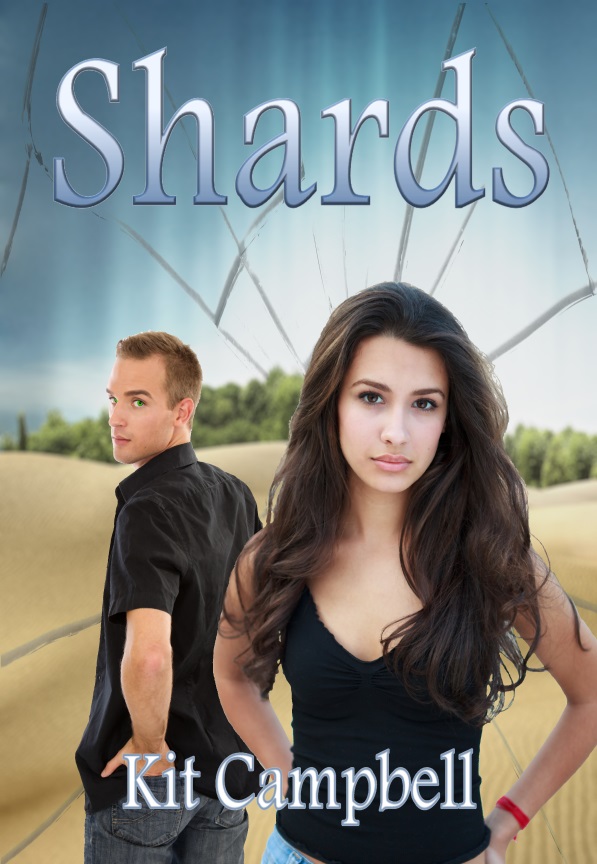
Shards cover
AmazonKoboSmashwordsBarnes%20and%20NobleiBookscustom
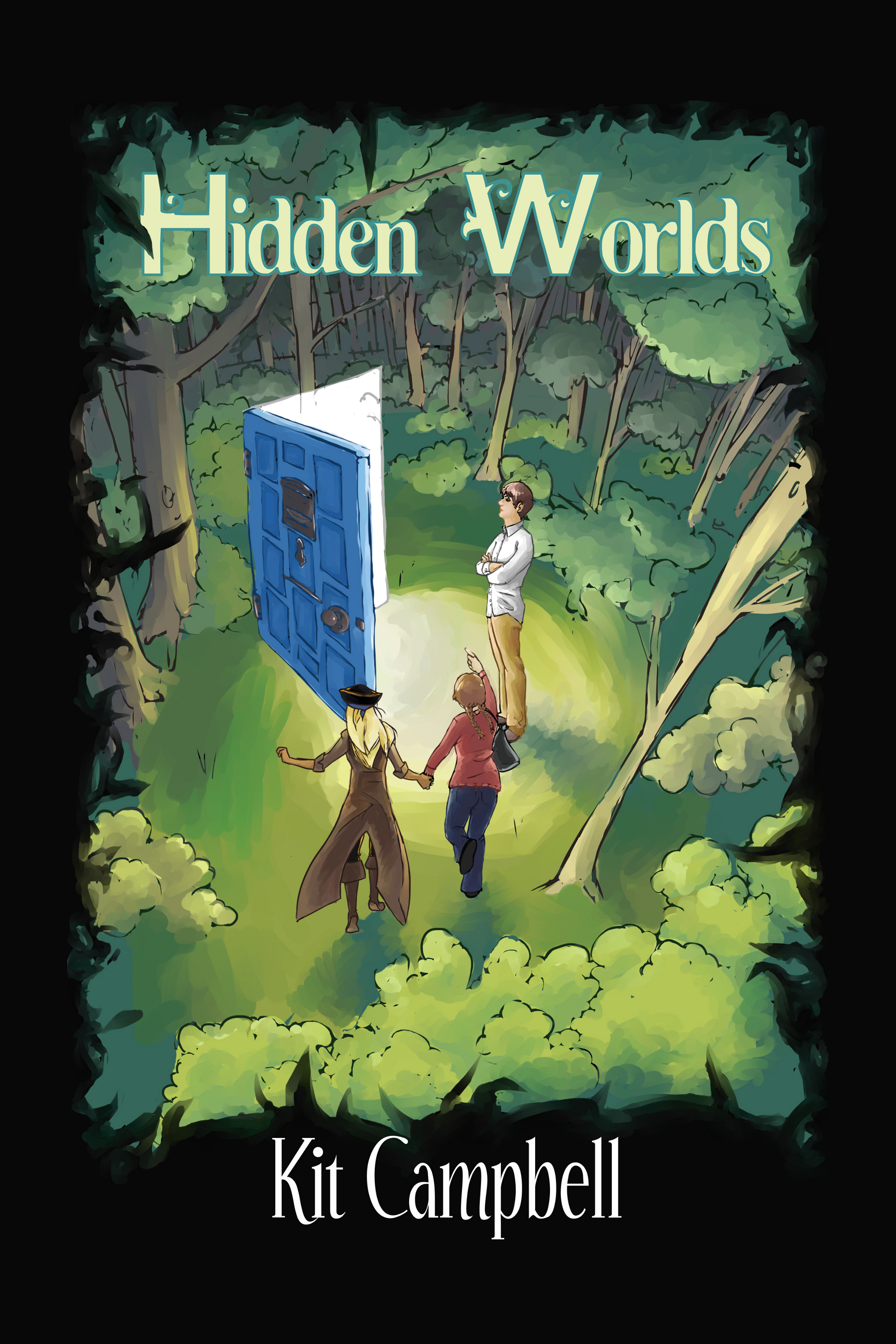
Hidden Worlds cover
AmazonKoboSmashwordsBarnes%20and%20NobleiBookscustom