Familiarity Breeds Like (and Eventually Hate)

You know when you hear a song on the radio and it’s not really amazing, but you listen to it anyway because it’s too much work to change the station? And as time goes on, you hear it more and more, and at some point you find yourself singing along, enjoying every minute of it.

And then, eventually, it reaches over-played hell and you think you might set something on fire if you have to listen to that same damn song over yet again.

While music is the most obvious example, this cycle repeats itself for every medium. Let’s look at it from a reading standpoint. You pick up a new genre. You think it’s pretty good. Not amazing, maybe, but pretty good. There’s something that resonates.

The next step? You seek out similar books. That cozy mystery really got the ol’ thinker going, so you search out more cozy mysteries. That epic fantasy – wow. What will those crazy speculative fiction writers come up with next? Or that romance you found where the main conflict is not that the two main characters spend the entire book thinking that the other hates them because they can’t hold a conversation?

You get my point.

Someone old and dead (Socrates, maybe?) once said that every story in the world has already been written. It’s not that hard to find variations on something you like. Sure, there may be the rare gem out there that stands alone, but even then there may be less shining knock-offs that scratches where it itches.

But eventually? Burnout. You’ve got the mysteries solved before the first chapter is over. The old boy meets girl story has you yawning, and if you see one more elf – especially one that distrusts dwarves – you may scream.

And then you move on to something new.

But the good news? Usually a little time away from something you used to love is all it takes to rekindle your interest again. And then you’ll be back to your favorite genre, and singing along in the car.
Snow Day

We’ve got about two feet of snow – it started about 6 pm last night and has yet to stop. My dog thinks it is the best thing in the world. So does my husband – we’ve ventured out twice today – once to acquire a sled (sadly – or not so sadly, a failure) and another time for snow shoes.

I’m afraid to say I accomplished nothing today. My husband was supposed to volunteer at Habitat for Humanity for work, but that got snowed out. Then he thought he’d go skiing, but that got snowed out as well. (How ironic.) Since he was around, it seemed silly to try to get anything done, mostly because he is mostly incapable of entertaining himself. (Though he and the dog went out to play in the snow a half-dozen times. He called it shoveling the walk – a bit fruitless in my opinion, seeing how the snow has yet to stop – but I know the truth.)

So early on, I gave up on the idea of productivity and embraced the snow day. I tried to remember what I used to do when faced with an unexpected day off of school – but honestly, we only ever had a handful, the last one being during my senior of year of high school. It had stopped snowing by 10 am and was warm, so my friends and I went sledding without coats or snow gear of any kind. That was fairly epic. But the last time I had a true snow day, where I was trapped in my house with just my family…who knows?

There’s not really a point to this post. I’ve had a lovely, relaxing day, and at this point, the snow has eaten my brain. If this storm hits you, ride it out. Embrace it for what it is. True snow days only come along so often.

An Excuse to Learn

One of the best things about books is that you learn new things. This is true both whether you are reading them or writing them. New places, new cultures, new mythology…oh, it is grand.

One of my favorite things about being a writer is that when I start a new project, it’s fully an excuse to go to the library and bring home an armload full of books and spend several hours on the internet (most possibly spent in Wikipedia). It gives you a lovely reason for when someone asks you why you have a book about alien parasites or alternate dimensions or ghosts or what have you. You’re not really crazy, you’re researching.

But Kit, you might say, why do you need to do research? Don’t you write science fiction and fantasy?

Ah, yes, the common misconception that it’s easier to do speculative fiction because you get to make everything up.

Here’s the thing. Everything is based off something else. And since modern scifi and fantasy now tend to be set closer to contemporary times – whether in location or spacetime – making something up is harder than ever. Fantasy tends to rely heavily on myth and religion, whether it’s a rework of the Arthurian legend or a story based very loosely on Polynesian gods. Science fiction has “science” right there in the name. Even if you manage to create worlds and civilizations that have nothing to do with anything else you’ve ever been exposed to, there’s still research to be done.

Just because something is made up doesn’t mean it doesn’t have to make sense.

Besides, why wouldn’t you want to have an excuse to learn? New books and new experiences and new knowledge help more than just the creative process. It makes for good conversation at parties. You can impress your friends and families. And it makes sure you keep on thinking and imagining and creating. All of which are good things.

So do yourself a favor, Squiders. Pick a new subject, and go read a good book.

What’s a Landsquid?

From time to time, you’ll see landsquid and other strange creatures here around the site. A landsquid, as the name implies, is a squid that lives on land. They enjoy hot cocoa, Cheez-Its, and pestering their neighbor and arch-nemesis, the Alpaca. They tend to be pretty friendly, however, so don’t worry too much about them. I probably won’t send them to egg your house.

Now, if you see some ceiling turtles…run.


Beloved Characters

Think about it. Throughout the years, there’s been characters that you have adored, whether you’ve identified with them or just thought they were wonderfully bizarre.

I can name a handful off the top of my head.

As a writer, it’s easy to slip into the trap of trying to create beloved characters of your own. There’s nothing wrong with wanting to do so, but it’s unfortunately rather simple to attempt to do so in the absolute worse way possible.

It’s one of the ways Mary Sues are created. Surely by making your character the most special flower in the field, people will love them, right?

We all know the answer to that.

The characters we identify with are human. They have hopes and dreams and flaws and hates, and some things they are good at, and some things they are actually rotten at, and that’s okay, because that’s how people work. The more depth you give a character, the more readers will see them as real.

There’s no guarantee that doing so will make your character “beloved,” certainly. The same things don’t appeal to everybody. Sometimes you don’t want a character to be adored, but you do, above all else, want to keep the readers’ attention and keep them engaged. You want them to care about your character, even if they’re just along for the ride in the hopes that your character may one day get a well-deserved fist to the face.

Which characters have caught your fancy over the years, Squiders? Why do you think they appeal to you?


Disconnect between Fantasy Books and Gaming?

To go along with Wednesday’s post, there seems to be a bit of disconnect between modern fantasy novels and stories and modern games.

As we speak, I happen to be gathered around the dining room table playing a session of D&D. Nerdy, I know, but I have a spirit panther and he’s nigh invincible and the DM hates him a lot. But compared to modern fantasy novels, it seems interesting that something like D&D continues to be much the same as it has been for the last twenty years, at least in terms of content.

And then I got to thinking – video games are the same. While fantasy fiction seems to be trending towards real-world, small cast, gritty realism, games continue with the wide secondary worlds, epic quests, elves and dwarves and all that jazz. Legend of Zelda. Skyrim. World of Warcraft.

Is it that there’s different audiences between readers and gamers? Is fantasy fantasy fantasy?

Is it a progression? For example, I read a lot of older epic fantasy when I was younger, and I don’t read it as much anymore. Perhaps gamers tend to do the same thing, and games give them a different medium to experience the same things that fascinated them as a child. Perhaps it’s the visual aspect, or the interactive element.

Any insights, Squiders? What, if any, mediums do you prefer to get your epic fantasy in?


Generational Fantasy

A friend recently loaned me a fantasy trilogy. (I am on the second book.) I started reading and was struck by how…80s…it read. I mean, this trilogy is from the 80s, but even if I hadn’t checked the publication date before I started, I would have been able to tell from the prose alone.

(It’s not weird that I look at publication date, is it? I mean, I use it for statistics when I do my year-end reading wrap-up. I admit I am a giant nerd. I have two engineering degrees.)

I got a few pages in and said, “Wow, this would never be published in today’s market.” I’d never really thought about it, but fiction goes through changes with each successive generation. Subgenres rise and fall, tropes are adopted or dropped. Some are more stable than others – I don’t think mysteries have really changed much in the last 150 years – but there ARE changes.

So, this 80s fantasy novel. Omnipresent 3rd person point of view. Large composite cast. Magic with no clear explanation of how it works. Epic story arc, multiple hero journeys, dwarves and elves. Main characters start in the real-world and travel to a secondary world.

Compare it to modern fantasy. Modern fantasy tends to be in limited 3rd or first person. You’re in someone’s head, and only one someone’s head at a time. Cast tends to be smaller. You don’t see a lot of between world traveling anymore – action is usually all in a secondary world or the real world, but not really both. Plots tend to be more character-focused as opposed to the sweeping epics of the past.

I’m not saying that you can’t find modern fantasy with the same characteristics as the 80s fantasy, but it’s going to be a lot more rare.

Even looking between, oh, say, Tolkien, and the 80s fantasy, there are generational differences. Tolkien has no female main characters, and he doesn’t really care what anybody’s thinking at any point in time. The story’s more important than the characters. The 80s fantasy is kind of a transition between the all-important plot of the 50s and 60s and the all-important character of the here and now.

Admittedly I’m being a bit general, but I do think you could pick up any fantasy from the 50s/80s/whatever the heck we’re calling this decade and be able to tell what generation it’s from without looking and be able to see the differences between them.

What say you, Squiders?


Creating the Right Atmosphere

Perhaps you’re the sort of person who can write anywhere – even at the dining room table while your offspring scream bloody murder and beat each other with foam swords. You are a lucky person.

For the rest of us who need to be at least somewhat in a good frame of mind to get work done, this post is for you.

This will vary from person to person. A lot of people like to create their own little writing cave, with inspirational artwork on the walls and their desk laid out just so for the best writing efficiency. Others just need any sort of flat, clean surface, as long as its either quiet and/or bright and/or you are the only one and so no one can bother you.

If you’re having trouble focusing, take a look at the environment you’re trying to work in. Is it messy? Clutter, for whatever reason, often manages to be subconsciously distracting enough to throw you off. Is it bright? If the room’s too dark, you might find yourself getting drowsy. Is it noisy? Sometimes it can be hard to focus around a lot of extraneous noise. Some people can listen to music to drown out random noise; others cannot.

Experiment with music, lighting, and location to see what works best for your creative juices. Sometimes you will need to leave the house to get work done – try a variety of coffee shops, libraries, and book stores – any place that’s willing to let you sit at a table for a few hours for the price of a mocha (or less) – and see if you can find one that suits you. My favorite one is painted with cheerful colors, has lots of natural light, and contains a constant low hum of happy customers.

Do you have any tips to share? What works for you?

Books by Kit Campbell

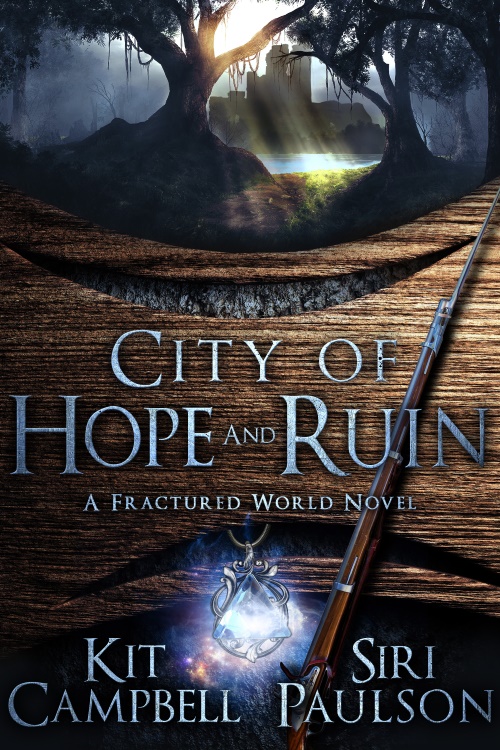
City of Hope and Ruin cover
AmazonKoboBarnes%20and%20NobleiBookscustom
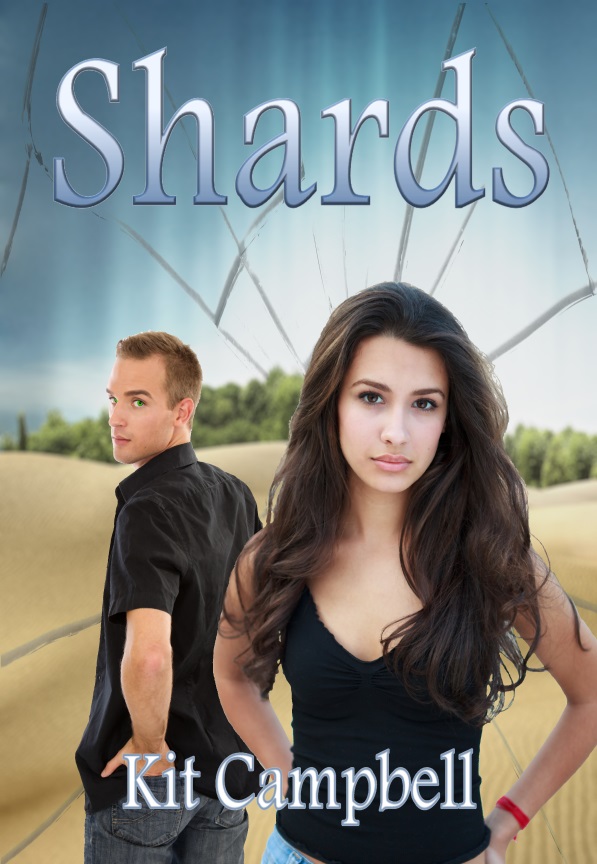
Shards cover
AmazonKoboSmashwordsBarnes%20and%20NobleiBookscustom
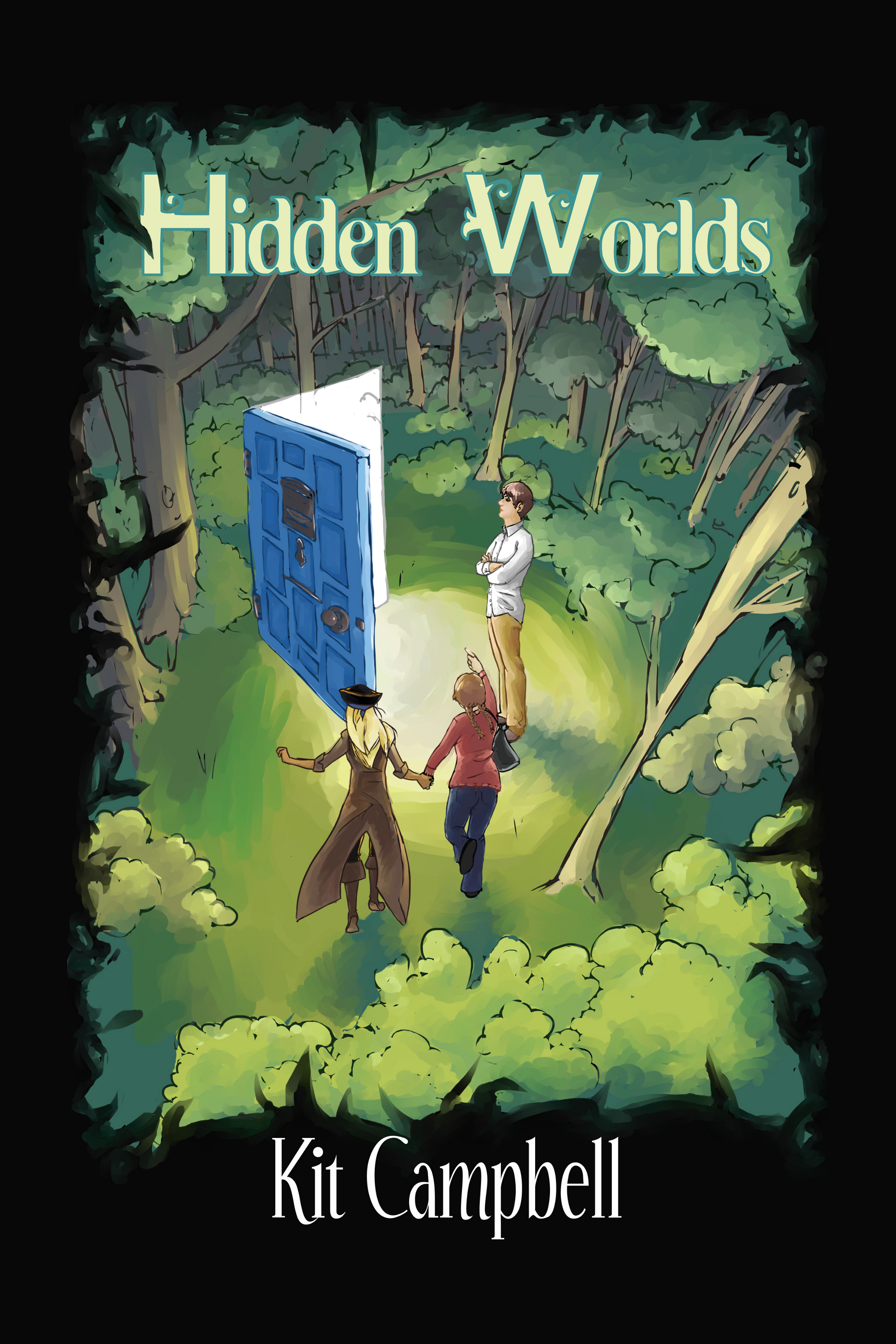
Hidden Worlds cover
AmazonKoboSmashwordsBarnes%20and%20NobleiBookscustom