Ebook Formatting for Self-Publishing

Ebooks!  Wave of the future!  Whether or not you prefer your novels cheap and virtual or paper, if you’re self-publishing these days you need to have your book on as many platforms as possible to reach the widest readership.  Ebooks are an excellent way for an unknown author to get their name out there, because it allows readers to try you out without investing a huge amount of money on you.

I spend a lot of my time formatting ebooks, as it’s one of the freelance services I offer.  (As you can see if you click the lovely ‘editing and formatting services’ tab above.)  Admittedly, formatting is a bit frustrating because the oddest little things will throw your book into chaos, but!  It is doable if you are patient and willing to spend time trolling internet message boards.  Or you can hire someone (like me) to do it for you if you are short on time/patience and don’t mind spending some money.

There are three ebook publishing venues you should be using (all are free, so if you’re not doing this you’re only cheating yourself):

1. Smashwords
Smashwords takes your Word document, converts it to a gazillion different formats and, as long as your book meets their standards, they’ll allow you not only to sell your book on their website, but will distribute it to pretty much every other ebook retailer out there, including the iBookstore, Barnes and Noble, Sony, etc, etc, et al.  They’ll even create a version that will run on Amazon’s Kindle, though last I checked, it will not list your book on Amazon for you.  (Note: Smashwords is one of only a few ways to get into the iBookStore.  Lulu.com is another, and something you should look at if you are publishing a print version through them.)

However, Smashwords requires you to strip your book down, getting rid of almost all your formatting, to ease the conversion between platforms.  If you have something formatting-intensive, you might have issues meeting their standards, or you might find you cannot get your book to look like you want.

Smashwords offers a comprehensive formatting stylebook to help you meet their standards.

2. Amazon
The Kindle still owns a good majority of the ebook-reading public.  Plus it’s something to see your book listed for sale on Amazon.  Amazon offers authors a 70% royalty rate within a certain price range, which you really can’t go wrong with.

The Kindle is kind of a pain in the butt to format for, however.  Each Kindle book is, at its base, an HTML file.  (Not unlike a website.)  If you know how to program in HTML, good for you.  You are good to go.  There are some programs that you can use to convert your book to HTML (or .mobi or .prc, the other two file formats Amazon will accept) though they are a bit buggy and I recommend fixing the HTML after you’ve done so.  There’s Mobipocket Creator (which I prefer to use, because although it’s buggy, it’s easy to get into its guts to fix things) and Calibre (I honestly think it’s easier to program your entire document from scratch than use Calibre, but your mileage may vary).

If you want NCX files or a lot of pictures and you are not HTML proficient, I recommend hiring someone.  You will spend a lot of time trolling the internet and it will be full of sad, confused people.  (Luckily, if you have a novel, both are usually unnecessary.)

3. Barnes and Noble
The Nook is the easiest of the three basic platforms to use.  You can pretty much just upload your Word document, no changes needed, and it will look pretty and be readable. Barnes and Noble holds about a fourth of the ebook market these days, so even though Smashwords will eventually get your book listed on B&N.com, I’d recommend going ahead and uploading directly to PubIt!  You won’t have to eat all your formatting and it will go live faster.

So there you have it, a very basic overview of ebook formatting for your self-publishing needs.  Have at it, Squiders.
Subgenre Study: Dying Earth

The Dying Earth subgenre is very similar to the apocalyptic fiction subgenre we explored earlier.  The key difference between the two is that apocalyptic fiction tends to deal with some major catastrophe that is threatening all life, whereas in Dying Earth things have more or less just faded over time until nothing is left and the planet is dying.  It’s a sudden process vs. a gradual one.  It’s a literal exploration of entropy, or the idea that all systems will eventually tend to go towards a more disordered state (though that is not actually what the Second Law of Thermodynamics says, but that is a discussion to have somewhere else).

While it is typically a subgenre of science fiction, it can have fantasy elements, or even feature a fantasy society that has replaced our current technological one.

Perhaps the best known of this subgenre is H.G. Wells’ The Time Machine, where a man travels far into the future only to find civilization has collapsed and humankind has changed so much it is hardly recognizable.

Dying Earth books often feature lone survivors searching the world for a better place.  Whether they find it or not depends.  Often resources are scarce and the world as we know it has changed dramatically, from the oceans rising, to tectonic activity, to changes in our solar system (such as the loss of the moon or the sun).

The Dying Earth subgenre is one of the oldest in modern science fiction, with examples dating back to the early 19th century.

While the subgenre usually deals with the end of our planet (hence the name) it can also deal with the end of the universe or the end of time.  The important, defining aspect is that this end is the cumulation of a long process of events, often over centuries or millennia, instead of something sudden.

Anything to recommend in this subgenre, Squiders?  Do you find it depressing or fascinating?

Nanowrimo: Week Two Tips

Well, Squiders, we’re about a third of the way through November.  How goes your word counts?  How goes your motivation?

Week Two tends to be a bad week.  Your enthusiasm has waned, you start to hit points in your story where your planning wasn’t so great, and you begin to realize that you’ve somehow managed to write in a plot hole the size of Africa.

You realize that 50K is still an awful long way away, and things begin to look a bit insurmountable.

There’s also something known as the Sophomore Slump, where your second year tends to go worse than your first, due to the same general principle.  Excitement can take you quite a ways, but it, unfortunately, can only sustain you for so long.

That’s when perseverance kicks in.  If you’re feeling low, seek out writing friends.  Attend write-ins, participate in word wars.

Hang in there for now.  It’ll get easier again.

Happy writing!  How are you feeling?

My Nanowrimo Challenge

I’ve been swept up in this November insanity for a long time now.  This is my ninth year participating.  When I first started, I was a junior in college, double majoring in two different engineering degrees, and I would fit in my words in between my classes and occasionally writing deep into the night to catch up.  I’ve done Nano around working full-time and taking graduate engineering classes.

I know some people feel the need to switch it up.  I am not one of those people.  I like my first drafts viable, something I can tweak into something potentially sell-able, something that other people are going to want to read.  50K in a month is a reasonable goal.  Each story has its own quirks, its own issues, and is a journey all its own.

That being said, this year I am attempting 100K.  Part of this is because I’m only working part-time, and so I have more time than usual, but most of it is because I couldn’t pick what I wanted to work on, and the extra free time allowed me to say, “Oh, why not just do multiple books!”

We will see how it goes.

If you’re doing Nano, don’t be put off by the people who are going for 100K, 150K, 200K (or more).  Even though there is a large group component to Nano, in the end, it’s still your challenge.  Do what you need to do for you, not anyone else.  There’s nothing wrong in playing within the rules if they work for you.

This year, I wanted to try two in one.  Thus far, it’s been interesting.  I may get to 50K and declare it a year anyway.  I may get to 50K and decide I don’t want to switch to the other story because I’m having so much fun with the first one.

Here’s the thing: anything goes.  Have fun.  Just write.

Subgenre Study: Time Travel

Squiders, I am bringing this to you even though I have overdosed on candy and may die.  That’s how dedicated I am.

Time Travel is generally considered a subgenre of science fiction, but there’s been some controversy lately.  You see, Einsteinian physics state that time travel is impossible.  No can do.  You’d have to destroy the universe to do it, and that’s just not worth it in a lot of people’s eyes.  (Those fools!)  As such, some people are now clamoring that Time Travel be considered fantasy, since it’s not scientifically plausible.

Those people are tools, by the way. As we discussed in Hard Science Fiction, not all science fiction has to be scientifically applicable.  (You know what else is theoretically impossible with current physics? Faster Than Light travel, the backbone of Scifi series all over the place.)  Intent and feel, as always, are important when determining genre.

So, Time Travel, a common trope that science fiction writers love to exploit over and over and over…whether you can slingshot around the sun to rescue some whales, fly through time and space in a police box, or whether your genes determine that you can puncture the fabric of space-time.  (I’ve read a couple of books now where people are genetically predisposed towards time travel.  It’s like the best of scifi’s two favorite tropes, time travel and genetic modification.)

Time travel can involve people from the past going into the future, people from the future going into the past, or people from the present going whichever way they want.  They can bounce around in their own lives or visit the span of human history.  They can influence events or merely watch.  They can go by machine, ship, genetics, or their own minds.

Often time travel is mixed with alternate history and alternate universes.  (All of which are awesome.)

And for those of you that are sad that science says it’s impossible, well…Einsteinian Physics has some problems, and some of the new physics show that it might be possible.  (New Physics also like multiple universes.  New Physics is awesome.)

What are your favorite time travel tales, Squiders?  I highly recommend the rather excellent The Time Traveler’s Wife by Audrey Niffenegger if you haven’t read it.

Nanowrimo: Week One Tips

Well, friends, November is upon us.  All that planning you did (or didn’t) do during October, all the excitement and the anticipation…and now it’s time to go.

Don’t get bogged down in the beginning.  We’ve talked about beginnings here in the past, but the simple fact is that most people never get past them.  You’re excited, November comes, you sit down to write that scene you’ve been picturing in your head and…it’s terrible.  It didn’t come out the way you wanted it to.  Your characters are flat, your plot is asinine, if you have one at all, and you know no one will ever want to read your book.

It’s really easy to get stuck right here, trying to get your first scene to work.  Ignore this urge.  No matter how bad you feel your beginning may be, keep going.  The story will eventually start to flow, but only if you push on.

If, on the other hand, your beginning is great, your story is flowing, you feel amazing — good for you!  Keep it up!

Each book is going to be different.  Some will flow from your fingertips so fast you wonder if someone was channeling it through you.  Some you will have to fight every scene.  If you get ahead here in week one, don’t sit back on your laurels.  You may run into difficulties up ahead.  If you’re behind on word count, don’t panic.  You can catch back up.

This early in the month, it’s important to remember to keep writing and to try to get some writing in every day.  Scope out your local write-ins, make some writing friends.  This is going to be a fun month.

Harry Potter Re-read: Half-Blood Prince

Happy Halloween, Squiders!

If we look at the entire Harry Potter series as a whole, where Order of the Phoenix is the Dark Moment and Deathly Hallows is the climax, then Half-Blood Prince is the lead-up.  Sure, it has some Dark Moment tints to it, as Harry loses the last adult he ever really looked up to, but for the most part, Half-Blood Prince tells us why.  Voldemort’s backstory is told through a series of pensieve visits, allowing us to see how the Dark Lord became the force of evil he is.  We find out about the horcruxes, how they’re made, how Voldemort thinks about them.  All this information is essential for Harry to go out on his own to accomplish his end goal: the destruction of Voldemort, finally and completely.

Also, eventually I will get through this book without crying at Dumbledore’s funeral, but today is apparently not that day.

Half-Blood Prince messes up convention.  I remember, my first readthrough, how shocking it was when Slughorn turned out to be the Potions teacher and that Snape was to be Defense Against the Dark Arts.  Up until HBP, there’d been a lot of discussion about his loyalties.  I’d been leaning towards good, since Dumbledore trusted and relied on him so much, and he’d always been there when it counted, but the end…brilliant, really.  HBP leaves you sure that Snape has been evil this whole time and yet…yet there’s this tiny doubt.  Just how much does Dumbledore know?  How far ahead is he really thinking?

Harry’s calmed a bit, though he still has his moments where you kind of want to punch him in the arm and tell him to shut up.  It’s almost like Sirius’s death has shown him the dangers of not thinking things through, of acting before having all the information.  Ron and Hermoine act like tools for half the book so we’re still reminded that they’re teenagers, to even things out a bit.

(Also, I like how Firefox tells me that Hermoine is not a word, but Voldemort’s okay. EDIT: Siri informs me that I am spelling Hermione wrong.  Whoops.  Carry on.)

We’ve also got two out of three Deathly Hallows in HBP, though, of course, we don’t know of their existence yet.  In the pensieve memories, Gaunt points out the crest on his ring: the Peverell coat of arms.  A random name at this point, means nothing; the scene distracts you from it with Slytherin’s locket.  Both would be turned into horcruxes, but only one contains the Resurrection Stone.  I wonder, since Voldemort was familiar with the Deathly Hallows enough to know of the Elder Wand, that he didn’t recognize the ring for what it really was, but maybe he just had no use for it.  After all, he had no loved ones to bring back.

Poor Harry has his hands on Ravenclaw’s diadem and doesn’t even realize it.

There’s also a vague hint of Dumbledore’s backstory, while he and Harry are in the cave.  Interesting that the guilt is so strong, even after all those years.

Half-Blood Prince is the last book in the series that attempts convention at all.  There are still classes, there is still Quidditch, there are still hormones and rivalries, but in the end, Dumbledore is gone, Harry will not return to Hogwarts, and the war looms ever closer.

Questions for Discussion:

1. Dumbledore thinks it’s important for Harry to know the truth of Voldemort’s past.  Harry himself has often noted the similarities between himself and Voldemort.  What do you think Dumbledore is trying to show Harry through this?

2. Scrimgeour is a much more active Minister of Magic, but is he a better one than Fudge?

3. Scrimgeour accuses Harry of being Dumbledore’s Man, through and through.  What exactly does this mean?

4. What does it say about Harry that he gives his Felix Felicitas to his friends to keep them safe, rather than keeping it for his own use?

5. Dumbledore knew that Draco had been trying to kill him all year.  Why didn’t he act on this knowledge?  Was there anything he could have done that would have kept both him and Draco safe?

Deathly Hallows will be on deck for November 21st.

Subgenre Study: Superhero Fiction

Up in the sky!  It’s a bird, it’s a plane, it’s…well, it’s a Sky Shark, but we will ignore it for the time being and pretend it’s Superman to go along with today’s entry.

Superhero fiction is somewhat unique among speculative fiction subgenres in that it exists almost exclusively in visual formats.  Comic books, movies, TV shows.  There are the occasional radio show or novel, but they are definitely in the minority.  Some alternative names for this subgenre include Superhuman and Super-powered fiction as villains tend to feature as prominently as the heroes.

It also crosses the boundary between science fiction and fantasy, like many of these subgenres do.  At first glance, a lot of it is science fiction: characters like Batman and Ironman depend on advanced technology, Superman is an alien from another planet, the Green Lantern is just one of many throughout the galaxy.  But there are also more fantastical characters such as Thor (who is the Norse God), and Wonder Woman, and some of the things that both the heroes and the villains get up to have absolutely no basis in science.

This is a very trope-y subgenre, for the most part.  There are the Superheroes.  There are their nemeses, the Supervillains.  They all tend to have silly names.  Most have mild-mannered (or not) alter egos.  Some are more obvious than others.  (Clark Kent, of course, wears glasses while Superman does not.  Batman is at least smart enough to wear a mask.)  Increasingly, superheroes all seem to live in the same universe, allowing them to participate in a number of crossovers with other superheroes, and leading to series such as the Justice League or the Avengers.

While the DC and Marvel characters are probably the most well-known, there are an increasing number of non-mainstream characters, produced through webcomics and indie presses.

Perhaps the most interesting thing about this genre is that it is constantly evolving, the characters being re-done and updated to meet the concerns of each age they find themselves a part of.  The modern Superman is very different from the 1940s Superman, because we worry about different things than they did back then.  There’s also been a trend lately of creating antiheroes or adding darker twists to superheroes’ backgrounds, or more media focusing on the villains instead of the heroes.

What’s your take on superheroes, Squiders?  Anything to recommend?  (I’m partial to Batman myself).  Read any books in this genre?

The Social Aspect of Nanowrimo

Writing, as so many books and other sources like to tell us, is a solitary activity.  We think of the “great” writers, holed up in their studies, never seen for days at a time, chain-smoking and drinking their absinthe and tossing wads of crumpled-up pieces of paper onto the floor in an ever-growing pile.

Maybe that worked for Hemingway, but if you’re going to participate in Nanowrimo, if you skip out on the social aspect of the event, you’re missing out.

Part of the energy of Nano comes from that fact that hundreds of thousands of people are doing the same thing at the same time.  If you’re dragging, it picks you up and takes you with it.  It’s easy to find someone if you need to bounce ideas off of someone or need a challenger in a word war.  There’s always someone to reassure you when things are going poorly, and someone to cheer you on if things are going well.

So what can you do to integrate yourself fully into the madness (and I highly highly recommend that you do):

1. Kick-Off and Thank God It’s Over (TGIO) parties
Almost every region (or sometimes combinations of regions) will have a party at the beginning and the end of Nano, normally outside of November so you’re not actually sacrificing any writing time.  These allow you to sound your plot ideas off of willing compatriots, get to know the other crazies Wrimos in your region, make friends, and hopefully eat a ridiculous amount of sugar.  Some regions also have halfway parties sometime around November 15th where you can socialize (and eat candy) or type desperately to try to catch up to where you should be.

2. Write-Ins
These are the backbones of Nano.  Hopefully there is at least one near you that you can make on a near-weekly basis.  A write-in is where a group of Wrimos, sometimes but not necessarily accompanied by the Municipal Liaison (ML), invade a coffee shop or a library or a 24-hour breakfast place or a bar or anywhere, really, where you can sit and type and giggle for several hours and not get kicked out.  These are useful for a variety of reasons.  MLs often have goodies from HQ to hand out, you can participate in word wars (races to see who can write the most words in a specific amount of time), and if you find yourself stuck, you can address the group at large for help.  Plus sometimes it’s good to get out of your own head and see other people.

3. Regional Forum
When you register, the website asks you to select a Home Region.  This connects you to the Wrimos closest, geographically, to you, lets you know what events are being planned, and helps you plan meet-ups with other people.  It’s also the region you give your words and any money you might donate to, allowing them to fight other regions to the death.  I mean, uh.  Regional wars are fairly common, so don’t be surprised if you occasionally get emails from your MLs asking you to crush Glasgow.  It’s all in good fun and gives you bragging rights.

4. Nano Forums
The Nano Forums are where you can reach out to your fellow Wrimos all over the world, help with plot issues, browse the Adopt-a-Character thread, accept Dares, and see what madness people have come up with for this year.  There’s also a variety of forums to help you find new friends, from the Newbie forums to the Age Lounges to Clubs to the Rebels Forum.  The boards can be a bit overwhelming, but find a few places that you like and you’ll be fine.

5. Twitter and Chat Rooms
Nanowrimo has two twitter accounts, one for announcements and one for Word Sprints.  I suggest you follow both.  Your local region may also have a twitter account specific to your region.  There’s also several chat rooms across multiple services if you need social support at any time of the day or night.  You can find some of these through the forums.  Your local region may also have a chat room.

Of course, the amount of social interaction you crave is completely individual, but I’ve found that participating and interacting with your fellow Wrimos makes it a lot easier to keep your motivation up and get across the finish line.

Anyone have anything they’ve found helps, or recommend any additional hangouts?

Editing: Breaking Everything Down

I’ve been taking an editing class, not necessarily because I feel like I don’t know how to edit, but that I am ridiculously inefficient at it and can probably use all the help I can get.

This class’s point is to, eventually, get it so you can identify all major issues in a single pass of your manuscript, so it has several classes where you go through your manuscript looking at certain things with the idea that, in the end, you can find everything at once.

I admit it’s been a bit frustrating doing it piecemeal, but on the other hand, it is helping me find things that I may not have picked up otherwise, and more importantly, it’s helping me solve plot problems that I was unaware existed.

(I am, admittedly, not supposed to be solving plot problems yet.  I am writing things down for when I get to that part of the class.)

It makes your fingers itch, to get into fixing things, but I admit this is probably better than doing a major edit (taking a chainsaw to it, as some of my writing friends say) and then having to keep fixing and messing with things until things either work correctly or you go insane trying to keep track of what you’ve changed and why.

I’m using the story that made it through a few rounds of Amazon’s Breakthrough Novel contest for this, which I affectionately call my most complete first draft ever.  I remember one reader thought I’d already edited and polished my first draft when she read it, but this process has made me realize there’s a lot of problems, from weird character motivations, to chapters that are in the wrong point of view, to objects that show up late in the book and really should have been mentioned earlier. (Foreshadowing, my nemesis, we meet again.)

No matter how good (or not) it was before, this is going to make it much better, if only because I can better see its flaws.

Fellow writers, what’s your editing technique?  Taken any classes that have changed your life?

Books by Kit Campbell

City of Hope and Ruin cover
AmazonKoboBarnes%20and%20NobleiBookscustom
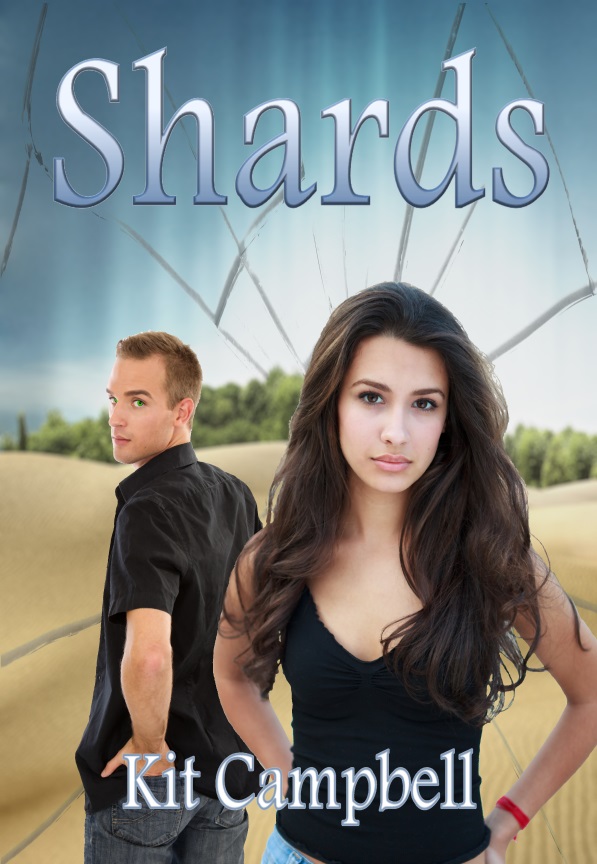
Shards cover
AmazonKoboSmashwordsBarnes%20and%20NobleiBookscustom
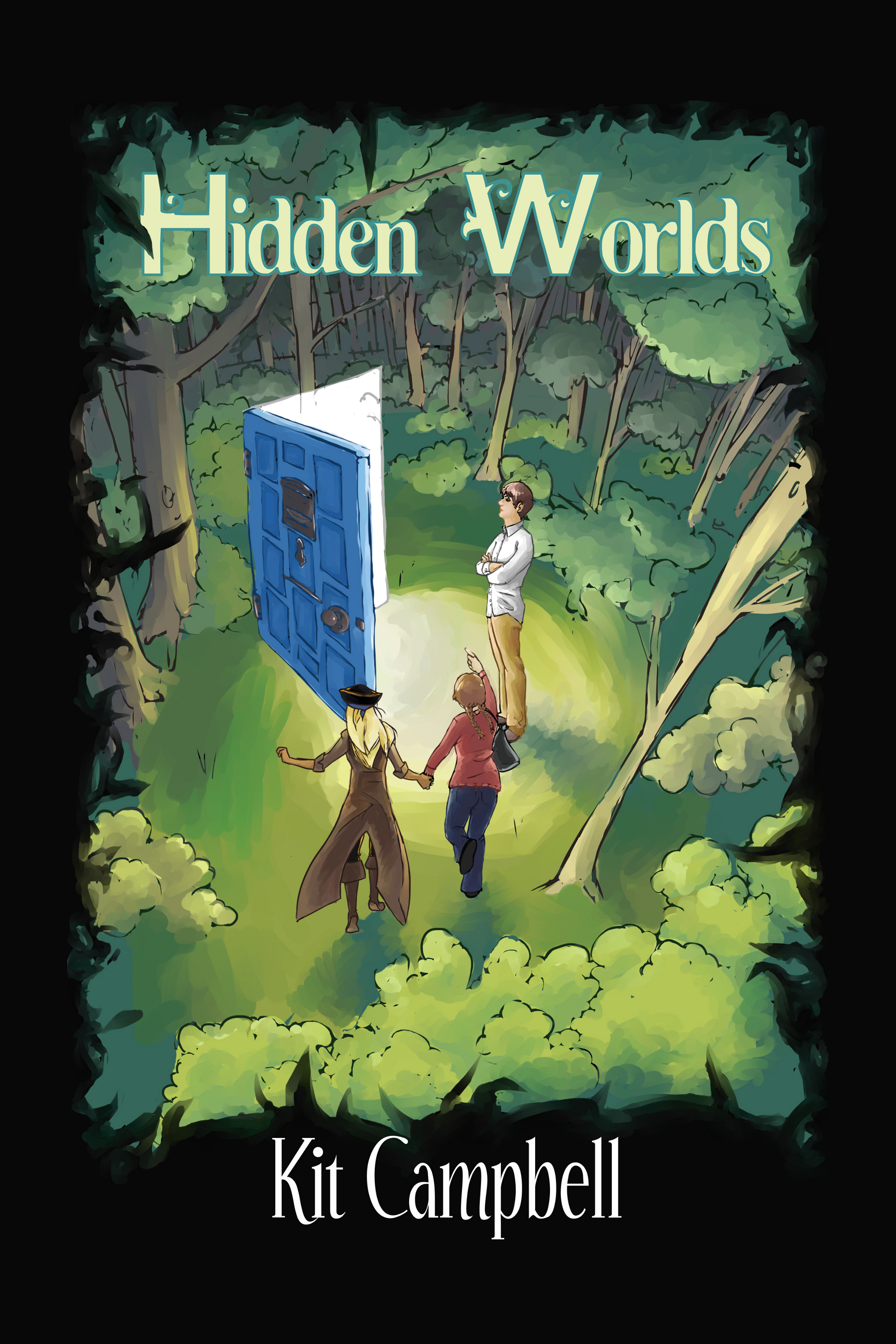
Hidden Worlds cover
AmazonKoboSmashwordsBarnes%20and%20NobleiBookscustom