Subgenre Study: Fairy Tale Fantasy

Once upon a time, there was a writer who wrote a writing/reading/scifi/fantasy blog, and she and her pet Landsquid and the Landsquid’s nemesis the Alpaca all decided to go to a coffee shop to get some peppermint mochas.  All seemed to be going according to plan until the Alpaca attempted to eat the pastry display and then…

Well.

Fairy tale fantasy runs the gamut from original works that incorporate fairy tale tropes to retellings of classic fairy tales, but like many of the subgenres we’ve discussed, there’s very fuzzy lines.  Sometimes you read something and it just feels fairy-tale-y, you know?  But it’s subjective.  Some people consider Lord of the Rings to be a modern fairy tale, based on the mythos it has inspired, but a lot of people just consider it to be epic fantasy.

It really makes you wonder where the line is drawn.  I mean, most fairy tales, while not written down until the 1800s, are based off of folklore that had been passed down for generations, and if you think about it, the Lord of the Rings is as well; Tolkien certainly didn’t invent elves and dwarves.  But by that argument, you can take any truly influential story and assign it fairy tale status, which is diluting things.  (I admit I am in the LotR =/= fairy tale camp.)

(=/= means does not equal for those of you who didn’t spend a million years taking math in high school and college.  Just to be clear.)

On the other end of the spectrum, you have the fairy tale retellings, which don’t necessarily follow the classic fairy tale format but are based off of stories that have been around forever.  Some of these have been rewritten to make the protagonists stronger, or to explain plot holes in the original, or to make things darker (though one can argue that some tales are dark enough as it is.  The originals contain rape, cannibalism, murder, torture, mutilation, and suicide).  Fairy tale retellings have appeal because they take something that almost everyone is familiar with and twists it in some way, which I admit appeals to me greatly.  (Did you play Epic Mickey?  The “evil” Sleeping Beauty song is my most favorite thing in the world.)

Some authors who have fairy tale fantasy books include Robin McKinley, Jasper Fforde, Gail Carson Levine, Margaret Atwood, Jane Yolen, Patricia Wrede, etc.  This is a popular subgenre.

What are your feelings about Fairy Tale Fantasy, Squiders?  I admit it’s one of my very favorite subgenres.
Putting the Pep Back Into Nanowrimo

Continuing our October Nano-prep series, today (tonight, I guess, technically at this point) we will discuss what to do when the initial excitement of doing Nanowrimo begins to ebb.

(Don’t worry if you have no idea what I’m talking about.  Some people never get tired of Nano.  This will be my ninth year, and the first year I’m not doing a straight Nano.  There’s nothing wrong with you.  You can sit this one out.  The Landsquid will provide lemonade and cookies.)

Some people, after they’ve done Nano a few times, find that they just don’t look forward to the event like they used to.  Some of the magic is gone, and a “been there, done that” attitude asserts itself.

What can you do?  Well, you can always sit Nano out, but then when it’s part of the way through Nano and all your friends are doing it and it’s all your writing group will talk about, you feel a bit sad and lonely.

So here are some ideas to spice up your November:

1. Change Your Genre
This is risky, but if you’re not feeling the love, you can always try something new.  Always dreamed of writing a gothic novel?  Give it a spin.  Want to give romance a try?  Why not?  Just be aware that you may run into issues with an unfamiliar genre and get stuck.

2. Raise Your Wordcount
You think 50K is a piece of cake?  (I hate you, by the way.)  Up your word count.  I know people who have managed 300K in a single thirty-day month.  Sure, it was probably all crap, but if you feel you need more of a challenge, go for it.

3. Write Multiple Books
Alternately, you can try to do more than one story.  This can take a variety of forms — related short stories, for example, or you can quite literally, write two or three complete novels.  (I recommend you go back and read the post on compartmentalization, however, before going forward with this.)

4. Invoke the Zokutou Clause
We talked about this a few weeks ago, but this allows you to write 50K on a book you’ve already started.  Nice if the drafts either aren’t getting done or are piling up in the corner.

5. Write Crack
If Nano’s got you down, why not pick something completely for fun?  Write that fluffy gay romance fanfiction you’ve always wanted to.  Tell the tale of intergalactic space monkeys (and their forbidden cheese fetish).  Write something you know’s going to be fun.

Any additional ideas, Squiders?  Anything you’ve tried in the past?

Scheduling

I talk to a lot of people who tell me that they’d like to write a novel (or short stories, or anything) but they just don’t have the time.

You know what that says to me? It’s not really a priority. It’s like…I would like to be a rock star, but I don’t care enough to do anything about it, and so it will never happen.  I suspect novel-writing goes much the same way for a lot of people.

But for the rest of us who do want to make it a priority and want to actually get things done, it’s still sometimes tough to fit it in around the things that life tells us are a necessity: school, work, family.  (For instance, I’m fitting in writing this around making dinner.  Luckily, the salmon is taking longer to cook than the recipe advertised.)

The best thing to do is to schedule writing into your schedule, whether it’s every day or once a week (but I do recommend doing it at least every week to avoid getting rusty).  It kind of goes back to my compartmentalizing article a few weeks back.  You can train your brain to do something at a specific time.  So you can get up early every morning and write from 6-8 before your kids/spouse get up.  You can put your kids to bed and write from 8-10 at night.  I have a group I meet with every Wednesday from 7-10.

But Kit, I hear you say, what if my schedule isn’t routine enough to schedule in regular time?  No worries.  When I was in college and had no idea how much homework I would have or when my groups would want to meet, I would just carry everything with me, and if I found myself with 20-30 minutes free, I’d pull out my laptop and get something done when I could.  As long as you make it a priority, it will get done.  (Though do remember to eat and shower.)

How’s your schedule, Squiders?  Are you a write-when-you-get-the-time sort or a scheduler?  What works for you?  What did you try that didn’t work?

Subgenre Study: Military Science Fiction

A fairly major subgenre of science fiction is military science fiction.  I bet you can name at least one book or movie in this subgenre off the top of your head.  Starship Troopers.  Ender’s Game.  The Forever War.  Military SF, as the name implies, focuses on military conflicts.

A lot of science fiction focuses on conflict on some sort, but military SF features characters that are members of some sort of military unit.  The conflicts tend to have much in common with past or current wars from here on Earth, with tactics and sometimes weaponry being much the same.

The main characters are often member of a specific unit, with comrades and sacrifice being a major theme.  There are very few lone heroes in military SF.  Technology is normally explained in great detail, as are the military tactics.  It’s what you’d expect if you took Band of Brothers and stuck it in deep space as, in most cases, these stories are set in the far future somewhere out in space against an alien species that’s a substitute for whatever side.

Just because something has a “military” does not necessarily make it military SF.  In Star Wars, the Empire (and also the Rebels, to some extent) has militaries, with ranks and squadrons and so forth, but it is not military SF.  Star Trek has Starfleet, which is very obviously based off the US Navy, but with the possible exception of the later seasons of Deep Space Nine, it also is not military SF.  The focus on the story is important here.

Military SF is sometimes assigned political messages, as much of science fiction is, by exploring the folly of war and the sacrifices it forces on those who perpetrate it, as well as how it affects those men and women in the service.

Read/watch a lot of military SF, Squiders?  What do you like/dislike about it?  What do you recommend for other people looking to get into the genre?

Nanowrimo Prep and Avoiding Plot Death

Nano looms ever closer, my friends.  (Also, it’s my birthday!)  I talked last year about Nano Zen and Plot Death — this cheats Nano Zen a bit, but I do think it’s important.  It’s hard to experience Plot Death if you have no plot.

A quick rundown for those too lazy to click the above link: Nano Zen involves not actively working on your Nano story in October to allow your brain to work on it subconsciously and to avoid Plot Death.  Plot Death is where you overplan your story to the point that you no longer want to write it.

“Kit,” I can hear you say (or perhaps it’s just the Landsquid, who wants some of my hot chocolate), “How can you write a post about Nano prep when you practice — and are the founder — of Nano Zen?”

As much as I advertise Nano Zen, it doesn’t mean that you shouldn’t do any planning for Nano.  In fact, I ardently believe that there are some things you should have going into November, and if you don’t, you should try to get some before Nano starts.

A main character (or two).  The main conflict (what does the MC want?).  A starting point.

What gets you in trouble is the overplanning, and what counts as overplanning varies from person to person.

So how can you tell if you’re planning to the point where you are approaching Plot Death?

Well, first things first.  Make sure you’re registered at nanowrimo.org (the 2011 site is up now) and have chosen a home region (this is the region that gets to count your words).  See if your region has any write-ins near you and, if not, suggest some.  The social aspect is a major part of Nano and I highly recommend you participate in it.

…sorry, I totally got distracted by the Nano site.

If you’ve done Nano (or written a novel) before, you probably have a good idea of what you need and how much you can do before you experience Plot Death.  For you newbies, find the above (characters, plot, beginning).

How are you feeling?  Are you excited or panicky?  If you’re excited, good job.  You’re probably good to go.  Go make yourself a book cover.  If you’re panicky, you probably need more.  I recommend fleshing out your characters a bit, finding a villain, and doing a basic outline of your plot.

Repeat the above until you find a place where you’re excited to write.  Then stop planning.

See, the problem with Nano and Plot Death is that you can’t start writing until November 1st.  So people reach that excited state, and then, since they can’t write, they just keep planning and planning and planning and then…Plot Death.

It’s hard, I know.  And by all means, write down anything important as you think of it, but after you reach the excitement phase, that’s when Nano Zen is essential.

Ever experienced Plot Death, Squiders?  Where’s your happy middle between panicking and overplanning?

Harry Potter Re-read: Order of the Phoenix

Oh, Order of the Phoenix, longest book of the series.  Perhaps annoyingly so, because it’s the first book to break the mold of school-year specific plots.  Harry spends about 75% of the book whining and yelling at everyone and at first glance it seems like there’s no point.  OotP I’ve only read a handful of times, mostly because I spend a lot of the book wanting to punch Harry in the face, but I didn’t feel that way this time.  I’m not sure why, except perhaps now that I’m looking at the books in a way that takes the entire series into account, so Harry’s feelings make more sense to me.

You see, in every character’s arc, there’s something that we writers refer to as the Dark Moment.  The Dark Moment is when a character is at their lowest, when they don’t know if they have the strength to go on, or if it would be worth it to just give up.  And OotP is Harry’s Dark Moment.  The entire book, but especially the end.

You see, up to now, while Harry has had his problems and people who don’t like him (Snape, Malfoy), in general things have been okay.  In some ways, even better than okay, because he’s the Boy Who Lived and that title pulls some weight around.  Here, everything changes.  Sure, there was that bit at the beginning of the Triwizard Tournament, but that was nothing compared to what’s happening here.  Suddenly, most of the wizarding world is against Harry.  He’s branded as a liar or, perhaps worse, off in the head. Voldemort’s back and he knows what that means, and yet, no one will listen, no one will prepare.

And then, at the end, Harry does something stupid and someone close to him dies, and he realizes that maybe he’d been buying into his own hype.  He’d been getting away with stupid, reckless things for years, but this time luck wasn’t on his side and things went horribly wrong.  And it had dire consequences.  While Harry never really settles down, he takes things much more seriously from here on out.

We see the prophecy for the first time here, we see Harry realize what must be done before this will all be over.  (There’s also a scene, just after Harry tells Dumbledore Arthur Weasley has been attacked, where Dumbledore fiddles around with snakes and shadows, which without knowing about horcruxes makes very little sense, but knowing that they’re coming, makes much more.  A nice hint, really, because I’ve always kind of thought that the horcruxes come out of left field in HBP.)

Taken by itself, Order of the Phoenix is kind of obnoxious, but it does contain a lot of important information for the remaining two books.  And it has its fun parts.  Personally, the scene where Fred and George make their exit is one of my favorites in the whole series.

(Ha, and yes, I managed to get through my entire write-up without mentioning Umbridge.  Extra cookies for me!)

Ye Olde Questions for Discussion:

1. So much epic fantasy revolves around the idea of Good and Evil.  How does JK Rowling subvert this in the character of Dolores Umbridge?

2. Harry and Cho are both a bit obtuse in their actions with each other.  What could each have done differently?  How would the books have changed if they had managed to make a go of it?

3. There’s a few hints of a future Ron/Hermoine in Goblet of Fire and that’s continued here.  How would it have changed things if they had acted on their feelings sooner?

4. To get off the topic of romance, Harry can sometimes see and feel what Voldemort is doing through their connection.  Voldemort uses this against him here and tries to possess him, but never does again afterwards.  Why not?

5. We learn here that Neville also fit the initial terms of the prophecy, though he no longer fits because Voldemort did not mark him.  How would the series be different if this were the Neville Longbottom series?  How do you think growing up under different circumstances would have changed Neville’s character?

We’re going to give Half-Blood Prince three weeks, so we’ll discuss it on Oct 31.  (That scene with the Inferi is certainly Halloween appropriate!)

Subgenre Study: High and Low Fantasy

Today we will be looking at High and Low Fantasy and the confusion surrounding the terminology.  It has nothing to do with how good the stories are (Eragon, for example, is high fantasy but most would argue not high quality) but, rather, which fantasy tropes they incorporate.

High Fantasy, sometimes called Epic Fantasy, generally encompasses “traditional” fantasy tropes.  It takes place on a made-up, entirely fictional world, and usually incorporates magic and monsters into the plot.  Low Fantasy, on the other hand, takes place in the real world and may be more subtle in its fantastical elements.

Lord of the Rings is the quintessential High Fantasy but, according to some people, so is Harry Potter.  See, High Fantasy breaks down into three subtypes: 1) the completely made-up world, like Middle Earth, 2) the travel from the real world to a fantasy world, like Narnia, and 3) a made-up world within the real world, like Harry Potter.  High Fantasy often involves a plot of epic scales — war, world domination, the end of the world, things like that.  The plot must be bigger than the characters.  Frodo must destroy the ring, or Sauron’s minions will take over the world.  Prince Caspian must defeat the Telmarines, or the native peoples of Narnia will perish.  Harry Potter must defeat Lord Voldemort, or the world will fall into ruin.  You see my point.  High Fantasy stories often include a classic hero who goes through the Hero’s Journey and focus on a fairly black and white Good vs. Evil.  Common plot elements include prophecies and old, mysterious mentors (who often die, at least temporarily, so the hero can come into their own).

Low Fantasy involves fantastical elements/happenings in the normal world.  What denotes it from something like Harry Potter is that, while Harry Potter takes place in the real world, almost all the story occurs in the made-up magical world.  To make Harry Potter Low Fantasy, Harry would have to live in a normal neighborhood and would probably go to a normal school and would have to hide his powers from the other students.  Low Fantasy focuses on normal lives that are disrupted by fantastical occurrences. The plot is usually more local to the characters, often only affecting them directly, but can involve more epic storylines.  Sadly, Low Fantasy is most usually described as not High Fantasy, so many definitions of this subgenre go along the lines of “If it’s not High Fantasy, it’s Low Fantasy.”  Stories as diverse as Pippi Longstocking and The Dark is Rising cycle are considered Low Fantasy.  A lot of children’s fantasy, which often involves children stumbling upon supernatural elements, perhaps that adults cannot see, is Low Fantasy.

We can go on forever.  High Fantasy tends to come in massive tomes; Low Fantasy can be any size.  High Fantasy tends to be based off Medieval Europe; Low Fantasy can be anything.  Etc, etc, et al.

What do you think, Squiders?  Does a massive High Fantasy series get your heart a-pumping?  Do you prefer the subtle (or sometimes not so subtle) reality-changing ways of Low Fantasy?  Recommendations of books, movies, TV shows for either subgenre?

Being a Nano Rebel: The Zotukou Clause

This is an advanced topic, so if you’re a Nano newbie or still thinking about if you even want to bother, I suggest you read the Nanowrimo – Is It Worth It? post from last year.

The nice thing about Nano is that you can make it work for you.  As long as you write 50,000 words of something, you’re good to go.

There are a variety of ways to be a Nano rebel, but I would say the most common is to invoke the Zotukou Clause.

The Zokutou Clause is available to all Wrimos that have won at least once in the past.

How it works is thusly: The Zokutou Clause assumes you have started a novel, but not finished it.  The official Nano rules state that you must write 50K on a new work of fiction, but the Zokutou Clause circumvents this.  It allows you to work on something you have already started, and it is considered a win if you write 50K or finish your draft. (If you finish your draft before 50K, most people will start a new project or move to another one in order to reach 50K, for tradition’s sake.)

The idea is, instead of starting yet another new story, to finish an old one instead, so you can move on to the next phase (editing, in most cases).

Have you ever utilized the Zotukou Clause?  Planning to this year?


Hooray, October!

It’s October, Squiders!  Best month of the year. Bold claim, I know, but how can you resist?  The leaves are turning on the trees, the heat of summer is burning off, and then there’s Halloween and my birthday and Nano-planning, oh my.

(Yes, I know y’all don’t care about my birthday, but nevertheless, the statement is true.)

We’re going to have a Nano-focused article here at Where Landsquid Fear to Tread every week until November hits.  And then, depending on how we’re feeling, we might keep going through November as well.

Also, just a reminder that we’ll be discussing Harry Potter and the Order of the Phoenix next Monday, October 10.

For my fellow writers, what are your November plans? Doing Nano? What are you going to be working on? Not doing Nano? Why not?

Subgenre Study: Off-world Fantasy

Most fantasy can be divided into either real-world or off-world fantasy (sometimes called second world fantasy).  The distinction is obvious: real-world fantasy takes place in the “real world” (so most urban and contemporary fantasy, as well as things like historical fantasy/alternative history) and off-world fantasy takes place on a different world of the author’s own creation.

(You run into problems where some fantasy looks like off-world fantasy at first, but it’s supposed to be our current world after some apocalypse in the future, which puts you into science fantasy or pure science fiction territory.  The entire thing is a mess.)

Off-world fantasy is attractive to authors because it allows them to create their own world with their own rules, their own histories, and their own cultures. Most epic fantasy is also off-world fantasy.  Everything from Howl’s Moving Castle  to George R.R. Martin’s Game of Thrones is off-world fantasy.

The worlds can be patterned after a time period or a culture here on Earth or they can be something completely of the author’s devising.

You also find books that are both real-world and off-world, often where the characters start in one and go to the other.  Usually it’s from real-world to off-world, ala Narnia, but sometimes it goes the other way as well. (Disney’s Enchanted, for example, goes from fantasy to real world, and the 10th Kingdom jumps back and forth between its two worlds constantly.)

As a reader, do you prefer real-world fantasy to off-world?  If you are a fantasy writer, what are your opinions on off-world fantasy?

Books by Kit Campbell

City of Hope and Ruin cover
AmazonKoboBarnes%20and%20NobleiBookscustom
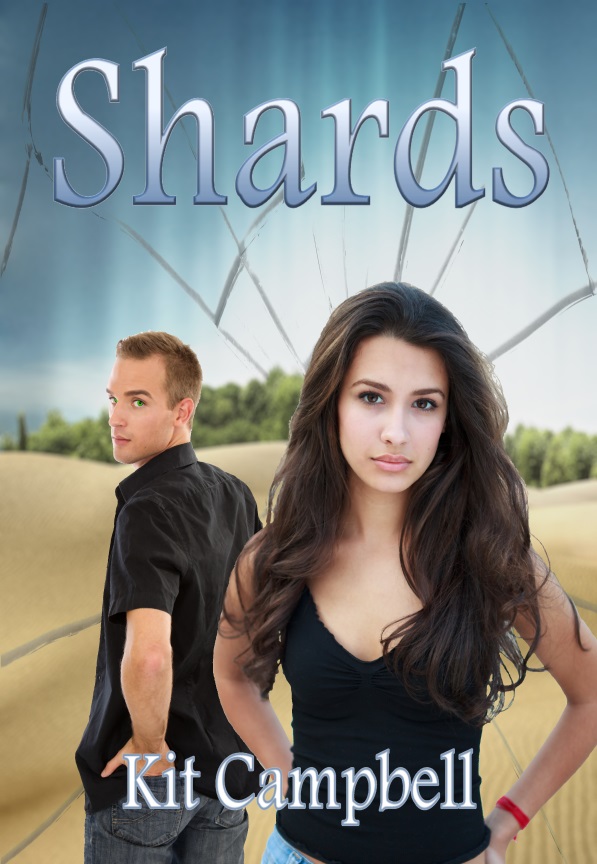
Shards cover
AmazonKoboSmashwordsBarnes%20and%20NobleiBookscustom
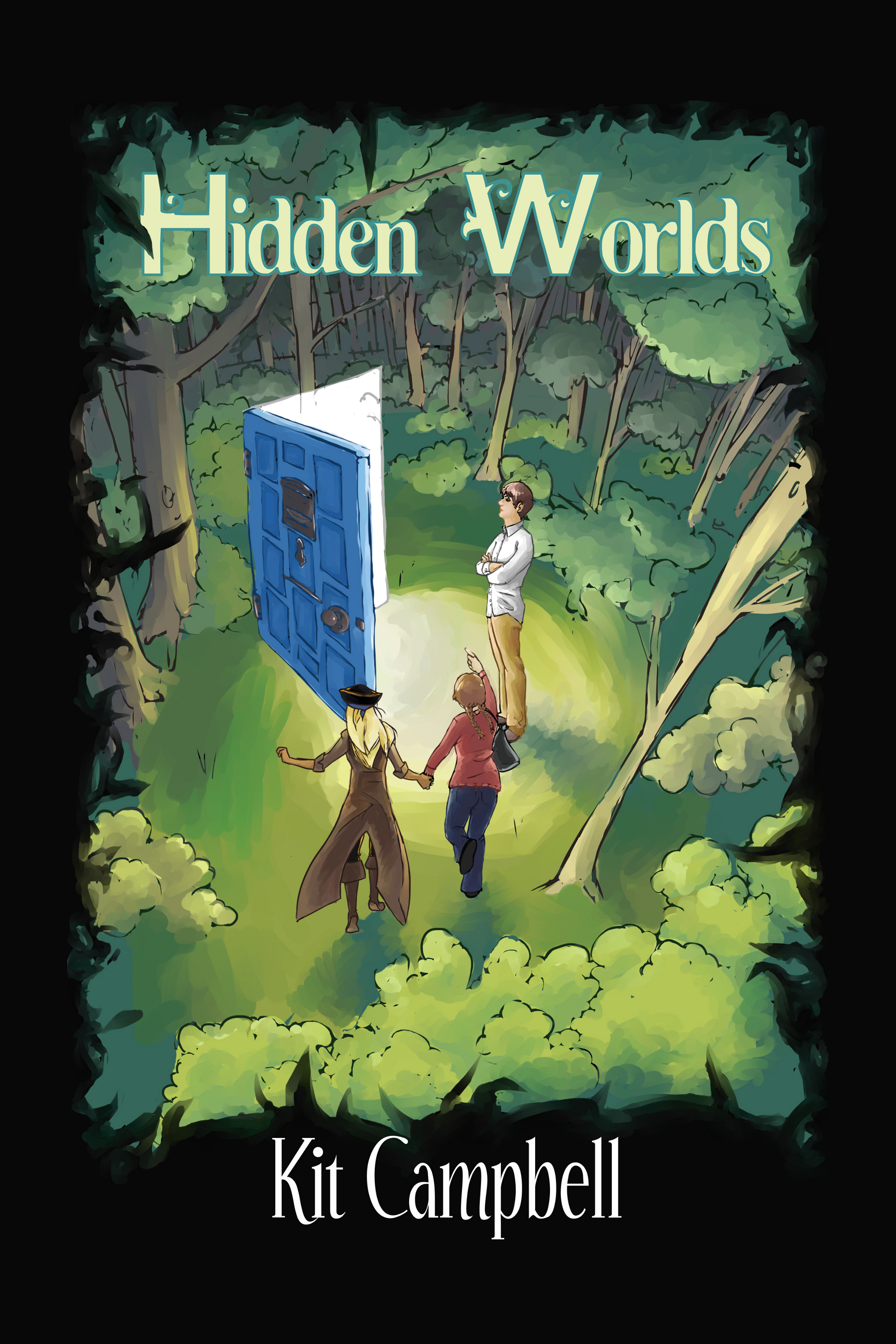
Hidden Worlds cover
AmazonKoboSmashwordsBarnes%20and%20NobleiBookscustom