Working on Multiple Projects

Perhaps you’re one of those sane people who works on a single project at a time.  You sit down and work on a one thing from start to finish and then, when you’re done, you move onto the next project.

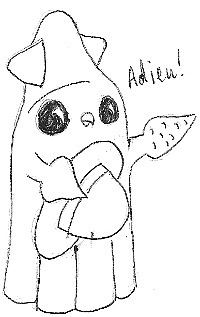
This post is not for you (and I will be sending the Landsquid to TP your house later).

If you’re anything like the writers I hang out with, you’ve got multiple projects you’re working on.  If you don’t, it might be because life is trying to eat you and you barely have time for any projects, let alone more than one.  Or you’re in your first.  Good for you!  It all goes downhill from here.

(Note to self: do not read Ian’s blog before you write your own.)

It’s a complication of time, honestly.  Once upon a time, I worked on a single project at a time too.  You write one novel.  Then you write the next, and the next.  Then you realize you’ve got to edit the things, and then there’s reader comments to incorporate, and then perhaps you decide you’d like to sell them…next thing you know, you’re up to your shoulders in stories in various stages of the process, and nothing’s getting done.

So how do you dig your way out?

The answer is simple: compartmentalization.

The real issue with working on more than one project at a time is that it’s difficult to get your brain to switch between them.  It’s hard to work on your horror short story when, the day before, you were writing fluffy romantic fanfiction.  Your brain gets into these grooves and wants to stay in them, leading to frustration.

The solution is to give each story their place.  This can work a number of ways, and you’ll probably have to experiment to see what works best for you.  You can compartmentalize by location: write one novel at home, a short story at a coffee shop, fanfiction during your lunch break.  Or by time: mornings are novel, afternoons are short stories, weekends are fanfiction.  Or by the color of fingerless gloves you’re wearing.  It’s up to you.

The idea is that you train your brain to expect to work on something specific under specific circumstances, so when your brain finds itself in those circumstances, it knows what to do and it becomes easier to get into the right frame of mind.  It’s the same idea behind creating a writing environment.

Any tricks to share, Squiders?  What works for you?

Harry Potter Re-read: Goblet of Fire

When I first read Goblet of Fire, I had to stop and read the graveyard part twice.  You see, I’d read the first three books about a month before GoF was released, and they’d all followed a nice formula where things were wrapped up and people were never really in mortal peril.  The basilisk in Chamber of Secrets was exciting, sure, but I wasn’t ever terribly worried that Harry wasn’t going to walk away from it.  But Goblet…Goblet changed everything.

It’s very interesting, really.  The beginning reads like the first three, very much still a children’s book, but by the end, it’s started to transform into a much darker series.  While Harry wins the tournament, it is not really his achievement.  It brings no joy.  And the reader is left with a sense of despair and disbelief.

Goblet is the first place where a lot of the darker elements that are staples of the later books make their appearance.  We learn about the Dark Mark and the Death Eaters.  We learn some of the horrors that went down during Voldemort’s first reign of terror.  We see the Unforgivable Curses in action – both in the classroom and outside of it.  (Poor Harry will experience – and live through – all three before we’re done here.)  We learn that Snape was, definitively, on Voldemort’s side and we begin to wonder, truly, why it is that Dumbledore trusted him.

Goblet is the second time in the series where the first chapter is in someone other than Harry’s point of view.  (The first being the beginning of Sorcerer’s Stone on Privet Drive.  We won’t see it again until Half-Blood Prince.)  The books are written in limited third, meaning that, while we are not in Harry’s head as much as we would be in first person, the thoughts are his thoughts and the actions are all his actions.  We don’t know what anyone else is thinking.  We don’t know what Harry doesn’t know (in most cases).  Very effective, really.

And her use of Promises for foreshadowing is fantastic.  In the first Quidditch World Cup scene, Harry and the Weasleys (new wizard rock band?) use a portkey to arrive.  The portkey’s promise is fulfilled within the scene, yet it’s foreshadowing for later in the book.  They stay in a wizard tent; promise fulfilled by the time they leave, yet it sets the basis for the camping they will later do in Deathly Hallows.

And I would argue that when the Dark Mark is summoned, it is the first truly frightening scene in the entire series.  You see the fear that Voldemort inspired, you see the cruelty of the Death Eaters.  It’s not something as basic as someone trying to kill you, but it’s more primal, more subtly evil and wrong.

Goblet lays the foundation for the remainder of the series.  It introduces the pensieve and hints at why Harry must return to the Dursleys each summer.  It teaches us that we can’t wrap everything up in a single book, that there are things to fear, and that we are going to lose people – possibly people we care about.  Cedric was only the first.

(A couple of things that I found interesting – just more examples of JK Rowling’s excellent foreshadowing ability: Harry forgets to use a bezoar in his antidote in Potions class.  Dumbledore hints at the existence of the Room of Requirement in a conversation with Karkaroff.  And Fleur looks at Bill in an appraising manner.)

Questions:

1. Hermoine spends most of the book trying to convince everyone for the need for House-Elf rights.  Is it wrong to try and force freedom on the House Elves?

2. The main goal of the Triwizard Tournament is to build bridges between the different wizarding schools.  Do you think it succeeded in this goal?

3. Hagrid tries to resign after it is revealed that he’s half-giant.  How does this tie into the larger theme of prejudice and “blood” in the series?

4. Harry feels a lot of guilt for Cedric’s death.  Do you think he is justified in this?

5. The end of Goblet is really the start of something bigger.  Dumbledore warns that they will need to be united, yet there are divisions in his own school.  What could he have done differently?

Subgenre Study: Dystopia/Apocalyptic Fiction

This week on Subgenre Study, we will be looking at the seemingly-increasingly popular subgenre of Dystopia, or Apocalyptic Fiction.  This is a subgenre of science fiction that takes place anywhere from the near to far future which portrays a bleak view of the future, usually one in which humanity has or is going through some form of apocalypse or catastrophe.  Often, “civilization” has ended.

(These are actually two separate, but related genres.  We will explore each separately.)

A dystopia generally involves a carefully controlled society and is usually initially portrayed as utopian, but there is usually some sort of dark twist.  Think 1984, Brave New World, or V is for Vendetta.  Think Oryx and Crake.  Or Fahrenheit 451. (A lot of “classic” science fiction, the kind the make you read in school, are dystopias.) Freedom is usually completely gone or merely an illusion.

Apocalyptic fiction tends to deal directly with some external form of catastrophe or a human (or non-human) caused apocalypse.  It can be a nuclear apocalypse, a zombie apocalypse, or one caused by biological agents.  Despite the poor reviews, I thought the Happening’s tree-apocalypse was pretty awesome.  (I have a character who believes trees are evil.  The Happening really validated things for her.)

Technically, apocalyptic fiction deals directly with the apocalypse; post-apocalyptic fiction deals with what happens after the apocalypse.  (Somewhat confusing, I know, as “post” generally gets tacked on to artistic movements as a post-script.  Postmodernism.  Postcyberpunk.  But in this case, it’s part of the genre definition.)

The Wikipedia article on Apocalyptic Fiction is fairly awesome, so I’m just going to link you: http://en.wikipedia.org/wiki/Apocalyptic_fiction

What’s your feeling on Dystopia/Apocalyptic Fiction, Squiders? Like to see possible glances of the future, or do you find it depressing?  Recommendations?

Surviving My High School Reunion

So, Saturday was my high school reunion.  Aside from a general feeling of “Oh God, when did I get so old?” I was looking forward to the event, as I was interested to see how the last ten years had treated people and what they had been up to in that time period.

First of all, I want to say that I was over optimistic.  I imagined a nice, laid-back atmosphere where I’d have long conversations with people and I would come off as stunningly witty or something along those lines, and my former classmates would leave me thinking, “Man, she’s done well for herself.”

Yeah, I don’t know what I was thinking either.

Saturday I found myself getting anxious.  What was I going to tell people?  I’m a writer, which some people don’t consider a real job.  It doesn’t pay that much, it’s not terribly glamorous.  But I sucked it up, grabbed my business cards (got to justify their existence somehow, right?), and dragged my husband along.

It was…not what expected.  It was hot.  Ungodly hot.  Makes-you-sweat hot, which is just not impressive to anyone.  And it was loud, so you had to shout to be heard, which is not conducive to catching up with anyone.  And apparently I don’t actually remember names that well, or faces, for that matter, which was embarrassing and awkward.  What do you do when someone comes up to you and says, “Hey, remember me?” when you honestly don’t?  Do you say no and hurt their feelings, or yes, and hope you can play it off successfully?

By far the most common question of the night was “So, what’s new with you?”  It was a bad question, and we all knew it was a bad question, and yet we all asked it anyway.  It’d been ten years.  No one really expected anyone else to say “Yes, well, I went to college, and here’s what happened there, and I got this degree and then moved to this state for this job, and then I decided I hated that job, so now I raise alpaca.  Oh, and I got married, and then divorced, and then married again and had 15 children,” so then there’d be an awkward pause while the answerer debated the best thing to mention.

Smarter people asked about specifics, such as relationships or work, and I experimented between answering writer or author to see the different reactions.  “Writer” made people think nonfic or technical documents, whereas “author” would then get questions about genre and what was available.  I plied my business cards liberally which, for me, is, like, five.

After all, networking is the game, right?  I may not see these people for another ten years, but if they pull out that card and think of me (and hopefully my stories) between then and now, it will have accomplished something.  In theory.

Whoops (and a Fairy Tale Anthology You Might Like)

Sooo.  It’s Sept 19.  And I know, weeks ago, that I said that today we would discuss Harry Potter and the Goblet of Fire today, but it turns out that I am not actually capable of reading a 700-page book in the three days between when I stumbled home from Peru (thankfully malaria free) and this morning.

I also freely admit that I spaced it completely, between stumbling home, my high school reunion, my nephew’s birthday, the inlaws visiting, and apparently hanging out with friends Friday night that I actually cannot remember at all, and I wasn’t even drunk.

Anyway, that’s a long-winded way to say “Sorry, Squiders, I am a cad and we will do Goblet next Monday instead in all its portkey-y goodness.  Here is something Potter-related to tide you over until then.”

While I have your attention, I want to point you in the direction of a fairy tale anthology myself and my dear writing partner Sarah have put together.  It’s an awesome mix of brand new tales and twists on old favorites and is definitely worth a look.  Once Upon a Spork can be found on pretty much all internet platforms for your reading pleasure.

So, to summarize: Goblet next Monday, excellent anthology for you to read available now (click the link!), and no landsquid were harmed in the creation of this post.

Subgenre Study: Sword and Sorcery

GUYS I got to touch an ALPACA.  Although it was fairly bad-tempered.  I may let you see when I finish photoshopping twisty evil moustaches on the pictures.

Anyway, on to the topic at hand.  Sword and Sorcery is perhaps the best known of all fantasy subgenres.  Some people will swear that it IS fantasy.  Swords, magic, romance, epicness, good vs evil, a world at stake!  The main thing that separates it from epic fantasy or high/low fantasy is the focus on the battles and the adventure as opposed to more overarching themes.  Often, if there is no battle to be fought, the protagonist will not know what to do with himself.  (This tends to be a theme in Sword and Sorcery; like Frodo at the end of the Lord of the Rings, the protagonist cannot return to a normal life.)

Sword and Sorcery almost always involves a fantastical world, whether it is author-created or an earlier version of our world where it is populated with gods, demons, and monsters, often built up from mythology.  It shares a lot of tropes with adventure stories and is often fast-pace, including many battles.  They include a brave, almost unnaturally strong hero, damsels in distress, and evil sorcerers with plans of world domination.  In Sword and Sorcery, magic is rarely used for good, compared to some other subgenres (most notably Fantasy Romance, where magic is almost always good).

Closely related genres include Sword and Sandal (similar tropes, but historical instead of fantastical) and Sword and Planet (science fiction related, obviously).

Edgar Rice Burroughs is generally considered the father of the subgenre.  Other authors that are generally considered Sword and Sorcery include Fritz Leiber, Robert E. Howard, Michael Moorcock, and Sprague de Camp.  It tends to be an extremely masculine-oriented subgenre, though some progress has been made to make it more gender-equal.  Marion Zimmer Bradley ran an anthology for many years called Sword and Sorceress, and most modern examples of the subgenre will feature both a male and a female protagonist.

The Conan the Barbarian books, which are generally considered Sword and Sorcery, led to a trend in the 80s in Hollywood for fantasy movies involving a lot of bloodshed and not much clothing.  These movies were also called Sword and Sorcery, which has led to some infamy for the genre in general.

How do you feel about Sword and Sorcery, Squiders?  Does it get your blood racing, your heart pumping?  Do you find it trite?  Any recommendations (books or movies)?


Subgenre Study: Fantasy Romance

This one’s a bit on the edge, Squiders.  One could argue that this is a subgenre of romance rather than a subgenre of fantasy (and some argue that Romantic Fantasy is the proper name).

You may be confused.  A lot of fantasy has romance subplots already (especially things like urban fantasy/paranormal romance) so what separates fantasy romance from fantasy with a romantic subplot?

Tropes, my friends.  It is all about the tropes.  You see, each genre (and subgenre) has tropes that tend to be prevalent within themselves.  They make it easy to identify the genre.  Also, certain tropes tend to resonate with people, which is why people tend to read mostly in the same genre, or tend to pick out books of a certain genre in certain frames of mind.

Fantasy romance takes typically romance tropes and mixes them with some fantasy ones.  Stories can be marketed as either fantasy or romance, depending on how whoever is in charge of such things decides. (For example, Jennifer Crusie, Anne Stuart, and Lucy March’s Dogs and Goddesses includes a strong mystical mythological theme but as they are all primarily romance authors, it’s billed as romance rather than fantasy.)

At least in my readings of the genre, the main character (almost always female) starts off alone, and then through whatever means, she discovers she is special somehow (many times involving some sort of magical powers) and then surrounds herself with friends and a lover (or a couple) and manages to get through whatever she must defeat to live happily ever after.

My favorite fantasy romance author is Robin D. Owens.  (And I recently found out she’s local, but I have been a good girl and not stalkery at all.)  She has a five-book Summoning series that I enjoyed quite a bit.  Other people who write the genre include Mercedes Lackey, Tamora Pierce, and Catherine Asaro.

What do you think, Squiders?  Fantasy romance – fantasy or romance?  Or does it not matter?  What are your favorites?

The Wonders of Webcomics

If you’ve been a denizen of the internet for a while, you are no doubt aware of the existence of webcomics.

They are everywhere.

They run the gambit from amateur attempts with poor storytelling and art to epic fantasy worlds to nerdy takes on the world to combinations of all of the above and beyond.

Even if you’re not really into comics, I’d bet you can find one that you’d like.  It’d be near impossible not to, with the range of what is out there.  There’s scifi, romance, fantasy, mystery – short series, that last only a few months, and massive epics that last years.  There’s funny ones and serious ones and realistic ones and every sort of combination.

They’re also somewhat evil.  You stop by one, decide it looks interesting, and next thing you know, it’s four hours later and you have gotten nothing done.  Eeeevil.  And then you catch back up and have to wait for updates.  Alas.  And some update daily, but most do not.  Some do not have regular update schedules at all, which is VERY AGGRAVATING.

What are your favorite webcomics, Squiders?  Need any reqs?  (I have many reqs.)

Harry Potter Re-read: Prisoner of Azkaban

Just a quick note – we’ll do the Goblet of Fire discussion on Sept 19 instead of Sept 12.  I’d like to claim that this is because it’s the first of the more massive part of the series, but the reality is that I will be in Peru and will not be around to read the book or write about it.  We can talk, at that time, about whether we think the later books need three weeks in general, but since I read ~100 words an hour, I’m leaning towards keeping the two week schedule.

Anyway, onto Azkaban!  The book that introduced us to the Marauders – Remus, Sirius, and Peter are not mentioned at all in the earlier books – who prove to be extremely central to not only the upcoming war, but the war in the past.

Harry accidentally blows up his aunt, but unlike in CoS when Dobby did magic in Number 4 Privet Drive, instead of getting in trouble, Cornelius Fudge merely asks him to stay where everyone can keep an eye on him.  Why?  Well, it turns out notorious murderer Sirius Black has escaped from the wizard prison of Azkaban, something no one has ever managed, and has come looking for Harry.

Now, we’ve been around the block a few times, so we know that Sirius is really a good guy, and it almost feels like Harry knows it too since he’s never really very concerned about the fact that this guy is apparently after him, even after Sirius manages to get into the Gryffindor common room a couple of times.

I’ve been marking places in the books as I go with post-it notes, but I think I’m going to have to stop because Azkaban has a worrying amount on it, and I imagine it’s only going to get worse as we go along.

Azkaban has the first signs that we’re reaching a turning point.  Peter Pettigrew gets away, Sirius is not redeemed (and never is, poor guy), and Harry has the first inkling that things are not going to go his way.  He realizes, after hearing Professor Trelawny’s prediction (her second ever) and stopping Remus and Sirius from killing Peter, that he may have orchestrated his own undoing.  (Also, Dumbledore notes that Peter will owe Harry because of this, but for the life of me, I can’t remember if this debt is ever repaid.  Can anyone help?)  Also, we start actually looking at Lily and James’s death – before, it’s mostly mentioned that they are dead and that Voldemort killed them, but here Harry hears their last words, their confrontation with Voldemort – and learns that one of their best friends betrayed them.  (Personally, if I were Harry, I would have occasional moments of doubt where I would wonder about Ron and Hermoine’s loyalty, but if I recall correctly, he never does.)

Things introduced here that are important later include: The Marauder’s Map (and the Marauders themselves), the Daily Prophet (mentioned obliquely in CoS but featured more here), the Knight Bus and Stan Shunpike, Crookshanks, Dementors, the first hints that the Defense Against the Dark Arts position may actually be cursed, a hint to the future existence of thestrals, animagi, the patronus charm, Cho Chang and Cedric Diggory, Hogsmeade, grindylows (featured in GoF), the secret passages, Madam Rosmerta, a hint that one of Dumbledore’s spies had heard about Voldemort’s plot against James and Lily (oh, poor Snape), the first hint that Dumbledore will not be able to fix everything, and, in the very first chapter, Harry is reading A History of Hogwarts by Bathilda Bagshot, whom Harry will go and visit in Godric’s Hollow in Deathly Hallows.

Also, randomly, when Harry runs away from home, he gives Neville’s name to the people on the Knight Bus.  Throwaway comment, or a very subtle hint that Neville had the same possibility of being the Chosen One as Harry did?  I am probably reading too much into things now.

When Lupin showed up on the train, I said, out loud, “Poor Remus, things are not going to go well for you.”   Interesting to see all these characters now in more innocent times.  (Also, I noted, on page 80, that we were still not to Hogwarts yet.  It will be interesting to see if the lead-in times get less as the plot thickens.  I know Goblet won’t because of the Quidditch Word Cup, but past that.)

(As a neat parallel – in CoS, Ron and Harry go it alone because Hermoine is petrified; here, Harry and Hermoine go it alone.)

Onto the questions:

1. It’s been noted that animagi seem to turn into animals that closely match the wizard’s personality.  Why do you think no one ever suspected Peter Pettigrew to be a rat other than because he was easily frightened?

2. It’s easy to see where Sirius’s (a star in the Great Dog constellation) and Remus’s (one of the twins raised by wolves in Roman Mythology) names come from.  What do you think the motivation for Peter’s name was?

3. Why does Dumbledore allow Harry and Hermoine to go back in time to save Buckbeak and Sirius when there’s so much room for something to go wrong?

4. Harry saving Pettigrew’s life ultimately goes poorly for him.  If you were in Harry’s shoes, what would you have done?  Can you fault Harry for his actions?

5. Harry shows little trust in the adults in his life.  In CoS, he has an opportunity to tell Dumbledore about the voices in the walls, but does not.  Here, he considers telling Lupin about the dog he saw when he ran away, but again keeps it to himself.  These are people Harry thinks very well of – why does he not tell them?  How would doing so change the plot?
Books by Kit Campbell

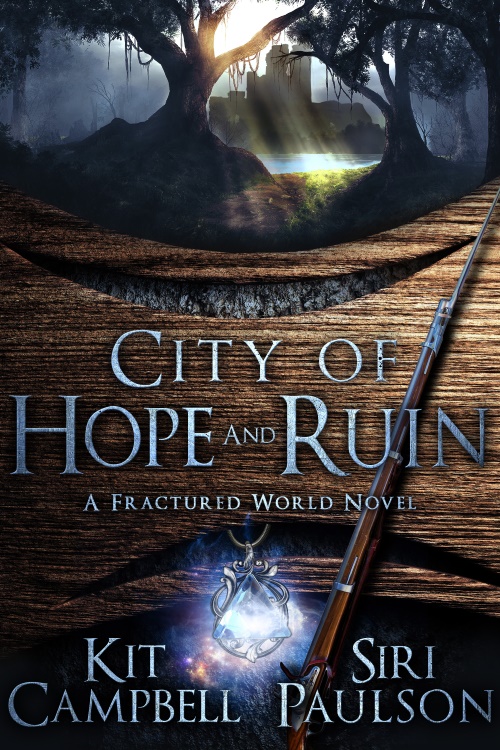
City of Hope and Ruin cover
AmazonKoboBarnes%20and%20NobleiBookscustom
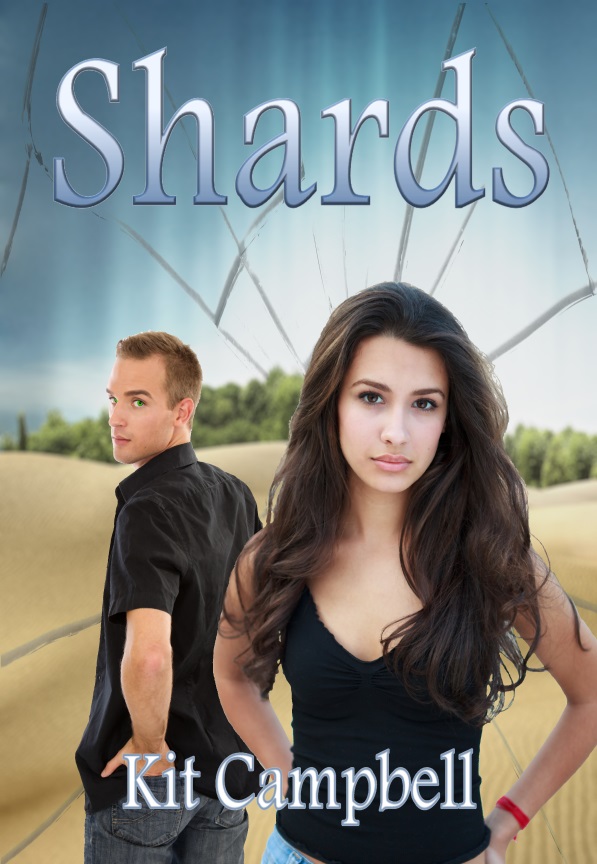
Shards cover
AmazonKoboSmashwordsBarnes%20and%20NobleiBookscustom
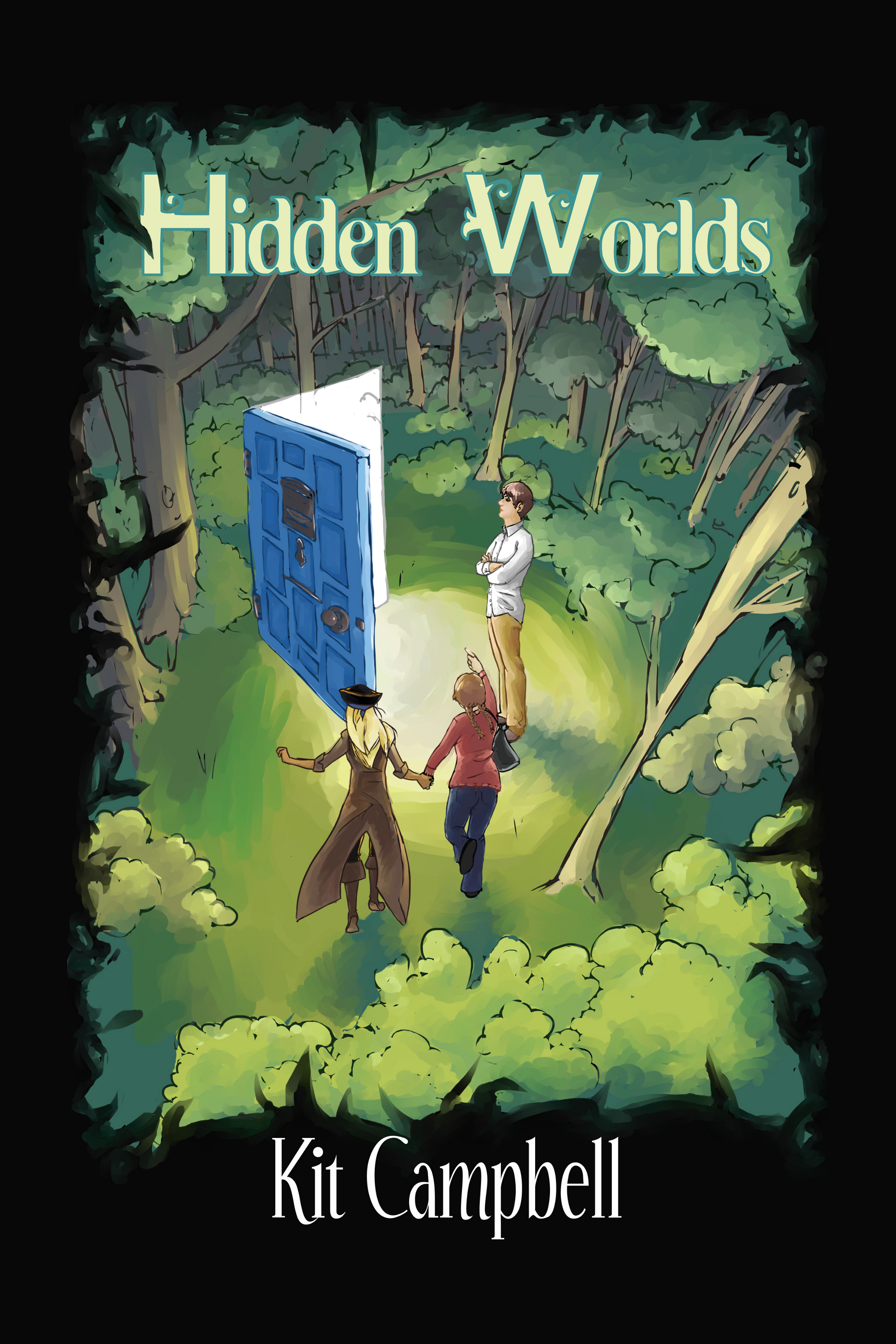
Hidden Worlds cover
AmazonKoboSmashwordsBarnes%20and%20NobleiBookscustom