Uglies Readalong: Pretties (Book 2)

Hey hey, look, I got a book done when I said I was going to! It’s a miracle.

So, for those of you just joining us, we’re reading through the Uglies trilogy by Scott Westerfeld, which is YA dystopia and came out in the 2005 to 2007 time frame, so pretty early in the whole YA dystopia craze there.

This month we read Pretties, which is the second book.

In our dystopian world, everybody goes through an operation when they are 16 which makes them a Pretty–basically conforming people to an acceptable range of appearance to help avoid the bloodshed and wars that humanity has faced in the past. Before their operation, they’re an Ugly.

Spoilers from here on out. You’ve been warned.

In Uglies, our heroine, Tally Youngblood, is forced to go into the wild after her friend Shay, who has run away from the city to live outside. Special Circumstances, or Specials, are essentially the enforcers of the society, and they tell Tally that the only way she’ll get to be Pretty is if she helps bring Shay back to the city. But as Tally learns more about the Smoke and the people who live there, she starts to change her mind about being a Pretty herself, especially after she learns that part of the Pretty operation changes your brain, making you, well, compliant.

However, things go poorly at the end of the book–when Tally tries to destroy the tracker so she can stay in the Smoke forever, it goes off, bringing Special Circumstances down on everyone. Tally stages a rescue and manages to get most of the Smokies to safety outside the city, but her friend Shay is turned Pretty in the process. One of the Smokies is a retired doctor who has devised a cure to the brain changes made in the process, but Shay, now Pretty, refuses to take it, and without a subject, they can’t tell if the process works.

So Tally volunteers to be made Pretty to test the cure. End of Book 1.

Pretties starts up about a month after Tally has become Pretty. New Pretties live in New Pretty Town (we’ve talked about how spot-on the place names are before) where they essentially do nothing except party. But at a party, Tally notices someone dressed as a Special, which throws her off, and, when she pursues the person, she’s surprised to find it’s an Ugly, and an Ugly she recognizes from Outside. All her memories of her time in the Smoke and the time after it have been suppressed by the operation.

The person has to run before the real Specials catch him, but he tells Tally that he left her something, setting off a chain of puzzles that lead her to the promised cure and her own letter, written before she turned herself in, to explain what the cure is and why Pretty!Tally needs to take it. But the puzzles attract the attention of the Specials too, and Tally shares the cure with Zane, the leader of her Pretty clique, to get rid of the evidence.

That’s the set-up. Tally does take some time to get going AGAIN this book, but it was less bothersome this time because I was expecting it.

Most of the book follows Tally and Zane as they plot ways to escape from the city and head back Outside, made troublesome by tracking bracelets the Specials have put on them. They also experiment with ways to make the rest of their clique “bubbly,” a term that basically means clear-headed and aware. Tally and Shay fight–Shay blames Tally for what happened out in the Smoke, and she remembers too, when bubbly–but finally Tally, Zane, and their clique have everything in place and make their escape.

There are complications, of course. Tally’s best friend from her Ugly days chickens out last minute, making it so Tally’s escape is almost ruined; Zane has been getting progressively sicker since taking the cure; Tally is approached by the head of the Specials and offered a spot, and all that jazz.

And, in the end, everything gets worse. We’re definitely not pulling any punches here.

So far the series has been very readable, and Tally is better in this book–determined and focused, and willing to protect her friends.

And I will say that, knowing that the last book is Specials, we didn’t get there in the way I thought we would. Hooray! I like surprises, especially when they make sense.

Did you guys read along? What did you think, Squiders? I’m glossing over the love triangle aspects to this because it doesn’t really interest me (which is also how I felt about it in Hunger Games), but if you like that sort of thing, which guy are you rooting for?

Let’s have Specials done for, hm, May 20, and we can decide if we’re going to do the fourth book at that point or if we feel fulfilled.

See you Friday!

Rivers as a Barrier Between Life and Death

Add New Post

Save draftPreview(opens in a new tab)PublishAdd title

So, a week ago, my family and I went to our local science and history museum since one of their temporary exhibits was in its last days and we thought we should probably see it before it went.

(That exhibit was about Sue, the most complete Tyrannosaurus skeleton ever found. Which was neat! I learned things. But not actually related to today’s discussion.)

(I also got us an entrance time to the newly renovated space exhibit, which is better than it was but still kind of whatever, alas.)

(ACTUALLY, our museum is a leader in studying what happened right after the asteroid that killed the dinosaurs, a notoriously tricky time period to study because they’ve had issues finding fossils from it. But some of our museum scientists made a big breakthrough in the area about a year ago, so they set up an exhibit off to the side of the space exhibit. And the exhibit was very interesting, but my spouse and I were also interested in the fact that it’s in a part of the museum that’s been closed off to the public for, oh, twenty years? It used to be the Hall of Dinosaurs when we were kids, but that was also when they thought dinosaurs dragged their tails and were cold-blooded, so when science proved all their skeletons wrong they took them away and closed off the whole hall.)

(Sorry. I like dinosaurs.)

(Our museum ALSO has two plesiosaur skeletons hanging from the ceiling in the entrance hall, which are my very favorite prehistoric reptiles.)

The OTHER temporary exhibit (our museum normally has two going at a time) was about Stonehenge. I have actually been to Stonehenge, back when I was young, but it has been a while, and archeologists keep making discoveries, so you know.

A lot of the exhibit was somewhat familiar information, talking about the different phases of the monument and how they moved the stones, but I did learn some new stuff too.

(They actually had a breaking news section, from a discovery made in February, so that was pretty cool.)

So, apparently, the reason why the stones came all the way from Wales was that they had a previous monument there, and when they moved, they decided to take the monument with them.

As you do.

That’s cool! But the coolest thing I learned from the exhibit was that, some miles away from Stonehenge was a settlement, with a henge made out of wood. So, at least at the beginning, Stonehenge was a burial ground, and it was always a place to remember the dead (or so they think). So there were no buildings there, no places for the living. And this village was where the living were. And, to get to Stonehenge, either to bury someone, or to worship or whatever, the people in the village would go down to the River Avon, get on a boat, and sail down to the entrance to the Stonehenge complex.

So there were two distinct areas–the area of the living, and the area of the dead, and the river was the passage between them.

Which I thought was very neat, to see some of the mythology of the people in the way they used the land. And you guys know me and mythology, and also it always helps me with my own mythologies for my fantasy world to see what people thought of.

But as I was thinking, I realized that the river as a passage between the living and the dead is a fairly common theme, though perhaps not realized quite so literally as done here. Both Greek and Norse mythology have a river the dead must pass (well, if going to Hel in Norse mythology), though those are later civilizations than the one that built Stonehenge. In Hindu religion, the sacred river Ganges is used in many death rituals, including ones meant to help grant salvation to dead relatives, suggesting a link between the river and where people go after death. In Scottish folklore, a bean-nighe, or washerwoman, is a messenger and omen of death, often seen in rivers and ponds.

I don’t know, I just thought it was cool, and it’s always interesting to see the connections between civilizations across continents and time.

Any thoughts on rivers in death practices, squiders? Cool trivia relating to Stonehenge or death rituals in general?

I Spent Half of Yesterday Locked Out

I had a grand plans of productivity this week. I was going to catch up and be amazing! But so far I’ve pulled my foot, had two snow days, and got locked out of my house for most of yesterday afternoon.

It was one of those things you just have to laugh at. Often, after lunch, I take the dog for a walk around the block and through our local open space park. It takes about 15 minutes to do our loop. Sometimes, if we’re feeling motivated, we’ll do a longer loop, but it’s snowed a lot recently and everything is muddy, so aside from going on the bridge over the creek to see how high it was, we just did our normal loop.

Now, I didn’t take any house keys with me. I rarely do. We have a keypad on the outside of the garage, so normally I go out and in that way, and that’s what I did yesterday.

HOWEVER, in the fifteen minutes I was out of the house, the power went out. Of course it didn’t go out the four hours I was home. It goes out the only fifteen minutes I was outside.

And, of course, the garage door will not open without power. And the house is locked up tight, because of course it is. Every window, locked. Every door, locked.

I mean, it wasn’t the end of the world. It was warm enough, not precipitating, and I had my phone and a coat. But it quickly became apparent that the power was not coming back on any time soon, and my car was in the garage, which I could not get into, and I needed the car to pick up the small, mobile ones from school.

Long story short, each of my neighbors on either side took me to get a child. I had to discourage the larger, mobile one from trying to pick the lock on the front door. The dog was very confused about why I would not let her into the house.

Finally, just before dinner time, the power came on and the house was regained.

So, yesterday was not as productive as I had hoped.

But overall, I’m pretty proud of myself. I kept a good humor about everything the whole time, so it didn’t ruin my day, and that’s been hard recently, you know? It’s funny in retrospect (what are the odds of it being THAT exact 15 minutes?), no one was hurt or cold, and, in the great scheme things, there are other days to be productive. And I have great neighbors who were more than willing to help (and now are owed baked goods of some sort).

How have you been, squider?

Uglies Readalong: Uglies (Book 1)

Hey, squiders! Guess who finally finished the book? And only two weeks late.

For those of you just joining us, we’ll be reading the Uglies trilogy by Scott Westerfeld, with the option of reading the fourth book depending on how the first three go.

The trilogy came out about fifteen years ago, and takes place in a dystopian future where, on their 16th birthday, everyone becomes a “pretty”–they go through an extensive surgery that reshapes their body so everyone is equally pretty, in theory equalizing everyone across the board.

Our main character is Tally Youngblood, who we meet a few months out from her 16th birthday. Her best friend has just become pretty, so she’s feeling lonely and desperately counting down the days until she becomes pretty too and can join her friend in New Pretty Town. Before you become pretty, you are an ugly, and they all live together in dorms in a place called Uglyville.

Yes, it’s on the nose, but it’s meant to be.

Tally sneaks out to New Pretty Town to see her friend and almost gets caught—Uglies aren’t allowed—but during her escape, she makes a new friend named Shay, who coincidentally has the same birthday as her. Shay and Tally find solace in each other, but Shay’s not quite as excited about turning as Tally is. She keeps taking Tally outside of the city, and talking about a place where you don’t have to turn pretty.

Is this a pretty form YA dystopia? I mean, yes. Yes it is. It came out in the same era as The Hunger Games and Divergent and all that jazz (actually a little before, so it’s an early contender in the genre). It’s got a lot of the same beats, but those beats aren’t necessarily bad. There’s a reason all these series were so successful.

As I’ve said in earlier blog posts, I had some difficulty relating to Tally, which made my progress slower than expected. It’s hard, as a fully-grown adult, to connect with someone whose sole purpose is to wait until she becomes pretty, and who puts so much emphasis on this procedure. It makes sense why she does, with the world-building and everything, but there’s not a lot of common ground there. Once we got about half way into the book and Tally’s motivations change, I found it much easier to keep going.

The book ends on a cliffhanger, as expected, but I’m interested in the twist (in this case, why this seemingly utopian society is in fact a dystopia—really the cornerstone of the entire genre and so hit or miss) and I’m looking forward to seeing how the story develops in Pretties.

How did you guys feel about it? How do you feel about the society when compared to other, similar dystopias?

We’ll read Pretties for April 27. I’m hoping the second book goes faster now that I’m invested.

Welp

Well, squiders, I’m still not done with Uglies. I thought this would be fairly easy since it’s YA and not terribly long, but sometimes with YA I just don’t connect to the main character very well and then it slows everything down.

Or it could just be a sign of my general state of mind. Who knows! Making progress now, though, so soon.

I’ve also finally made some progress on working on World’s Edge as well. Not much, not what I was hoping for, but sometimes, taking that first step, especially after you haven’t worked on a draft in a while, is the hardest.

I’ve set a goal of 25,000 words on it for Camp starting tomorrow.

Camp Nanowrimo has always been very hit or miss for me. It doesn’t carry the same creative energy that sweeps through a normal Nano. There’s not the in-person stuff, and it’s not as many people. Plus the cabin set-up makes it so you really only have a few people that it’s easy to regularly interact with.

So my Camp history is very spotty. Generally I manage about 10,000 words, no matter what my goal is or what I’m working on. Sometimes I don’t do anything at all, and sometimes I manage 25,000 or more.

I think I can manage 25,000, but I do need to put some sort of schedule into place. I know from experience that if I try to just get to it eventually sometime in the day, it doesn’t happen.

In other news, I’m still playing podcast catch-up. I got a little burnt out on Myths and Legends–turns out 100 episodes of something, when you’re listening to several episodes a week, gets old–so I’m working on some of the other ones that weren’t quite as far behind.

I’m going to talk about two here–Start With This and Inn Between.

Start With This is by the Night Vale creators, talking about creativity and writing. It’s geared toward making your own podcast, but a lot of their tips are general to story telling in general. And it’s nice, just going back over things, as well as learning things that are not necessarily useful for prose but are interesting nevertheless. Knowledge! It is beautiful. And it helps to know that they, too, have issues with anxiety and periods where creating is hard.

Inn Between is a fantasy podcast that takes place at the inn in between adventures. So you don’t hear the adventures so much (unless they follow the characters into the inn) but it’s a really interesting look at character dynamics and a neat twist on the genre. I’m a little behind (at the end of what came out in 2020) and apparently we’re getting new characters for season 3, which makes me a bit sad because I’m very attached to the original characters now.

Well, that’s me! Off to make plans for success, and I shall see you all on Friday. Maybe with a book for discussion! We shall see.

AWOL

Hey, squiders, sorry I’ve been AWOL for the last week. Things have been…stressful.

I keep hoping that my productivity will make a return, but the fact of the matter is that my anxiety is high and I’m finding it really hard to create right now.

Uglies for next Tuesday, hopefully.

Landsquid for today.

I remembered to shade this time.

I hope you guys are doing okay.

WriYe and Revision (Again)

Well, it’s March, and March continues to be connected to NaNoEdMo, even though it’s dead. (And every March, I’m not revising. Well, I might get there later in the month. Or not.)

I feel like we do some variation of this prompt every March, and since this is my third year of doing the WriYe blog prompts, well, I guess if you want more info, check previous Marchs.

Explain your revision process. Do you go through multiple stages of editing?

I’ve talked about it before, but basically I spend a bunch of time looking at the story as it is, then solidifying my arcs and plot lines, and making notes about what needs to be fixed. Then I RE-outline everything and essentially re-write the entire story, even re-typing scenes that are not changing.

I realize this is an inefficient way to work, but I find the story sits better in my head if I work through the whole thing from start to finish. Also, it allows me to take note of issues on a line level, such as repetitive wording or filtering, which gives me less work in the end.

After I finish my major edit, I tend to read the whole thing out loud, which helps me find any weird flow things, fix dialogue, find typoes that I’ve previously missed, etc.

I don’t typically edit again after that, aside from smaller fixes.

Or just one and then leave the rest to the professionals? Do you/will you use professional editors?

As a freelance editor, I recognize the value that having someone else–especially someone else who knows what they’re talking about–look at your work. That being said, I don’t tend to use professional editors myself, mostly because I can’t afford to and partially because I can self-edit fairly decently.

I don’t think there’s anything wrong with using beta readers and critique partners in place of professional editors. You will need to gauge if you’re getting value out out it, of course–not all feedback is created equal–but if you can’t afford an editor, it’s not the end of the world.

Of course, on the other hand, sometimes it’s easier to use a professional editor than beta readers/critique partners. Oftentimes, betas/CPs are part of an exchange thing–you look at mine, I’ll look at yours–which means you need to have the time to look at someone else’s work too, and betas/CPs aren’t always the most reliable people, so you may find yourself waiting a while, or forever, for feedback. A good professional editor will get feedback to you when they say they will.

So, really, using them or not is up to your personal circumstances. My advice is to edit yourself before you hire an editor. You don’t want to distract an editor with things you could have fixed yourself. And make sure you’ve done your research, and that the editor you’re working with understands what sort of feedback you’re looking for.

That turned into more of a lecture than personal experience, so, uh, sorry!

Anyway, see you guys on Friday!

Moving Forward

Hi, squiders! Sorry about missing Tuesday. It’s been kind of a rough week, but I don’t really have an excuse.

But anyway, we’re in to March! Crazy, right? I know everyone’s focused on how it’s been a year since the world essentially turned upset down, but isn’t that insane? I can remember the last time I did a number of things–we went to the movies on March 8, to the theater on March 12, out to dinner on March 14. No one thought we would still be here a year later, not then.

ANYWAY.

February was a loss, really–I did write some alternative openings for Book One, but with the waiting on feedback and my inability to focus, not much else got done.

Last thing I want is for March to go that way as well. And it could–I am still waiting on feedback. But I’ve come up with a solution.

Do you remember World’s Edge? I worked on it for Nanowrimo in 2019. (Lots of info there, if you’re interested–character pics and worldbuilding and the works.) As a refresher, it follows Marit, who’s taken passage on a ship to escape something back home–a ship that’s attempting an ocean passage no one has successfully made in centuries.

I finished up Nano with about 55K out of a planned 100K.

So, Kit, you might ask, how does this solve anything?

Well, World’s Edge takes place in the same world as the Trilogy and hence, Book One. About 700 years before hand, yes, but same world nonetheless. Which means I can work on completing this draft of World’s Edge without getting too far from the Trilogy, which means, when I have everything I need (and find a direction), it won’t be too hard to switch gears back to revision on Book One.

And I’ll be doing something instead of going insane.

Of course, now I have to figure out where I was and what I was doing. I’ve read back through the current draft. It cuts off rather abruptly, but really I should expect that by now. Hopefully by going through my outline and notes I’ll be able to pick everything back up and get going.

World’s Edge was on my list of things to do this year anyway.

So! Onward!

What are you working on this month, squider?

Snow Day Interlude

We got a foot and a half of snow overnight, squiders, which means that the schools just gave up and everyone was home all day. Which means my focus was completely off, not like I’ve been getting anything done recently anyway.

I’m strongly considering picking up something else for a bit, at least so I have something to do while I wait on beta feedback. I’m starting to think I should have gathered beta commentary while working on something else this whole time, but, of course, hindsight is 20/20. Besides, reading through the story is what me search out betas in the first place.

Got to strongly think about my productivity in general and try out something new to make sure things are getting done–or moving at all.

I’ve been reading The Starless Sea by Erin Morgenstern, which has several stories within stories going. I’ve found myself wondering how she put the story together–did she do the mythology first, and then build the stories around that? Maybe it would be fun to try something like that, writing interlocking stories where it’s not quite clear how they’re collected.

Not like I need a new project. But you know how it goes.

ANYWAY, not much happening in these parts. But I did draw you a landsquid to celebrate the first real snow we’ve had all winter.

Snow Landsquid

In retrospect, I should have added in some shading. Oh well! Next time.

I’ll see you next week–and next month! And hopefully I’ll have found some mojo in the meantime.

Announcing the Uglies Readalong

Hi squiders! It’s been forever since we’ve done a readalong.

I mean, that’s because we started Kim Stanley Robinson’s Mars trilogy and got half way through the second book (Green Mars) and made it no farther. Well, I made it no farther. I can see Green Mars on the bookcase, staring at me accusingly.

And nothing against the Mars trilogy, certainly. I enjoyed Red Mars, and Green Mars has been similarly well-written. For some reason I can’t get through them very quickly.

Someday. Someday I will finish it and talk about it, and everyone will have forgotten what we were doing in the mean time.

Let’s not dwell on the past and our failures, however. Let’s move forward!

So I’m announcing a new readalong! We’ll be doing the Uglies trilogy by Scott Westerfeld. I inherited all three books from my mother when she was culling her collection a few years back, and I remember hearing good things about the books when they first came out. I haven’t read any of them, but I’m expecting them to be somewhat standard YA dystopias. We shall see.

(Wikipedia tells me there’s a fourth book. Well, we will cross that bridge when we get there. If we get there.)

I read Scott Westerfeld’s Leviathan trilogy, which is a YA (I was going to say middle grade, but apparently not) steampunk alt history of World War I, and I enjoyed the series greatly, so I’m excited to read his first series.

Let’s be ready to discuss Uglies on March 23rd. That gives us a month, and it’s not that long of a book.

See you then!

Books by Kit Campbell

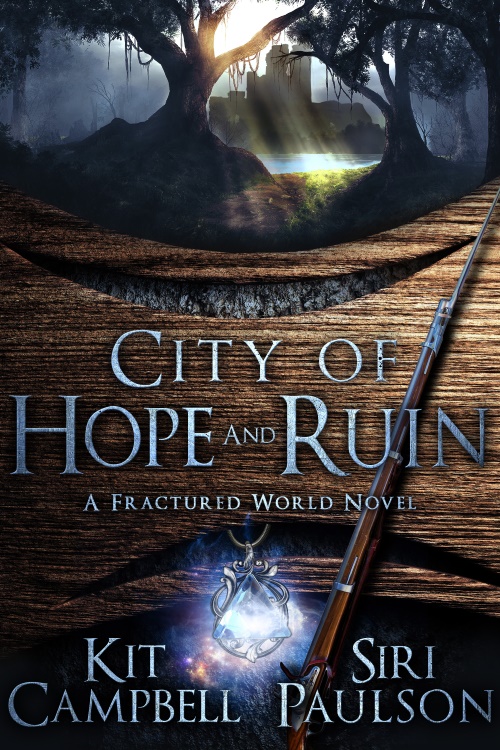
City of Hope and Ruin cover
AmazonKoboBarnes%20and%20NobleiBookscustom
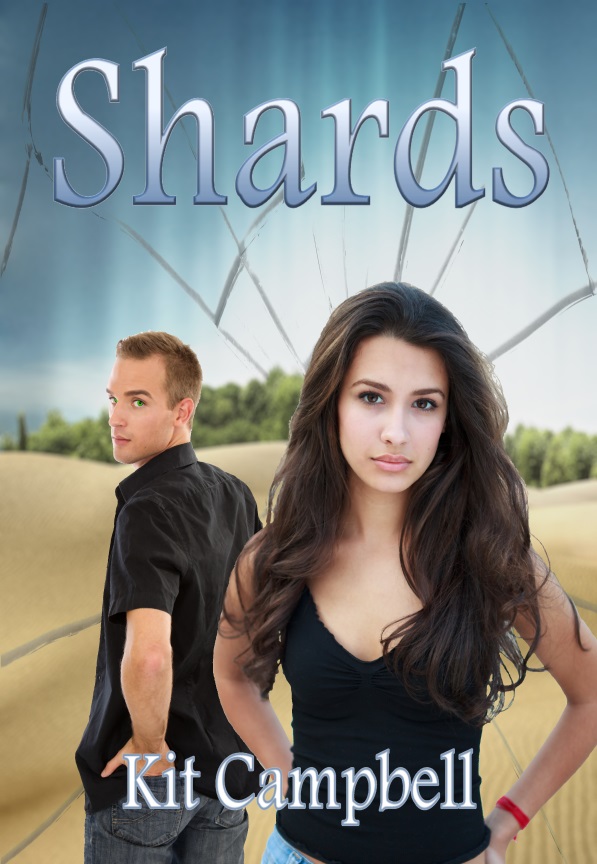
Shards cover
AmazonKoboSmashwordsBarnes%20and%20NobleiBookscustom
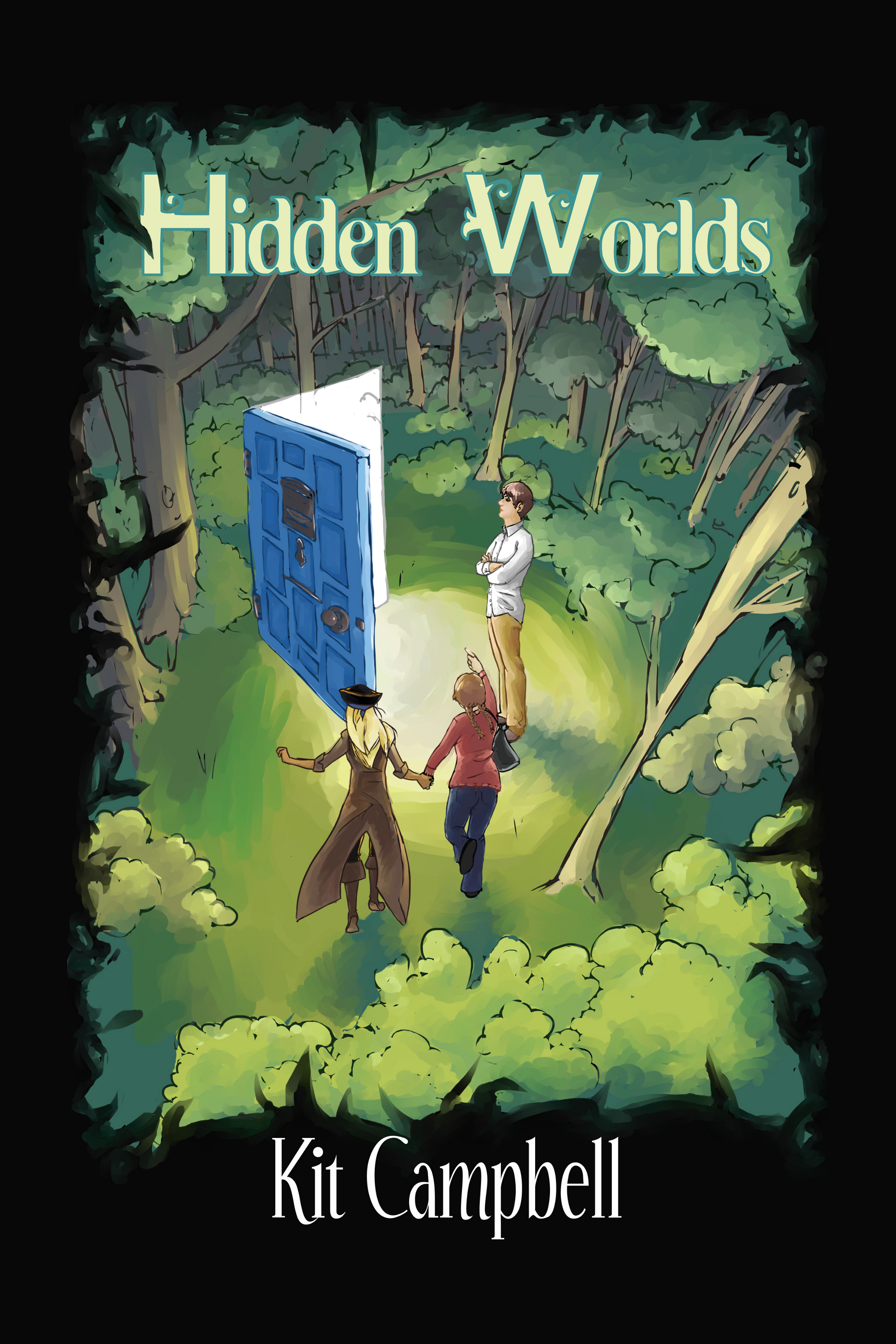
Hidden Worlds cover
AmazonKoboSmashwordsBarnes%20and%20NobleiBookscustom