The Internet Marches Ever Onward

I’m putting together a cosplay, squiders.

It’s been a while. The last time I cosplayed was when I dressed up as Amy Pond from Doctor Who for Denver Comic-con back in 2014. That was just a closet cosplay (meaning I just wore clothes I already owned) so it didn’t take a lot of work.

(It also didn’t work particularly well on its own. One person recognized me the entire day, and she was dressed as River Song. One friend I ran into thought I was Mary Jane from Spider-Man which, fair. What’s one redhead in normal-ish clothes from another?)

The last cosplay where I actually made costume pieces and whatnot was when I did Agatha Heterodyne from Girl Genius for WonderCon back in 2010.

But before that, I was a big cosplayer. I’ve been that person who’s spent a couple hundred dollars and six months of their lives on a single costume. I’ve made props, armor, shoes. I’ve styled wigs (though not well, ahahahaha). I’ve made my own patterns. I’ve embroidered and appliqued.

That was before, though, when I was still employed and childless. And, to be honest, I haven’t really had the inclination to recently either.

But anyway, I was kind of remotely thinking about cosplaying, and then a friend said, “Hey, that sounds fun, I’ll do this other character,” so now I am definitely cosplaying and have the main part of the costume put together.

But it has been a while, and this costume makes use of something I’ve not done before, and that’s FX contact lens. These are contacts designed to make your eyes look inhuman in some way, either by changing the shape of the pupil, or being a weird color, etc.

(These are otherwise normal in size/shape. The whole eyeball kind are called “scleral contacts” and are apparently very uncomfortable.)

I am extremely nearsighted, so I will need prescription lens, of which there is a very limited supply, boo. But I thought I’d go to my old cosplay hangout and check out the forums to see if people knew other alternatives I might have missed.

The hangout in question is cosplay.com, which is a lovely website that not only has a forum, but allows you to keep track of and display your costumes.

Or, it did.

Admittedly, it’s been a while, and I haven’t been on the site much except to show pictures of costumes to various people every now and then. So I was very surprised to find they’re in the middle of revamping the entire thing, and half my costumes and most of the forums are MIA.

(It doesn’t help that it seems like it’s been revamping for several months.)

Have you ever had that happen? You go back to some place you used to hang out at all the time to find everything has changed?

Anyway, I’m out of the loop and looking for a good cosplay community to hang in, if you know one. Otherwise, I suppose I’ll flounder about and do the best I can.

(Alternately if you know stuff about prescription FX contacts, hit me up.)

How’s your Tuesday, squiders?
Library Book Sale Finds: Barbary by Vonda N. McIntyre

Good morning, squiders! I finally stopped checking a million books out from the library, so I’m getting back to reading books I actually own.

And, as such, I dug into my big pile of library book sale books from a few summers back and picked out a book.

(It was on the top of the pile. That was the deciding factor.)

Vonda N. McIntyre (the usage of the middle initial in her author name interests me, since her first name is fairly unique. Maybe it was to match the convention of other scifi authors at the time?) I’ve read before. (Oh no, I just Googled her, and she died in April. Rest in peace.) She wrote some Star Trek novels, which is where I know her from. Most notably (for me, probably not for other people, since she also wrote the movie novelizations for Star Treks 2 through 4) she wrote Enterprise: The First Adventure, which I picked up because it sounded like total crack–for its very first mission, the Enterprise has to transport a space circus, complete with flying horse–but it was actually really well done.

She also won a Hugo and a Nebula in 1979 for Dreamsnake, which I’ve not read, but sounds cool. And another Hugo in 1998 for The Moon and the Sun.

There’s some spoilers in the discussion, because unfortunately I can’t really discuss the plot without revealing something that the book keeps secret for the first few chapters.

Title: Barbary
Author: Vonda N. McIntyre
Genre: Science Fiction
Publication Year: 1986

Pros: Quick, easy read; includes a cat and aliens
Cons: Ends a little abruptly

We meet Barbary (a 12-year-old girl) waiting, on Earth, yet again, as she attempts to get a shuttle to a space station to meet her foster family. (She keeps getting bumped off for more important people.) Barbary doesn’t really read like a 12-year-old most of the time–I’d put her a little older, maybe 14 or 15–but I suppose the argument could be made that she’s had to mature a little faster due to being in the foster care system for so long. (There is a point, later in the book, where her new foster father, a friend of her mother’s, is upset about something, and Barbary fully expects him to hit her, because that’s what she’s used to, which is heartbreaking.)

Adding to the complication of getting off Earth is that Barbary is smuggling her pet cat, Mickey, with her. Mickey, or Mick as Barbary normally refers to him, is a major motivation for her as well as a plot driver, and directly contributes to the climax of the story.

Once Barbary manages to catch a shuttle and get off Earth, she learns that there’s an alien ship approaching Earth, which is why it’s been so hard to get off-world (all the politicians and so forth keep taking priority). It’s on a course to the station Barbary will be living on.

This was a quick, easy read, one that was enjoyable. There’s not a lot of depth to the plot, but that’s fine. Barbary is a fine viewpoint character, mostly concerned with the wellbeing of the people/animal close to her and making sure she doesn’t get sent back to Earth (though the wellbeing does trump that). The alien ship is important but in the background for most of the story, which makes sense since, as a child, Barbary is more interested in things closer to home. There’s some nice, logical discussion about moving and living in space, and the technology predictions (we’ve talked before how older scifi tends to be good at predicting societal trends and bad at predicting technological trends, or vice versa) are not particularly jarring.

I’d recommend it overall. And if you haven’t read anything by Vonda McIntyre, you probably should.

Read anything by Ms. McIntyre, squiders? Read Barbary?

Decisions, Decisions

Good morning, squiders!

If you’ll remember, in February I finished up my serial scifi story in one of my writing communities, a story I started in January of 2009 and hence had been working on for 10 years.

(I really should back it up in a word document and see what the final word count is. I’d bet it’s about 70K or so.)

I don’t think I’ll do anything with the story–it kind of feels like I’ve spent enough of my life on it already, and I wouldn’t say it’s necessarily worth the time to revise and so forth to try and publish it.

Plus it wasn’t my favorite story idea to begin with. I just felt like I needed something, a story I could work on periodically for said writing community (you’re supposed to post at least once a month), and so I put it together off a weird dream I had once.

I requested a few months off after the completion of the story, which I was readily given, but it’s now six months later and I find myself at a crossroads.

A couple, actually.

The first one is: do I want to stay in this community?

It’s a LJ writing prompt community that I joined back in 2006. In 2006 I joined a lot of different writing communities–I was fresh out of college and living in a new state where I knew no one except my significant other, and I found myself falling into a depressive spiral. So I threw myself into writing as a coping mechanism, which worked pretty well, all things considered. I made a lot of friends, many of whom I still talk to today, and it’s really the point where writing went from a hobby to a more serious pursuit.

And the community has generally been great. The other writers are talented, so it’s nice to read their stuff, and the feedback and encouragement I’ve gotten over the years. And it has been a good way to ensure I’m writing somewhat regularly, especially if life has been otherwise problematic.

But is it still helping me meet my goals? Would it be better to use the time I spend every month on something else?

The community has quieted down lately, too, with only a half dozen people actively posting, if that.

The second question is: if I stay in the community, what do I write?

Do I start another novel-length serial story, posting 600-1500 words a month for the next ten years? Do I actually rely on the prompts and write little drabbles and shorts that I may or may not want to do something with? (That’s what I did for the first few years. There’s some I like, but not enough to do anything with.)

Do I use it like the RaTs system on WriYe and focus on writing drabbles in universes that already exist?

Do I go for a serial, but something shorter, something designed to only last a year or so?

I’m not sure. Nothing’s jumping out at me. But I feel like I’m reaching a point where the decision needs to be made.

Thoughts, squiders?

Foundational Books: Harry Potter Series

Happy Friday, squiders! This week we’re going to talk about the Harry Potter series. Like LOTR, this is perhaps a bit obvious, but hey, it’s still true.

(We’ve discussed Harry Potter here before–I think the first readalong we ever did was HP. Waaaaaay back in 2011. First post for that is here. We had discussion questions back then.)

I am not one of those people who grew up with Harry. I came into the series a few months before Goblet of Fire came out (so 2000) when I was 17. My mom (an middle school English teacher) passed the first three books along and the rest, as they say, is history.

But HP is perhaps more foundational not because of the books themselves (though I am a great fan of the books) but because of the fandom that sprung up around them.

I was not new to fandom–I grew up a Trekkie, went to my first Star Trek convention at the age of 12 (where, in the middle of a panel on the Dominion War, the panel was invaded by a bunch of Klingons wielding a Cardassian skull) and had fully integrated my friend group into the madness by 16 (when my high school boyfriend and I were finalists in the dance contest at the Federation Ball while dressed like Vulcans), and did a ton of online roleplaying online between the ages of 14 and 19.

But the HP fandom was different and new. For once I was surrounded by people my own age (Trekkies skewed older at the time, though I think that is no longer true with the advent of the newer movies), and it was huge. It was the first fandom I ever read fanfiction for, looked at fanart for, joined fan communities for.

(I even made a Gryffindor uniform in…2003? I don’t remember which book release it went along with. I still have my tie just in case I ever need it again. And my Slytherin tie. Both of which are somewhat amusing, because if I am honest with myself, I am neither a Gryffindor or a Slytherin.)

(I am Ravenclaw.)

Between books six and seven I even ran a LiveJournal community dedicated to exploring a new theory every week until Book 7 came out. I couldn’t tell you what it was called anymore, but even though I was some random person on the fringe of the community, people were more than willing to engage with me.

But the weird thing about being so involved in the community and so involved in the fandom is that, when Deathly Hallows came out–it read like fanfiction.

There were theories that I had brought up in my community that turned out to be true, and I’d read fics that had correctly predicted portions of the book. It was surreal.

And after Deathly Hallows came out–the whole thing kind of died. Oh, not that there isn’t a Harry Potter fandom, or that there still isn’t great fanfiction or fanart being put out for it, but there was a fever pitch in there for a while that I’ve never seen matched since.

Fandom is a bit cyclical anyway–they rise and fall, based on if/when new material comes out, and while I still do occasionally read new HP fanfic or favorite a fanart piece on tumblr, I’ve never really gone back to it. But man, for those seven years (2000-2007, when Deathly Hallows came out), it was really something.

And to actually talk about the books, I do admire the pure amount of characters JK Rowling manages to juggle and make feel alive, and the way she introduces plot points books before they’re actually relevant. It’s pretty damn amazing, from a plotting and worldbuilding standpoint. And while we can argue all day about the weak and strong points of the series (and, believe me, I have), you can’t deny that they, perhaps more than any pop culture phenomenon since, made an impact.

Thoughts on Harry Potter, squiders? Favorite character? What’s your house?

Looking Back at 7DN

Good morning, squiders! I hope you’re doing well! I’ve been sick, which has not been awesome, but I think I’m on the mend now.

I mentioned a few times that last week WriYe was doing a challenge called Seven Day Novel (or 7DN for short) where you’re got a week to write a novel or novella (WriYe has a 15K minimum) which I decided to take part in, both because I’ve had this scifi/horror novella I’ve been wanting to write, and as kind of a test to see if Nano would be doable this year.

And the results are…mixed.

You obviously have 7 days for 7DN, but I only ended up with 4. I knew Sunday/Saturday were unlikely to be usable and so had only planned for 5 days (with 3K a day), but Friday I woke up with really bad vertigo and hence lost it too.

An added issue was that I have a story for an anthology that I’m also working on, which takes precedence because Deadlines and so forth.

So, in the end, I ended up with 6.5K on the scifi/horror story, plus another 2.5K on the anthology story. So 9K for my four days, which is not bad at all. Obviously not quite at the goal, but not bad.

So I think I will do Nano this year. I haven’t tried since 2014 (and I did win that year) mostly due to the small, mobile ones, but it wasn’t too hard this past week to get 2K+ words a day, and school will be back in session in November (except for Thanksgiving break, but oh well).

Of course, making that decision now has come with some unintended consequences. Mostly ones of the “YAY I GET TO WRITE A NEW STORY WHICH ONE SHOULD I WRITE” variety.

Which…no, brain. We’re not there yet. We’ve got to focus on the current projects first. We can pick a story idea in October, or maybe late September if I’m feeling generous.

(Though…maybe this is the year to try my non-protagonist narrator story? I’ve technically written the first chapter already, but I’ve had it planned for close to a decade now and I should probably get on it.)

(No, bad Kit. Focus on your current stuff.)

Got too many things going on as it is.

I might try running the 7DN challenge again on my own. Maybe once a month or so? It’s a good way to get a word count boost, and I think it’s good for your soul to do some creating in with all the other administrative and logical things (revising, marketing, checking contracts and doing market research, etc.).

Anyway, quite pleased with the experiment overall, except for the getting sick part. And now on to other things for at least a little bit.

How was your weekend, squiders?

Foundational Books: Scary Stories to Tell in the Dark

I am a secret horror lover, squiders. But only a very particular type of horror. You won’t catch me watching horror movies (I had to sleep with my TV on for three nights after seeing The Ring–because if the TV was already on it conceivably couldn’t turn itself on) and I don’t like a gore, but I love horror with a tinge of the supernatural–ghost stories, or tales of ancient, forgotten evil, doppelgangers, things of those ilk.

And among the first versions of this type of story I came across was Alvin Schwartz’s Scary Stories to Tell in the Dark series, written in the 80s and early 90s. There’s three books with a different selection of short stories in each.

(Alvin Schwartz also wrote other horror short story collections for children, including In a Dark, Dark Room and Other Scary Stories, which features one of most haunting stories I’ve ever read, “The Green Ribbon.” And, you know, non-horror short story collections for children, but who cares about those.)

I guess they made a movie of the book series this year? Because when I googled the title that’s what came up first. How do you do that, make a movie based off a collection of short stories? Anyway, the movie comes out TODAY which is a weird coincidence.

(I will probably not see the movie, because as noted above I don’t have a very high threshold for terror, and the nice thing about reading horror vs. watching horror is that you can control the amount of imagination you put into picturing things.)

These books were a great intro to the horror genre. All the stories are pretty short, so you could read one or two in a few minutes and then go find something else to think about to get said stories out of your head.

I would go on to read more horror as I got older, especially the Goosebumps series and another author I’ll discuss a little later on in this series, Mary Downing Hahn (specifically Wait til Helen Comes, which I re-read recently as an adult and is still terrifying), and this flavor of horror has certainly informed my own horror stories when I write them.

(I’m working on a haunted space station novella right now which is super fun, not going to lie.)

I haven’t re-read these as an adult–I don’t think I ever owned them, honestly, instead checking them out incessantly from the school library–but I would bet they hold up pretty decently.

Read Scary Stories to Tell in the Dark, squiders? Any stories stand out in your head? Recommendations for supernatural horror to read?

WriYe and Experience

Happy Wednesday, squiders! My week’s off to a pretty good start–getting a ton written, which feels amazing. I’m really enjoying my 7DN novella, which is a scifi horror story about a falling apart space station. Also finishing up a story for an anthology. But I’ve written more this week than some months this year already.

Anyway, new month, new WriYe blog prompt.

We’ve all heard “Write What You Know”. What do you think? Truth or fallacy?

I wrote a blog post about this back in 2016 while I was working on the blog tour for the release of City of Hope and Ruin. That post is here. But basically, I think this idiom is one that’s not very well understood. People take it very literally, like, “I am a college student, so my characters must also be college students” or “I have never jumped out of a plane and so my character can’t either.”

Which is wrong, sorry.

“Write What You Know” means that you should pull from your own life where applicable to help make the situations and characters in your book feel more realistic. You may not have faced down a dragon, but you’ve been scared before. You may not have lost a child, but you’ve been sad before.

So, yes, I think it’s true. But I do think you need to understand what it’s really saying.

Bonus:
Do you write what you know?

I mean, I write 95% speculative fiction, so, kind of?

Going back to what I said above, I try to make the feelings and tone throughout my stories as realistic as I can by drawing on my own feelings and experiences, which is really the best you can do, I think.

Luckily, there are not really evil mechanical people or haunted space stations or immortal archnemeses to deal with in my life, for which I am eternally grateful.

Hooray for Flash Fiction

In the interests of full disclosure, this post was supposed to go up yesterday. However, we lost power for several hours and nothing was charged, so you get it today instead! (Sorry.)

Hi, guys! It’s the end of July (now the beginning of August), however the heck that happened. I have had a very good couple of weeks since we stumbled home from our road trip. I’m finally feeling a little more like myself, and I’ve gotten quite a bit done.

I finished the last nonfiction book, and am currently putting together betas for the books/workbooks.

I made three finalized drawings for the Landsquid picture book as examples for an illustration portfolio (so now I only need to type up the manuscript and put together a list of places/agents to submit to, and then…I think I’m good to go?).

And I wrote the middles and ends of five short stories for my flash fiction class. While the class wants you to aim for 500 words a story, the first two are around 1000. That’s on purpose, since I’m submitting one to an anthology and planning on using the other one as a freebie for my newsletter, so I wanted them to be a little more substantial.

I’m pretty pleased with all five stories, truth be told, though two of them are only borderline spec fic and so I’m not 100% sure what to do with them.

But, best of all, I wrote.

If you remember, after certain traumatic events back in May, I was having a really hard time with fiction. So having five completed short stories feels really nice.

And since we’re into August now, we can talk about plans for this month! Or at least for next week, because that’s about as far as I’ve gotten. WriYe is doing a challenge called 7DN (or Seven Day Novel), where you write a minimum of 15K of a novel in a week. It must be a new project, and it should have some semblance of a complete arc.

I’ve got a horror/scifi idea I’ve been poking which I think would be perfect for the challenge, so I need to outline that here in the next few days. And I think the challenge will be a good indicator of whether or not I can give Nano a try this year.

How did July go for you? How’s August looking?

Foundational Books: The Lord of the Rings

I know this one sounds a little stereotypical, but bear with me, squiders.

Somewhere in my early teens I received a box set of the Lord of the Rings trilogy (and The Hobbit). I still have the books, though not the box. Okay, to be fair, I loaned The Two Towers to a friend in high school, who never gave it back (TODD), but I found an identical copy at a thrift store so it’s fine.

My dad read The Hobbit to me as a child, but I didn’t pick the rest of the books up until I was in late high school, when I was going through some emotional turmoil (my sister and my best friend were dating, and had hidden the relationship from me for some months before I found out, so I was feeling betrayed that they hadn’t told me and lonely because it felt like I’d lost my relationship with both in one fell swoop).

And there was something very comforting in that story at the moment in my life. Maybe it was the way that Sam stuck by Frodo through thick and thin, or Aragorn, or how Legolas and Gimli overcame centuries of racial hate to become the best of friends. Whatever it was, reading through those books, appendices and all, really helped me, and I will be forever grateful, even though re-reading them has never had anywhere near the same impact.

These were not my first foray into epic fantasy (I’d found the Shannara books by Terry Brooks when I was 12), so I didn’t personally run into the whole fact that a lot of epic fantasy is just LOTR rip-offs thing (and by the early 2000s epic fantasy was changing enough that it wasn’t necessarily true).

A few years ago I took an excellent course through Coursera, called Online Games: Literature, New Media, and Narrative, offered through Vanderbilt University. It’s honestly one of the best courses I’ve ever taken. In it, we used the Lord of the Rings to explore differences in narrative between different forms of media. Each week we’d watch part of the movies, read part of the books, and play a section of Lord of the Rings Online (excellent game, little bit addictive, plus you can turn into a chicken and try out a chicken run, which is where you try to get from the Shire to somewhere else without getting eaten by anything). We also read a lot of romantic (the time period, not like, modern romance) poems and stories, which were the start of modern fantasy.

(I almost made it to Rivendell as a chicken once. It was in sight when I was killed by a giant bug.)

So, I appreciate the books for being there when I needed them. I appreciate the characters, who, for the most part, are good people and willing to help their friends and family, no matter what. I appreciate the movies, even though they are very long, and I appreciate the source material for being there to teach me really cool things years later.

Thoughts on the Lord of the Rings, squiders?

WriYe and Zombies

Still going strong over at WriYe, though I am a little behind on my word count for the year, but not so badly that a couple strong months won’t catch me up.

So on to this month’s blog prompt. Along with the monthly challenges (this month’s genre stretch looks fun–epistolary + Gothic romance), there’s also certain months set aside for certain types of stories. May was mermaids (MerMay) and July is apparently zombies.

(I haven’t done either. May was, well, May, and I am not a zombie person.)

Zombies are a July tradition here at WriYe. Do you have a writing tradition of your own? How did it come about?

I don’t really have writing traditions. I used to, but as I began to write more regularly I couldn’t be sure of being in the right spot at a particular time, and I’ve learned to be more fluid in my plans.

I used to do Nanowrimo religiously–did it for nine years straight–but with the small, mobile ones in the picture, it’s been harder to devote the time to the challenge. I’ve only committed myself to it once in the past seven years, though I am tempted to try again this year. We’ll have to see how we’re doing/where we are when November rolls around.

And I suppose there were other monthly challenges as well. April Fools in April, though that one has gone defunct. Camp in April and July, though I am less committed to that than a normal Nano. (I also find it’s less helpful in terms of dragging you along in a creative stupor.) But this particular brand of challenge has grown less useful over the years.

Other than that, I don’t think I have any.

Bonus:
Tell us about your favorite non writing traditions!

My family has an Easter tradition known as the Egg War. And I am notoriously terrible at it. I’ve won twice in my life. The small, mobile ones have almost caught up to my record at this point.

The Egg War takes place after all the Easter eggs have been found. These are real eggs, hard-boiled and dyed. The eggs are laid out in open egg cartons, and everyone selects an egg. You then partner up and proceed to smack the eggs together (there is a particular way to hold the egg, and you hit “points” or “butts” together).

Last egg standing wins, and there’s typically prizes for first and second place. We do two rounds every year, and if you win the first round you can’t win the second, though you’re still allowed to play if you would like.

(My problem is that I’ve never figured out how to tell if an egg is structurally sound or not. Shape doesn’t seem to have much to do with it, nor does placement of wax decorations on the shell. If you can find one where the air bubble is on the side rather than one of the edges, you’re on the right track, but I don’t know how you tell that just by looking.)

Anyway, I love the Egg War even though I am godawful at it. And I appreciate it because it’s one of the few traditions that we still do from my childhood with my extended family.

Do you have writing or otherwise awesome traditions, squiders? I’d love to hear them!

Books by Kit Campbell

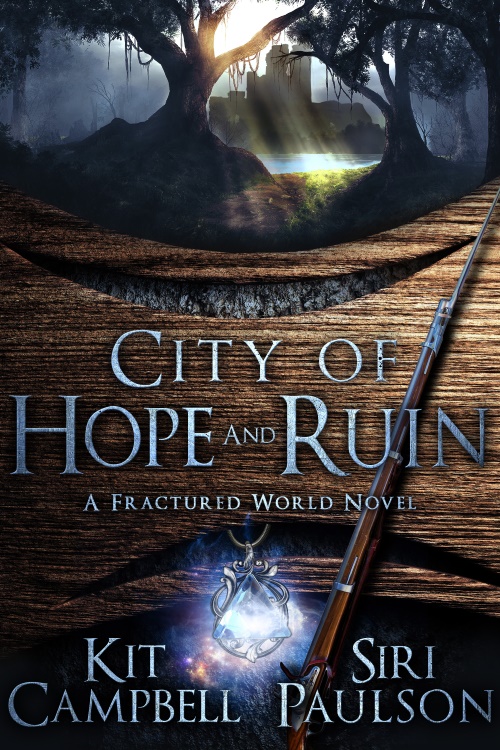
City of Hope and Ruin cover
AmazonKoboBarnes%20and%20NobleiBookscustom
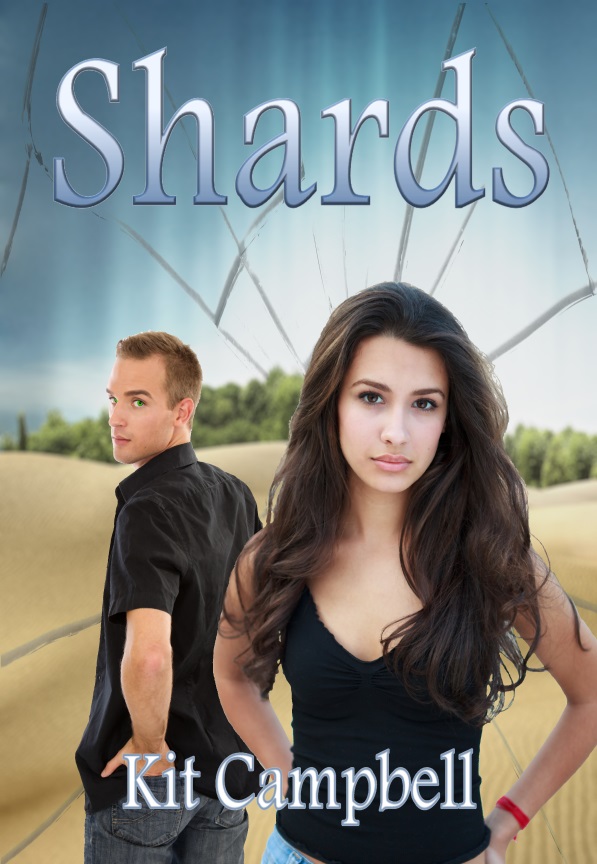
Shards cover
AmazonKoboSmashwordsBarnes%20and%20NobleiBookscustom
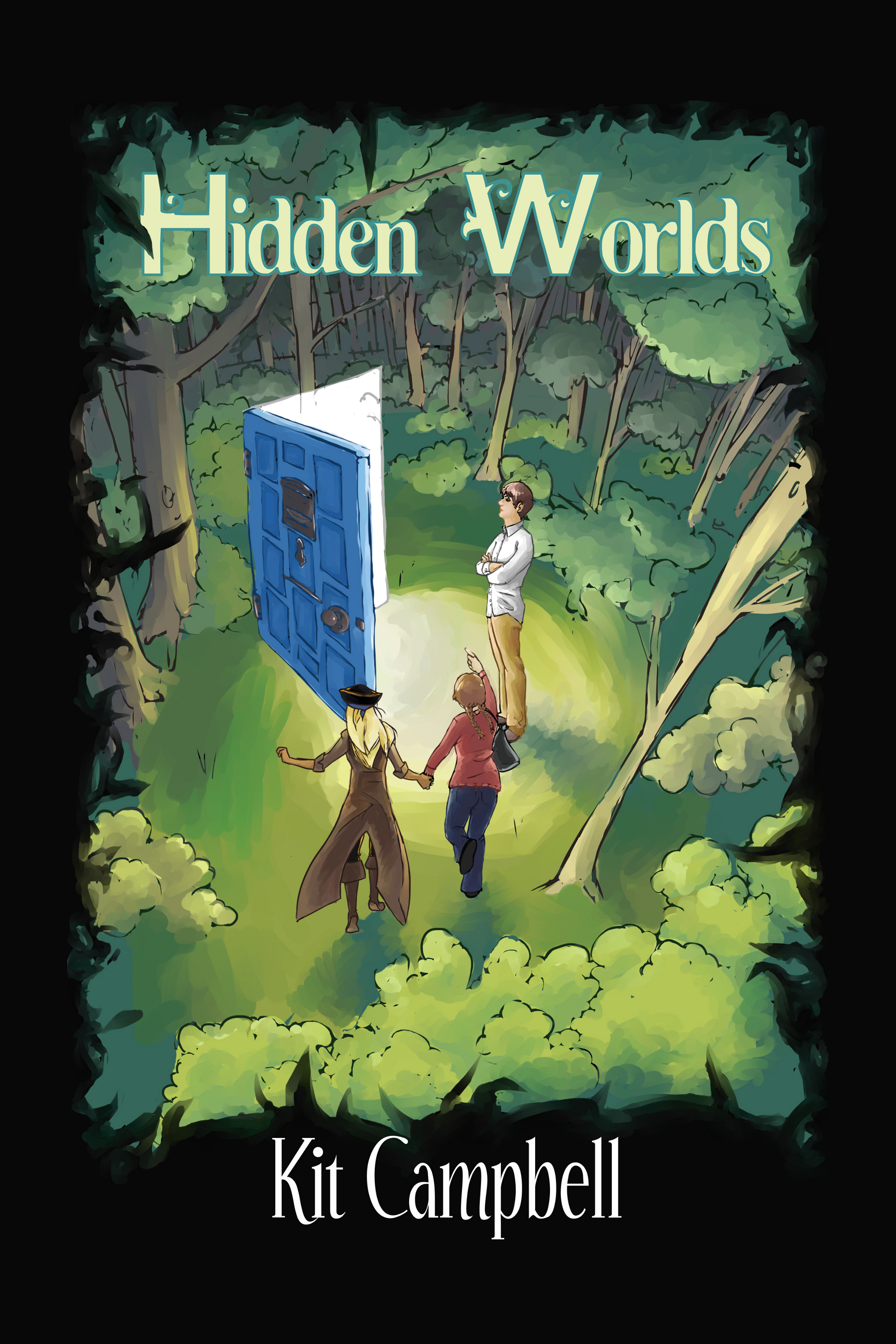
Hidden Worlds cover
AmazonKoboSmashwordsBarnes%20and%20NobleiBookscustom