Review: Electric Gardens by M. Black

Happy Tuesday, squiders. Today, for your reading pleasure, I have Electric Gardens, the first book in a dystopian YA series, by M. Black.

Robotics Dystopian
Date Published: March 15, 2018
Publisher: Eloquen Enraptures Publishing
In our future, robots known as Tins keep us protected from the floods, fires and diseases of the outside in what are called Compounds. But when the Tins become more our masters than protectors, humans rebel. Lexi019 is turning eighteen, and will then be sent into what Tins call the Electric Gardens. Since no one ever returns from the Electric Gardens, Lexi019 is desperate to escape. With her best friend Kyle53 and his sister, the three of them find an unlikely friendship that helps them escape. But not everything is what it seems in this Robotic Dystopia, and soon Lexi019 will be faced with hard decisions she never anticipated. Join Lexi019 and Kyle53 in this four part Robotic Dystopia set in a future that could one day be our own.


About the Author:

M.Black graduated from UCF and packed her bags for Asia. After living in Thailand for close to seven years and visiting near by countries, her travels have influenced her point of view. Passionate about the Earth, nature, wildlife, robots and future technology, M.Black brings you a new line of books called ENTER TOMORROW!

( Website )
Buy the Book: ( Amazon )
Excerpt:

EVERYTHING OUTSIDE IS PITCH black. Night always is. All I hear is the deafening sound of a hard clank, like metal scraping, with every step the creature takes, followed by a pounding into the ground. Red eyes like the sun and shaped like an overgrown Siamese cat named Lotus1; but it’s not a cat. It doesn’t even have fur. It’s another Tin, just like all the other metal monsters in here, designed to keep us in submission, and compliant. At twelve feet long and four feet wide, its paws and claws are something to be reckoned with—if we disobey. None of the ‘human’ Tins have skin; they are all just hard metal, and none have a gender either. If they did have faux skin, they couldn’t fool anyone anyway, because their blood-colored eyes do not hold the human story.

My eyes track the feline’s movements as it passes by me under the shards of moonlight. Its metal neck turns in a creak to glance at me. It’s nine in the evening, just after the last rustic-horn blow. Same time, every night. The feline will crawl one-hundred yards east from my window, and then it will turn around at the Compound wall, and retrace its steps until it passes me again to walk another one-hundred yards west past me. It—and others like it—guard the Compound. I’ve watched this feline Tin pass by me for twelve years; I was put in here when I was five. The Tins do that—keep us behind thick glass—so we see just enough to keep us scared of the dark, of the feline Tins, to tell us they have power over us, to tell us there is no way out of here. My right palm presses on the hard glass that separates me from the metal beast, leaving moist fingerprints and a window squeak. It’s always colder inside than outside; it’s the temperature controlled rooms.

My body lies over a cot—number seventeen. My head coddles the rice-filled pillow in a poor attempt at sleep, but at least I’ve hollowed out a space for my head. It’s weird, having my cot number the same as my age. It’s completely coincidental, and when I’m eighteen the cot will still be number seventeen, but I will no longer be here. I’ll be reassigned, and someone else will take this room—the room I’ve lived in for twelve years. Everything changes when you turn eighteen in the Compound.

Review:

I give this one a 3.5 out of 5. It’s a pretty quick read, without any noticeable slow spots, and does a good job of building up a dystopian world where humans screwed themselves and machines took over. Lexi is a complex character who reads believably as a 17-year-old.

The good: The world, especially the set-up of the Compound and the Tins, the characters (varied and easy to differentiate), the flow of the story,

The bad: Each character has a name + number combo, which can be confusing, especially since every now and then the numbers change for some characters (probably not on purpose). There’s a lot of repetition in Lexi’s thoughts, which bogs it down a little in the middle.

Overall, though, I enjoyed the story and the world that was created and would recommend it if you’re into our own creations turning against us (or are they? duh duh duuuuuh).

Come back on Thursday for the start of Writing Around Life. See you then!

Writing Around Life Introduction

Well, squiders, I think I’ve finally gone mad. Writing around life (work, school, kids, etc.) won the poll, and I was super excited, because I would have sworn that I already wrote, or at least started, this book.

Sworn in a court of law.

However, I can’t find said supposedly written (partially or fully) book anywhere.

I’ve checked my external hard drive of back-ups, which has the contents of at least three different computers on it. I’ve checked the cloud. I’ve even gone through a full year of email, just in case.

It’s vanished into thin air. If it ever existed.

I still feel like it does. I would have sworn that I had started it, run into issues, stopped, and then eventually turned to the idea of blogging the nonfiction books here, where we started with submission and publication.

(The first book in the series, about working on multiple projects at the same time, I wrote completely off the blog and already have had it beta-ed and whatnot.)

I found the outline for the book. All my outlines are numbered, and it’s number 2, so I should have started it after I finished book 1.

I thought I had.

But that doesn’t change the fact that it is undeniably missing. Or that I am crazy and never started it.

There was a laptop in there where the screen shattered, and I don’t know that I ever bothered to back it up (since I tend to double store everything important locally and on the cloud), and I suppose it’s possible that if I hook that laptop up to a monitor, that it might be on there. That seems like a real stretch however. I don’t remember when I was using said laptop, and if it lines up with the time line for when I started the nonfic series.

So, ANYWAY, we will be going over ways to fit writing in around the rest of life, specifically the big things, like work, school (high school and college specifically), and kids. If there is another section you think should be included, please let me know!

I’m still working on the organization of the information (a lot of things are applicable across the board). I’m not sure if it’s better to go through methods to work writing in over all, or focus on a specific area (kids, for example) and just reuse methods through the different sections.

I’m sort of leaning towards the latter, since that way people don’t have to read the whole book if they’re only looking for solutions for one thing. Any thoughts?

We’ve got a review on Tuesday, so we’ll dive into the meat of this subject next Thursday. Let me know your thoughts on organization/other things to include!

Release Party Aftermath (and a Video)

So, the Necro-Om-Nom-Nom-Icon release party on Saturday was interesting! It was held in a combo coffee shop/bar (I don’t know about where you live, but here in the Mile High City and surrounding areas, we’ll combine a coffee shop with anything. Or a bar with anything. Really, it was inevitable.) which we took over most of and confused the general patrons.

They had a toast (I promptly spilled my champagne on myself, very embarrassing, would not recommend) and did some readings, and we all signed each other’s copies and also copies from the general public. And my sister showed up and brought me an alpaca, which she got me after I expressed jealousy over the one she got the smaller, mobile one for Easter.

ALPACAS

(Mine’s the purple one.)

One of the other authors did interviews with everyone. Here’s mine, where you can see me fail at reading as well as try to spell Cthulhu on the fly, and the whole series is here.

All in all, it was interesting, though a bit stressful, because while I knew some of the other authors, I didn’t know anybody particularly well. One of the publishers told me that they’ll be doing a second one closer to home soon, and I’m not sure whether or not I’ll go. (Though it will probably depend on schedule more than anything.)

Still no buy links on the anthology, but I hear we’ll have them soon.

How’s your April going, squiders?


Announcing the Necro-Om-Nom-Nom-Icon

Hey, remember last year when I told you guys I’d been invited to submit a story to a Lovecraftian-themed anthology? Well, I can’t remember if I told you the story got accepted, but it did, and now the anthology’s coming out on Saturday!

Necro cover

They’re doing a release party in a town about an hour from here (convenient!) so I’m going to go. I’ve never been to an in-person release party (though I have done virtual ones) so I am equal parts excited (networking! books! coffee!) and terrified (aaaaah I will have to talk to people).

Each story in the collection has a recipe paired with it, which is silly and I had entirely too much fun making mine.

And now that I’ve seen the galley for the anthology, there’s some authors included that are up the success rung from me, so that makes me feel nice and fuzzy too.

ALSO I have a story in this quarter’s edition of Bards and Sages Quarterly, so April is very exciting here, and then I shall have nothing until the fall, unless someone buys a short story with a short lead time.

(It’s been a year on The Necro-Om-Nom-Nom-Icon and six months on Bards and Sages, which I know is fairly typical, but I think last year’s story that went into Spirit’s Tincture was accepted, like, two weeks before the issue came out. So things vary wildly.)

Anywho, links:

The Bards and Sages Quarterly issue is available here, and there’s a nice write-up about the anthology over here.

There will be more later after the anthology goes live, and the editor from B&S did email to say the issue would be available through other avenues soon, but I’ll probably just update next week as necessary.

Tips for release parties, squiders? Anything exciting happening on your end?

Trying Out a New Challenge

It looks like writing around life is winning the nonfiction topic poll, so if you want one of the other ones more, now’s the time to vote! I’ll probably start that up next week.

So, it’s April! Yay, April!

April is one of the Camp Nanowrimo months, so like most camp months I have signed up with a random goal (in this case, 15,000 words). I appreciate that Camp lets you pick whatever word count you want, but unlike Nano itself, it doesn’t have a lot of momentum behind it so success is random. Looking back at my camp history, I’ve “won” 3 out of 9 attempts. (I also reached my word count goal an additional time but apparently didn’t verify for a win, and didn’t write anything another.)

For a random statistic, 10,000 words seems to be my most common goal, and also the one I hit the most. One year I picked 50K and only wrote 2K, and another I wrote 18K but had a goal of 30K.

There’s really no excuse. Unlike some challenges, Camp lets you update/change your goal up until the last five days or something.

This April, aside from Camp (the 15,000 word count goal is for working on the sequel to City of Hope and Ruin, finishing up the rewrite of Book One, and writing a short story), I also signed up for a challenge called 30 Days of Writing run by Shut Up & Write.

Thus far, I’m not terribly impressed by the challenge. I get daily emails with writing prompts, but if you guys have been around for a while, you know I hate random writing prompts. I believe writing prompts have a place and a purpose, but if I’m trying to work on my fantasy novel, giving me a prompt to write a journal entry from an animal’s point of view is next to worthless.

I’ve got to wonder if they’re useful to anybody? I suppose, if you’re starting out, that any writing might be good practice. But it does seem like a pretty small percentage of people who could be participating in the challenge.

(There’s also the argument that forcing yourself to write every day may not be the best thing for everybody.)

Doing anything new and fun this April, squiders? Participating in Camp or this 30 Days of Writing thing? Thoughts on either?

Pondering Pen Names

Ah, the pseudonym. Something to hide behind, for whatever reason. Authors as varying as Stephen King, J.K. Rowling, and C.S. Lewis have used them over the years.

As I ponder trying out new genres, I find myself returning to this topic. (Of course, depending on the quality of the finished product of said new genres, it may all be a moot point.) And also on how different a genre has to be from your original genre to warrant a pen name.

(For example, I’m plotting out a cozy mystery series with paranormal elements. Do the paranormal elements link it close enough to my normal fantasy/scifi/horror to keep using my same name? Or does the mystery structure move it far enough away to consider using a different one?)

There are various arguments for or against pen names. The reasons people typically use them include:

  • To protect one’s identity (especially if one is writing erotica or something controversial)
  • To confuse/hide gender (female authors might take on a male or gender-neutral pen name, such as using initials instead of a first name, or a male author might take a female or neutral pen name if writing in a women-centric genre)
  • To make things less complicated (if a real name is hard to spell or pronounce, or if a real name is identical or similar to a famous author’s)
  • For co-writing (two people writing under one name, ala Magnus Flyte (my favorite example))
  • To separate themselves from previous work (if they want to try something new or experimental, or just something different)
  • To separate different genres (such as scifi and romance, mystery and children’s, etc.)
  • To hide from past failure (if books sold under one name haven’t done well, an author can re-invent themselves under another and hopefully do better)

If any of the above are an issue, then it can be beneficial to have a pen name. But there’s also arguments against using a pen name, such as the fact that any audience you may have built up won’t follow you to the new pen name so you’ll have to start over audience building from scratch, processing royalties and other payments becomes more difficult, there becomes complications with copyright and rights sales, and things along those lines. There is also an argument that openness is highly valued these days, so using a pen name can seem dishonest to some people.

There are also bad reasons to use a pen name, such as believing that not writing under your own name will allow you to commit libel, or thinking that money earned under a pen name doesn’t have to go on your taxes, etc.

(As a side note, I have learned that some “authors” are really company-owned pseudonyms, meaning any number of people could have written under them. These include V.C. Andrews, Carolyn Keene, and Franklin W. Dixon. Wild. Also, now I know I could potentially write a Nancy Drew novel, which is somewhat exciting.)

I go back and forth on them myself. I’ve looked into people who have successfully published in more than one genre under their own names, and most are big name authors that could probably write down their shopping list and have them published (Stephen King, Neil Gaiman, etc.) or are authors that mostly write/wrote a single genre and then had one or a few random things. (Did you know Ian Fleming wrote Chitty Chitty Bang Bang?) But there are some–Lisa See is best known for her historical fiction, but also has a mystery series, and Emma Donahue is all over the place (though hers are all standalones, best as I can tell).

There is also the counterargument that you don’t need a pen name for different genres, especially if they are wildly different, because it will be obvious. If you write both scifi and romance, for example, one of your romance readers can probably look at your spaceship and alien-infested cover and figure out that it’s not a romance title. (Which goes into the importance of title/cover matching genre expectations, I suppose, but we’re not going to talk about that right now.)

What do you think, Squiders? Pen names or no? Under what circumstances would you (if an author) use one, or would you (as a reader) want an author to use one? Examples of people who have or have not used them to successful or disastrous consequence?

And don’t forget to vote in Tuesday’s poll!

All and Sundry (and Your Favorite Poll)

Hi Squiders! We’ve almost run out of March already. How does that always seem to happen?

(We got a ton of snow yesterday, and our power’s been flickering on and off all day, which is very annoying, especially when one is trying to write a blog post.)

I finished the short story collection I’ve had since forever from the library last night, so now I’m down to three books! \o/ But I’m going to start another one later today. Whoops. I must stop checking things out from the library. Except we all know I won’t.

The collection is First-Person Singularities by Robert Silverberg, which is a collection of science fiction short stories told in first person from the last fifty years of his career. Never read anything by him otherwise (my husband picked up the book because he thought I’d like it) but it was pretty good. Some of the stories I thought were quite excellent, such as “Now Plus N, Now Minus N” and “The Secret Sharer.” So if that sounds like your sort of thing I’d recommend it. It came out in October of last year, so it’s only a few months old.

Writing-wise, I’ve hit the spot near the end of a book where I’m so close I can’t seem to properly focus and get the dang thing done on the Book One rewrite. I mean, I am writing, but it feels like I’m getting nowhere. I need to figure out a way to get through this part of the process in a way that is less taxing to my psyche, because it happens every book and drives me mad each time.

On that note, it’s hard to focus on the CoHaR sequel because I’m so close on Book One. Yet Siri’s waiting on me to finish my part, so…

And, probably thanks to First-Person Singularities, I’ve got a short story itch. I haven’t written one since the end of October and there’s one I’ve been wanting to write for probably five years, and maybe I should just sit down and do it…? I’ve got two coming out in various publications in April and I don’t really need any more to stick into my portfolio, but there’s something very satisfying about getting a story done in 2 or 3000 words, especially when your main project is up to 110K and probably has at least another 5K to go.

And it’s been a bit since our last nonfiction series here on the blog, so let’s get one going. We’re down to our last few topics.

Which Nonfiction Topic Should We Do Next?

View Results

Loading ... Loading ...

Re-Learning How to Co-Write

Siri and I have officially broken ground on the sequel for City of Hope and Ruin! It’s just a couple thousand words, but we’re going, and so far it feels good.

It’s already interesting from a process standpoint, however. For City of Hope and Ruin, we each essentially had our own worlds, with our own characters and our own plots, that occasionally overlapped (or a lot overlapped, at the end). But for all intents and purposes, we could go and work on our own parts for a week or a month, then meet up and check in and go over each other’s parts, and then go back to our own stuff.

It worked pretty well. But it won’t work for this book.

Our characters are in the same place, now wrapped up in the same part of the plot. At least for now, there will be a lot more overlap between what the characters are doing (they very well might split up for a while later, but they’ll probably still be working on the same plotline). So we can’t go off and write independently. Each new section will need to be discussed beforehand and looked at after the fact.

So that will be new. It will be interesting to see how it goes.

Does anyone have examples of novels (preferably fantasy or scifi) where two authors wrote different characters interacting in the same place? Most of the dual author books I can think of either do what we did with CoHaR and separate the characters so they don’t overlap much, or both authors work on the whole book (which I don’t honestly understand how that works, unless people are doing different parts of the process).

Anyway, long story short, we’re here, we’re moving, so far so good, and we’ll see how it goes. Every book is different and has its own challenges, whether it’s your first or your fiftieth, so I guess we shall see what problems pop up on the way. At least we have more time for this book before it’s due, and the world/characters are already established.

How’s your Tuesday going, Squiders? Anything new and interesting?

(I’m down to four books, by the way.)

Day Job?

So, in theory, I’m living the author’s dream. I’m mostly a stay-at-home mom (though I do freelance and contract editing and writing part-time), so I should have plenty of writing time. Right? Isn’t that what we all want, to be able to stay home and write? To ditch the day job?

I mean, there are the mobile ones, who are a distraction and also very demanding. And there are chores (like the never-ending dishes, argh).

Still, plenty of stay-at-home parents find time for their writing. And, I mean, it’s not like I don’t get anything done.

But I recently came to the realization that this situation isn’t ideal, at least not for me. I was so much more productive when I was working full-time. I even managed 50K a month while working full-time AND doing graduate-level engineering courses. I’ve always chalked up the decrease in productivity to having kids, but now I’m wondering…

And I’m wondering if the editing/writing as a job isn’t hurting my productivity with my fiction. If I’ve spent three hours doing a content edit for a client, it can be hard to turn around and spend another two hours on my own work. If I’ve spent an hour and a half fighting with someone’s grammar, my brain can feel fried.

And maybe getting out of the house and doing something non-writing related would actually be beneficial. Maybe if I got a job doing something else, writing would be more of a reward again. I mean, I still love writing, I enjoy doing it, but sometimes the motivation just isn’t there.

There’s options here. I could:

a) Pick a different job to do on a freelance contract basis. I made a list. Some are things I already do that I’d love to do more of, if I could pick up more clients, such as book layout. I love formatting a book for print. ebook layouts are a little less fun but still enjoyable. And book layout keeps me with the books I love without eating my writing/editing brain. Others are new. Like being an audiobook narrator. I’ve got vocal training through singing and theater, so that could be really fun, and it keeps me with books. I’d also love to draw on a freelance basis, but am more lacking in skills/experience in that area.

b) Pick up a part-time job doing whatever outside of the house. Mostly I’ve been eyeing libraries and book stores. I have experience doing that (I was a library page for three years back in high school), and, same as above, keeps me near books. And gets me out of the house, which is probably a good thing.

c) Go back into the full-time work world. My college degree(s) are in aerospace engineering and mechanical engineering, and my preferred part of the production life cycle is testing, which is apparently rare, so I’d probably be able to pick up a job pretty easy, even though I’ve been out of the industry for almost seven years.

d) Go back to school for another degree. To be honest, I didn’t really like my last “real” job–the company was a bad fit for me in practically every way, and is a major reason why I went freelance instead of trying for another engineering job at the time. So I might be happier in another field (or it might have been the company). I’d like to write stories for video games, but would probably need to get a degree in video game design. Graphic design could also be fun, though, as above, I am probably lacking in skills/experience. Of course, college + mobile ones probably equals less writing time, but maybe not!

Any insight, squiders? Has anyone had success with career crises?

Bogged Down in Books

I worked the Scholastic Book Fair at my older mobile one’s school this morning, which was actually really fun! And I only walked out with one book and it wasn’t even one for me, which is kind of a victory. (I bought my smaller mobile one Kate Beaton’s The Princess and the Pony. I have both of her Hark! A Vagrant collections and the mobile ones really enjoyed King Baby, so I figure it’s a good bet.)

Also! I discovered Mary Downing Hahn is still publishing! She was one of my favorites when I was a kid. I re-read Wait till Helen Comes fairly recently and it held up pretty well even as an adult.

I seriously considered picking up one of her books (for me, my mobile ones aren’t old enough, and the older one is a bit sensitive about scary things anyway), but I didn’t because I’ve reached that state where I’m in the middle of too many books and hence am making no progress on any of them.

I’m in the middle of…six books right now. They are:

  • A Dweller on Two Planets, Frederick S. Oliver (1905) — this is a book the author claimed was written through him, and deals with Atlantis and re-incarnation and whatnot. I’m about halfway done, and it is pretty impressive work for a late nineteenth century homesteader.
  • The Well at the World’s End, William Morris (1896) — early fantasy, a lot of emphasis on chivalry and knighthood and all that jazz. Still working through all the public domain books I downloaded years ago when I first got my Kindle and Amazon was giving them away from free. This book must be really long because I spend half an hour reading it while reading the exercise bike and only move 2% at a time.
  • Thrice Upon a Time, James P. Hogan (1980) — At MileHiCon, there was a man selling old scifi and fantasy paperbacks for $2 each, and I bought four. This is one of them. I bought it because I thought Hogan’s Inherit the Stars was excellent science fiction. This is also scifi and the story takes place now-ish, and is a fairly common mix of overshooting on technological achievements and somehow missing all the societal changes that have happened.
  • Heirs of Power, Kate MacLeod (2017) — Reading this for a review group on Goodreads. Fantasy. So far so good!
  • One Man’s Wilderness, Richard Proenneke (1999) — nonfiction about a man who built a cabin by himself in the wilds of Alaska and lived there for 30 years.
  • First-person Singularities, Robert Silverberg (2017) — I’ve probably had this book since it came out. Whoops. But in my defense, nobody else is requesting it from the library. Science fiction short story collection, all told in first person. I always find short story collections a slow wade, because I like to digest a story before I move on to the next one.

One Man’s Wilderness and Heirs of Power should probably be my top priorities–the first is due back to the library in a few days (and there’s a hold request on it) and my review for the second is due Saturday–but when you’ve bogged yourself down, don’t you find it hard to read at all? Too many stories vying for attention.

And it doesn’t help that I re-read the second half of City of Hope and Ruin yesterday to remind myself of the ending/characterization so I can start working on the sequel.

But yes. Too many books. Must stop picking up more. The first two are slow going and I don’t read them very often, but I should probably just power through them and get them out of the queue. And also read more recent books. But I hate looking at those unread books on my Kindle library…

How many books are you reading right now, Squiders? Any recs (not that I need them)?

Books by Kit Campbell

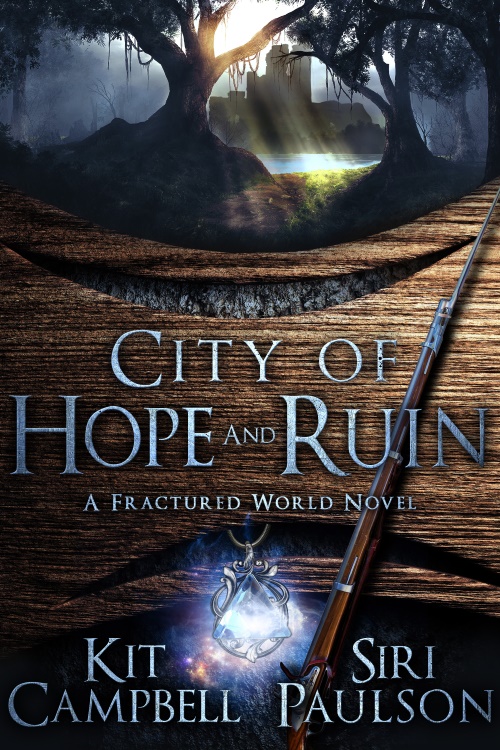
City of Hope and Ruin cover
AmazonKoboBarnes%20and%20NobleiBookscustom
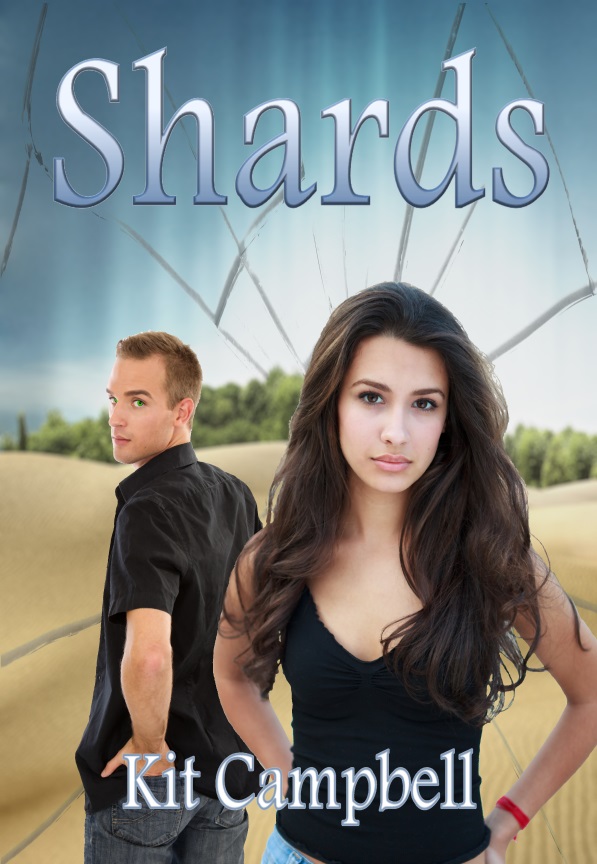
Shards cover
AmazonKoboSmashwordsBarnes%20and%20NobleiBookscustom
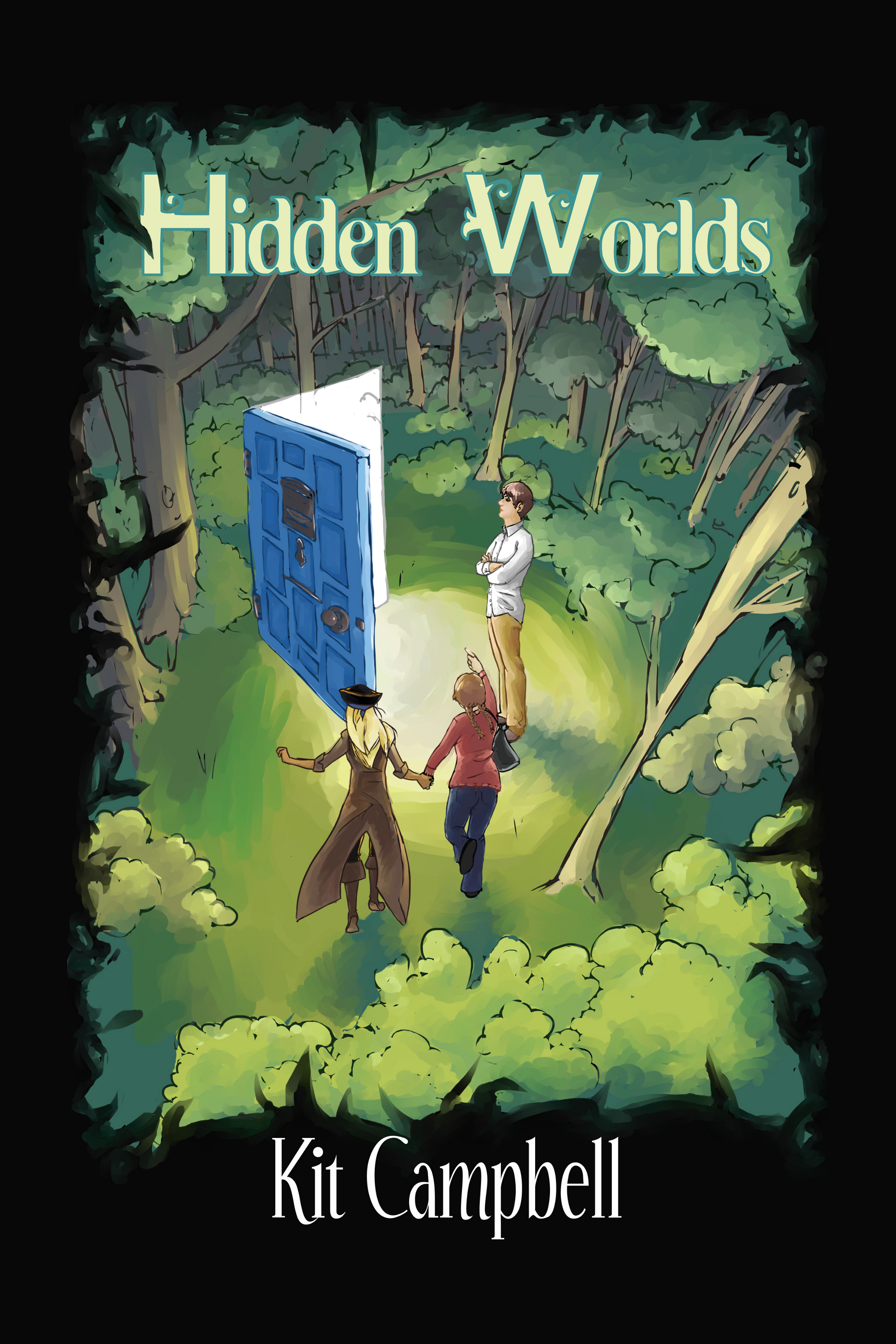
Hidden Worlds cover
AmazonKoboSmashwordsBarnes%20and%20NobleiBookscustom