Goals, Accomplishments, and Zombie Alpaca

Happy arbitrary division of time, everybody! But a new year feels good, doesn’t it? I feel good, anyway, like there’s a year of possibility out there just waiting for me to take it.

To get things started, look at this awesome mug my sister got me for Christmas.fear them
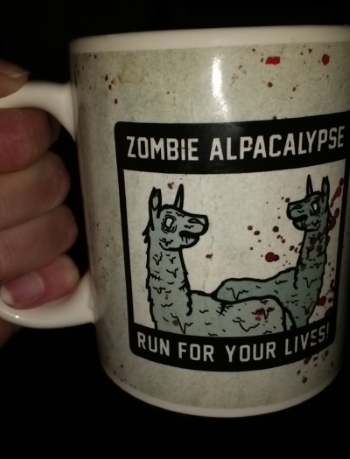
Ahahahaha. Sometimes she has excellent taste.

(Sometimes.)

The rest of this post is the obligatory reflection of how 2016 went and how I hope 2017 will go. At the beginning of last year I made a spreadsheet of all the things I wanted to do and gave them general time frames for completion.

I only completed two things on the list, but I think that’s a bad reflection of how the year actually went.

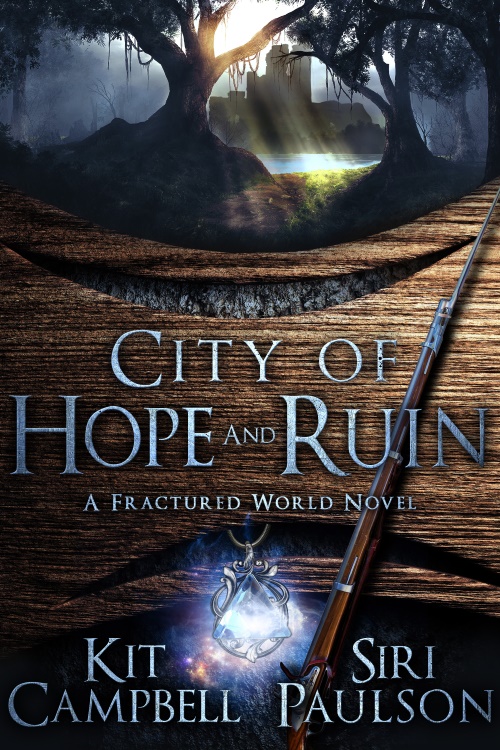
  • I revised, edited, published, and marketed City of Hope and Ruin (with help from my intrepid co-writer Siri, of course). That’s no mean feat in of itself, as you guys probably know.
  • I also wrote a near-novella length story for To Rule the Stars and went through the revision process with that. In addition, I did both the print and ebook formatting AND the cover. I’m pretty dang proud of that. (The cover in paperbook form is gorgeous and I regret nothing.)
  • I wrote and published a CoHaR-related short story/prequel which may or may not have made people cry.
  • I wrote several (not sure how much, but probably at least 10K) thousand words on my nonfiction books, both here on the blog and in the books themselves.
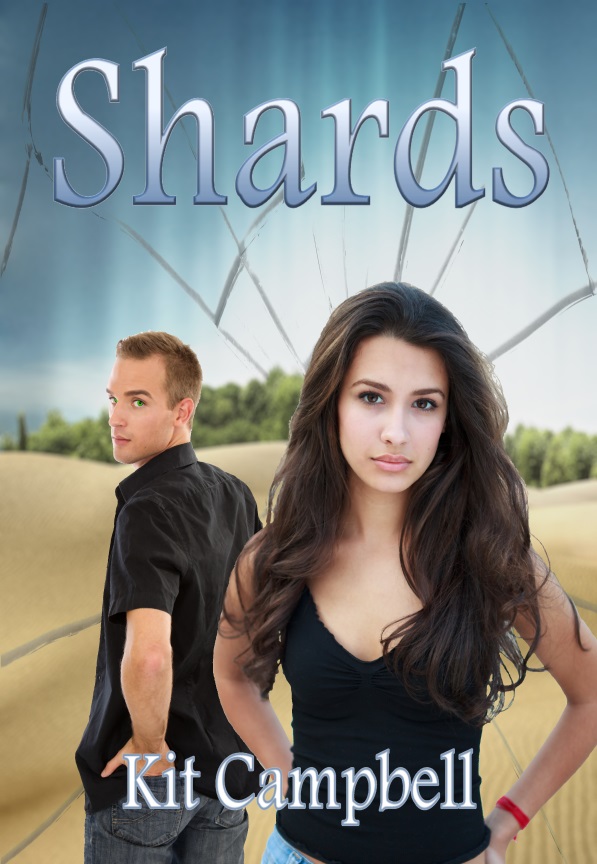
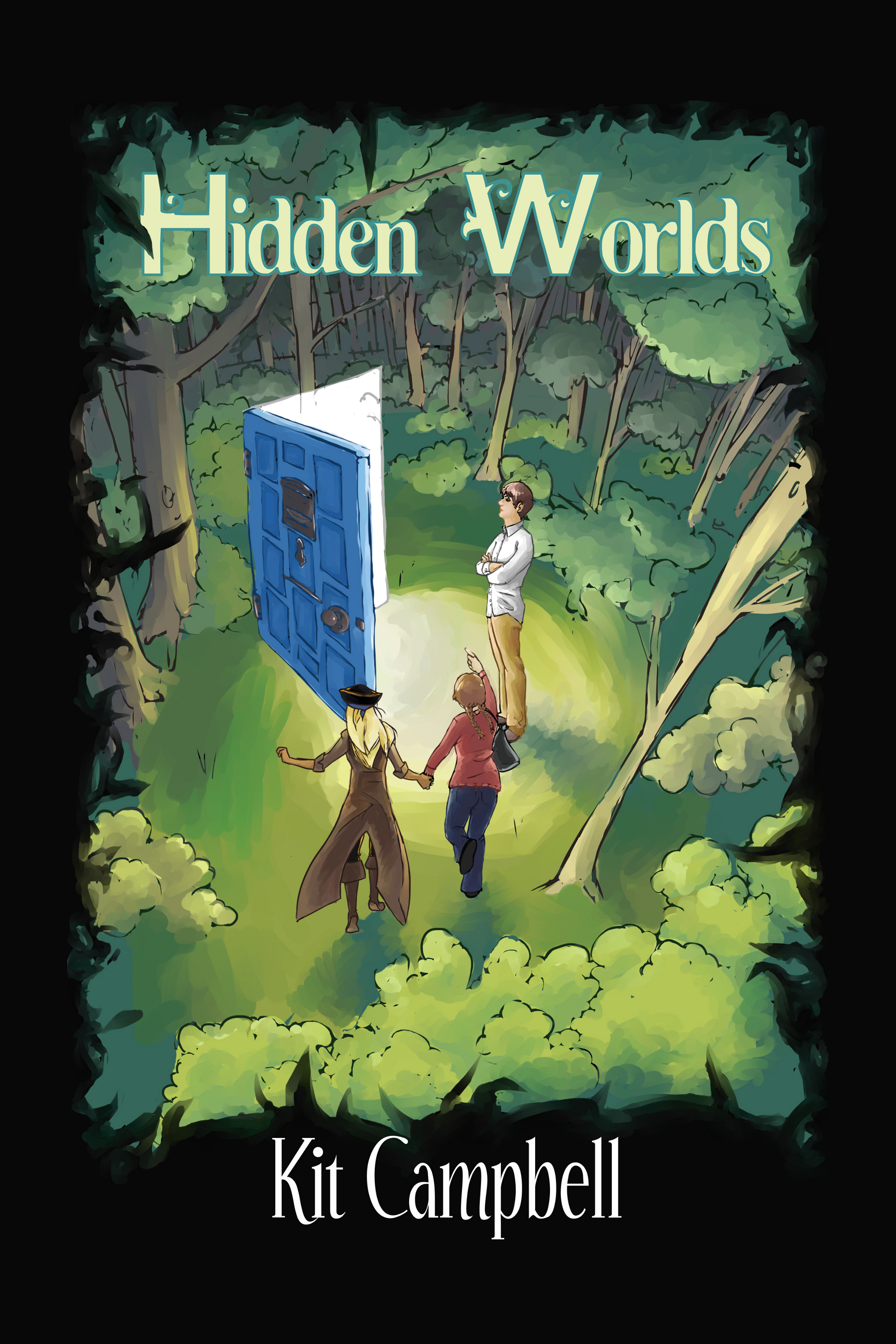
  • I redid the book description for Shards and redid the back matter for both it and Hidden Worlds.
  • I’ve done several drafts of my query letter for my YA paranormal novel.
  • I completed the revision prep for the first book of my high fantasy trilogy, which took about six months because it was in a terrible state.
  • I’ve continued to shop short stories to appropriate markets.
  • I’ve also continued to write monthly installments of my stealth scifi serial (say that five times fast), and have also started posting it to Wattpad.

So how does 2017 look?

First of all, I’ve got a short story collection coming out in early February called The Short of It. It will have four previously-published stories and one brand spanking new one. I’m doing final edits on it now, so I’ll let you know more information as it becomes available. I’m going to test out KDP Select with it, so I’ll report back on how that goes.

I’ve also got Shards in a promotion this weekend where it’ll be available for $.99 (It’s normally $3.99). I’m testing some new promotion techniques, and am also interested to see if the new book description (see above) will hatch me any chicks. More information on that later, too. I may post a Saturday post depending on when I get the info from the promo coordinator.

That’s the immediate future. Other plans:

  • My revision of the first trilogy book takes top priority. My mother and sister signed me up for PPWC at the end of April, and if all goes according to plan, I hope to pitch it there. I’ve applied for a session with the acquisitions editor of Del Rey.
  • The next highest priority is the query letter for my YA paranormal. I’d like to start querying it sooner rather than later.
  • I’d like to continue to try out new promotion techniques with both Hidden Worlds and Shards. I didn’t market HW at all when it was released, and Shards suffered from a misleading book description. I feel like they deserve more/better work than I gave them the first time. If you have ideas/want to help, please let me know!
  • I’m going to continue work on my nonfiction book series. The publishing/submitting posts will start back up here next week. I’m also considering moving to a three-times-a-week posting schedule to speed things up.

If all that gets done, I’d like to:

  • Finish the first draft of my space dinosaur scifi adventure novel.
  • Research, outline, and start a steampunk adventure/mystery series.
  • Start a new novel in the Shards!verse.
  • Discuss and perhaps start a sequel to City of Hope and Ruin, or at least work on other stories in the same world.

There’s more odds and ends, but those are the main things.

How did 2016 go for you, squiders? Anything really exciting happen? What are your plans for 2017?

(I know typing this stuff all out is a pain, so feel free to link me to posts and whatnot if you’ve laid it out elsewhere!)
Happy Holidays! (Also, a hiatus and landsquid and a typo)

So, I’ve had a chance to actually look at my schedule over the next two weeks, and it is extremely unlikely that I will be able to post next week. So I guess this is my cue to wish everyone a happy holidays, and I shall see you on the flipside in 2017, when we will do year-end/year-beginning stuff for about a week and then dive back into the publishing/submitting posts (where we will discuss self-publishing short stories to begin with.

So, Jan 3. I shall return.

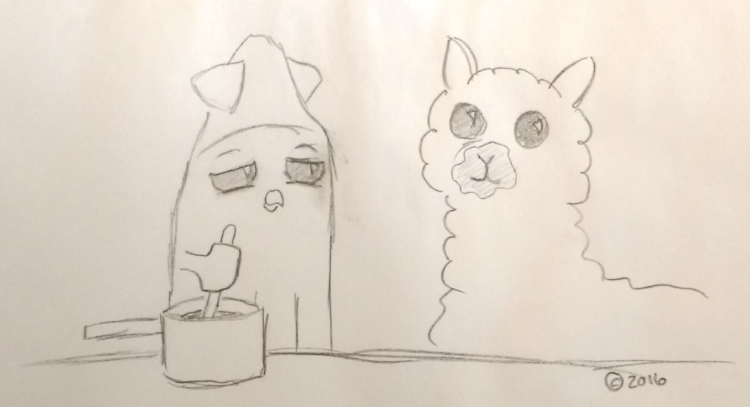
Til then, I was up late making peppermint bark, so I drew you a peppermint bark-making landsquid.

He’s supposed to be eying the Alpaca suspiciously. Oh well. Things to practice. Squinty eyes.

I was talking to a few friends last night about whether or not I should do a holiday post today or whether I should start the year-end stuff, and the general consensus was to do the holiday post, at which point I noted that I would draw a landsquid for the post.

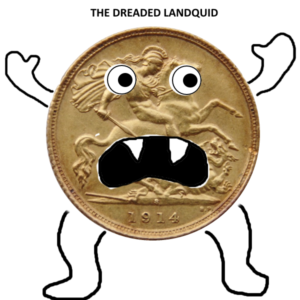
And my dear friend Di said, “LANDQUID.”

So, in celebration of a hilarious typo, I made you all a landquid. Just for you, Di.

landquid--it's terrifying

Rar.

Happy holidays, everyone! I’ll see you on the other side!

Memory of Place

Around this time of year, I occasionally get a bit nostalgic, and various childhood memories sneak in here and there. Last week I was at the Tattered Cover with the small, mobile ones buying gift cards for the larger mobile one’s teachers. The Tattered Cover is a local bookstore chain. The original store I was familiar with was in a fancy shopping area called Cherry Creek, and I would swear we practically lived there when I was little.

(I called my mother to see if this was just childhood exaggeration, but she says we were there fairly often.)

The original Tattered Cover was amazing. If my memory serves me–and it may not–it was a towering bookstore, four or five stories tall, not counting the basement, and it was a chaotic mess. There seemed to be little order to the sections, and you’d often have to explore multiple levels, with their maze-like shelves, to find what you were looking for (provided you were looking for something specific). For a small bookworm, it was heaven, equal parts mystery and adventure.

(Unfortunately, the Cherry Creek location went out of business about ten years ago, and while there are three current locations, none of them quite manages the magic of the older location, though they still have interesting organization and they try to stick in hidden corners where possible.)

There are other places that have stuck with me over the years. What is it about these places? I think it’s that they all have a little bit of magic to them, something that makes them a little different. These can be places you’ve been a million times or a place you’ve only seen once.

I was going to make this a reading analogy, about how some stories stick with you, even years later, but I’m not quite sure it’s necessary. But it’s good to have a little bit of magic in our lives, and perhaps it’s most important to remember that through the holidays, when tensions run high and stress threatens to drag us all down.

If you have one of these places still, maybe it’s worth it to take the time to spend some time there, to let the magic wash over you as much as possible.

What are some of the magical places in your life?

Captain Hawkins by H. Peter Alesso

Happy Friday, Squiders!

Today it’s my pleasure to introduce Captain Hawkins by H. Peter Alesso.

mediakit_bookcover_captainhawkins

Here’s the blurb:
Jamie Hawkins was living on an obscure planet in the twenty third-century when on one fateful night—his life changed forever. His heroic effort to save the lives of innocent women and children, caught in the cross-fire of war, placed him squarely in the crosshairs of avenging soldiers.

A former marine, Hawkins was stunned when his rescue effort was seen as treachery. Unfairly convicted of treason by a corrupt judge, he was sentenced to life imprisonment at hard labor on an infamous penal colony.

Once in prison, Hawkins was mistreated by a paranoid warden, but his courage and perseverance won him the admiration and trust of his fellow convicts. While he was plotting his escape, an enemy attacked the planet—giving this daring warrior his chance. Together with his fellow prisoners, he launched a bold assault and high-jacked an enemy warship.

From then on, the exploits of Captain Jamie Hawkins became legendary.

Excerpt:
The black of night had fallen, but Jamie Hawkins couldn’t sleep. Though the surgeons had patched up his many wounds, the remorseless pain persisted, even now, months after his medical discharge from the Marines.

BAM! BAM! BAM!

Despite his desire to ignore the unwelcomed thundering blows, he answered the door to his country home and found his neighbor, tall scrawny seventeen year old Joshua Morgan, gasping for breath.

“Captain Hawkins, come quick! Come quick, or they’ll all be killed!”

“Who? What are you talking about, Joshua?”

“I’ve just come from the city—it’s a war zone. People are dying,” Joshua’s voice broke. “The hospital is taking care of the wounded and sheltering women and children, but its force shield is buckling.” He finished in a breathless rush, “It’s only a matter of minutes before it fails.”

A troubled frown creased Hawkins’s face. Their mothers had been friends and he had known Joshua since he was born.

Has the boy been drawn into the turmoil? He wondered.

Hawkins had listened to the broadcasts throughout the day, absurd in every detail; demonstrators declared that they were only protesting injustice, while the government insisted the violence was a last resort against rebels.

Which is the greater lie?

Bio:

As a scientist and author specializing in technology innovation, H. Peter Alesso has over twenty years research experience at Lawrence Livermore National Laboratory (LLNL). As Engineering Group Leader at LLNL he led a team of scientists and engineers in innovative applications across a wide range of supercomputers, workstations, and networks. He graduated from the United States Naval Academy with a B.S. and served in the U.S. Navy on nuclear submarines before completing an M.S. and an advanced Engineering Degree at M.I.T. He has published several software titles and numerous scientific journal and conference articles, and he is the author/co-author of ten books.

Website

Goodreads

Facebook

Pick up the book here!

The author will be awarding a $25 Amazon or B/N GC to a randomly drawn winner via rafflecopter during the tour. a Rafflecopter giveaway

Mid-December Music Interlude

We’ve talked previously about writing and music, Squiders, and I thought the lot of you might want some alternatives to the never-ending Christmas music.

Last Thursday my husband and I braved below freezing temperatures to go to a Sonata Arctica concert (and were up past midnight on a work night! Madness). Anyway, because so much of this year has been dedicated to marketing and revision, I haven’t had a lot of chance to listen to long swathes of music, and I haven’t gotten much of a chance to listen to my beloved symphonic metal (excellent for writing epic fantasy–not so good for the more left-brained activities).

Anyway, I was inspired, and I thought the lot of you might like some music recommendations as well, since the last post went over so well.

Sonata Arctica was touring with Omnium Gatherum and Leaves’ Eyes. Omnium is melodic death metal and is not particularly my cup of tea (too much growling), so I’m not recommending any of their stuff. If they sound interesting to you, feel free to check them out.

Leaves’ Eyes is symphonic metal, but I haven’t listened to them in some years. I was very pleased to see they’ve gotten quite a bit better. They were fun live as well, with the male vocalist coming out in full viking armor for the last few songs. This was one of my favorite songs from their set:

Leaves’ Eyes – Sword in Rock

Sonata Arctica is more power metal than symphonic, but I am fond of them, especially their earlier stuff from the early 2000s. Their more modern stuff is less to my taste though there are still songs I enjoy. Hard to pick one to share. Here’s one that falls between the older stuff and the newer stuff.

Sonata Arctica – I Have a Right

And now some off the radio to round out the post:

There’s a riff in the chorus that gets me every time.

Andrew McMahon in the Wilderness – Fire Escape

This one has a nice message, plus an interesting twist on things.

Alessia Cara – Scars to Your Beautiful

And to go back to the symphonic metal for a minute, here’s a song that got me through the climax of the third book of my high fantasy trilogy. (And the music video has spawned a novel-length plotbunny of its own.)

Within Temptation – Paradise

(Seriously, though, if you’ve not checked out symphonic metal, you are missing out.)

Anyway, Squiders, hope this tides you over for a bit! Let me know if you’ve heard any songs that have really stuck with you lately! (Also love symphonic metal? Let us geek out together.)

Tie-in Fiction Friday: Star Trek #3 The Klingon Gambit

My mother recently moved out of my childhood home to move in with my grandmother, which means I had to go through the stuff I accumulated throughout the first portion of my life and then abandoned when I went out on my own after college.

There was a lot of it.

A good majority was Star Trek-related–action figures, ship models, tons of roleplaying stuff, and books. LOTS of books. Nonfiction books about how the series were made, nonfiction books like The Physics of Star Trek (and Biology, and Metaphysics…), and most of my collection of the fiction books. Most of mine are Original Series, which was always my favorite series to read from, with the odd one or two from Next Gen or DS9 or Voyager (I did have a lot of the New Frontier books, which is Next Gen era but on a different ship with different characters, though some of them had appeared one off on various episodes).

Actually, until I was an adult, I’d only ever seen one or two Original Series episodes. My appreciation for the series came from the movies and the books. And I did love those books.

But the Original Series books are a mixed bag. Not a lot of quality control. Some are amazing. Some are godawful. Most fall somewhere in the middle.

So this brings us to The Klingon Gambit, Star Trek #3, by Robert E. Vardeman, published in 1981. I admit I picked this one out because it was one of the thinnest of the bunch, but it turns out the font is really small and so it’s somewhat hard to read. I am unfamiliar with Vardeman’s other works (except I’ve probably read his other Star Trek novel) but he’s apparently written quite a few fantasy series (usually writing with other people) and was nominated for a Hugo for best fan writer. If his other stuff is worth reading, let me know–I’m not sure this particular novel was a good display of his potential storytelling.

(I tried to write a Star Trek novel once, when I was 16 or 17 or somewhere in there. Despite my great love of the series, I couldn’t seem to get anyone in character and gave up after the first chapter.)

The premise of this novel is that the Enterprise is sent to Alnath II to investigate the death of a shipful of Vulcans. All the Vulcans are dead in their beds, with no sign of any issues–there should be no reason for them to be dead, but they are. A Klingon dreadnought is in orbit, and the fear is that they’ve developed some new weapon. There is also an archoelogical team on Alnath II, investigating a large, complex pyramid that seems to be the only remains of what was once a technologically-advanced civilization.

This is not one of the better Original Series novels. Several characters feel out of character (there is a subplot where people are acting out of character, but this is apparent even when that subplot is not in effect), and I feel like perhaps the author was a little bit amused about Star Trek in general. I noted, for example, that every time someone uses the transporter, we had to focus on the fact that their atoms were scattered and then reformed back on the planet. In general, some of the terminology just feels slightly off.

Now, this is probably just from me looking back from the future. The Original Series is not the best on continuity, and it wasn’t until Next Gen and later that a lot of the worldbuilding for the universe was solidified. Next Gen didn’t start until 1987, so this significantly predates that. It was probably hard to figure out what exactly was going on back then.

I also found the plot pretty predictable, and also somewhat close to at least one, if not two, Original Series episodes (as a kid, having not seen those episodes, maybe I liked this plot better). Also Kirk seemed to not be suffering from one of the major plot issues despite the rest of the crew doing so, and if he had been, maybe the stakes would have been a little more interesting.

So, would I recommend this particular book? Not really. It’s not great in Star Trek terms, though it does at least use Star Trek plot elements, such as the Klingons and Andorians. It got better as it went on, but it still wasn’t strong in either plot or character. There’s definitely better books out there.

Read this particular Trek novel, Squiders? Thoughts?

Publishing Short Stories Traditionally (Part 3)

Here’s our final stop on this particular story type/publication method combination, Squiders.

Short Story Collections

Like anthologies, short story collections are, as the name implies, a collection of short stories. The main difference is that an anthology features the work of multiple authors, while a short story collection includes the work of only one. As such, short story collections tend to operate more along the same principles as novels than selling a single short story at a time.

The first step toward submitting and publishing a short story collection is to have written a number of short stories. These can be ones that have been previously published, or they can be new ones. A number of stories is necessary; most traditionally-published collections are equal in length to novels. These stories can be related, such as all featuring the same characters, or the same universe, but they do not need to be.

If you have an agent (see agents section–note for blog: not written as of yet, so don’t be confused that you can’t find it), you can have them submit to publishers for you; some publishers will accept submissions from unagented authors. Like novels, you will need to write a query letter that you or your agent can send out. The query letter will need to have statistical information about the collection (number of stories, word count, genre if possible, etc.) as well as some sort of hook to inspire a publisher to look closer at your stories. An interested publisher may ask for a sample, or may ask for the entire collection to aid in the decision-making process.

NOTE: Short story collections are notoriously hard sells, especially if you are not an established, traditionally-published author. Publishers typically find them hard to market, and readers may not pick up a collection if they are not previously familiar with the author in some way. Previously published stories may be an easier sell in this case, especially if they’ve been published in top-tier markets or have won industry or genre-specific awards. Alternately, short stories that are linked to a novel series can also be easier sells, since readers are more likely to seek them out to augment their reading of the series in between novels.

A publisher will have a contract you will need to agree to before they’ll publish your collection. If you do not have an agent, you might consider asking one or a rights-specific lawyer to look over the contract to make sure that you’re getting a fair deal. Some publishers will pay some amount of money up front, called an advance. You have to “earn through” your advance before you can start earning royalties. Others may not pay an advance at all.

All right! That’s it for traditionally publishing short stories. Please let me know if you feel I’m leaving anything out, or if anything is confusing.

I’m going to take about a week off of the book posts (I’m reading a terrible Star Trek novel to share with you guys on Friday) and then we’ll jump into self-publishing short stories (which is a massive beast). And then another break from those sorts of posts and then into the novels, egads.

Happy Tuesday!

Publishing Short Stories Traditionally (Part 2)

Continuing on from Tuesday. If you missed that post, I recommend clicking the handy link at the top or bottom of this entry (depending on whether you’re on the blog or website) or simply scrolling down and reading that one first if you’re on the main blog page.

Picking up where we left off:

Anthologies

An anthology is a collection of short stories (or longer works, such as novellas) that center around some sort of theme. These themes can be very specific or very broad, depending on the publisher and the particular anthology in question. Publishers that regularly release anthologies may have the next several themes available on their website so you can plan ahead.

Submissions for anthologies work in two distinct ways:

  • You can be invited to submit work for an anthology. This is more common if you’re an established, decently-selling author who has been traditionally published by major markets, or if you’ve worked with an editor before and they’ve been impressed with your work.
  • A publisher releases a call for an anthology, which is open to established and new writers alike. (In some cases, publishers may be looking specifically for new authors; the submission guidelines for the anthology would state this.)

Like magazines or journals, market websites like Duotrope and the Submission Grinder list open anthology calls on their websites, and you can search specifically for anthology markets by using their advanced search function. Anthology calls often have a deadline associated with them (i.e., stories must be received by November 15), though some publishers may keep submissions for a particular anthology open until they feel they’ve received an appropriate amount of acceptable submissions. Often, an anthology call will also include the intended publication date for the anthology.

Pay rates for anthologies follow the same methodology as magazines and journals, falling into pro, semi-pro, token, and non-paying or exposure. Anthologies are more likely to pay a flat rate per story, and also may include a copy or two of the anthology. Some anthologies may pay authors a share of the royalties, either as the main form of payment, or in addition to whatever the original buying rate was. Some anthologies are created to make money for charitable causes–the submission guidelines will normally specify this.

Like magazines and journals, you can try to fit a previously written story into an anthology, or write a story specifically to match an anthology theme.

NOTE: Depending on the anthology theme and how specialized it is, it may be hard to place an anthology-intended story elsewhere if the anthology does not accept it.

In many cases, the submission process for an anthology is similar or identical to submitting to a magazine or journal, with most using either an email submission process or an online portal. An anthology may accept a wide variety of story lengths or be focused on a specific type of short story (such as flash fiction), and pay rates may be different depending on the length of the story. For example, some anthologies may pay a pro rate for very short works, such as flash or micro fiction, but pay semi-pro or token for longer works.

If your short story is selected for inclusion in an anthology, the publisher will send you a contract specifying rights and when/if the rights will revert to you after a certain period of time. The editor or publisher may also ask for some edits to be made to the story. These are normally fairly minor–small plot issues or copyediting–as the time frame and demand for an anthology does not allow for more major changes; if a story is not working on a larger level, it is very unlikely to be selected.

Here’s part 2, Squiders! Again, let me know if anything is confusing or if you feel I’m leaving something out, or let me know if the format isn’t working for some reason. I’d hate to go through the whole thing if the format is inherently wrong! Otherwise, we’ll continue next Tuesday with the third and final part of traditional short story publishing and then take a bit of a break on the subject before we jump into self-publishing short stories.

Otherwise, I hope you have a happy weekend, Squiders!

Publishing Short Stories Traditionally (Part 1)

Okay, Squiders! Let’s get into the meat of things. Today we’ll be talking about “traditional” methods of short story submission and publication. As a short recap, “traditional” publishing is the method of publishing that has been the norm for the last several decades, where authors send out a story to a market with the hope that said market will buy it and pay them money.

For short stories, your traditional paths fall into three main categories:

  • Magazines (including e-zines) and journals
  • Anthologies
  • Short story collections

We’ll take a look at each of these in order.

Magazines/Journals

A magazine is a soft-bound publication that often features a mixture of articles, advertisements, and pictures, often centered around a theme, that is released on a regular basis. A journal, in this case, is similar to a magazine but tends to focus more on publishing stories. These are sometimes known as a literary journal, but many people use both magazine and journal interchangeably. There are publications that combine the two, featuring a mixture of articles and stories.

And e-zine or online journal is essentially the same idea, except the final product is digital. These can be an e-book type file, which can be downloaded and read on e-readers, or everything might be hosted on a website.

When submitting to a magazine or journal, it’s important to do your research beforehand and make sure the publication in question is open for submissions, and that they publish the type of story you’re trying to sell. Most publications will clearly list their submission guidelines on their websites.

Various websites will list open markets. The most well-known of these is Duotrope. Duotrope keeps track of short story markets and also provides acceptance and response time stats. It is a subscription-based website, costing $5/month at this time, which can be somewhat costly if you aren’t using it regularly or aren’t selling on a regular basis. A free alternative is the Submission Grinder, which also keeps track of markets and stats. There are others, and websites also exist for specific genres.

Markets tend to be divided by pay rate. Short stories tend to be paid on a price per word, though many markets pay a flat rate per story as well. The highest rate is known as pro, and tends to be at least $.06/word, though some publications do offer higher. So, for example, if you had a 2500-word short story, you’d get $150 for it at a pro rate of $.06/word. Some professional writing associations, such as the Science Fiction Writers of America (SFWA), will only accept pro-level short story sales as a consideration for membership.

The next highest level is semi-pro, where pay rates are greater than $.01/word but less than $.06/word. Then you get into token, which is where you get paid something, but it’s typically $.01/word or less. A lot of token markets pay a flat fee, often somewhere between $5 and $25 per story. Markets that pay a larger flat fee (such as $50 or $100) may be rated as a semi-pro or pro market, depending on the word count on stories they accept.

The final payment category is non-paying or exposure markets. With these, you’re not paid in money, but in exposure and experience. This means that you often receive a bylaw at the top or the bottom of the story where you can advertise or link to something else, such as your website or a recent novel release.

Many websites that list short story markets allow you to search specifically by payment category, as well as genre and accepted word count. They also allow you to search for anthology calls and contests, which will discuss later.

There are two main ways people go about choosing submission markets. The first is to write and polish a short story, and then do research to see what markets would be acceptable; the second is to choose a market and then write a story that feels like it would be a good a fit. Either way, once you choose your market and finalize your story, you can start submitting.

WARNING: Some markets only accept submissions during certain times of the year, called reading periods. If you submit a story outside of these periods, or while a market is closed to new submissions (which sometimes happens if a publication gets too backlogged), your submission will be deleted unread and you will have wasted your time.

Most short story publications accept submissions one of two ways:

  • Through email
  • Through an online submission portal

Some publications still accept or insist on snail mail submissions, though these are lessening. When submitting a short story for consideration, you will need a cover letter. These can be very short and essentially just need to include the story title, genre, and word count, as well as your name. Some publications will also ask for a short bio. If your story has been previously published elsewhere, you would also note this in your cover letter.

NOTE: Not all publications will consider a previously-published story, also known as a reprint. Their submission guidelines on their website will specify. Publications that do accept reprints often pay less than they would for an unpublished story.

In almost all cases, you submit the complete text of your story with your cover letter. The publication will specify their preferred format in their guidelines, but many accept a standard manuscript format, which you can find through an Internet search. (This is mainly for email submission; oftentimes online portals strip out most of the formatting and a block paragraph style may be the most readable option.)

Once you’ve made sure your story is in the proper format and you’ve met all the submission guidelines, you can go ahead and submit.

BEWARE: In many cases, you’ll have to send your story to one market at a time. Sending it to more than one market at a time is known as simultaneous submissions, and many publications don’t accept them. Though, in theory, they may never know, if you’re caught in a situation where more than one publication has accepted the story, you’ll be stuck in the awkward situation of having to explain to one what’s happened, and you might find yourself unwelcome from submitting to that market in the future.

Short story publications will have you sign a contract upon acceptance of your story that specifies which rights they’re buying (varies by publication, but may include first publication rights, serial rights, audio rights, etc.) and how long it is before the rights revert to the author.

It often takes several months for your story to appear in an issue or on a website, as many publications buy more stories than they immediately have slots for. The publication should tell you when your story will appear and, in some cases, may offer you that issue for free.

Tada! That’s part 1, Squiders. Hopefully it’s helpful. Please let me know if any steps are unclear so I can tweak them! Part 2 will be on Thursday.

Character Change as a Catalyst for Conflict

A few weeks ago, my sister finally convinced me to join Pottermore and get sorted into a house. Now, I was 14 when I started reading the Harry Potter books, and over the years I have taken a lot of sorting quizzes. The good majority of those came up about 50/50 Gryffindor (due to a sometimes ill-advised tendency to jump to people’s rescue without thinking things through) and Ravenclaw (because I am a giant nerd and love puzzles). Once I got Slytherin, which was a bit thrilling, because I went through a phase where I was really into Slytherin (much like I went through a phase where I was really into the Empire a few years before), but even I had to admit that was probably a fluke.

I was expecting Ravenclaw from Pottermore. I got Hufflepuff.

“Hufflepuff?” I said to my sister, who had sat with me on the phone while I went through the quiz. “I have never been a Hufflepuff. Aren’t Hufflepuffs nice? And like other people?”

My sister is also a Hufflepuff, but she is, like, stereotypically Hufflepuff. If she’d taken those gazillion of quizzes back in the day, they all would have said Hufflepuff.

My sister said, “I think most parents are probably Hufflepuff.”

Which I’ve been thinking about, because that’s what I do. And I think she’s right. It’s not that I no longer have the qualities that marked me as a Gryffindor, it’s that I have to stop and think about what I do before I do something, to think about how it will affect my family. And it’s not that I’m not still a giant nerd or no longer love puzzles, but when presented with a choice between working on a devilishly hard Sudoku puzzle or having a tea party with the small, mobile ones, the latter tends to win out.

People change. It’s what they do. And characters also change, at least if you want them to remain realistic. There are always thread to who they were, sure, but people are affected by life. Good things, bad things. A character raised out of poverty to a life of luxury is not going to be the same person they were when they were living in a cardboard box. A character who has lost their spouse to cancer is going to be affected by that, one way or another. Characters make choices–choices that force them to reevaluate their priorities, to face the darker parts of themselves (or not to), to pick where they want to go and what they want out of life.

And that, dear Squiders, can be a wonderful catalyst for conflict within a story. It can drive internal conflict. Maybe a character knows they need to do something–for themselves, for their family, for their soul–but can’t bring themselves to separate from a part of their selves that they feel is essential. Maybe their goals are hurting them, but they’re not willing to let go. Or they know what they need to do, the change that needs to be made, but feel like it’s out of their reach.

It can drive interpersonal conflict as well. I’m sure you’ve heard the phrase “He’s not the man I married.” When people change, it can affect how they interact with the people closest to them. People react to pressure or success in different ways, ways that not be compatible with those of their loved ones. Someone can make a change for the better only to find their old friends trying to pull them back down, or someone can feel that someone else is leaving them behind.

Don’t forget change, Squiders. People response to outside stimulus, good or bad–and characters should too.

I think I’ll skip Thursday, but I should be back to post on Friday, unless I get swallowed by family things. (All state parks have free admission on Friday to try and combat the Black Friday phenomena, and that’s hard to say no to.) If I don’t see you then, have a happy Thanksgiving, American Squiders, and a great weekend, global Squiders.

Oh, and thank you to everyone who’s picked up To Rule the StarsWe’re sticking up pretty decently in our Amazon categories, hooray! The ebook version is still on sale for $.99, and the paperback is now available as well, so pick it up while you can if you haven’t yet!

Books by Kit Campbell

City of Hope and Ruin cover
AmazonKoboBarnes%20and%20NobleiBookscustom
Shards cover
AmazonKoboSmashwordsBarnes%20and%20NobleiBookscustom
Hidden Worlds cover
AmazonKoboSmashwordsBarnes%20and%20NobleiBookscustom