Let’s Talk About Harry Potter and the Cursed Child

Afternoon/evening, Squiders. As you guys know, I was a major Potterphile back in the day. Still, when Harry Potter and the Cursed Child came out in July, I didn’t pick it up. There seemed to be a lot of mixed thoughts on both the idea of revisiting Harry Potter years later as well as the plotline itself. There’s also the fact that Cursed Child is a screenplay and not a prose novel, and the fact that it wasn’t even really written by J.K. Rowling.

I could understand those fears and anxieties and so I just…didn’t touch the thing.

But my husband took the small, mobile ones to the library while I was at MileHiCon a few weeks back and picked the book up for me. Still, I resisted. I stared at it for a week before I touched it. And then I was very slow about it, reading maybe ten pages a day, afraid to get too caught up in it, just in case.

And then last night I read the last of it in one go, so here we are.

I liked it, in the end. It feels like it fits. Adult Harry, Hermione, Ron, and Draco read like believable adult versions of the kids from the books. The story mainly revolves around the younger generation, Albus Severus Potter and Scorpius Malfoy (? Scorpius, poor kid), and deals with them trying to break out of their fathers’ shadows (and shenanigans along those lines). There were some really nice moments.

There was also one key scene where I will swear part of it was missing. I flipped back and re-read it a couple of times, and it still didn’t make sense. And I felt like some of the less major characters were occasionally out of character.

But still, it was nice to revisit that world, to see what had changed over the years. Also, technically, to see the future, because if you recall, the Battle for Hogwarts happened in 1998, and so the story starts 19 years later, in 2017. It was nice to see Harry (even if he is not the greatest parent), to see Ron and Hermione’s relationship, to see the kids as their own characters.

So, if you’ve been holding out–there’s no reason to. It’s not going to destroy the characters you love or the stories you grew up with.

I gotta say, the stage version must be something. Some of the stage directions…plus there’s a section with polyjuice potion, and another with transfiguration–I’d like to see those pulled off. It’s probably awesome. The Internet tells me that there’s talk of moving the show to Broadway, or starting a separate showing on Broadway, or something along those lines, and if we get a Broadway show, maybe we’ll get a traveling show, and then maybe I can go and see it.

Read Cursed Child, Squiders? Like or dislike? Favorite new character? (Mine’s Scorpius, as noted above.) Plus McGonagall, right? You can never go wrong with Professor McGonagall. ?

Out Today: To Rule the Stars

Happy Tuesday, Squiders! It’s my pleasure today to announce the release of To Rule the Stars, an anthology of space princess stories.

To Rule the Stars cover

Who says fantasy should get all the princesses? Here’s the blurb:

Meet the princesses.

A trained diplomat, kidnapped by an alien race desperate for justice, and its dashing leader…

A political pawn, on her way to meet her betrothed, who stops in the asteroid belt to answer a call for help, and finds a princess both beautiful and brave…

A captive raised to believe that the greatest evil is magic, when it—and the handsome ship’s engineer who wields it—are the one thing that might save her…

Here are their stories.

I just got to say, I’m super pleased with my story in this one. (Mine’s the one with the trained diplomat up above.) AND we have it on special release price in ebook form for now, at $0.99, before it goes up to its normal price. There will also be a print version (which will be $7.99, I believe) but it hasn’t gone live yet.

For now, you can get it here: ( Amazon | Smashwords )

The Turtleduck Press page will get additional buy links as they go live.

So go check it out while it’s cheap! You get three awesome novelette/novella-sized stories for less than a dollar. Besides mine, which I am understandably biased about, I’m also super jazzed about Siri’s Ship of Thorns, which has a very cool tone to it that I won’t spoil for you. (You may remember Siri as my co-author for City of Hope and Ruin.) Erin’s story, which wraps up the collection, is also an interesting look at evaluating your beliefs and what’s acceptable (but don’t worry, it’s not preachy). You also get a preview for TDP’s next release, which is Erin’s Ever Touched, the third book in her science fantasy Fey Touched series.

So what are you waiting for?

Otherwise, I hope things are going relatively well for you, Squiders. Let me know if you’ve got anything awesome going in your corner!

Notes on the Submission/Publication Posts

So, as you know, Squiders (or if you missed it), I’m going to be interspersing in blog posts about submitting and publishing to help me put together a book on the subject. We talked about the types of publishing last week, but I wanted to let you know how the posts will be working going forward.

The bulk of the posts will be on a publication type combined with a type of submission/publication process. So one post might be Self-Publishing Short Stories, for example. For the blog, I’m going to focus on novels and short stories; in the book, I’ll also touch on nonfiction books, articles, and poetry. (If you have other prose-based types you’d like to see included, let me know. But I would like to stay away from things such as screenplays, music, etc., both because those aren’t my specialty as well as the fact that I think you can go too broad.)

There might be two or three posts on a particular subject, depending on the amount of information. In the book I intend to also address the pros and cons of using a particular submission/publication process with that particular publication type, but I’m unsure as of yet if I’ll do that here.

Once we’re done with that, we’ll move into troubleshooting topics, such as how to tell if an agent/publisher is reputable, things to do if you’re having trouble selling or getting bad reviews, how to tell how many rejections should be your limit, etc.

And then that should be that!

Please let me know if there’s anything you’d like covered that you don’t see above, and I’ll see if I can fit it in here, or perhaps in one of the other nonfic books I’m planning. (I have a series of seven planned, with a book and a half written at the moment.)

Anyway, Squiders, I hope this week hasn’t been too tough for you. Have a good weekend.

Revisiting Query Letters

A branch of my library system had a talk last night, given by Kristen Nelson and Angie Hidapp of the Nelson Literary Agency here in Colorado, about querying and query letters.

My husband said I should go, and so I did, and there were free cookies, so woo! But it served as a good reminder of the process.

If we go back to 2009, back before this blog, I was somewhat seriously querying. I’d finished my first revision ever, had done all my research, crafted a query letter and a synopsis, and had started sending queries out. And I got some requests, all of which came back with a “good, but not great” rejection. And I entered that story in some contests, with the same results, and then sent out more queries and got nothing, so I shelved that story and went on to other things.

But now I’m back in the querying saddle, and it was good to go through the process again, because admittedly I’ve just been working on my query, and it wasn’t until last night that I realized a refresher was actually not a bad idea, since it’s been so long.

A query letter, to recap, is like a cover letter on a resume. It’s a short letter (or email, these days) that explains the basics of your story. If it catches an agent’s/publisher’s attention, they then go on to read or request pages (depending on whether that particular agency/publisher asks for pages with the query). That’s its whole job–attract attention so the actual manuscript gets looked at.

There’s generally four parts: an intro (Hello, I think you would be a good fit because we both like plesiosaurs, and also we talked about plesiosaurs that one time I cornered you in the elevator at that writer’s conference), some basic story stats (word count, genre, title), a pitch (this is what my book is about, look isn’t it fascinating), and a bio (I have relevant experience which makes it sound like I may have a clue what I’m talking about).

The bio part has always been a bane of mine (I mean, alongside the pitch, but I think most people have pitch issues). I’ve generally gotten the impression that it’s no good to mention you’re an indie author unless you have major sales. I also have no major publication credits and have won no awards, so my instinct has always been to just…not do that part. But I did ask about that, and they said it was fine to just put a brief biographical statement like “I live in Colorado and 15 cats and a landsquid.”

Which is news to me, but hey, what can it hurt? It’s not really relevant until I manage to find a pitch that doesn’t suck, so, you know.

How are you doing, Squiders? (Don’t worry, it will all be over, one way or another, tomorrow.)

Types of Publishing

Let’s move into our nonfiction topic, shall we, Squiders? Before we can get into the nitty gritty of publishing and submitting, it will help to know about the general types of publishing so you can consider what’s best for you and your goals.

Publishing basically comes down to three types:

  • Traditional publishing
  • Self publishing
  • Hybrid publishing

Traditional publishing

Traditional publishing can essentially be boiled down to “someone pays you for your writing.” Someone who is traditionally published has submitted their manuscript to a publisher, has had it go through an acceptance process, and gives the rights of the story to the publisher in exchange for something, which typically is some sort of monetary reward. It is called “traditional” because this is the way the publishing industry has generally operated over the past hundred years or so, with the publishers acting as the gatekeepers for what was acceptable or of good quality.

Self publishing

Self publishing, as an antithesis to traditional publishing, is when you publish without any oversight. Someone who is self published has made their manuscript available when they wanted to without having to go through any sort of gatekeeper. Self published people often have to wear many hats, as they must do everything themselves or hire their own help, such as editors, proofreaders, cover designers, etc. It is “self” publishing because the author remains in full control.

Hybrid publishing

Hybrid publishing is, as it sounds, a combination of traditional and self publishing. This can take many different forms and often varies from author to author. Someone might, for example, traditionally publish novels, but self publish novellas or short stories in between so their readers can have new content. Someone may self publish their novels but send their short stories off to magazines. Some people may traditionally publish one genre and self publish a different one.

What about indie publishing?

Indie publishing is hard to define. Indie, or independent, publishing, in some cases, can be used interchangeably with self publishing. In general, indie published people do not go through any sort of formal submission or publishing model. Indie published authors usually retain full control of their manuscripts and their rights. For some people, the difference between being self published versus indie published lies in the end goal: is writing a hobby? Is this release a one-time thing? Or do you intend to make a career out of this, regularly releasing new content? The distinction is that someone who is self published is a hobbyist, whereas someone who is indie published is someone who is trying to make a career/business out of their publishing.

What about vanity publishing?

It used to be that self and vanity publishing were used interchangeably, but with the event of print-on-demand and e-readers were authors can interact directly with readers, the two forms of publishing have separated. Vanity publishing is when you pay someone else to publish you, making it the direct opposite of traditional publishing. Vanity publishers are often consider to be scams, since they will publish you, no matter the quality of your manuscript, as long as you pay them money. Vanity publishers may offer a variety of services, such as editorial work or cover design, but the quality may vary wildly.

Types of publishing I’ve left out? Questions on the basic definitions?

MileHiCon Recap

Well, Squiders, MileHiCon has come and gone. I manned a table in the Authors’ Row for Turtleduck Press to mixed results, but the con is always a good way to meet other local authors and talk shop.

(I said hi to Connie Willis and she said hi back! Of course, I didn’t know it was her when I said it, because I didn’t know she was at the con as she was not advertised. I’ve been quietly geeking out to myself ever since. I also ran into Carrie Vaughn in the bathroom and exchanged greetings.)

The Authors’ Row is a space where local authors and small or indie presses get half of a six-foot table to lay out their wares, so they can sell books and connect with local readers. I believe they implemented the idea in 2014 (which was the first time I had a table–and I originally applied for a vendor table since there was no Authors’ Row option originally), and from what I understand, interest has grown in it exponentially, so they’ve tried to expand it every year to get more people in. The original section is an L-shape in the main atrium outside the Vendors’ Room and the Art Show. Last year they added a couple of tables across the atrium directly next to the Art Room doors, and this year they added a table on the far side of the Art Room doors and a couple tables down a side hallway directly next to the original L. They put all us presses down this hallway.

It wasn’t a terrible idea. The Authors’ Row coordinator is a sweetheart and trying to do her best for everyone. And this hallway section was directly across from the entrance to the room where the major events were, so I think the plan was that we would get traffic from people going to the events. Unfortunately, it didn’t work out that way. People going to the events didn’t want to be bothered, and people who hit the original L-section of the Authors’ Row didn’t seem to realize that the other sections (the hallway, across the atrium, or next to the doors) were part of it, so we also didn’t get the same traffic. So sales were not so hot.

Ah well. It was a learning experience.

I do find myself pondering what to do about next year, however. Is it worth it to get a table and hope I get a better spot? I’m pondering dropping doing TDP and just doing me, and seeing how that goes. There were a couple of other published authors from my writing group there as well, and there was some discussion about seeing if we could share a single spot, but I don’t know if that would be allowed.

The other option is to not get a table and use their author co-op option. They have a co-op table, where an author is assigned a 2-hour slot for selling and signing. It could be a good compromise.

Decisions to be made. The sign-ups for Authors’ Row for next year is already live, though, so I should probably get on it.

The other authors around me were awesome, however. MileHiCon is specifically for scifi and fantasy literature, so if you’re in search of some new reads, check these guys out:

Everyone there was super great, but these were the guys I connected with the most over the weekend. Props to them for keeping me company and being generally great people.

So, that’s MileHiCon in a go. How was your weekend? Thoughts about doing conventions in general?

Review of Alien Contact for Kid Sisters

Happy Wednesday, Squiders! Today we’ve got a review for Alien Contact for Kid Sisters, by Edward Hoornaert. The book is free while its review tour is on, so if this sounds interesting to you, check out the buy links below. It’s science fiction romance.

Alien Contact for Kid Sisters cover

Marianne Harmon is sick and tired of being just the kid sister of the famous queen of Kwadra Island. Although she daydreams about being a warrior, when rebels bomb the royal ball she’s shunted to one of the many tunnels that honeycomb Kwadra, where she awaits a captain of the valiant Royal Guardians.

Quinn Lebatarde, a scam artist fleeing the police, dons the uniform of a Royal Guardian killed by a tunnel collapse. When Marianne mistakes him for her bodyguard, Quinn can’t decide whether to save the feisty maiden, fall in love with her—or kidnap her. With bloodthirsty rebels pursuing them and a treasure map in his pocket, what will he choose?

Excerpt:

“Fifty, fifty-five, sixty,” the white-haired tourist said. “There you go, chief, paid in full.”

Chief? Quinn Lebatarde’s lips tightened at the insult, but almost immediately, he grinned. The tourist’s Rolex watch shouted money to burn, as did his expensive digital SLR camera. Quinn pocketed the money but held onto the cheap, plaster replica of an ancient Kwadran woodcarving the man and his wife were buying.

Time for some fun. Hordes of tourists crowded the streets, celebrating the birth of the heir to Kwadra’s throne. Business was great. Only three more ‘carvings,’ a mask, and some miniature totem poles remained on his rickety street-side table. And now the prospect of conning this man made Quinn’s day even brighter.

“All original,” he said in the thick accent and broken English dumb tourists expected. If you spoke too well, they didn’t believe you hailed from an alternate Earth. “Historic. Maybe I sell too cheap.”

Instead of giving them their mythological monster from Kwadra’s distant past, he clutched it to his chest. Not hard, though. The trashy fakes broke under the least pressure.

“Too cheap, ahha. Thirty dollah more.”

“We had a deal,” the tourist’s wife said.

With a loving fingertip, Quinn stroked the carving’s ugly, wide-open lips. “Fifty dollah more.”

“Now wait one minute,” said the man. “Isn’t this against the law or something?”

“You no on America now. Merkin law useless.” Merkin was Kwadrans’ slang nickname for Americans, with sexual connotations most of them didn’t know—despite English being their native language, not his. “Where you from you no know that?”

My Review:

I’d give this, oh, 3.5/5. I waffled a bit with this whole thing. I get review requests quite a bit, but this isn’t a review blog (aside from one here and there) and for some reason, whenever I do sign up for something with a deadline for the review something invariably shows up to make it difficult. I liked the excerpt but not the title, but I did eventually go for it (as you can see).

I received a copy for free (as can you through Nov 2) from GoddessFish Promotions. The waffling continued while I read the book. There are some aspects that are really cool. The setup of the “aliens,” who are from an alternate version of Earth, is distinctly different from most things I’ve read. The worldbuilding and culture is neat. The plot carries along at a good pace and has plenty of action to break everything up.

My biggest issues all stem from the characters, and I even feel a little waffle-y on this front. The characters are not flat or caricatures–they are well developed and have varying flaws and strengths–but they didn’t feel quite real to me. I mean, they did at points, but occasionally they would be…I’m not even sure. Too much to be real? Too intense? Not really sure how to describe it, but it would sometimes pull me out of the story. However, Elfy is my favorite character.

This is the second book in the series, and a third one is coming out soon. Like many romance series, each book revolves around a different couple. I’d recommend it if you like romance and are in for some cool worldbuilding.

Author Bio:

What kind of guy can write romance? A guy who married his high school sweetheart a week after graduation and is still living the HEA decades later. A guy who’s a certifiable Harlequin hero in his own right—he inspired Vicki Lewis Thompson’s Rita Award finalist Mr. Valentine, which is dedicated to him.

Ed started out writing contemporary romances for Silhouette Books, but these days he concentrates on science fiction and sf romance. In addition to novelist, he’s been a teacher, principal, technical writer, salesman, janitor, and symphonic oboist. He and wife Judi live in Tucson, Arizona. They have three sons, a daughter, a mutt, and the galaxy’s most adorable grandson. Visit him at http://eahoornaert.com.

Goodreads: https://www.goodreads.com/author/show/1237266.Edward_Hoornaert

Amazon: http://www.amazon.com/Edward-Hoornaert/e/B001K8HWVQ/

Subscribe to Ed’s World (newsletter): http://eepurl.com/Psqmn

Pick up the book:

( Amazon  | Amazon Canada | Amazon UK | Amazon Australia | Smashwords | Kobo Books | Barnes and Noble | Apple itunes )

Edward Hoornaert will be awarding a $10 Amazon or Barnes and Noble GC to a randomly drawn winner via rafflecopter during the tour.

a Rafflecopter giveaway

Wattpad and Tea

First of all, Squiders, if you haven’t given me feedback on Tuesday’s post for the nonfiction format, please do so. My brain does not always follow the most logical of paths and input would be great.

Onward.

A few months ago I received a letter in the mail inviting me to subscribe to a magazine. I imagine you guys get these sorts of things as well. I tend to ignore them, because the last thing I need in my life is more magazines, but I decided to go ahead and get this one since it wasn’t too expensive. It’s called Scotland, and my justification was that I have always wanted to do some Celtic fantasy–especially Scottish over the more common Welsh and Irish, since that’s where my heritage lies–and that it might be a good place to get some story ideas.

I have gotten two issues thus far, and mostly it has just made me want to go to Scotland (I spent a day there once when I was 16 as part of a whirlwind tour of the British Isles, and so did not really experience very much). They talk a lot about old manor houses and castles, which could be useful, though nothing’s caught my eye as of yet.

Of course, subscribing to one magazine means they like to see if you’ll subscribe to others (I think I’ve been offered all the parts of the United Kingdom at this point), but today I received my first related catalogue. At first I was very excited–I opened it up, and the first page is full of tea and tea-related snacks, and the latent British in me had to put the catalogue down out of excitement. Unfortunately, once I got further into it, I realized it’s an American company selling kitschy UK-themed stuff and I am kind of over the whole thing. (They sell things in Campbell of Argyll tartan. That tells you something. Never buy anything in Campbell of Argyll, it is not an official tartan and only one person is allowed to wear it, and it is not you.)

I do like a good tea, though. But in retrospect theirs are overpriced and can be bought locally for much cheaper, even the imported stuff.

(We should do afternoon tea. Or coffee and cake, like they do in Germany.)

Moving on to relevant things, do you remember us talking a few months ago about Wattpad? It’s a free platform where people can write and/or read stories. Some people have even found commercial success through it if their stories caught enough attention. I joined in August and have mostly been reading other stories. They’re not perfect, but I’ve found some ones that are pretty decent.

Anyway, I’ve started putting up parts of the scifi serial I’ve been working on once a month for the last seven years up there, kind of as an exploration of the platform but also to get feedback on the story itself. If you’d like to read along and help me out, you can find the story here. (Otherwise, my profile is here.) Thus far I’m getting about 4 or 5 views each time I put up a part, but I have no idea how people are finding it.

So I don’t have any conclusions about the platform yet. Anyone else use Wattpad, either for writing or for reading? Have thoughts about tea? Anything else new or exciting?

Let’s Talk Format (also MileHiCon)

Okay, Squiders. The winner of the nonfic subject poll was submission and publication, so I’ve gone ahead and outlined that subject. I’ve tentatively called it a “quick” guide, but now that I’ve outlined it, it’s kind of massive, so I may have to rethink that.

Anyway, my general plan is to talk about the different types of publication, and then go through the submission/publication process by type of work (short story, novel, novella, etc.). I’m also going to have a “troubleshooting” section.

Which seems more logical to you?

  1. Organize the topic by publication type. So have all the self-publishing together (with the different work types as subsections), all the traditional publishing, and onward.
  2. Organize the topic by work type. So have a section, for example, for short stories, and then have subsections inside that for self-publishing, traditional publishing, etc.

Both seem like they could be equally useful (for example, if I do by work, someone who writes only short stories would have all the information they want in a single section, but if I do it by publication type, then someone who’s only interested in traditional publishing would have all that information in one place…), so I thought I’d see what you guys thought, especially since you’re my guinea pigs.

I suppose I could try it both ways here and see which works better in the end. Anyway, thoughts? Which would work better for you?

Also, if you have specific submitting/publishing questions or topics, let me know and I’ll incorporate them if I’m not already.

Also, as a reminder, I’m going to have a table at MileHiCon again this year! (Well, technically, it’s a table for Turtleduck Press, but since I shall be the only one manning it due to life eating people…) So if you’re in the general area of Denver, Colorado the last weekend of October, you should come and say hi!

Anyway, hope you’re having a lovely October! Let me know what you think about the format.

Depth of Setting

Well, Squiders, I’ve talked about Holly Lisle’s revision class before and how helpful I have found it when putting together my own revision process. I still reference the class often, even though I’m working on my fourth revision since I took it the first time.

There’s one lesson, Lesson 7, that deals with setting. As I mentioned sometime recently, setting is something that I’ve only recently come to appreciate as an author. I normally skip lesson 7. I did it the first time through the process, but found it unhelpful, and so skipped it for the next few novels (which were, coincidentally, Shards and City of Hope and Ruin).

But as you guys know, I’m working on the revision of the first book of a high fantasy trilogy, one I’ve been working on for more than half my life at this point (sheesh). I decided I needed to do lesson 7 for this one because of the complexity of the setting. This first book takes place entirely within a non-human species and their homeland, and it’s been hard work over the years dealing with mythology, customs, geography, history, and all the miscellany that comes with building your own society from scratch.

You see, lesson 7 is about setting, but it’s not about the layout of your world–it’s about how your world works. The customs. The philosophy. The way your magic system works and its limitations. What items are available to your characters and why they’re needed/make sense. The objects that make up your world–the doors, the buildings, the plants, the animals.

And I got to tell you, I put this lesson off for a long time. I reached it at the beginning of September. I read back over the lesson. And then I avoided it for approximately three weeks. The thought of having to go back into the story and pull out what made the world work–or didn’t–was overwhelming.

But I finally got my act together and went into it. And I’m so glad I did. Just by going through how the world was designed to work and how it was presented in the current draft actually helped me work through a ton of worldbuilding issues that I’ve been struggling with for years. I hadn’t expected that at all, especially not with how useless the process was with my YA paranormal.

It just goes to show you, again, that each novel is individual and has its own needs.

Of course, now the next step in the progress is to consolidate everything that’s wrong with the novel (the list is practically novel-length itself) and then put together a plan of action for fixing things (and, to be perfectly honest, rewriting most of the dang thing).

Ever tried something in revision that proved to be way more helpful than you expected? Thoughts on setting/worldbuilding?

Books by Kit Campbell

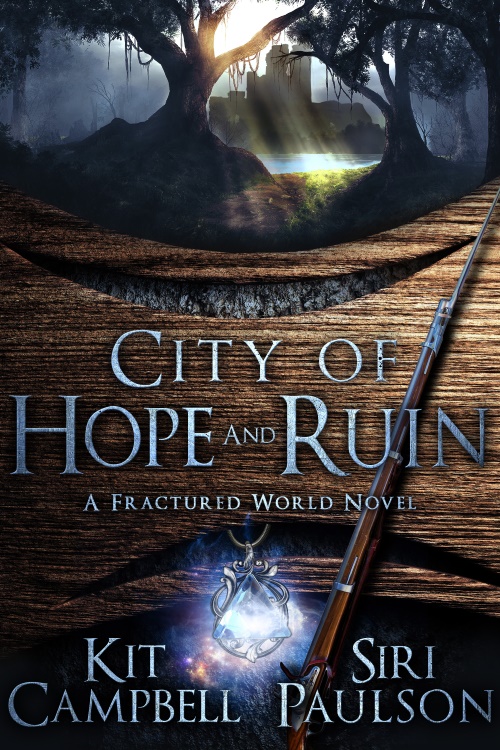
City of Hope and Ruin cover
AmazonKoboBarnes%20and%20NobleiBookscustom
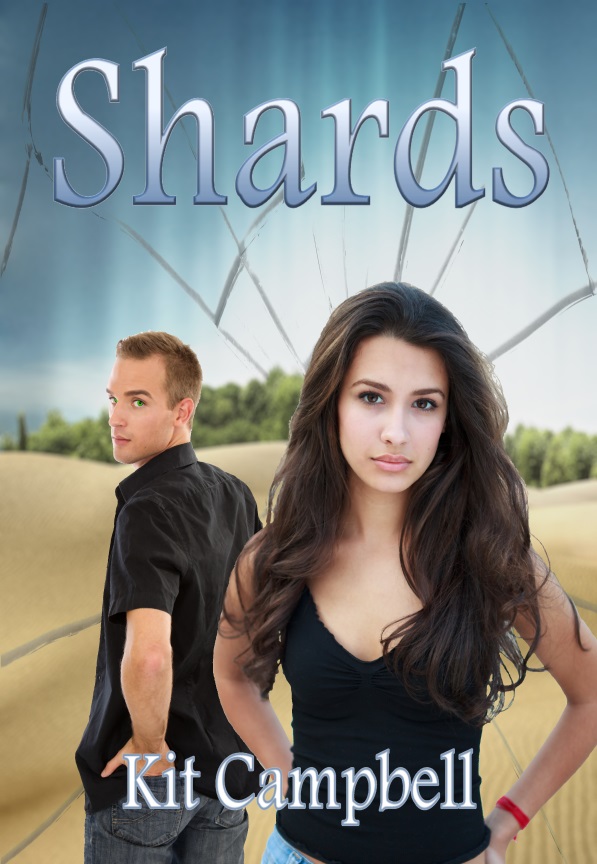
Shards cover
AmazonKoboSmashwordsBarnes%20and%20NobleiBookscustom
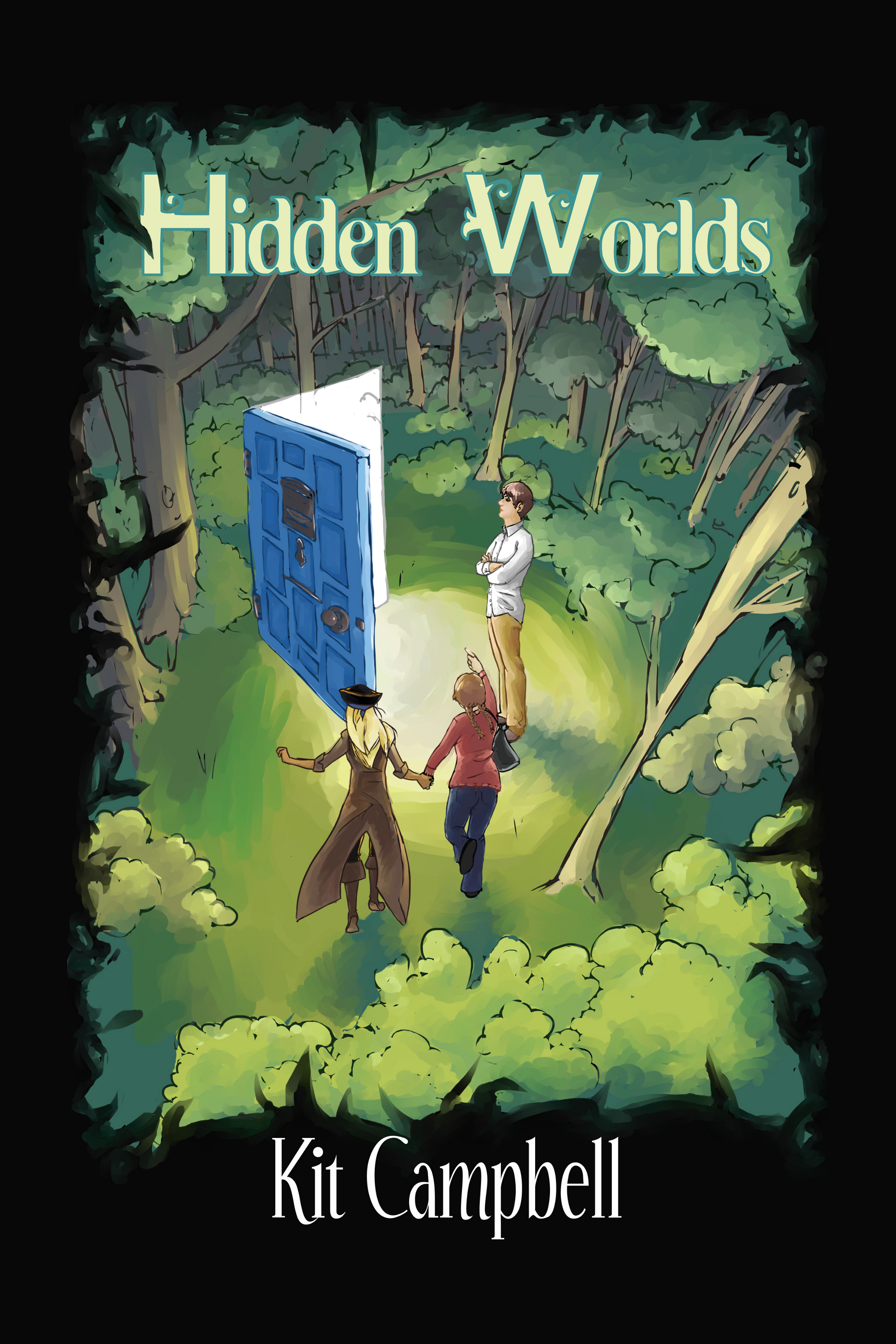
Hidden Worlds cover
AmazonKoboSmashwordsBarnes%20and%20NobleiBookscustom