What is Conflict?

We talked about conflict on Tuesday at Storycraft, and I put together an info sheet on the topic, which I thought you guys might like to see. It’s pretty basic–conflict is a wide and varied monstrosity, and you could really talk about it forever. Aside from this info sheet, we also talked about the main basis of a good conflict, which I’ll stick after the info sheet, and also about ways to add suspense to your conflict.

What is Conflict?

Conflict is what stands between your protagonist and their goals. It can be internal, external, relationship-based, etc.

How often should your story have conflict?

All the time. Allllll the tiiiiime.

That seems stressful.

It’s not, not really. The issue is that when people hear “conflict,” they think gunfights. Car chases. Explosions, jumping out of windows, planets being torn apart. Those aren’t really conflict, and you don’t need to have something like that happening that often.

So, if those things aren’t conflict, what is conflict?

Conflict is really two different things—there’s “story” conflict, or the conflict(s) that drive the plot/subplots, and there’s “scene” conflict, or the conflict happening in any particular scene. Often the scene conflict is based on the story conflict.

Elaborate, please.

All right, let’s say your main plot “conflict” is that your main character’s brother has been kidnapped by demons, and she’s trying to get him back. That’s your story conflict, your main plot. Every story needs a main plot, of course. Scene-level conflict for above plot might be your main character getting lost in the woods, or confronting a demon only to find it’s not the right kind, or losing the trail.

Above you mentioned internal, external, relationship-based, etc.?

There’s different types of conflict, and it’s good to mix them up so your story has variety. But let’s go over the basic ones. The most common ones are internal, external, and inter-relational.

Internal conflict is all thoughts and feelings and beliefs. In elementary school, you probably learned about Man vs. Himself. This is essentially the same thing. Something in your character’s personality or thoughts or beliefs is holding them back from their goal. This can be them not believing they’re worth love, or having a set belief that all what-have-yous are evil and yet needing to go to one for help, or not believing that they’re capable of what needs to be done.

External conflict is conflict coming from a source other than your main character. In elementary school, this was Man vs. Man and Man vs. Nature (though, if we’re going to be perfectly honest, Man vs. Nature is more of a combination of internal/external conflict). This is your explosions, your bad guys, your robot sharks, etc. These are physical, external forces working against your protagonist.

Inter-relational conflict is conflict that happens directly between two (or more) people. The partners that are having trouble working the case and need to put aside their differences to catch the bad guy. The married couple whose marriage has gone south and are trying to save it.

There are more types, or, rather, there are combinations of these types. Random internet searches give me Man vs. Fate, Man vs. Society, Man vs. Supernatural, and Man vs. Technology.

Some excellent writing advice that I once got is that you need all three types (external, internal, inter-relational) to have a story that keeps people interested.

Why can’t I just have explosions?

Let’s say we have Fred, walking down the street. Suddenly, a car that was parked across the street squeals out of its spot, turns, and comes after him. The windows roll down, and the men in sunglasses inside raise their guns and start shooting at poor Fred.

Exciting! But—why is this happening? What did Fred do to deserve this treatment? There’s no story here, just action, and without story, people won’t stay engaged, no matter how many things you blow up. This is part of the reason why the Transformers movies suck.

Okay, so how does conflict work when writing?

Well, you’ve got your main plot. Each scene needs some conflict that relates directly to the main plot, or to a major subplot. You can’t just have random things happen that don’t tie into the rest of the story just because they’re exciting. Things have to make sense and advance the story, one way or another.

What’s conflict resolution?

You’re getting ahead.

I am?

Before there’s resolution, everything story or subplot level conflict has a climax.

What’s a climax?

The climax of a conflict is the point where the stakes are the highest, where things are most intense. Where the protagonist needs to put everything they’ve learned, every new skill and new knowledge they’ve encountered on their journey, into play to fight their way to victory. Without a climax, your story has been for nothing.

How do I know what my climax is?

It depends on the promises you made to your reader, and on your main conflict. If you’ve set up a Big Bad, they’ll need to be fought. If your main character has been fighting some internal demon, those demons will need to be overcome. You can’t leave your main conflict dangling. Even if you’re doing a series, and you have an overarcing plot that goes on to the next book, you will have to have a book-specific conflict to wrap up.

Okay, now resolution.

Resolution means two things, actually. You have “conflict resolution”—i.e., how do you solve your conflict? And you have a plot step known as “resolution,” which is everything that happens after the conclusion of your climax. We’ll take about the latter first.

The resolution part of the plot is what happens after the climax. It’s normally pretty short, just a quick look at the results of the climax, at how life has returned to normal (or not), at the rewards the hero has earned.

And conflict resolution?

That’s such a broad topic. Different conflicts have different ways to solve them, and even the same type of conflict can be solved different ways, depending on your story, setting, etc. The important thing is that everything needed to solve the problem MUST be introduced before the climax, and that the resolution must make sense in a logical, rational sense.

So, what makes good conflict? Good conflict must be based on something your character cares about–their personal values. Searching for a lost brother has more weight if family means everything to your main character, for example. Alternately, if you base conflict on something against the character’s value–fighting against their better judgment–that can also be interesting.

Any more thoughts on conflict, Squiders?

Spurts of Creativity

I’ve had this blog a long time, Squiders–six years this August–and so sometimes it’s hard for me to remember if I’ve talked about something before, and sometimes a scan of the archives is not helpful if it’s a topic without clear key words.

Anyway, I feel like we’ve talked about this before, but I can’t find it anywhere, so maybe I just imagined it. Or maybe I talked about it elsewhere. Who knows? Maybe I thought about it in my brain, and never actually wrote it down yesterday.

Wait–no! I found it! I’m not crazy ahahahahahaha

Anyway.

So, we’ve talked in the past about how writers tend to have other creative hobbies besides just writing. The example I used at the time (for me personally) was theater, and we talked in the fall about that too when I tried out for Into the Woods. But lately I’ve found myself drawn back to a different creative love, a deep dark secret that had risen back into the light after a long sleep.

And that is…sewing.

But it is a new kind of sewing. You see, in the past, I’ve primarily done costumes–from 2007-2011 ish I was big in the cosplay community. I spent many hours sewing costumes, learning all sorts of techniques. I taught myself how to modify existing patterns as well as draft my own. I learned how to attach intricate designs, make my own boots (ick), and even attempted armor (also ick). I learned how to properly wear a wig, how to bind, how to make props. It took a lot of time, which is probably why I didn’t get a whole lot of writing done in that time frame.

(I find that working on a different creative hobby can help your writing in the long run, but it’s really hard to do creative activities at the same time.)

(Also, if you want to see my costumes, you can look at my profile over yonder.)

But I don’t feel like making costumes right now. I’ve had vague inklings in that direction–things along the lines of doing whole family cosplays now that I have children to exploit. But nothing definite and nothing that I’m itching to work on. (Two years ago I designed and almost made a fairly complex Fire Emblem costume–Fire Emblem is a strategy RPG series from Japan, and I really dig the character designs, so I love making costumes from it. They’re hard, but I always learn new things. Also, the games rock and I really enjoy them too, so it all works out.)

Instead, I feel like…making clothes. Mostly dresses and shirts. Hats and arm warmers and fabric bracelets. Before, I always shied away from making clothes. What was the point? You could just go out and buy something if you needed something. Costuming was different, because you had to match a specific look. A shirt was a shirt. I did make a t-shirt once as part of a knit class, which was a very useful skill to learn, though I wasn’t wild about the shirt, and I did “upcycle” a couple of shirts out of dresses, but that was it in the clothing department.

Now, though…

But will I actually get to sewing? Maybe. It requires a lot of work–a pattern (and modifications, because I am about eight inches taller than the average woman), fabric, laying everything out. I don’t even know if my sewing machine still works. I haven’t touched it since early 2012, I’m pretty sure. And it will take time away from my writing.

But maybe that’s okay? Do a project or two, get the itch out of my system. Writing hasn’t been feeling so great lately. I feel like I’m not accomplishing anything, that I’m just working and working and not getting anywhere. I am, but it doesn’t feel like it.

What’s your creative fallback, Squiders? Any thoughts on sewing (and sewing clothes specifically)?

(If you’d like, you can check out my new sewing board over at Pinterest.)

New Marketing–How’s It Going?

So, Squiders, at the end of April I told you about some new marketing techniques Siri and I were giving a try, since there’s two of us to share the costs and whatnot.

Since then, the book has launched and I now have feedback on some of the things we’ve done. I thought it might be useful for other indie authors to see how things have worked for us. If you are also an indie author and have some technique you’ve found beneficial, let us know! (Also, if you are a reader, let me know if you have a go-to way to find new books/authors.)

As a recap, here are the things Siri and I are trying/have tried out:

  • fancy-butt cover
  • 1-day book blitz (last week, June 9)
  • 12-week blog tour (not yet started, no data yet)
  • pre-orders
  • in-person launch party (Siri, in Toronto, on May 29)
  • FB launch party
  • Goodreads ad/giveaway combo

So, how have things gone? Let’s break it down. Actually, let me preface by saying that sales for City of Hope and Ruin have been over double what my previous releases have done, and, in general, I think a lot of that comes from there being two of us. But, moving on:

  • Fancy-butt cover. I don’t know that this has directly influenced sales, but we’ve gotten a lot of compliments, and the bookstore Siri did her launch at said they’d put the book front and center in the display because it looked so great. Also, I was super happy with the process and the results and will probably use our designer (Deranged Doctor Designs) again in the future.
  • 1-day book blitz. We ran this last Thursday, June 9. We had about 30 blogs pick up the book, all of which were lovely, though some have gone above and beyond and are still tweeting, etc. about the book over a week later. We discounted the ebook version to $.99 for the duration of the blitz, and I think it cost us ~$70. The blitz, not discounting. Very exhausting–I went through all the blogs four times to thank the hosts and answer questions from commenters. We also gave away a $50 Amazon gift card as part of the tour, so all-in-all we spent ~$120 on the book blitz.

That being said, we sold four books during the duration of the blitz/giveaway (two days), which is not terribly encouraging. In the week since, we’ve sold an additional ebook (and had someone use Kindle’s matchbook program to get a free ebook after buying a paperback version). We’ve also sold two paperbacks. Are those additional sales related? Maybe? No real way to know. But $120 for four books is not a good return on investment.

Now, saying that, the book blitz did get us about 150 adds on Goodreads. That’s pretty decent. We’ll have to see how many of those convert to sales/reviews over the next few months. And, in general, the people commenting seemed genuinely excited about the book. Two of the blogs did include reviews, one who had finished the book and loved it, and one who was only part of the way in (and was loving it). Those reviews are only on the blogs (not cross-posted to Goodreads or Amazon), but they’re still something.

It certainly put the book out in front a bunch of new people, if nothing else. Now we watch and wait.

  • 12-week blog tour. Again, this starts mid-July. At some point I believe we get sent a list of guest post/interview requests and then have to fulfill it, so this one’s going to be a ton of work too. At least it’s one post per week, so less constant stalking to do.
  • Pre-orders. We ran pre-orders on all the ebook platforms, though the only ones we got a statistically relevant amount of sales on were Kindle and Kobo. And it did help our sales rankings–all those preorders counted as sales on launch day, which got us up in the Top 100 in a couple of categories. So in general, I recommend doing this. Why not?
  • In-person launch party. Siri threw an in-person launch party at her local SFF store in Toronto. You can read about her experience in more detail here. I was not there, since Siri and I live in different countries, but from what she’s told me it went well. Siri’s been inspired by its success to contact other independent bookstores in her area, and at least one more has also been persuaded to stock the book. I should…probably do that too. >_>
  • FB launch party. We did do a virtual launch party on the actual date of the book release, which went pretty well. (You can see it here.) We got a lot of great questions, and the whole thing seemed pretty high energy. We gained a number of new followers for our publisher, Turtleduck Press, and did “party favors” (I guess you’re not technically allowed to do giveaways on FB) of copies of the book and one $20 Amazon gift card. I’d do one again.

Though re: gift card giveaways in general–I’d be interested to see if lowering the amount of the gift card affected participation at all. I’d bet you it wouldn’t. With the FB party one, the girl who won it didn’t even know we were giving one away.

  • Goodreads giveaway/ad. I’ve done this for all my books, and typically it works really well. I feel like it’s not working as well this time around. I’ve been steadily increasing the price per click in an attempt to increase views, but nothing’s really worked. The ad(s) have been running for a month–the giveaway ends today–and the ads have only been shown 16,000 times. Comparatively, the ad campaigns for both Hidden Worlds and Shards have over 304,000 views each. Not sure what’s up–at first I thought it might be because I limited the target audience more for CoHaR, but I actually had a lot less categories selected for Shards, and it had the most views. (For clarification, “views” in this case is just Goodreads popping the ad up on someone’s page. There’s no guarantee that someone will actually see it, just that it is there to be seen. Goodreads also keeps track of how many times someone clicks, and charges you money per click. I use the ads to drive people to the giveaways while they’re live.)

(If we’re going off clicks, CoHaR has 16, while Shards got 133 and Hidden Worlds got 172. No doubt due to the massively lower views.)

Speaking of which, here’s the link to giveaway–it ends tonight. We’re giving away three paperback copies, and as of me writing this, there’s 684 people signed up.

Goodreads Book Giveaway

City of Hope and Ruin by Kit Campbell

City of Hope and Ruin

by Kit Campbell

Giveaway ends June 18, 2016.

See the giveaway details
at Goodreads.

Enter Giveaway

Comparatively, Shards had ~750 people enter, and Hidden Worlds had ~950. You always get a ton of people last minute, so it will be interesting to see what the final count ends up being.

Now, I think a lot of the giveaway people are coming from Twitter/the book blitz, judging by the lousy numbers on the ad.

What’s up with this ad compared to previous ones? It has nothing to do your actual ad copy, so is the competition just more fierce now? More people using the ads, so you have to fight more to get yours seen? Raise your per click price to a couple of dollars? Maybe so. I’m going to have quite a bit of money left over after the giveaway ends, so I’ll experiment with changing prices/categories to see if anything helps. But it may be that my old go-to of giveaways/ads isn’t as viable as it used to be.

So, that’s me thus far! Anything else you’d recommend, squiders?

The Healer’s Rune by Lauricia Matuska

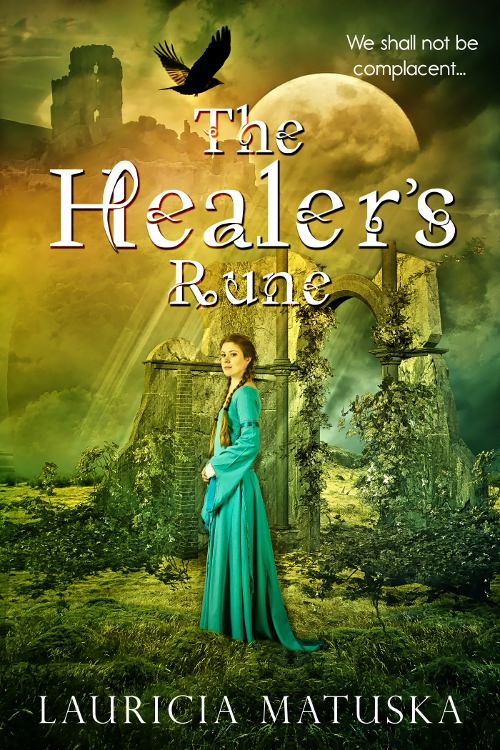
Good morning, Squiders! Today I’m pleased to present to you The Healer’s Rune, a fantasy novel by Lauricia Matuska.

The Healer's Rune cover

Three hundred years after a great war shattered the Council of Races, the warriors of Rüddan have all but eradicated their cousins, the faerie Aethel. In so doing, they decimated the Dryht sages and enslaved mortal Humanity. Now a voice rises above the chaos and calls her people to rebel. Young Sabine, one of the Human slaves, must learn to overcome centuries of lies and prejudice to forge an alliance between four enemy races. But what chance does she stand to overthrow the Rüddan with her dangerous secret, a secret that threatens not only her own life but the existence of all the races on the planet?

Excerpt:

Wiping a tear from her cheek, Sabine stood on tiptoe again. Three guards surrounded Mariel now, shearing away jagged clumps of her long black hair while the captain moved to the front of the dais. “Mariel Brockselle has been tried and found guilty of magic use and conspiring with the Dryht. For these treasons, she is hereby sentenced to death by the Empress of all Kirin Roh. Let this be an example to any who would emulate her.”

“Treason and magic use are easy to claim,” Sabine muttered under her breath, “and almost impossible to disprove. I wonder what she really did.”

Author Bio:

Lauricia Matuska has taught high school literature and creative writing classes for more than ten years. She first discovered the realm of fantasy by traveling with Lucy through the wardrobe to Narnia. Since then, she has established dual-residency between that world and this one, and she currently serves as an ambassador to contemporary youth and young adults. The Healer’s Rune is the first novel in her Ceryn Roh trilogy.

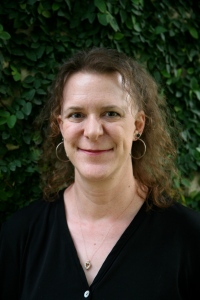
Author Photo

Contact Info. –

Web Page: Lauricia-Matuska.com

Twitter: https://twitter.com/lauriciamatuska

Facebook: https://www.facebook.com/lauricia.matuska

Pinterest: https://www.pinterest.com/LauriciaMatuska/

Buy the Book: Amazon | B&N )

Lauricia will be awarding a $20 Amazon or B/N GC to a randomly drawn winner via rafflecopter during the tour.

a Rafflecopter giveaway

New Directions

Oof, squiders. Yesterday was rough. On top of it all, our one-day book blitz ran, so I needed to stop by the many many blogs throughout the day to respond to comments and whatnot. Oy vey, that’s tiring! I’ll give you guys an update on how our new marketing things are working out thus far next week. Probably Friday.

We’ve got City of Hope and Ruin on sale for $0.99 for the blitz, and our giveaway for a $50 Amazon gift card is still open for another 12 hours or so. All the information you need to enter can be found here. Also, you should totally pick up the ebook while it’s on sale, because it’s $4.99 normally. 80% off! Woo!

So, marketing for CoHaR is winding down, though there’s still some stuff to do–we’re doing a longer blog tour in July/August that will need guest posts and interviews written, and there’s book stores/libraries to talk to, and the like, but in general, I can move on to other things.

I thought I’d talked about this here, but I don’t see it anywhere, so maybe I just talked about it over at Turtleduck Press. At the beginning of the year, I made a spreadsheet of all my writing projects for the year, with the dates I thought I’d work on them and some basic notes about current status. And then working on CoHaR ate everything and I found myself extremely behind on the whole idea.

At first I thought I’d just catch up on everything, but then logic caught up, so I decided to just pick the most important thing on the list and make sure that got done, and everything else could get done as there was time.

So, I’m revising/rewriting the first book in my high fantasy trilogy. You guys probably remember me talking about this here. (I thought I had a tag specifically for it, but apparently I don’t and that’s dumb.) I wrote the first draft on Book 3 in 2014. The current draft of Book 1 was written 2009/2010, and ew, is it bad.

Like, really really bad. Hence the rewriting part of said revision. I’m sorry I asked people to read this version, which is saying something, because I was really sorry I made people read the original version (written 2004/2005, and my first finished novel draft).

You know, if I ever get this book done decently, I don’t know what I’m going to do with my life.

So, that’s the current plan! Revising/rewriting. I did get slightly sidetracked by the whole Shards thing (and also looking a language building class), but I’m focused again now.

How was your Thursday, squiders? Big plans for the weekend?

Doing Your Own Marketing

Ah, Squiders. How I long for the days when all you had to do as an author was write the books, and someone else would sell them for you. I am not a good seller. You guys have probably noticed that.

Last week I mentioned how I would be re-reading my 2013 novel Shards in an attempt to tweak some of its marketing, specifically its book description. Well, I finished Shards. And then I skimmed through it two more times because, as is probably expected, seeing how I wrote it, there were some parts I really liked.

(Some people can probably write books they don’t have emotional/intellectual connections with, and more power to them. It turns out I can’t write books I wouldn’t want to read myself. I tried ghostwriting once and it was an abject failure.)

(Coincidentally, reading Shards has put my brain into overdrive on plotting out two related Shards!verse books, neither of which are on the schedule until the end of the year at the earliest, so that’s less awesome.)

(I mean, awesome, because said ideas haven’t really gone anywhere in the six years since I originally wrote Shards, but not awesome because I’m working on editing something else at the moment. We’ll talk about that Thursday.)

(Right, out of the parenthetical statements.)

And, Squiders, I was right. The current book description for Shards does not match the book. At all. The current book description makes it sound like a big mystery, when in reality there’s very little mystery at all. No wonder people were disappointed. As I said, I do like the book, but it’s more adventure/romance/mythic romp. The mythology is not subtle. No mystery.

I think I must have been so focused on making the description draw people in, that at the time I didn’t consider that I was doing the book, and its marketing, a disservice by being misleading. I don’t even think I realized I was being misleading.

It’s a learning situation, that’s for sure. Now I know how careful I need to be about this sort of thing. And hopefully I’m getting better about the whole thing. I certainly think the book description for City of Hope and Ruin is much better and more appropriate, though admittedly I had someone else to work with on that.

And I have to write a new book description. Groan.

Someone should invent a service where they write your book descriptions for you. They would make a buttload of money.

Marketing or description thoughts, Squiders? Collective moaning about how we wish someone else would do this for us?

Library Book Sale Finds: The Spirit Ring by Lois McMaster Bujold

I know I did one of these, like, last week, and I apologize for reading library book sale books so close together. Except not really.

So, as I mentioned about a month ago, I bought this book to read for my Twitter book club, and then found it in my library book sale books. I suspect I picked it up because I have several friends who are obsessed with Bujold’s Vorkosigan series (of which I have read an omnibus called Cordelia’s Honor and nothing more). This is her first fantasy novel.

Title: The Spirit Ring
Author: Lois McMaster Bujold
Genre: Historical Fantasy
Publication Year: 1992

Pros: Interesting characters that you care about, cool magic
Cons: Slow plot build which culminates rather quickly

So, apparently Bujold used actual historical events/people for the inspiration for this novel, which is kind of cool. It takes place in Italy in what’s probably the late Renaissance. The main characters are Fiametta Beneforte, the daughter of a metalsmith/mage, and Thur Ochs, a Swiss miner. Most of the action revolves around the city of Montefoglia, where Fiametta lives, which has been taken over by an invading force when the Lord of Losimo kills the duke instead of marrying his daughter as planned.

The magic system here is very interesting. It’s mostly based off of “real” magics from the time period, though in a more traditional fantasy bent. For example, the Church oversees the mages to make sure they’re not performing black magic. While the magic is essential to the plot, it works well with the world and seems very reasonable. Historical fantasy can be hard to do well, but Bujold manages both the history and the fantasy parts well.

While I found I liked both Thur and Fiametta, the plot moves along fairly slowly. There’s a lot of reacting and forced inaction. The build up to and the climax felt a little fast, but I can’t be sure whether it really is, or if it’s because it took me three weeks to get through the first two-thirds of the book, and then I read the rest in one day.

So! If you like historical fantasy and/or ’90s fantasy, you’ll probably like this. I found it a little slow, which is why it took me so long to get through it, but that’s just me.

Read The Spirit Ring, Squiders? What did you think?

Revisiting Published Stories

Morning, Squiders. I hope you all had a lovely long weekend (for American Squiders), or that you at least didn’t get stung by a bee and fall down the stairs like some other people I know.

In slightly related news, how do you tell if you are allergic to bee stings?

Anyway, on to the topic at hand. There seems to be two camps when talking about books you’ve published. One camp says leave ’em alone–they’re out in the world, for better or worse, and you’re likely to just drive yourself crazy fixing things if you don’t just cut yourself off.

The other camp says, if you have access to your books, why not fix them? If there’s something consistently wrong, according to your reviews, and you can easily upload a new version, why wouldn’t you do it?

Personally, I find myself more in the first camp. Perfection is something we all hope for in a book, of course, but it is something that is hard to obtain, and even if you think it’s perfect, there’s no guarantee that anyone else will agree with you. Why drive yourself crazy tweaking this thing or that?

(One exception, I would say, would be nonfiction books. Then I say update, because it’s important to have the best information out there.)

That being said, I’m not against some tweaking, and it can be fun to go back through a book, to remember the writing journey and so forth. And it’s not a bad idea to occasionally read through and remind yourself what the story is about and what you love about it, so you can talk to the book if someone asks you about it.

(And I advocate reading through a book if you’re planning to write a sequel or related story, so you can recapture tone/characterization/etc.)

Last night I started reading through Shards. If you’ve been with me for a while, you were probably around when Shards came out in December of 2013. Shards is kind of off-genre for me, and it’s proven to be the most mixed of my books, in terms of whether people love it or hate it. Part of that, I think, is the book description, which I think may be somewhat misleading.

So, I’m going to rewrite the book description and see what that does. But, to do that, I have to remember what the book is. So, reading.

I’m only a chapter and a half in, thus far. So far, I’m enjoying it, though that is probably to be expected. I have noticed that the writing is not as tight as my more recent stuff, but that is also probably to be expected. One does hope that one gets better over time, after all.

Have you ever revisited a story that’s already been published, Squiders? Are you in the let it free and leave it camp, or the update as necessary camp? Any thoughts on Shards or its book description? It might be handy, if you haven’t read the book, to read the book description and then let me know what kind of story it sounds like so I can tweak appropriately.

Announcing The Adventures of Kate Readalong

A lot of reading posts this week, Squiders. But hey, I figured you wanted some variety after hearing me talk about City of Hope and Ruin for months on end! (Speaking of which, you should go enter the giveaway on Goodreads.)

We haven’t done a readalong in a while, so let’s! This time we’re going to do a trilogy of books by T.A. Barron, referred to as either The Adventures of Kate or the Heartlight Saga. It’s not a trilogy trilogy–the books have the same main character (Kate) but the events do not directly follow from book to book.

The second book, The Ancient One, was assigned as part of a school project when I was in seventh grade. Each year my middle school would host a local author, and we would all read at least one of their books before the visit. The Ancient One was a formative book for me, but I haven’t revisited it since middle school, so I’m interested to see how it withstands the test of time.

(Eighth grade was Will Hobbs, and I was very thoroughly over Will Hobbs and the entire boy-gets-lost-in-wilderness-and-has-to-survive genre by then, so that was less enjoyable.)

Kate’s adventures are YA/MG scifi-y/fantasy-ish somewhat in the vein of A Wrinkle in Time.

Anyway, I’m excited, and I hope you come along with me! I’m really hoping the books hold up. T.A. Barron was a favorite author of mine in my early teens, between these books and his Young Merlin series. The three books in the series are Heartlight, The Ancient One, and The Merlin Effect. We’ll read Heartlight for June, so let’s say we’ll do the discussion on…June 28.

See you then! Have a lovely weekend, Squiders!

Library Book Sale Finds: Sushi for Beginners by Marian Keyes

You ever have a book that you’re not quite sure why you picked it up? That’s the case here. I have a vague memory of selecting this book from one of the library book sales last summer, but when I picked it up to read it again, I couldn’t, for the life of me, remember what had attracted me to it.

Title: Sushi for Beginners
Author: Marian Keyes
Publication Year: 2003
Genre: Chick lit? Slice of life?

Pros: Doesn’t require a lot of thought to keep up with despite the myriad of characters
Cons: Inconsistent characterization, head hopping, lack of plot

I mean, maybe I thought it was romance? I can get behind a good romance. Okay, I’ve just re-read the back of the book, and it definitely sounds like a female friend romp/romance. That would have been okay.

It is not either of those.

I admit I don’t read a lot of real life based stories because I don’t necessarily get the point of them. They tend to focus on depressing things, like infidelity, illness, depression, loss of spouse/child, getting over childhood abuse–all things that I don’t really want to think about if I don’t have to. Now, from what I understand, knowing that I am wildly out of my depth here, chick lit tends to be upbeat, funny, kind of like candy for your soul.

So, I think that’s probably what this book is–it’s got the witty banter, the sex scenes, etc. But I still don’t really see the point. It wasn’t necessarily hard to keep reading, but I didn’t particularly like anybody in the book, and there’s very little plot to speak of, which again, I think is normal for the genre.

Most of the action takes place at Colleen, a new fashion magazine based in Dublin, Ireland. You’ve got Lisa Edwards, the editor, who’s upset about being shunted over from London when she thought she was going to get promoted to a New York magazine; Ashling Kennedy, assistant editor, who is kind of a wet rag, honestly, and is still the most likeable person in the book; and Clodagh Kelly, who’s the mother of two and Ashling’s best friend. And then there’s occasional head hopping into male points of view for a line or two.

And there’s finding ourselves and learning to be better people, blah blah blah, but it’s not terribly interesting.

ANYWAY. I didn’t particularly like this book, as you can probably tell. But, again, not really my normal genre cup of tea. Good to read around and all that.

Squiders, do you know anything about chick lit? Is this a good example of it? Is there a different book I should read instead?

Books by Kit Campbell

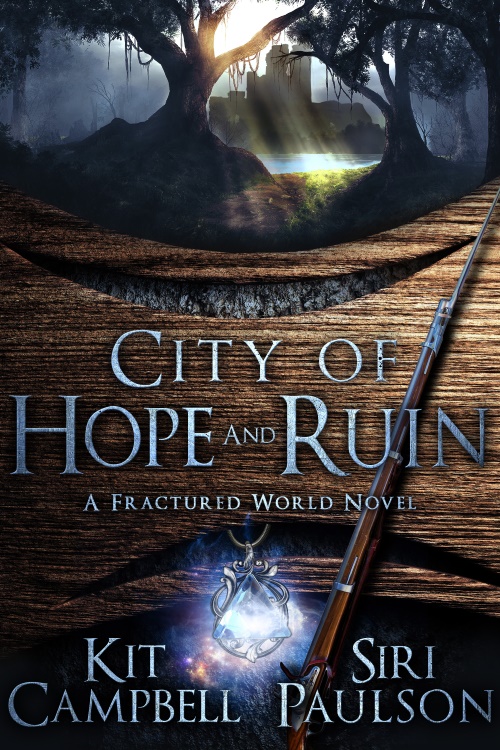
City of Hope and Ruin cover
AmazonKoboBarnes%20and%20NobleiBookscustom
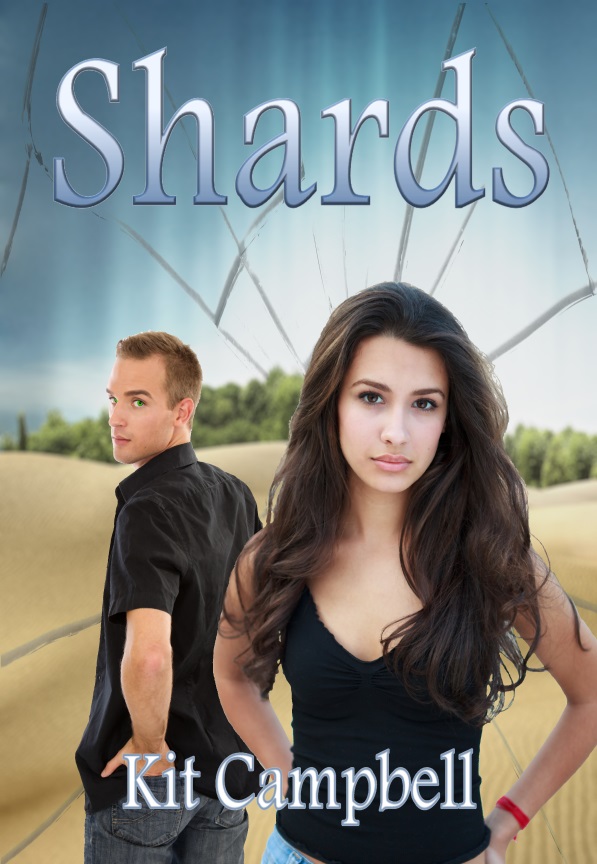
Shards cover
AmazonKoboSmashwordsBarnes%20and%20NobleiBookscustom
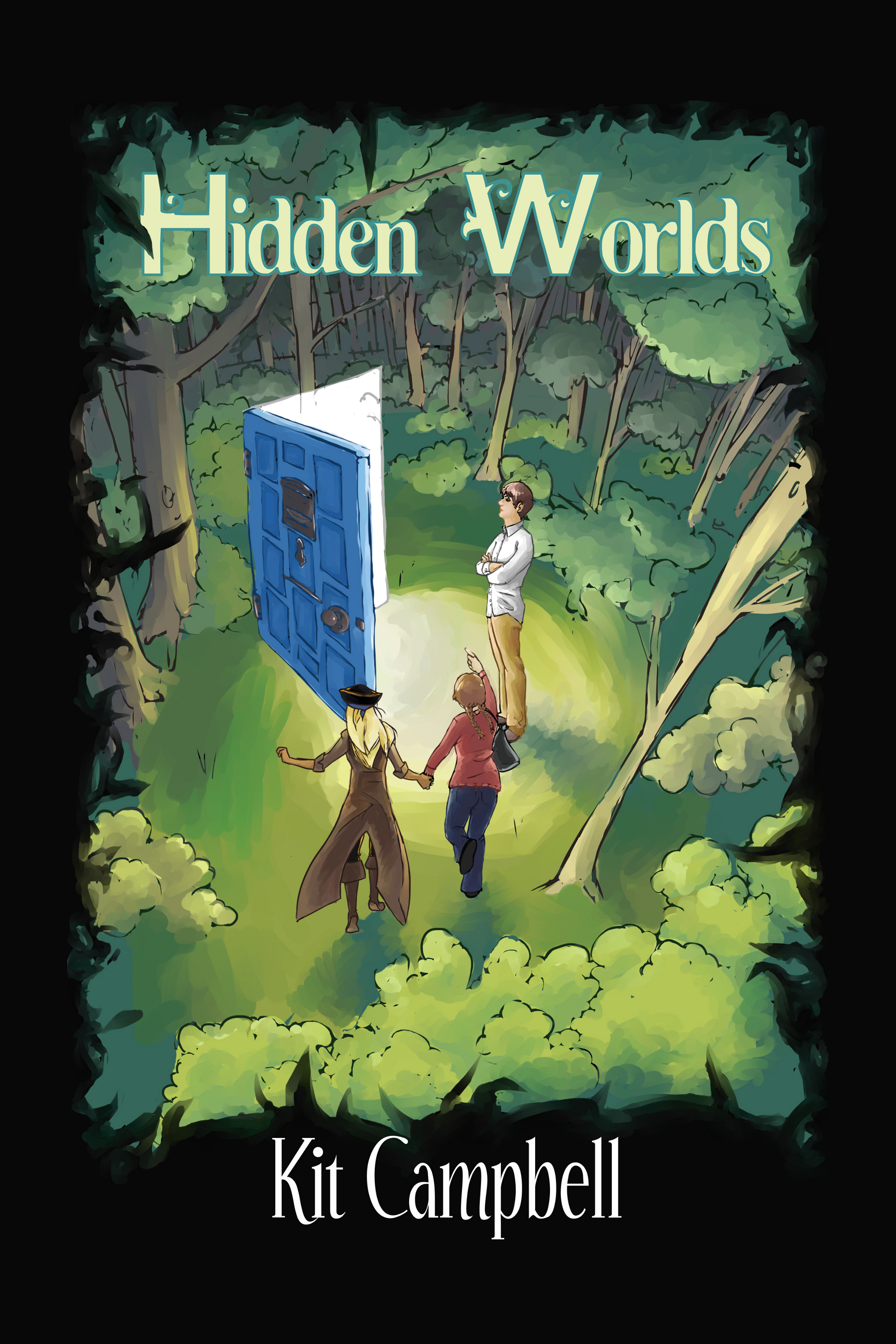
Hidden Worlds cover
AmazonKoboSmashwordsBarnes%20and%20NobleiBookscustom