Why We Love Reoccurring Characters

Amazon’s put Doctor Who (except for Season 9) back onto Prime, so I’ve been catching up. (I continue to have a “this show makes no sense and I’m not sure why I continue to watch it, yet there must be something because I keep watching” relationship with DW.) One of the recent episodes I watched had an occasional reoccurring character that happens to be a favorite of mine, and I may have gotten unnecessarily excited when she showed up.

That got me to thinking about reoccuring characters in general. It seems–and this may be generalizing–that people feel more strongly about their affection for reoccurring characters than main characters, in many cases. Everyone has that character that, when they happen to grace a show, book, movie, etc. with their presence, makes their day.

(Or, alternately, it could be a character that they love to hate. Or just really hate. I’m looking at you, Kai Winn.)

Why do we react stronger to characters we don’t see that often?

Well, my going theory is that we get used to characters we see all the time, so while we relate to them and may feel closer to them (or, for characters we don’t particularly like, just kind of accept that they’re there and deal with it). They lose their impact, to some degree. It’s like the friend you see every day. You’re comfortable with them, you love them, but they’re not necessarily exciting.

Reoccurring characters are like the friend you haven’t seen in a year. It’s an event when they come and visit! It’s something you look forward to. And even better if it’s a surprise, and you open the door one day to find them sitting on their porch (assuming they don’t think they’re staying with you unannounced).

It’s not that they’re better, per se. It’s just the absence makes the heart grow fonder.

I do find it interesting that when a reoccurring character becomes a main or side character for a period of time, it can go really well or really poorly. It really shows how complete of a character that character is when some of that shiny-ness wears off.

Who are your favorite reoccurring characters, Squiders? Any examples of a reoccurring character turned regular that went spectacularly well (or not)? Any experience with your own reoccurring characters?
Ten Books That Have Stuck With You

I was tagged a week or so on Facebook by a writer friend for one of those chain letter sort of things that goes around. (Do you remember, like, actual chain letters? That you had to write and mail with stamps and everything? Those were weird, and yet they have stuck in the vernacular.) This particular one wants you to list the ten books that have stuck with you the most.

The note tells you not to think about it too hard, but I’ve found I’ve had to because it’s been hard to come up with 10. I read a lot of books–try to get to 50 every year, at least–but not many of those have necessarily stuck.

Here’s the list I’ve come up with:

  1. Lord of the Rings, J.R.R. Tolkien
  2. The Phantom Tollbooth, Norton Juster
  3. Pride and Prejudice, Jane Austen
  4. Agnes and the Hitman, Jennifer Crusie
  5. The Sword of Shannara, Terry Brooks
  6. Howl’s Moving Castle, Diana Wynne Jones
  7. The Pillars of the Earth, Ken Follett
  8. Murder with Peacocks, Donna Andrews
  9. And Then There Were None, Agatha Christie
  10. Mr. Midshipman Hornblower, C.S. Forester

Of course, now that I’ve finally gotten those 10, more are starting to pop up. Harry Potter. Maria V. Snyder’s Study series. Macbeth. The Ancient One by T.A. Barron. Pegasus in Flight by Anne McCaffrey. And there’s stories that I remember snippets of, clearly, but can no longer recall the name of the book.

Isn’t that how it always goes?

Actually, now that I’ve thought of The Ancient One again, that might be good for a readalong. What do you say, Squiders? It’s a MG/YA science fantasy trilogy. The Ancient One is the middle book. I don’t know if I’ve read any of them since my early teens, so it might be fun to revisit them.

What are the 10 books that have most stuck with you, Squiders?

Why They Tell You Not To Use Speech Tags

This advice seems to be everywhere lately, Squiders. Have you seen it? The basic gist is that using speech tags when you write is amateurish and distracting.

I feel like this advice can be really confusing to people, especially newer writers. So! To clarify, this is advice is not telling you to leave off speech tags. Then you get something like this:

“How dare you!” Jenny said.
“How dare you!” said Louise.
“You knew he was my boyfriend! You had no right to invite him to go to that party with you!”
“Hey, you were busy and he was lonely! What’s so bad about keeping a friend happy?”
“Oh, is that what they call it these days.”
“Look, I don’t like your tone.”
“Listen to you! Don’t like my tone. Like you have any room to talk.”
“I have a freaking mansion compared to you!”

Do you see the issue? After a couple lines of dialogue, it becomes near impossible to keep track of who’s actually talking. If your readers have to stop and count to see who’s talking, that’s a bad thing.

So speech tags are good, right? Well, kind of. Here’s an older post about general speech tag usage, but generally you should be conservative with what speech tags you’re using. Or not use them at all!

Here we get into the root of the above advice. You need speech tags to tell who’s talking, but if you overuse them, you get what’s called Talking Heads Syndrome.

Here’s an example of that:

“How dare you!” Jenny said.
“How dare you!” said Louise.
“You knew he was my boyfriend!” Jenny cried. “You had no right to invite him to go to that party with you!”
“Hey, you were busy and he was lonely! What’s so bad about keeping a friend happy?” asked Louise.
“Oh, is that what they call it these days,” said Jenny scornfully.
“Look, I don’t like your tone,” said Louise.
“Listen to you! Don’t like my tone. Like you have any room to talk,” retorted Jenny.
“I have a freaking mansion compared to you!” shouted Louise.

See the problem now, Squiders? We might know who’s saying what, but it gets repetitive and boring, because Jenny and Louise aren’t doing squat except talking. It’s also completely unrealistic, because who just stands there and talks in the middle of a fight?

So when people say ‘don’t use speech tags,” they’re not saying to make it impossible to tell who’s talking. They’re saying to have your characters do something instead of being a talking head.

Jenny pushed through the crowd to Louise. “How dare you!”
Louise pulled away from the girl she’d been talking to, towering over Jenny. “How dare you!”
“You knew he was my boyfriend!” Jenny cried. “You had no right to invite him to go to that party with you!”
“Hey, you were busy and he was lonely! What’s so bad about keeping a friend happy?” Louise smirked at her, and Jenny dug her nails into her palms to keep from hitting her.
“Oh, is that what they call it these days,” said Jenny, letting the scorn drip through her voice.
That got Louise’s full attention. “Look, I don’t like your tone.”
“Listen to you! Don’t like my tone.” Jenny crossed her arms over her chest. “Like you have any room to talk.”
Louise’s eyes flashed. “I have a freaking mansion compared to you!”

Now, that’s a late-night first draft example, but do you see the difference? You know who’s talking through the action, and now it’s much more engaging than just having two people yell at each other. You can use actions, thoughts, etc. instead of speech tags to give a sense of emotion, setting, what have you. And, sure, the odd speech tag can stay. Sometimes people do just say something. But in this case, they’re also doing other things.

Have any thoughts about speech tags, Squiders?

Also, good news! City of Hope and Ruin is now available for pre-order on Amazon! We’ve got it on sale until launch. Only the ebook version is available for pre-order, but there will be physical copies launching at the same time on May 11. And if you missed the excerpt, you can read it here. Pick it up now before the price goes up! (Or wait until we get a cover.)

(It will also be available for pre-order on other ebook platforms, such as Nook and the iBookstore. Lemme know if you prefer one of those and I shall link you.)

Whew!

Good news, Squiders! We got a cover artist all picked out and set up and our book description finished AND you can go read our excerpt here! (I’ll wait while you do.)

Now it’s on to the more mundane (and less visible) marketing stuff. Again, if you’d be interested in hosting us for a cover reveal or the book launch, let me know! Or if you’d like to review.

So that’s a heavy weight off my chest.

Although, now that’s done with, I am reminded that I need to do final edits and check copyedits and all that lovely stuff.

Hmm.

Pre-orders should go live later today or tomorrow, so I shall retroactively come back and post those as well, and mention them on Thursday.

I have not moved on to other projects and find myself mostly unmotivated to, which is, of course, the issue with marketing. It kind of drains all your creative stores, and because I write/edit for my real job as well, there’s not much left at the moment. I hope to move on to Camp some time today. Not the space dinosaurs, no–and probably won’t get to them until later in the month after the edits are done–but the nonfiction books.

In non-writing news, I’ve got a triathlon coming up in a little over two months, so I’ve got to start training for that too. I don’t think I’ve been swimming in over a year.

What’s up with you, Squiders? How’d you like the excerpt?

Why You Need to Hold on to a Bit of Optimism

As I write this, Squiders, it’s snowing outside. Not just a little snow, but big, heavy flakes, drifting down in a rather determined fashion. It snowed yesterday as well.

Here in Colorado there seems to be a point where we just kind of mentally give up on winter. There’s no clear seasonal delineation, so it can be 70 degrees one day in the middle of November or February or March, and then blizzard the next day and drop two feet of snow (as it did last week). So everybody eventually gets to a point of It’s Not Winter Anymore and sticks to it.

This is often why you’ll see pictures of Coloradoans wearing shorts or no coat in the middle of snowstorm. Winter is mentally over for those people, and evidence to the contrary shall not sway them.

The thing to take away from this is not that Coloradoans are insane (though, admittedly, we probably are–lack of oxygen and all), but that sometimes it’s okay to keep a little bit of optimism even when everything tells you to give up.

I feel as writers this can be especially useful. So many of us get into these ruts where we expect rejection. I’m not saying that’s not realistic, but it can be depressing. If we get too far into said rut, we may fall into a “why bother?” mentality, where we figure it’s not worth it to send that story out again, or move on to the next agent on our list.

Holding on to a bit of optimism can help us send that story again, knowing that maybe this time we’ll find that agent/editor/publisher who’s willing to give us a try. It can be what we need to move on to the next project.

Sometimes I think that’s all that really separates people who make it versus those who don’t–persistence.

What do you think, Squiders? Have any stories where holding on to that little bit of hope paid off?

As for me, I’m going to go back out into the snowstorm with my windbreaker and nothing else, because dangit, it’s spring.

Thoughts on Worldbuilding

Afternoon, Squiders. Not much has happened since we last spoke, which I find frustrating, but I have finished editing my short stories and have sent the whole lot out on rotation (which I haven’t done in a while). So here’s a whole new element that I have learned about co-writing, because while I have cowritten novels before, I have never had one published before.

Anyway. I’m running my writing group’s storycraft meeting tonight on worldbuilding, which I’ve made an outline and discussion questions for, but I find myself very curious as to how the meeting’s going to go.

My initial thought was that worldbuilding was a specific enough topic that we could get through it in a meeting, but broad enough that it would carry us the whole time without worry. But I’ve been reminded again just how massive the concept of worldbuilding is.

It’s probably because, despite my best efforts, my own worldbuilding is a bit hodge podge. I always think I have enough in place before I start, and I always discover things I have forgotten, usually by the second page or so. You might remember back to Nano 2014 when I had plotted out my space travel technology and the schematics of the ship, planned out my universe and my culture and my history, but hadn’t figured out whether or not the doors of the spaceship opened automatically.

Wikipedia says people tend toward top down worldbuilding (entire world, history, etc.) or bottom up worldbuilding (things only specific to locale of story). Both have their downsides and of course, you should probably do both or a combination. I would say that I generally trend toward the top down but not always. I wonder if it’s obvious from my stories which type of worldbuilding I did for that particular story.

I could probably do a storycraft meeting on each aspect of worldbuilding.

How does your worldbuilding tend to go, Squiders? What do you feel is the most important part of your worldbuilding, and what, if anything, do you find you tend to forget? (I am notoriously bad about economics in my worlds.) Readers, any worlds that you really love, that feel almost real?

Limbo and April

I find myself in kind of a weird place right now. The sekrit project still needs work–most of that marketing stuff we talked about last week, though the excerpt has gone out for approval and will go up at the beginning of the month–but there’s nothing I can actively do while I wait for my co-writer’s input on the book description and the cover.

So I’m in this sort of limbo. I feel like I can’t start up one of my other novel projects while the marketing stuff for the sekrit project is still outstanding, but I also feel like I should be doing something.

The best I can figure for the moment is that I’ll do some short stories. I have some written but not typed up, and other ones that need to be submitted. But, unfortunately, that’s probably only 2-3 hours of work, and then I’ll be stuck again, because it sounds like I’ll be getting nothing from my co-writer until Sunday (boo!).

I could…write a new short, I suppose? I’m delaying the release of my short story collection until the fall, even though it’s essentially done, because what’s the point of putting out two books within a month and then potentially nothing else for the rest of the year? (Although…now that I think about it, I think I’ve got an anthology coming out in the fall. Maybe release it late summer, then? Argh.)

I guess the next step would be to move on to my nonfiction books until the marketing for the sekrit project is done.

I mean, some of that will be ongoing, such as contacting potential reviewers or bloggers, but that’s not necessarily creative in any way.

For April I’d like to participate in Camp Nanowrimo. Camp is very hit or miss for me in terms of whether it’s useful or not, but I figure why not try? I’m behind on everything for the year, and it might help me get back on track. I’ve set a goal of 15K and will primarily be working on my scifi space adventure with dinosaurs (you may remember that from Nano 2014) which needs about 25K more on the first draft.

I’d like to work on my submission docs (query/synopsis) for my YA paranormal novel too, but I’m not sure it’s possible to be into two different books that closely, so that may be a terrible idea. Especially with ongoing sekrit project stuff happening.

I don’t know if I will be able to work on the scifi novel while also getting the sekrit project launched, but I suppose I can do 15K on my nonfic stuff instead. There’s certainly that much (probably closer to 25K, or more) to be done there as well.

Can you do submission stuff for one novel while writing and/or marketing another, squiders? Any tips on keeping everything straight?

Following a Series Real-Time

Yesterday, I finished the last book in Pierce Brown’s Red Rising trilogy, Morning Star. I picked the first book up right after it came out in early 2014, thanks to a note about it in the newspaper, and have read each subsequent book within a month of them being released.

It’s the first time in a long time that I have followed a series so closely. In fact, Harry Potter was probably the last example, and it wasn’t until Order of the Phoenix that I actually started paying attention to the releases for those. Normally I come in after the series is all the way out, or when it’s most of the way finished, like Harry Potter. So it’s been an interesting experience, you know, actually having to wait for the next book.

At first I thought I’d talk about Morning Star exclusively, but then I realized that it wasn’t the only series I’d been following. I also recently finished the second book of Erika Johansen’s Tearling books. A few months after it came out (last July, I believe), but still fairly timely, and definitely ahead of the next book (which is due in November).

Very different animals, these two trilogies. And so has been my reaction to both of them.

  • During the actual reading of each of the Red Rising books, there were points where I contemplated dropping the series, because the main character is sometimes not an easy person to ride along with, and there’s a lot of moral ambiguity throughout. But always at the end, the book would catch my interest again so that I not only knew I’d read the next book, but that I’d look for it actively. The end of Morning Star was also satisfying for the whole trilogy, even though, for a while, it didn’t look like we were going to get there (the main character became an unreliable narrator there for a bit, which was jarring but also awesome, and I am conflicted about the whole thing).
  • The first Tearling book, The Queen of the Tearling, was awesome. I really really liked it. The second book (Invasion of the Tearling) I did not like. At all. It’s different in tone, subject matter, characterization. So, now I find myself wondering whether or not to look into the third book. Am I invested enough now that I have to see it through to the end? Do I want to see it through to the end?

What do you prefer, Squiders, reading each book as they come out, being up to date and on the edge? Or waiting until all the books are out so you don’t have to wait (and, presumably, can tell better if a series will fit your tastes all the way through)?

(Red Rising is far future scifi with a dystopian bent, the Tearling books are high fantasy with a scifi-y-ish twist, if those sound interesting to you.)

Ah, Marketing

Happy St. Paddy’s, Squiders! I should have probably drawn you a landsquid, but that would require me to have foresight. And not be still recovering from brain fatigue.

There is in theory wifi here, but the wifi is a lie. So who knows when you will get this! Bwhahahaha. (Probably in about an hour when I get home. But you’ll never know, because you have no idea when it is right now.)

Sorry. Sorry. I am so behind on sleep.

Now that the revising portion of the sekrit project is done, in theory, it’s time to move on to marketing. Marketing, bane of authors everywhere. But, alas, it must be done. The following is both a to do list for me, and an idea of what needs to be done in general if you’ve never marketed a novel and plan to attempt it sometime in the near future.

  1. Cover
    We’ve talked covers before. Covers are super important, because people totally judge books by their covers.
  2. Book Description
    The book description is also super important. It goes everywhere, from Amazon to book release announcements to guest blogs to the back of the book itself. It’s got to sell the book without being misleading. They are hard and some of mine have not gone well in the past. At least I’ve got a cohort this time?
  3. Marketing Plan
    A marketing plan is a single place for you to lay out and keep track of all the marketing you’re doing. It includes things like planned advertising, reviewers to contact, people/blogs to contact about guest posts, promotions you’re planning (like who you’re releasing info, such as a cover reveal, to), extras you plan to release and where you’re releasing them to, teasers or excerpts, etc.
  4. Contacting People
    Once you’ve got your marketing plan in hand, you’ve got to start implementing it. Normally this involves contacting people first–many websites require at least a month lead time, and if you’re asking someone to review your book, they might have a backlog. Plus, there seems to be a lousy return on reviews vs. number of people you contact–5% or something. So if you want 10 reviews, you might need to contact 200 people or more. You can also hire people to set up a blog tour for you, which is usually fairly reasonably priced, though I have not used this service myself.
  5. Put Up Other Materials
    The good news is that it’s easy to upload things places, like your website or Goodreads or Amazon or wherever, so you can do this last, or throughout your marketing process as you want, without worrying too much about timing.

That’s the basic premise. I’d better get on it.

Hope you have a lovely Thursday and weekend, Squiders! If you have any marketing tips you’d like to share–things that have worked well for you, people who have been helpful, etc.–please do! It never hurts to have some help! Oh, and if you’re interested in being part of our book’s release (it’s due out May 1), either through hosting a cover release or guest post, or acting as a reviewer (it’s high fantasy), or whatnot, leave me a comment here or shoot me an email at kit m campbell at gmail dot com.

Why You Need to Plan Out Your Revisions

Our revision is finally done, squiders! o/ (That’s a little guy throwing his hands in the air.) I mean, until we get comments and stuff back and have to finalize things before release. But huzzah!

I don’t normally stuff my entire revision process into 5 weeks, but this process, and especially the last few days, has reminded me how important it is to know what you’re changing before you get into it.

Because revision is exhausting. Someone once told me that writing is right-brained, but revision is left-brained. You have to take what you have and make it a coherent, entertaining, relevant story. Your character motivations must make sense. All foreshadowing must be properly foreshadowed. All characters and important plot objects must be firmly entrenched in the story and not come out of left field later.

And, as I have been reminded but has also been true on previous revisions, by the time I get near the end of the book, my brain hurts. I can’t think anymore. And if I haven’t written down what, specifically, needs to change, I’m too tired to figure things out. Which is not good, because you want your ending to be amazing, so that your reader leaves feeling satisfied and/or motivated to move on to the next book, in the case of a series.

There’s also the issue with revision fatigue, which is where you know you’re changing things, but you can’t tell if you’re making things better or worse. Again, if you’ve planned your revision out, the odds are the story is getting better, even if it doesn’t feel like it, because you’re moving in the right direction.

How does one plan out a revision?

Well, it varies from person to person, but, in general, you look at your overall story. You look at your plot and character arcs. Are they complete? Are there steps missing that need to be added in? Do they logically make sense? Are you using your setting to its fullest potential?

And after you identify issues, you make a plan for changes. Do things need to be added? Do things need to be removed? And you plan where those changes go.

And then, after all that, you start revising. And because you know where you’re going and how you plan to get there, you can power right through fatigue and brain death.

Planning! You can get through a novel draft without it, but your revision is going to be a million times harder without it.

What do you think, Squiders? Have you revised without a plan? How did it go? If you do plan, how much work do you put in before you get going?

Books by Kit Campbell

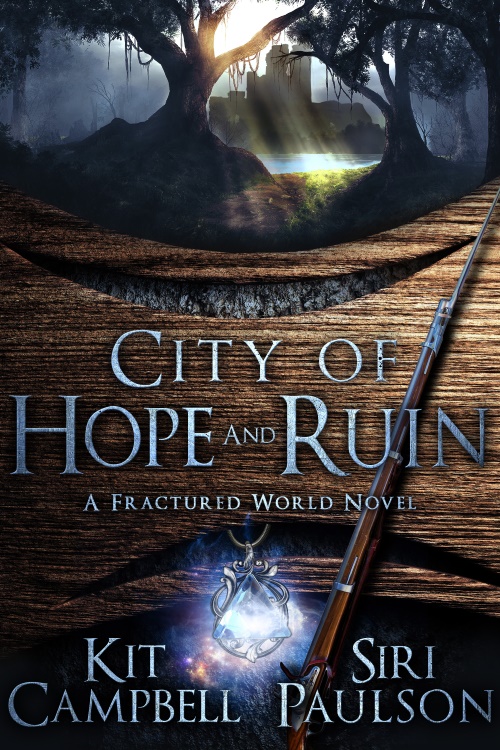
City of Hope and Ruin cover
AmazonKoboBarnes%20and%20NobleiBookscustom
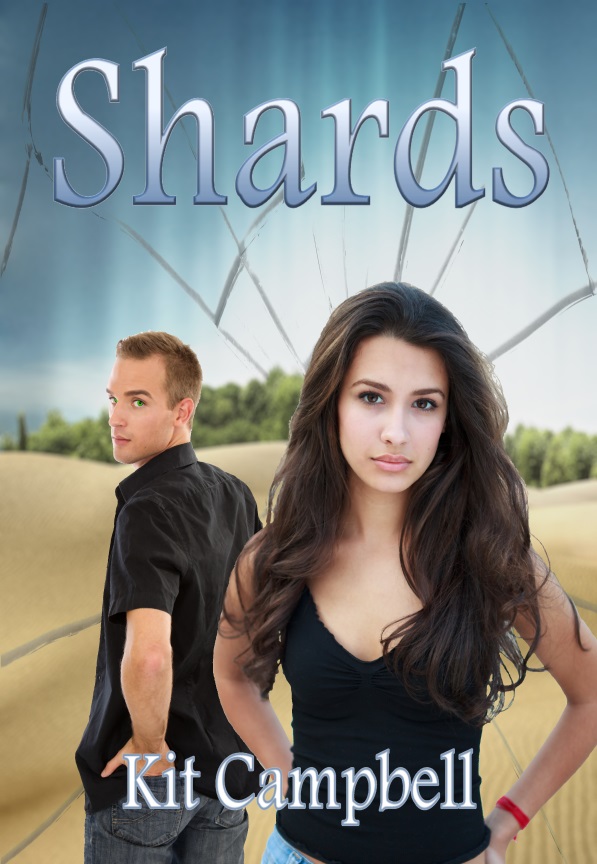
Shards cover
AmazonKoboSmashwordsBarnes%20and%20NobleiBookscustom
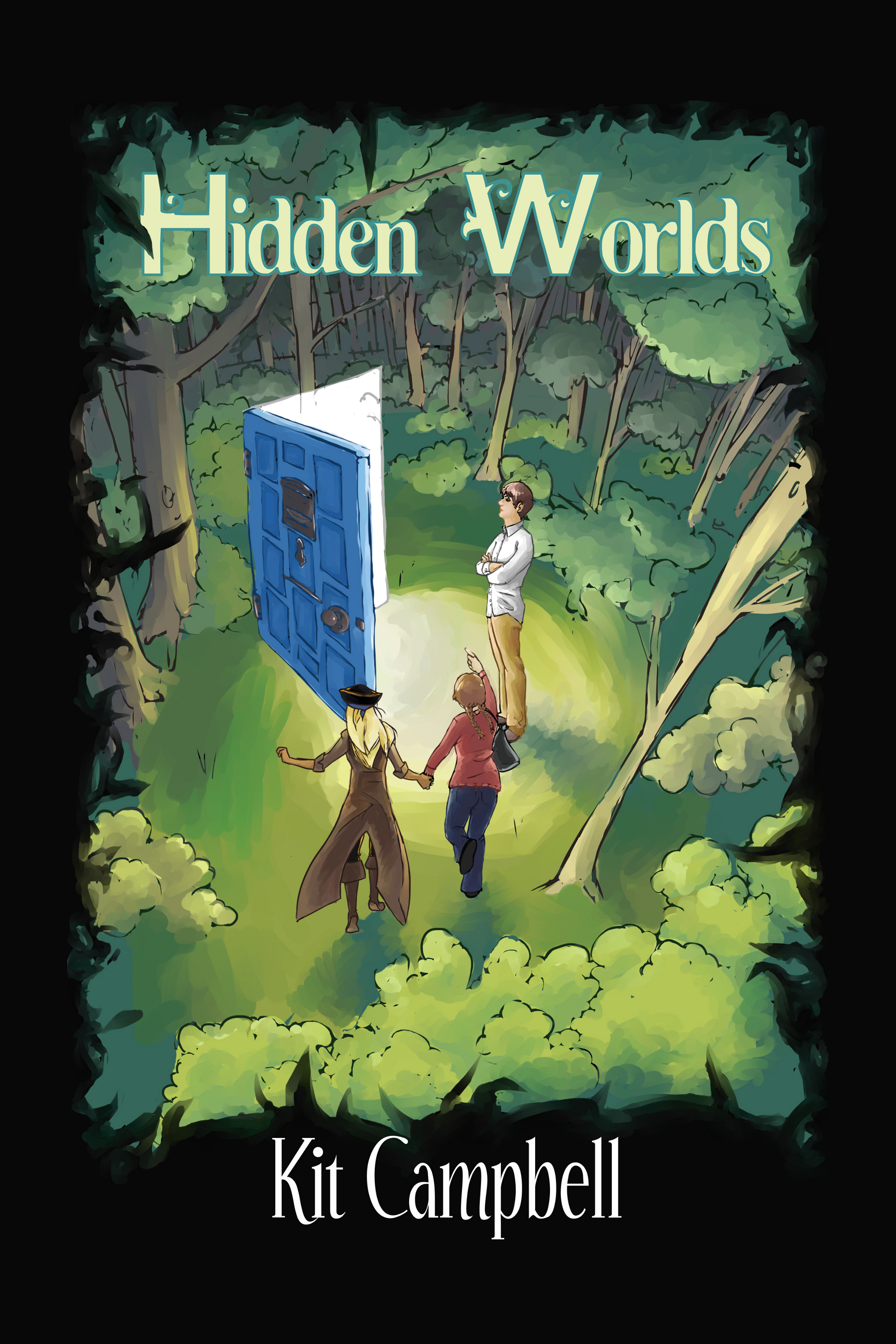
Hidden Worlds cover
AmazonKoboSmashwordsBarnes%20and%20NobleiBookscustom