Let Me Tell You a Story About Failure

I’m taking a break from revising, squiders, because I got really excited about my own story and, while that’s a good thing, it’s not the best state of mind to do revision in. (Almost done! And then on the rest of what needs to be done to get this book out.)

So, it seems to me–and feel free to fight me on this–that most author fears fall into two categories: fear of failure, or fear of success.

(We’ll talk about success later. Tuesday, maybe. I’m making no guarantees til this revision’s back in.)

So! Story time. Imagine, if you will, a 15-year-old Kit, learning to drive, because I lived in a single parent household and my mother really wanted there to be another driver around.

I was terrified of driving. Nothing seemed like a worse idea than giving me control of a several thousand pound machine and letting me around other people. But I did it, because I wanted to help my mother, and I liked the idea of freedom, and it’s typically one of those Life Skills that American society expects you to have.

The driving school I went to had a week or two of classroom education before they released us into the student driver cars. Now, I’d handled a car before: my father had let me steer the car on his lap since I was four or so, and my mother had let me drive around the neighborhood and other low-population areas as practice. But my first day, I went and got in that car with one of those people that you wonder how exactly they came to be teachers, because they obviously dislike children.

So I’m stressed to be driving at all, and then I get the least sympathetic person possible on my first “real” time out.

He had me drive around the neighborhood next to the school for about 20 minutes, then suggested I take a left turn out onto Colfax. (Colfax is a 3-lane-in-either-direction state highway, for non-Coloradoans.) I told him I wasn’t ready. I asked to spend a little more time in the neighborhood. I asked to try a right turn onto Colfax, since I’d never been on a big street before.

But he insisted, and off we went, white knuckled on the wheel. The light turned, I went, then realized I wasn’t turning quite enough. So, instead, I overcompensated, went over the median into oncoming traffic, and blew the tire.

My teacher was irate. I was much relieved.

Here’s the thing. When you fail, you have two options. You can give up, or you can try again, knowing there’s no way it could go worse. I’m pretty sure I was the only one of my friends who managed to physically break a car while learning to drive, but on the other hand, it gave me valuable experience.

In retrospect, it was good that he pushed me. Could he have done it better? Sure. But it forced me to give it a try, and even though it ended poorly, I felt better in the end, probably better than I would have if I hadn’t tried at all.

So don’t let your fear stop you. Yes, you might fail. But then you can try again, with no where to go but up.

Had any particularly spectacular failures, squiders? Stories about learning to drive?
Creating the Right Cover Art

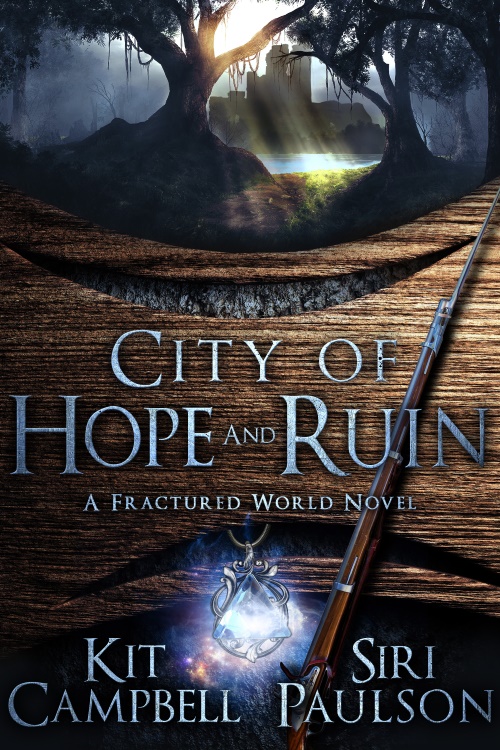
Well, Squiders, work continues apace on getting this novel ready for release in May. We’re finishing up our final revisions and the manuscript is due back to the copyeditor/proofreader in a few days. And now we have a title, so we can get going on our marketing.

So the next step is, of course, the cover.

I mean, ideally, we would have gotten started on the cover months ago. If you’re in charge of your own cover art, listen to me: GET THIS GOING EARLY. I like to do it at least six months out, normally, which gives you time to butt heads with the cover artist, get changes fixed, have a nice, well-marketed cover reveal (preferably linked to a pre-order), and not have to worry about things.

Six months ago we didn’t even have a first draft. I am learning all sorts of things about working to a deadline when there’s a year between concept and publication. Mostly things like This Is a Bad Idea and Oh God What Have I Gotten Myself Into. I’m not sure how people who put out a book or three a year do this.

The nice thing about working with Turtleduck Press is that we have control over our own cover art, because I know that can be an issue at times. (I have a friend who recently had a historical fantasy novel traditionally published, and he says sales and reviews have been good, but he’s very disappointed in his cover art. He fought to get his main character on it and the publisher ignored him.) On the other hand, now we’ve got to figure it out ourselves. And not only does it have to be representative of this novel and portray the general tone and genre of the story, but it’s got to launch a shared world series, so it has to be in a style that subsequent books/novellas, etc. can follow.

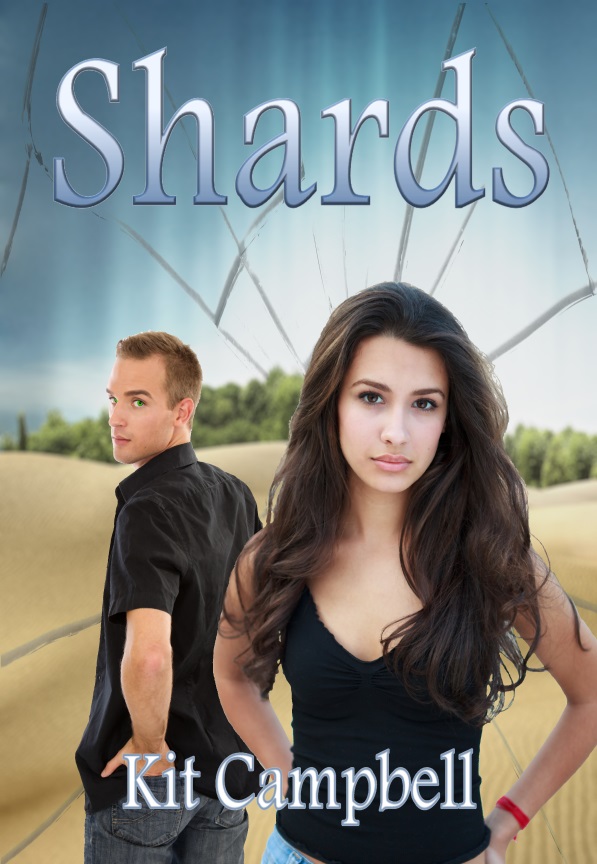
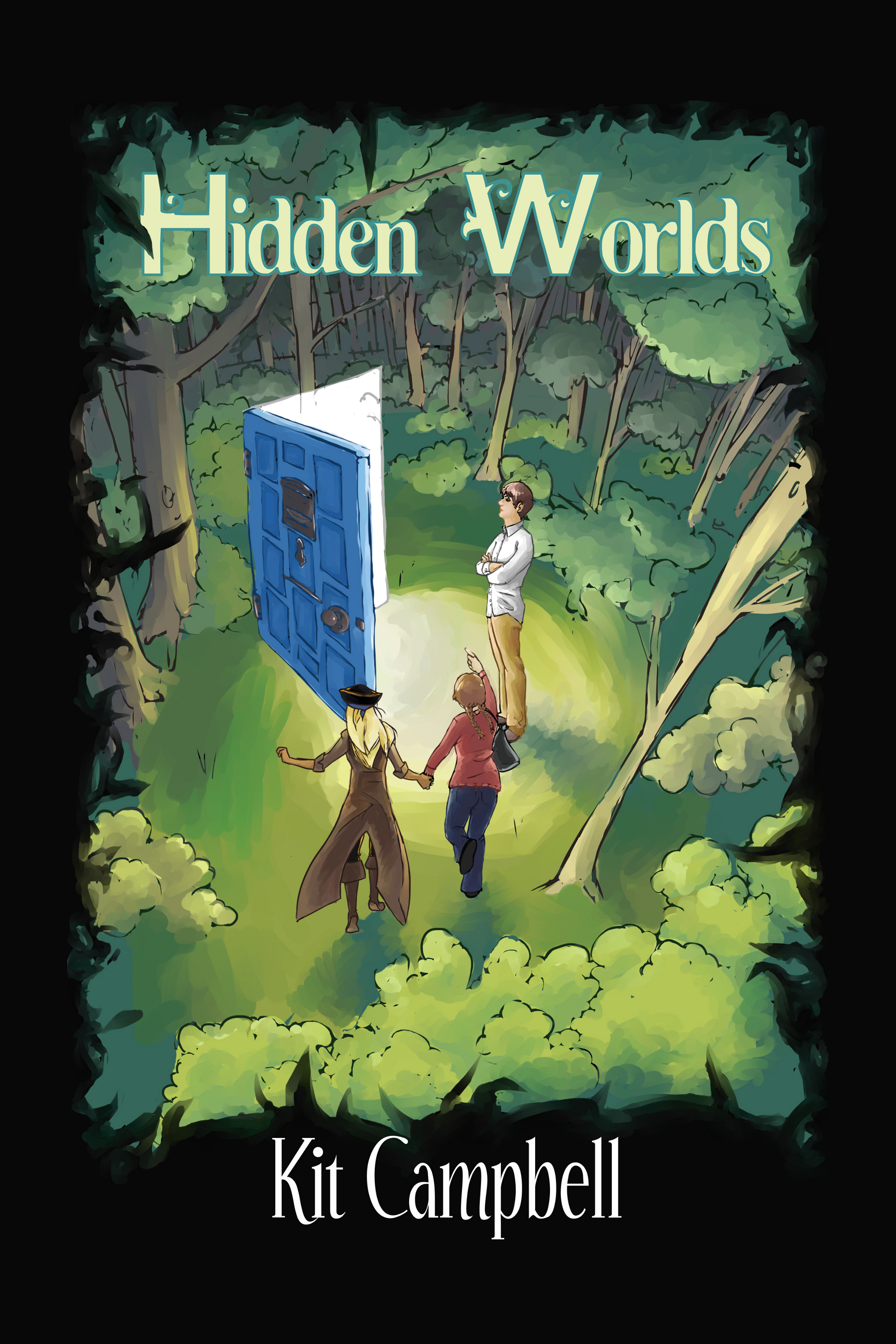
I feel like none of my previous books have been this hard. For Hidden Worlds the artist was a friend, and I just let her read the book and then come up with a cover. For Shards I had a clear idea what I wanted and what was usual for the urban fantasy/paranormal romance genre.

Here we’ve got high fantasy, which points more toward hand-drawn illustration, but we could also do something more symbolic.

Options, options, but we’ve got to get it figured out and done.

Any recs, Squiders? Thoughts on illustration vs symbols? Cover artists you’ve used that you like?

Library Book Sale Finds: Uncharted Territory by Connie Willis

First of all, good news, Squiders! We’ve finally decided on a title. So that’s one thing checked off the seemingly endless list.

Anyway, onward!

I’ve read a couple books by Connie Willis before (To Say Nothing of the Dog, and the Blackout/All Clear duology) from her Oxford time travel series. This is not one of those. This is planetary exploration scifi in the style of a Western.

Title: Uncharted Territory
Author: Connie Willis
Publication Year: 1994
Genre: Science fiction

Pros: Short, fun, interesting world and premise
Cons: A character twist really threw me, and not a lot actually happens

In general I liked this quite a bit. Westerns, like Age of Sail, have a lot of the same tropes as science fiction, so ala Firefly space westerns feel very natural. (You can read more about this subgenre here.) Connie Willis writes this first person, which generally I am not hugely fond of, but I love the character voice so it works out fine.

Basic premise is two surveyors, out on a new world, trying to explore but being faced with bureaucracy at every step. You see, the government doesn’t want to be accused of expansionist tendencies, so they’ve given the natives the ability to monitor and fine the surveyors, which the indigent people have figured out how to twist to their own advantage.

The voice is fun, the situations are ridiculous and totally believable, and I liked the characters as well. My biggest issue is that the PoV character is female, and this is completely not obvious until about halfway through, when it suddenly becomes (and remains) a plot point throughout the rest of the book. I thought the PoV was male, and it took me a good half a chapter to adapt to this new information. I’m not sure if I missed something early on (I did go back and do a cursory look) or if this was supposed to be a big reveal, or what, but it really threw me.

The other thing is that it doesn’t quite feel like a complete story. It’s a short book, only 149 pages, and it’s almost a slice of adventure sort of story. Only one thing’s changed from start to finish, really, and even that doesn’t seem to be anything major.

But it was short, it was fun, and I enjoyed it. So I’d recommend it, if you like space westerns or other planetary exploration stories.

Have you read this? What did you think?

Hybrid Publishing and Making It Work For You

Our storycraft meeting next week is on marketing and publishing, so as I’ve been working on putting the meeting together, I’ve come across some things that I thought you might like too, Squiders.

So, today, let’s talk about the concept of hybrid publishing.

What is hybrid publishing? Simply put, it’s any publishing model that falls in between traditional and self-publishing. Some indie publishers refer to themselves as hybrid publishers, because they have aspects of both. For example, Turtleduck Press has a traditional editing model, but allows authors full control of things such as pricing, covers, and where to list the books for sale, and it relies on POD and e-book technology.

That’s publishers and presses. For individuals, being hybrid published can mean a number of things, but typically it means that you have works that have been self/indie published, as well as some that were traditionally published.

You might be asking why one would want to do hybrid publishing. Well, let’s look at the pros to being traditionally published. You get some marketing/PR (hopefully). You are eligible for most major awards, can get your books reviewed by the snootiest of reviewers. There’s the clout, the respectability of having made it the “right” way. And you might get a large advance.

And the pros of self-publishing: you get full creative control of your story, cover, etc. You get more royalties and potentially more money over time. You can publish on your own schedule instead of waiting a year or more for each book to come out. You can switch genres and write whatever suits you at that particular moment of time.

So why hybrid publish? So you can get the benefits of both methods. An author can publish novels traditionally and self-publish short story collections and novellas in between novels to give their readers new stuff while they wait. An author can traditionally publish one more serious series while self-publishing another sillier series. You can traditionally publish short stories and link them to your self-published or indie-published novels. Hybrid publishing can be done in any number of ways.

In this day and age, is there any reason to not do both in any way that works for you?

Are a hybrid author, Squiders? Do you have any authors you follow that have a system you like?

Picking a Title: Surprisingly Hard

My co-writer (the lovely Siri Paulson) and I are deep into our revision for our novel coming out in May. I feel like it’s going fairly smoothly, because we identified a lot of issues ourselves and got started on fixes before we got our comments back from our editor. Siri may feel otherwise. We haven’t been in several-times-a-day touch like when we were writing and so now I feel like I have no idea what she’s thinking anymore.

But we’ve run into what’s turned out to be a difficult and complex issue: we can’t pick a title.

Titles are notoriously hard in general. You want something that evokes the theme and tone of the story without being too obvious, something catchy but not misleading. With my novels, I tend to pick a title before I start writing. This isn’t really the best practice, as the titles often times don’t fit by the time I’m done, but I find it hard to undertake a large project without a name. (Luckily with short stories, I can write them and then title them, which works much better.)

Siri deemed this the “Sekrit Project” at the beginning, which stuck, and has worked for getting around whatever name-hangup I have with novels, but now we need a real title because we’ve got to get the book up for pre-order, get the cover art done, reach out to reviewers, etc. And we can’t do anything of that without a title.

And we’re stumped. Because of the structure of the novel, we essentially have two of everything–two main characters, two settings, two plots. There are things and themes and everything that overlap, but finding something that makes sense for both characters and both worlds and the over-arcing themes has proven elusive.

We’ve bounced from more literal titles to more metaphorical titles and back again with no luck. We’ve looked at recent releases in the same genre to get an idea of title trends with no luck. We’ve asked our editor and our betas for suggestions. Again, no luck.

I kind of want to laugh. We worldbuilt together, we plotted and wrote and are now revising together, and we can’t manage a little thing like picking a couple of words to slap on the front of it.

Siri jokingly suggested we just call it the Secret Project, but alas, it will not work.

Any suggestions, Squiders? We’re at our wits’ end. Any thoughts about titling or things that have worked for you (or things that you look for when picking a book to read)?

Making Sure Your Characters Fit Their Community

This morning I went to yoga at my church. As far as yoga goes, this is pretty non-intensive–more for relaxation and stretching than anything else. I’m the youngest person who goes. Afterwards, everyone gets together to chat for a while and, since several people who come know me or my husband or the small, mobile ones, I often have several people come and talk to me for a while. Meanwhile, I’m thinking about how I need to go and what I need to get done and what order I should do it in, and I find the practice somewhat stressful.

(Also? Introvert.)

Part of that is personality, and part of it is generational.

But I do know how to play my part, because this is a part of the society I was raised in and I know its rules. Which is something we should always remember about our characters as well.

Characters, like people, are a product of their environments and upbringing. Societies have rules, and even people who are outcasts or uncomfortable with the people around them know those rules and respond to them in some manner. And if you remove a character from their base environment and place them somewhere else, even if those new rules fit them better as a person, there’s still going to be a transitional period for that character.

Authors can fall into the trap of creating a character outside of their environment pretty easily. It’s not hard to give your character modern ideals and then plant them in a society which goes against all of them. It’s one thing to have a character against the injustices of their society, but it’s another to put them there without any logical reason. People raised in comfort tend to not see issues until directly confronted with them. People raised in poverty or other hard circumstances often have a hard time seeing the way out.

Authentic characters feel that way because they feel complete. Readers can see where they came from and how they got there. Someone serving as a political mouthpiece for the author might have important things to say, but they don’t feel real.

What do you think, Squiders? Have any examples, good or bad, where a character doesn’t echo their environment?

Using Worldbuilding to Bring Your Story to Life

I’m into the final revision on this co-written story coming out in May, and there was some commonality among comments from the editor and our beta readers:

  • The setting reads a little generic
  • My main character’s initial plan seems a little confused
  • Why are the two side characters not seeing what the main character sees, re: danger?

Now, this may look like a bevy of issues, but they all have their root in one thing: worldbuilding.

As a quick recap, Wikipedia defines worldbuilding as “the process of constructing an imaginary world, sometimes associated with a whole fictional universe.” All fiction requires worldbuilding, but it’s mostly associated with science fiction and fantasy.

The thing is, everything else stems from your worldbuilding. Your characters, their motivations, the plot, the setting–so if you’re winging it or are a little unclear on something, that’s going to be painfully obvious in your narration.

I’ve found, when creating secondary worlds, that it’s hard to get it right the first time. That, despite thinking things through and planning things out, there’s always something that you’ve forgotten, or that gets fleshed out through the actual writing. Or, in this particular case, you notice something your co-writer is doing that would be excellent to incorporate into your own stuff.

The good news is that everything is fixable. By fleshing out your worldbuilding, you can make your settings feel real, your characters relate-able, and your plot cohesive. The better you understand it, the better the underlining structure of your entire story is.

That’s why stories where the worldbuilding was an afterthought or deemed not important feel contrived and derivative. There’s a key element missing from them that all the pretty prose and excitement in the world won’t fix.

The good news for me is that now that the first draft is finished and that I’ve done some additional worldbuilding in spots that I identified as lacking, those beginning problems can be solved with some tweaks to bring everything into proper alignment. And it sounds like everything else is pretty good to go.

Have you found issues stemming from improper or incomplete worldbuilding, Squiders? Have you ever read a book with obvious worldbuilding fails?

This Will Be a Super Bowl Interlude

So, hey, my local football team, the Denver Broncos, won the Super Bowl. As you might imagine, nothing much is getting done around these parts. My financial adviser stopped by for a minute this morning to pick up some paperwork on her way downtown for the parade and rally.

There’s a million people downtown right now. Even I considered going, but the thought of small child wrangling around all those people seemed like a terrible, terrible idea.

(The population of Denver isn’t even a million people.)

I’m not a huge football fan, but I do keep general track of how the season’s going and occasionally break out my Broncos shirt. And we always watch the Super Bowl, no matter who’s playing, because it’s a good excuse to hang out with our friends and eat too much food and watch the commercials.

I find myself kind of lukewarm about winning. On one hand, it’s really exciting. Super Bowl 50! Our defense is ridiculously unstoppable. We’ve got two ex-players running things backstage now (Gary Kubiak and John Elway), which is kind of neat. I like the idea of people staying with a team. (Our hockey team is currently run by some ex-player as well.) And everyone is so happy. Nothing brings the state together like the Broncos. There’s a reason the motto is United in Orange. And it’s kind of amazing that we got here when our starting quarterback was out for half the season.

On the other hand, it wasn’t a great game. The offense was pretty terrible. The poor Panthers couldn’t get anything done. The commercials were boring.

So part of me wonders–is it right to be so excited when it feels like we didn’t really do much?

And I know it’s wrong to judge an entire season off a single game. The team did a lot of good stuff this season, especially when Peyton was out. And the defense is brilliant, and was brilliant in the Super Bowl. It’s just not as showy.

Defense is one of those things that is so necessary, and isn’t terribly visible when it’s working, but is oh so obvious when it’s not.

I want to make to make some sort of writing analogy, but it’s not coming today. What would the “defense” of writing be? A basic control of the written word. Story structure. Plot pacing. The sort of stuff that is necessary for a story to feel right, that might not be obvious to the reader when it’s working, but feel wrong when it’s out of place.

You’ve read stories like that, haven’t you, Squiders? Where something is wrong, but you can’t put your finger on it?

Anyway, happy football parade day, everybody. Also Fat Tuesday. We’re going to have pancakes for dinner!

The Future of the Readalongs

If you’ve been with me for a while, Squiders, you know that I have traditionally done a readalong or two a year (depending on series length). The last one we did was The Foundation Trilogy by Isaac Asimov, which wrapped up mid-2014.

We’ve previously done Harry Potter, the Time Quintet (A Wrinkle in Time, etc.), the Enchanted Forest Chronicles, and the Howl’s Moving Castle books (which probably have an actual series name, but I don’t know what it is).

I’d like to do another one, but I find myself at a loss as to what to do. I’ve been focusing on more “classic” series with the idea that other people would either want to read them also or would already be familiar with them, so we could discuss them as we went. But I can’t think of another one I want to do. Narnia would be an obviously choice, but I don’t feel like re-reading it. The Oz books, though it’s harder to find some of the later books in the series. (Also, I’ve been reading The Wizard of Oz to my eldest, and man, the description can really drag.) The Lord of the Rings, maybe, though I just read The Hobbit and have read LOTR enough times that I can probably quote bits of it in my sleep.

(Plus I’d have to get through the part in the Old Forest again, oy.)

Maybe a newer series? But is there one that has been enough of a cultural force that most genre readers will have at least heard of it? I don’t want to touch a series of BFFN (big fat fantasy novels) like Game of Thrones or Wheel of Time, at least not for the readalong. I’d like to be able to guarantee I’d be able to get through a book on a reasonable time frame.

I’ve been reading some promising fantasy series, but they’re all ongoing and I’d prefer to do a complete series for the readalong.

I do like the readalongs and I’d like to keep doing them–I feel like they’re interesting from a learning standpoint, to see how authors continue story and character arcs across a series, as well as in individual books.

So, any suggestions? Anything you’d like some company reading through? I’d prefer something scifi or fantasy-related, if at all possible.

Otherwise, read anything decent lately? I’ve got the second book in the Tearling series out from the library right now and I’m looking forward to jumping into it.

January: Came and Went

Is it just me, or did January seem extra short this year? One minute it’s a brand new year, brimming with possibilities and freedom, and the next it’s snowy, dark February and despite trying to be realistic in my goal planning I am already horribly, terribly behind.

Sure, there were extraneous circumstances. My website (technically websites, since I had to move my editing one as well, though it hadn’t been crashed since October), which we’ve gone over. (Now all moved and still working, thankfully, except I still need to figure out how to fix my stupid theme.) And I’ve been sick all month. First there was the pink eye debacle (two and a half weeks to clear up, all told) and now I’ve had a cold for about as long, with is mostly annoying because I cough myself awake several times throughout the night and can’t take any decent decongestants because of life.

Oh, sleep, how I long for thee.

Oh, well, life happens, and you just have to shrug your shoulders and climb back into the saddle, and other nonsense sayings.

(As a random aside, my sister got bucked off a horse when she was about 12 and did the whole get back on and so forth, but I don’t actually know what her current thoughts on horses are, and she didn’t answer when I called her to find out. We were part of the Westenaires at the time and I don’t know if either of us have done anything with horses since. I know, for me, that it firmly determined that I didn’t actually like horses.)

(I think it probably says something that my favorite horse was a cranky Appaloosa named Smokey that liked to try and bite me when I brushed him and was known for kicking people across the arena when they tried to pick his hooves.)

(ANYWAY.)

I mean, January wasn’t all bad. I wrote half of a nonfiction book and got my short story collection in order with a title, cover, and everything. (I’m just waiting for the final go ahead on that.) I’ve done a fair amount of work on the co-written sekrit project. I submitted two short stories, one of which is still out (and finally got a rejection on a story that’s been out for almost a year and a half). I learned to use a new image processing tool which I can use both in book publishing, and probably here at the blog when I stop being lazy. And I did a ton of freelance work and made a bunch of leads in that direction. So those are the good things.

I did have a lot more planned, though, things that probably wouldn’t take too long if I could just get to them. Mostly marketing things. Poor Shards needs a new book description and to be re-categorized on Amazon. My YA paranormal needs a decent query letter (and probably a Twitter pitch–I’ve been wanting to try out those #PitchMad things and there’s one around Valentine’s). And I’d like to get Hidden Worlds some new reviews, so I need to hunt down some reviewers for that. (Let me know if you’re interested, and I can get you a free review e-copy in the format of your choice.)

Sigh, alas, and all that rot.

It’s no use crying over passed months. It’s February now, and there’s still things to do. And, maybe, I can get some of those dropped January things done around the sekrit project edit. (We’re still waiting on our formal feedback, so if nothing else, this week is kind of free! Though I have tons of edit prep to do.)

How was your January, Squiders? Get anything exciting done?


Books by Kit Campbell

City of Hope and Ruin cover
AmazonKoboBarnes%20and%20NobleiBookscustom
Shards cover
AmazonKoboSmashwordsBarnes%20and%20NobleiBookscustom
Hidden Worlds cover
AmazonKoboSmashwordsBarnes%20and%20NobleiBookscustom