No Happily Ever After?

My husband and I finished up watching Wayward Pines last night (Yes, I realize we’re about four months behind, which is actually pretty good for us, television wise). And the series was working toward a conclusion, and working, and working–and then it kind of jumped the shark at the last minute.

And I understand, logically, why they did–to leave themselves open for a possible second season, even though they used up all the source material in the first season–but it still annoyed me.

(And this morning I did some research, before I got too annoyed, to see how the books ended so I wasn’t wildly out of line.)

It just…it almost seems like it’s a trend now. It’s bad enough that we seem to have gotten to this point where everything has to be dark and gritty much of the time, but now nothing can end on a good, or even a hopeful, point.

Sometimes this can be good, but more and more I’m just finding it a little exhausting. I look at the news, and all the terrible things happening around the world, and now I can’t even escape into media because it’s just more of the same.

And I know the argument is that it’s more realistic, that bad things happen and nothing is ever truly good, but can’t we have some hope? Some peace? It’s fiction, so can’t we occasionally bend the rules?

(Ending this here because I am typing outside without gloves and it is freezing and also now snowing, and I regret my decisions in life.)

What do you think, Squiders? Any recs for good, engaging media that is not all dark and “oh noes” all the time?

(And Merry Christmas, for those who celebrate, if I don’t get here on Thursday!)

The Increasingly Muddy Line Between Fantasy and Science Fiction

Have I shown you my speculative fiction pyramid, squiders? Hold on, let me do a quick paint drawing for you.

Speculative Fiction TriangleTada! Behold, the speculative fiction pyramid. Because, back when I was doing the Subgenre Study, I found it increasingly difficult to tell where one genre ends and another begins. Something like Pern looks like fantasy on the outside, but actually takes place on a planet that humans colonized.

The Pern books are admittedly kind of old-school at this point, but it’s certainly not the only example I can provide. The Shannara books (getting new life through the upcoming TV show) have always hinted that it takes place in our world after some disaster at some point in the distant past. And one of my favorite books that I read this year, The Queen of the Tearling, has every high fantasy trope you could want, but makes mention of England and Scotland and some passage made to get to where the story takes place. (And, actually, apparently Amazon has its sequel, The Invasion of the Tearling, which I have sadly not read yet, filed under Science Fiction>Dystopian.)

So while it’s true that most speculative fiction falls somewhere on the speculative fiction triangle (dark fantasy would go between fantasy and horror, say, and science fantasy would go between science fiction and fantasy), it almost feels like a lot of fantasy has pushed off toward the science fiction end.

My own personal theory is that we, as a technical society, like to know how things work, and so magic systems have become more technical and, over time, morphed toward the old “Any sufficiently advanced technology looks like magic” end of things. So maybe a world has magic, but instead of being true magic, it’s just considered magic because the Ancients who came up with the technology are dead and long gone, and the knowledge has been lost through whatever.

…one sec, I have to write down a story idea.

This co-written novel I’m working on right now has some elements of this too. What do you think, Squiders? Elements of our time? Is is really as pervasive as it seems, or do I just keep falling into that particular type of book?

An Unholy Alliance

Sorry, squiders, but I’m going to talk about Star Wars again. And Star Trek. We’ll get back to real content again on Thursday, when we will either talk about the fluidity of fantasy into scifi or antagonists, depending on how I’m feeling at the time.

But for now–Star Wars. Star Trek. AND THE UNHOLY UNION OF BOTH.

Sorry, overly dramatic. I’m going stircrazy. We’ve got at least a foot of snow outside and I’m going to have to try and drive in it soon.

Now, I’m sure you guys know by now that I am a Trekkie, and have been as long as I can remember. As such I occasionally dabble in the fandom community, usually in a “lurk and consume” manner, though I have been known to participate actively when time allows.

So it was from there that I learned that they were releasing the first trailer for the new Trek movie (due some time next year) in front of the new Star Wars movie this weekend.

While many Trekkies also like Star Wars, it might be the first time in history that the entire community raised its head with interest.

On one hand, it makes perfect sense. Star Wars is (arguably) science fiction. Star Trek is also science fiction! (And, in the current iteration, a lot closer to Star Wars than previous iterations have been.) On the other hand–is this allowed? Star Wars and Star Trek in such close proximity? (You can see my feelings on that whole debacle here.)

But then they went and released the Star Trek trailer online yesterday, so now some of the excitement has dissipated. (Trailer is here if you want it.) Unless it is a different (and hopefully better) trailer? Hm. Maybe! Doubtful, but maybe.

Anyway, two days til Star Wars, four days for me. Thoughts on the Trek trailer? Or showing it with Star Wars? Let me know, Squiders.

Library Book Sale Finds: The Grail Tree

It’s that time of month again, Squiders. I’ve dug into the library book sale books from this summer and read another, and now I’ve come to tell you about it.

(One might ask why the library book sale books are still sitting on their own on the floor in front of the book case instead of being put away, but to that I say, uh, look over there!)

The Grail Tree tells me it is the third of the Lovejoy mystery novels. Now, my father is a big fan of British mystery series (Rumpole of the Bailey being his favorite, I believe) and I can remember watching Lovejoy with him when I was much younger, which is why I picked this book up. Nostalgia! Except I don’t really remember anything about the TV show except I think Lovejoy had long, curly hair.

(I have looked it up on Google now, and it’s really more of a mullet, in retrospect. Also I was apparently four when the series premiered.)

Title: The Grail Tree
Author: Jonathan Gash
Genre: Mystery
Publication Year:
1979

Pros: It was short? And the writing pulls you along well.
Cons: Highly confusing at points, main character occasionally is too unlikeable

I’ve never really run across a book before where the phrase “I am obviously not the audience for this” has been so true. This is first person from Lovejoy’s point of view, and Lovejoy comes across as kind of a sexist jerk that doesn’t seem to think well of, well, anyone. As I said, I don’t really remember the TV show too well except for the father/daughter bonding time, but maybe it wasn’t as apparent in the show because television, through the very definition of the media, adds a layer of distance between a viewer and a character which you don’t normally get with a first-person narrative.

(Also, now I have been to Wikipedia, and it says they toned down the lechery and violence, so there you are.)

If you are unfamiliar with Lovejoy in either book or TV form, the character is a rogue-ish, normally down on his luck, antique dealer. He also has an almost supernatural ability to tell if an antique is real or not, or merely a clever forgery. That’ll get you pretty far.

The premise for this particular adventure is that Lovejoy has been contacted by an elderly gentleman claiming to have the Holy Grail, because he wants Lovejoy to look at it and see if it’s the real thing. Whether it is or not, it’s certainly a valuable antique, so of course the poor man is offed before Lovejoy ever actually sees the thing.

I found the story very confusing in places–there’s a lot of female characters, most of whom occasionally dally with Lovejoy in some manner or another, and aside from three or four I found them impossible to remember, and of course there’s no introduction. In other places the book gets so caught up in antiques lingo or other specialty dialect that I just literally could not tell what was going on. And, as I said, Lovejoy is sometimes too much of a jerk for me to sympathize with him at all.

So! Not for me. I shall see if my dad wants the book when I see him next Saturday. If you like mysteries, and you don’t mind a bit of sexism and generally unfriendliness in your main characters, you might like this, but otherwise I’d give this a pass.

The Thrill of Anticipation

I’m not going to lie, Squiders. For the last week or so I’ve had kind of a constant underthought going through my head. And it goes a little something like this:

STARWARSSTARWARSSTARWARSSTARWARSSTARWARSSTARWARSSTARWARS

It crept up on me. When the latest trailer came out and everyone was so excited, I thought it was merely okay. I didn’t bother fighting everyone for opening night/day tickets. And I’m a bit burned, because of the Star Wars prequels and the fact that the last Star Trek movie had some major issues going for it.

But all the same it’s snuck up on me anyway.

Anticipation is a funny thing, isn’t it? It’s a mixture of good and bad. Excitement and anxiety. Something could be amazing–or terrible. Or anywhere in between. And it’s kind of fun, a break from normal life. Sometimes it’s just something on your mind, something coming up to look forward to. Sometimes it’s more of an obsession.

If nothing else, I have some family members who are going to be way easier to shop for this year than usual.

Have anything you’re looking forward to, Squiders? Some big event coming up? Tickets to the Force Awakens? (We’re going on the 19th at lunchtime.)

A Landsquid Thanksgiving

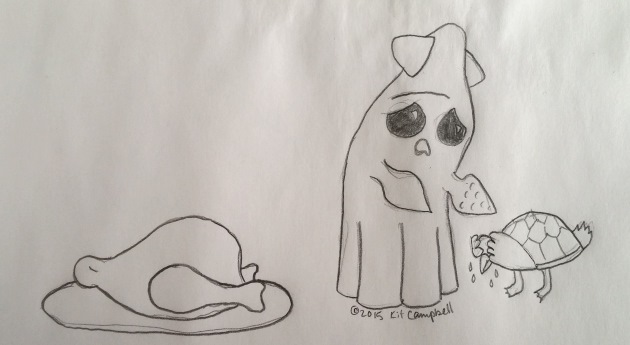
Landsquid called his friend Turtleduck on the phone. “Come over,” he said. “I’ve learned about this great holiday that some people celebrate, where you get together with those you love, eat a shared meal, and go over what you’re thankful for. Food’s at 5. See you then? I’ve got to call the Alpaca still.”

It was a merry group that convened later that day. The Alpaca had knitted sweaters for the lot of them, which, though hideous, everyone still wore with good cheer. The self-folding plesiosaur had brought drinks, and the alligator in the tree entertained them all with stories from his perch on top of the bookcase.

Finally, it was time to eat. Everyone settled down as Landsquid brought in dish after dish: mashed potatoes, stuffing, green bean casserole, and to top it all off…

“…is that a giant duck?” Turtleduck asked.

“Well, no,” Landsquid said. “Actually, it’s…”

“But it’s some kind of bird! You’re trying to serve me bird!” And she burst into tears.

Poor Turtleduck

The others stared at Landsquid, judgment written on their faces. “No!” he said. He placed the plate down on the table and crossed over to Turtleduck, patting the top of her shell awkwardly. “I would never do that–surely you know that, Turtleduck.”

She peered out from between her feathers, caught sight of the plate again, and wailed anew.

“Let me explain, please!” Landsquid waited until Turtleduck quieted. “You see, it’s all part of the tradition. Birds are fantastic, everyone knows it, so to celebrate them as part of the general thanksgiving, a giant effigy is made of them. It’s called a tofukey. It’s made of tofu.”

“Oh.” Turtleduck dried her tears on one wing. “Why doesn’t it have a head, then?”

They all regarded the tofukey solemnly. “I must have used a bad template,” Landsquid said finally. “I’ll find a different one for next year. Now, shall we eat?”

And so they did.

Dramatic Interlude

No landsquid today, Squiders–my holiday weekend was overstuffed (pun intended, haha) and I’m still recovering from it on some levels. Thursday, I promise, and if I’m wrong I shall let the Alpaca have my favorite hat, even though he will probably eat it.

So, moving on. I’ve always said that it’s good to try new creative things every now and then. I think it helps one grow as a writer and/or an artist, helps clear the mind, and gives one experience they can apply to whatever their main creative occupation is.

With that in mind, Saturday I am going to try out for a musical.

Am I terrified?

You bet!

My local community theater is doing Into the Woods, which admittedly I know nothing about aside from it being a Sondheim musical and a mixture of fairy tales. And that Chris Pine rips his shirt off during a song in the movie version (which I have checked out from the library, but still not actually watched).

Am I expecting to get a part, or even make it to call backs? Not especially. I am what I would call a competent singer–I can sight read, have good rhythm, and can stick to my own part in a multi-part song–but I don’t think anyone will ever say I have the voice of an angel. I was an Alto II in high school and an Alto I in college, but I can usually do the mezzo soprano and Soprano II ranges without any issues. On the other hand, I have had a death cold for about a month and it’s only within the last few days that I can sing at all.

Musicals and I don’t have an especially good relationship anyway. I didn’t get cast in a single one in high school, despite being in the advanced women’s choir and also a regular lead in non-musical plays. I was only onstage for my senior one because one of the chorus (a freshman, alas) dropped and they needed to replace her. And I’m pretty sure high school was the last time I tried out for one.

But it never hurts to try, right? Experiences! Variety! Theater-based mysteries! (A friend and I went to see Curtains about a month ago, which is a musical about a murder during a musical, and it was lovely and I enjoyed it a lot.)

And maybe I’ll actually get a part, and then get to sing, by myself, in front of all sorts of people…

But maybe dressed as a princess! That would be okay.

But first, I need to pick–and learn–an audition song.

Have you tried anything new lately, Squiders? How did it go?

What I’m Thankful For (And What You’re Thankful For)

We’re in that holiday spiral now, squiders. Halloween’s gone and done, Thanksgiving is mere days away (oh no, it is! I’m not ready!), and then from there it’s downhill to Christmas and New Year’s and 2016 and that horrible feeling that yet another year is gone and you didn’t quite get done what you wanted to get done.

And during this time of year, when you realize the end is looming and you have unfinished plans, there’s not much you can do about them. The month-ish between Thanksgiving and Christmas is full of other obligations–cards and presents and wrapping and guests and family–so it seems like you might as well give up and wait til next year.

(Maybe this isn’t an issue if you don’t celebrate Christmas. Let me know!)

Deep breaths, squiders.

I think it’s important, when the holidays are upon us, to take a step back and look at what we’ve done for the year. Maybe our to-do list is still twenty items deep, but that doesn’t mean we didn’t take some important steps.

For example, I didn’t get my nonfiction series done. I’m still not done with this novel draft that’s due to my editor at the beginning of December. And I still don’t have a usable query letter for my YA paranormal novel. Those were my big goals for the year. Do I fail?

No, not really. Because looking at it another way, here’s what I did do:

  • I outlined an entire nonfiction series, wrote a nonfiction book, and came up with related workbooks to go with the series.
  • I edited and polished a 89,000 word YA paranormal novel
  • I’ve taken a ton of marketing classes
  • I got my Patreon up and running
  • I finally got an email list!
  • I wrote 9-10 sections of my serial story
  • Have written most of a co-written novel
  • Worked some on other novels so I don’t forget ideas
  • Completed a fair amount of freelance editing and coaching
  • Blogged here consistency throughout the year
  • Wrote and edited three short stories
  • Took a flash fiction course and wrote five flash stories

So, from that standpoint, things are actually looking pretty good. And I’d bet you, if you sat down and looked at how far you’ve come, you’re not doing too shabbily either.

What are your accomplishments for the year, squiders?

I’d like to promise a landsquid drawing/story for Thursday, but I’ve got people staying here the next few days and I’ve got to host Thanksgiving, so it’s not actually looking too likely. You’ll get them Tuesday if Thursday doesn’t happen.

Those Plodding Books (Or How I Just Finished a Book I Started Last October)

Have you ever read a book, Squiders, that seemed to take you forever? It’s not so godawful that you want to throw it away and never touch it again, but neither is it riveting enough to pull you through it in a timely manner. And so you just read a little bit at a time whenever you have nothing better to do, and meanwhile you pick up (and get through) other books, just so you’re not stuck with your plodder.

I’m sure we all have these. The last one before this that I read was The Aeneid. I had a grand scheme that I would read all three books (The Iliad, The Aeneid, and The Odyssey), but The Aeneid took me six months and killed all my motivation for ancient Greek literature, so to this day I have still never touched The Odyssey.

(And yes, I realize that The Aeneid is Roman, not Greek.)

On Tuesday afternoon, I finally finished The Mysteries of Udolpho by Ann Radcliffe. I’d seen mentions of it in other books for years, and had long heard it mentioned as a classic example of the Gothic novel. So I decided to give it a try, especially since I got it for free on my Kindle. According to my Goodreads update, I was on page 180 on October 22 of last year. I’m not actually sure when I started it.

So, it took me at least 13 months to get through. Maybe more, because I remember the beginning being mind-numbingly slow, and I was lucky to manage 20 pages a day.

Why did it take me so long? Well, the beginning is…slow paced would be putting it kindly. There’s a lot of meandering about the countryside, waxing poetical on the landscapes. For the longest time, I couldn’t figure out why old books dwell so long on description, but I eventually figured out that they had no other way of showing their readers what a place was like. People didn’t travel like we do today, and they didn’t have easy access to pictures. If they wanted to know what the Pyrenees looked like, they had to read the beginning of this book and picture it in their heads. I can just use Google images to get the same result.

Anyway, at least the first third of the book is wandering about describing things. The first 250 pages can be summed up as “young girl’s mother dies, goes on trip with father, falls in love, father dies, and she gets shipped off to Italy with her aunt and her aunt’s creepy new husband.” Udolpho, which is a castle, by the by, doesn’t show up until page 320 or so.

There are also large swaths of poetry throughout which, personal preference, are not my cup of tea, and I will admit to skimming most of them.

The good news is that the end picks up quite a bit. I read the last 200 pages in a week. But, oy, to get there…

Is it worth it to slog through the plodders? Not sure. What do you think, Squiders? Which books have given you issues?

(I also should probably stop with the Gothic novels. They never seem to quite do it for me, yet I keep trying.)

(I say this after just starting Rebecca, and being in the middle of The Haunting of Hill House, though I am not sure the second counts as Gothic.)

The Importance of Perspective

Story time, Squiders. When my husband and I got married, we had an outdoor ceremony. We wanted to include a unity ceremony, but the “normal” one (you’ve probably seen it somewhere–the bride and groom each have a candle and use them to light a bigger central candle) seemed like a bad idea in unsure weather conditions.

(Actually, my cousin had an outdoor wedding a few months before ours, so I know it’s not the best idea.)

I did some research on alternatives, and we ended up doing a wine unity ceremony, which involved our mothers pouring two different wines into a Scottish drinking vessel called a quaich, which we each drank out of.

We didn’t mean any symbolism beyond your basic unity ceremony symbolism (two people united as one) but we got a lot of comments afterwards about it.

My extremely Catholic family saw it as relating to communion. Our friends from California saw it as a commentary on our love of wine. Some friends assumed that it was a Scottish tradition, since we included a lot of Scottish elements to our ceremony.

Everybody who saw that ceremony brought their own interpretation based on what they knew of us and what their own experiences related that to.

What’s my point? People interpret the world differently, based off their backgrounds, experiences, beliefs, and thoughts. So, when writing, it’s important to take that into account. A character who grew up an orphan will have a different perspective than a trust fund brat, and someone with children will react differently than someone without.

It’s important to make sure that diverse characters react diversely, and that the different characters are also different from you, especially if your background is different than theirs.

And fiction can become that much richer when you allow varying perspectives to shine through.

Do you have examples, Squiders, of either good examples of diverse perspectives, or of bad ones where everyone reads the same? Any tips on how to write perspectives different from your own?

Books by Kit Campbell

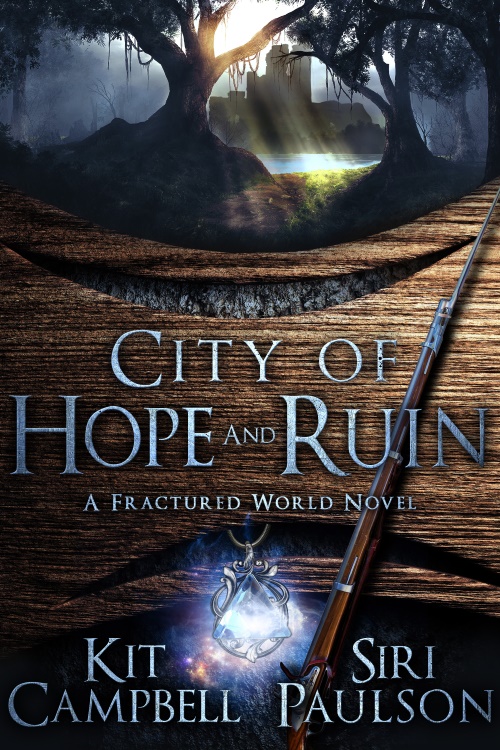
City of Hope and Ruin cover
AmazonKoboBarnes%20and%20NobleiBookscustom
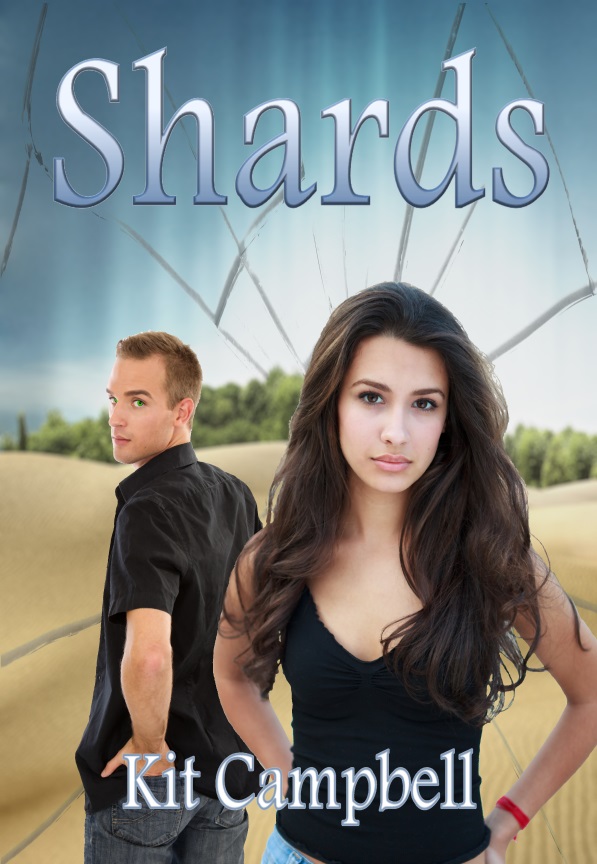
Shards cover
AmazonKoboSmashwordsBarnes%20and%20NobleiBookscustom
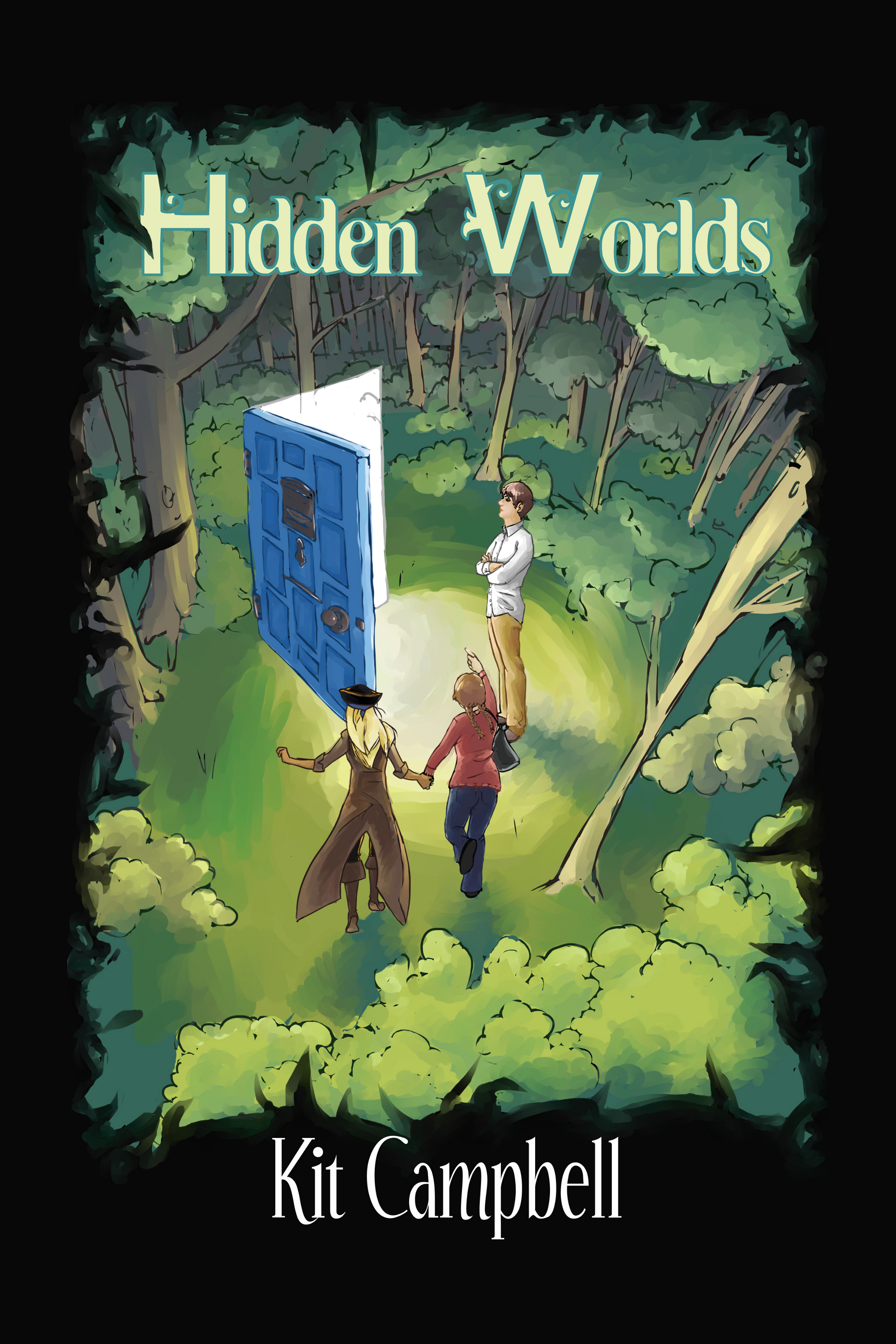
Hidden Worlds cover
AmazonKoboSmashwordsBarnes%20and%20NobleiBookscustom