Beginning Problems: The Mirror

Another common issue found in the beginning of a lot of early drafts and first novels is the mirror. Generally, this is combined with the dream sequence, where the main character wakes up from their dream, stumbles into the bathroom for mundane showering/teeth brushing, and then stares into the mirror, where we get a full, detailed description of their eyes, their hair, whatever other visual quirks, such as freckles, that the author has decided exist.

There are a ton of problems with this. The first of which is that it’s plain weird. I don’t know about you guys, but the last thing I think in the morning after I stumble into the bathroom is how sparkling my green eyes are, and how luscious my wavy blonde hair is, and man, aren’t my long lashes just the best?

(This is true even if the mirror is not related to a dream sequence. I see the “wander down the street and look at one’s reflection in the windows” variation a lot as well, and it still is weird.)

Second of all, it breaks up the story flow. Ideally, a short starts with something happening, even if it’s as simple as fighting with a sibling or being late for school. When you stop and spend a paragraph (or more) on appearance, the story loses its forward momentum.

Third, by dwelling on the main character’s appearance, it’s like the writer is saying, “I don’t know how to properly show characterization, or I think that somehow my character’s appearance is their characterization, and it’s important that I tell you all this now or you won’t care enough to keep reading.”

No reader cares about a character because they’re pretty/plain/brunette/a special snowflake. Readers care about a character because they’ve got a relate-able personality, a problem that’s interesting, something intriguing that pulls a reader along. Frankly, a character’s appearance is the least important aspect of their characterization in most cases (exceptions exist to every rule of course–the only black kid in the neighborhood is an important distinction to note up front, for example) and there’s no reason to dwell on it up front or in such detail.

I’m not saying that appearance can’t be noted–it’s the infodump qualities of the mirror sequence that make it a problem. A line of description here, another there–spread out throughout the narrative, not disrupting flow or plot.

What do you think, Squiders? Disagree with me that the mirror is a problem? Have examples of stories where the author manages it without ruining their momentum?
Beginning Problems: The Dream Sequence

Beginnings are an interesting beast, and what I find fascinating is that so many writers start their first stories the same way, like there’s some instinctual drive to do so. Like we were all taught to do so, even though most of the time they are a terrible, terrible mistake.

Let’s take the dream sequence. Dream sequences, in and of themselves, are not bad. Done right, they can convey information, tension, foreshadowing, etc. Some people can even pull off starting a novel or short story with a dream sequence.

However, most people can’t, and the problem isn’t even necessarily the dream sequence, but how it ties in with the rest of the story.

See, the typical dream sequence beginning goes something like this: Main character has a dream, where they either remember something that has recently happened that is interesting, or they has some sort of cryptic dream that hints interesting things are to come.

Main character then wakes up, goes to the bathroom (generally takes a shower, though brushing teeth is common as well), and any conflict or tension that was built up during the dream is immediately lost. The story doesn’t try to build off of it, and so everything just collapses into boring mediocrity.

There’s a bigger issue with the remembering something that has just happened kind. Why not start with that event? Why tell about it after the fact instead of showing it in action, especially if it’s something major, something that rocks the character’s world, something that starts the main plot?

But sometimes it doesn’t do any of those things–it’s just a one-off, something to hook people in right at the beginning, that doesn’t actually have anything to do with the main plot or the goals of the main character. That’s got a whole heap of other problems tied to it.

Beginnings are hard–they have to hook the reader, set up your MC and his/her world, and be relevant to your plot and your MC’s character arc. Getting that balance just right is a skill that generally takes a lot of cultivating.

If you’re starting with a dream sequence, ask yourself the following questions:

  • What am I hoping to show about my plot/character with this sequence?
  • Could this information be better conveyed in another way?
  • Does the content of this dream sequence directly tie in to and influence the main plot of my story?
  • Am I managing to keep the tension up once my character wakes up?

What do you think, Squiders? Do you have any examples of a starting dream sequence done right? Have you run into this issue in your own writing (or even professional writing) in the past?

When You Really Want to Read a Book

Maybe you don’t do this, Squiders. Maybe I am alone in my oddity. But there are times, when I’m staring at my bookcase, trying to decide on what to read next, when I’ll look at a book.

And I’ll say, “Man, I bet I’m really going to like that book.”

And then I’ll back off, and say, “Man, since I’m going to like it so much, maybe I shouldn’t read it yet. Maybe I should wait, so I can savor it, so I can make sure reading it is going to count.”

And then, “I mean, it’ll get in my head. I’ll love the characters. I’ll think about it for days afterwards, and I just can’t commit to that right now.”

And then I’ll pick out something else, something that is less of a perfect fit, something that I’m less excited about, and read that instead, and sometimes it’s forever before I get to that book that seems like I’m going to love it.

I just realized I did this yesterday. I have a book that has been highly recommended to me by a few different friends, a science fiction novel from the ’70s called The Voyage of the Space Beagle (the last friend said it was even better than the original series of Star Trek which is, frankly, sacrilege, but man did it catch my interest). It’s sitting right here. On my desk. I can see it.

Yesterday I needed to start a new book. I stared at the Space Beagle, got really excited, and then went and picked something else out.

Isn’t this madness? Why on Earth would I pick a book I kind of want to read over a book I really want to read? Is some form of self-punishment? Am I, subconsciously, gravitating towards books I know I can probably get rid of after I read them, thus clearing up room for more books?

Whatever it is, it really has to stop.

What about you, Squiders? Do you get all weird when confronted with a book you’re excited about? Have you worked past this inanity? If you can just pick up an anticipated book and go, can you give me some tips?

A Hint of Arthurian Legend

I was at the storycraft meeting for my writing group earlier this week, and while we were mostly talking about pacing (ah, pacing), we also had gotten somewhat sidetracked on dystopian stories. (To be fair, we got there from talking about whether or not emulating the general plotline of a classic dystopia would preserve the pacing, but still.)

One of the guys brought up The World’s End (the movie), and as none of the rest of us had seen it, he proceeded to describe it using other movies as examples. And he topped it off with “With just a hint of Arthurian legend. Everything’s better with a hint of Arthurian legend.”

We laughed, and I brought up Kingsman, which I saw on Saturday (and was excellent and I highly recommend it), as another example, and then we probably got distracted by something else.

But I got to thinking a little later. Is it really Arthurian legend that makes it better? It’s not like Arthurian legend is strongly superior to other forms of mythology, either in terms of longevity or subject matter. Is it better to have a hint of Arthurian legend versus, say, Norse mythology?

I suspect a hint of any sort of mythology helps a story, because it ties the story into something older, maybe even something arguably instinctual.

As for Arthurian legend versus other mythologies, the differentiation probably comes from cultural exposure. American culture is a mixture of other cultures, yes, but I think the argument could be made that we perhaps draw most of our influences from English culture. I would think that, universally, we’re more familiar with Arthurian legend because of our cultural exposure. (There are exceptions, of course–people of different backgrounds are more familiar with the mythologies that go along with their background–but I think everyone knows the basics of Arthurian legend.)

What do you think, Squiders? Does tying a bit of mythology into a story make it resonate a little more? Is Arthurian legend any better than other mythologies? Would you argue that another type of mythology is stronger in our cultural background?

The Appeal of Family Secrets

First of all, Squiders, let me apologize for the lack of a post at the end of last week. I’m afraid Leonard Nimoy’s death threw me off my game, and I may have spent a lot of time trolling Tumblr for memorials and occasionally tearing up. He was such a good, kind man, very talented, in a number of areas, and we were–are–very fond of him in the Star Trek community.

RIP, Leonard.

On to family secrets. I almost consider this its own genre. Not speculative fiction, no–more general or contemporary literature. I admit I am not a big fan of general/contemporary literature, mostly because I live in the real world and don’t usually feel the need to read about it, and partially because it tends to be a horribly depressing genre, full of cancer and dead children and cheating spouses, and I really don’t need that most of the time.

I do make an exception for family secret books, though. There’s something different about secrets that may have been passed along through a generation or three, things that could change a person’s entire world view if they knew. Maybe it’s the mystery, the wonder of what exactly is being hid.

After all, don’t we all love our own family secrets and scandals? Sure, most of the time they’re not to the level portrayed in the books, but my grandmother once told me of an uncle of hers who just…disappeared. He came home to visit and was never seen again. They thought he was perhaps killed in a train accident, but both bodies were claimed by other families, and an acquaintance mentioned he’d seen him about two years after the fact.

When I was doing genealogy for the family, I found no mention of this uncle. All his siblings, yes–but the uncle himself? Nothing. It’s almost as if he’s disappeared from history.

I wonder about that uncle a lot.

Sometimes I feel family secret books fall back on a lot of overused tropes–there’s invariably a dead child somewhere, like someone’s not sympathetic if they haven’t lost a child. But I always hold out hope that a book will try something new, give me a twist I didn’t expect, that I didn’t see coming.

My favorite example of the family secrets genre is The Thirteenth Tale by Diane Setterfield. Do you like family secrets books too? Which ones have you enjoyed? Which have you found trite or predictable?

Ta Da Tuesday (and SFWA’s New Membership Guidelines)

I got an email this morning from D’vorah Lansky (who is a writing/marketing professional) talking about it being Ta Da Tuesday. The idea is that, instead of a To Do list, you make a Ta Da list and celebrate your recent accomplishments.

It’s a nice idea. I think too many of us get bogged down in things going wrong, or get depressed when it seems like we’re not making any progress.

So here’s three things I’ve accomplished lately:

  • I finished the first draft of my nonfic book, found betas, and sent it out to them.
  • I finished a scrapbook I had been working on for almost three years.
  • I got through the doom!chapter in my edit and am two or three hours of work away from being done, hooray!

Okay, now your turn. What are three things you’ve accomplished lately?

In other news, (and maybe you’ve already heard this) the Science Fiction and Fantasy Writers of America (SFWA) have announced that, starting March 1, they’re changing their guidelines to allow self and indie published authors membership.

The new guidelines won’t be up until March, but it seems like it will be based on how much money an author is making off of their stories, regardless of how they were published.

What do you think of this development, Squiders? Yay for recognizing new forms of publishing? Nay for focusing on monetary rewards instead of literary merit? Other opinions about SFWA in general?

The Novella Hype

Last summer, Tor announced the creation of a new imprint dedicated to novellas. Last week they put out their list of inaugural titles, which seems to have caused a bit of a stir among the authors I talk to or follow.

(Some of the stories look pretty cool, so I’ll probably look into them. If I remember.)

It’s not the novellas themselves, nor the release titles. No one seems to have a problem with the idea of an imprint dedicated to novellas. In fact, most authors think it’s a pretty cool idea. The novella, as a prose length, has been notoriously hard to sell. Not long enough to be a novel, not short enough to be a short story, but somewhere in between, novellas have typically gone the way of a lot of not easily marketable genres or cross genres: ignored.

What this has done, however, is created a wave of people declaring that novellas are the new publishing norm, that people can’t sit still long enough to get through a full-length novel. And then, of course, you have the counterwave, declaring that those people are crazy and have no idea what they’re talking about.

Seeing how almost every new publishing trend seems to be hailed as the new norm, I admit I agree more with the latter camp.

I can’t help but think that it’s the same sort of thing as when someone rounds up quotes going back a thousand years or so about the state of technology, or how the newest generation is the worst, or how every story ever has been told and everything modern is a hack.

(Plus the continued popularity of the Game of Thrones books seems to directly counteract the original argument.)

The fact is that, through epublishing, it’s a lot easier to put out works that don’t fall into a traditional length. Authors may finally be able to let a story by the length it wants to be instead of bulking it up to reach novel lengths, or cutting things out to reach short story lengths.

But does that mean that people–readers and writers–are suddenly only going to write/read things that are novella length?

Of course not. Everyone has a reading comfort zone. (Mine used to include 1000+ page books, but has shrunk over the years to under 700 pages, barring exceptions.) No one is going to change theirs just because of a new imprint.

What do you think, Squiders? Are shorter books the wave of the future? Or is this just a nice alternative for both the people who write novella-length scfi/fantasy and the people who like to read it?

Speculative Fiction is a Product of its Time

If you remember, last year I acquired and read a short story collection of the best science fiction and fantasy stories from 1959. For those too lazy to click the link, I mentioned that I thought that most, if not all, of the stories included would never be published in today’s climate.

I’m currently most of the way through a volume of the best science fiction and fantasy stories from 2011. Earlier today (while building a snow dinosaur in the backyard) I was pondering the differences between the two collections. The current collection is much more what I would expect to find in a scifi/fantasy short story collection, and I’ve picked up a couple of authors to look more into based on their included stories.

But I think it’s wrong of me to say that the 2011 collection isĀ betterĀ than the 1959 one. I think that it’s more of a generational thing, if you will.

Authors don’t write in a vacuum. They absorb the culture around them–pop culture, religion, politics, the concerns of the day. The more modern authors and I probably share a lot of the same influences, so these stories feel more natural to me.

On the other hand, the people in the ’50s had different worries. There was the constant threat of nuclear war, and they were still recovering from the horrors of WWII. It seemed perfectly plausible that an invading alien race could show up at any time.

Those worries have disappeared into climate change, terrorism, school shootings, and government oversight.

That doesn’t make our stories better–just reflective of the times we live in. If you handed the 2011 collection to someone from 1959, it’s entirely possible that they would think it was crap. They might think we take too long to get to the point of the story, that we rely too much on twist endings. They might wonder why we’ve already given up on space travel instead of being excited by the possibilities.

Any thoughts, Squiders? Do you agree that stories are a product of their time? Why or why not?

Reminder to BACK YOUR STUFF UP!

Don’t worry, Squiders, nothing got me. Well, nothing got my stuff.

(I do, however, have an issue where, if I forget to uncheck the graphics driver update before my computer runs the updates, the new driver eats my display set-up. I have a lovely dual display which I HIGHLY recommend to everyone, because it’s excellent for editing, writing (and checking research at the same time), doing two things at once (always), etc. For some reason the update not only won’t let me do my double monitors, but it also won’t let the remaining monitor use any logical resolutions so everything looks stretched and that really bothers me. And I forgot yesterday so I spent an hour this morning doing a system restore and am now grumpy and may go eat chocolate even though that’s a bad idea.)

Oh! And because I’m remembering, TDP videocast tonight at 7 PM ET with the lovely crew of Full Coverage Writers! Go like the Turtleduck Press facebook page so you can get more info and the videocast link when it becomes available. Tonight we’ll be talking about the wide selection of TDP books and individual authors’ processes and so forth.

ANYWAY. Back up your stuff! This is your reminder if you haven’t done it recently. And I do mean everybody: writers, artists, college students, even you–your pictures, anything sentimental you want to look back on in future years. And make sure your computer is set up to do a system restore after it updates, so you can fix anything wonky that might occur.

Believe me, the omnipresence of the Internet and the Cloud and whatnot can make it seem like you’ll never lose anything ever, but you never know when your power will cut out, your Internet connection will drop, your computer will implode with little to no warning, or someone will hack your account.

Back it up. It hurts no one.

Share any particularly disastrous stories of not backing up in the comments. Also, if anyone knows how I can delete this stupid graphics update from the list (I’m using Windows 7) so that I can stop wasting my time, you will be my favorite person.

Videocast tonight!

Using Your Phone as a Notebook

First of all, though, I’ve been remiss on telling you guys about stuff.

  • I have a new free short story, called Band of Turquoise, up at Turtleduck Press. Go read it! (It’s nice and short.)
  • SF Signal featured Band of Turquoise in its round up of free stories, which is pretty dang cool.
  • And I totally spaced on telling you guys, but me and the entire Turtleduck Press gang were interviewed by Full Coverage Writers on their videocast last night. You can find that video here. (There are squid. Just saying.)
  • On a similar note, we’ll be on FCWriter’s videocast again next week. I’ll hopefully remember to remind you guys about that in a timely fashion.

Now, on to the show.

A common writing tip is to carry a notebook with you at all times. A little one, pocket-sized or so, and a pen or similar writing utensil. That way, when you have an idea, whether it’s a new story, an idea to help you break writer’s block, or just something that may prove useful later, you can whip out your notebook, jot it down, and save it for later use.

In practice, I find this problematic. I don’t carry a purse, and women’s pockets are tiny and mostly decorative, which makes notebook/pen combos difficult to stow. Also, tiny notebooks tend to wander off when you most need them, so the result is that I have half a dozen tiny notebooks, two of which I can find at any given time and none of which have more than a few pages used.

I’ve found it’s much more useful to use my phone as a tiny notebook. I already have my phone with me most of the time, and there’s a tiny of apps you can put notes in, many of which are backed up elsewhere on the cloud so you can access them from your computer or from a new phone should something happen to the old one (unlike a tiny notebook of mine which suffered a traumatic and fatal incident with tea).

Here’s a sampling of apps that can be used for this purpose:

  • Google Drive
  • EverNote
  • Google Keep
  • OneNote

No doubt there are others, but these are the ones people I know use. Personally, I mainly use Google Keep. I find the Drive phone apps non-intuitive, and I haven’t managed to get my act together enough to check out the various Notes.

How about you, Squiders? Leave a comment about your note-taking method of choice and what, if any, justification you have for making said choice.

Books by Kit Campbell

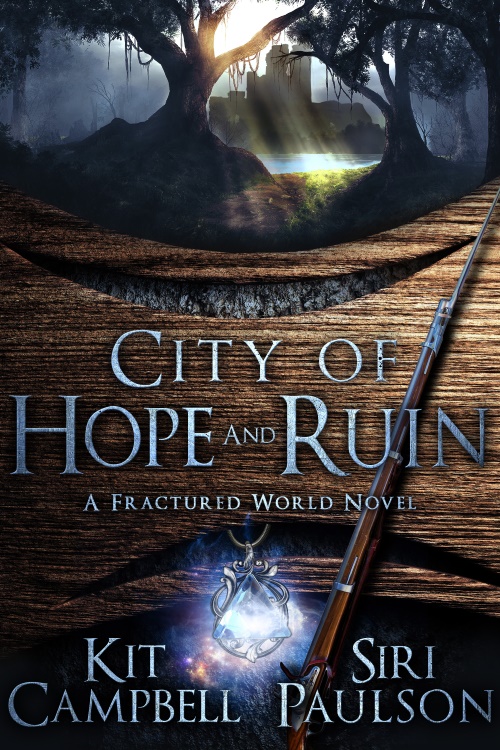
City of Hope and Ruin cover
AmazonKoboBarnes%20and%20NobleiBookscustom
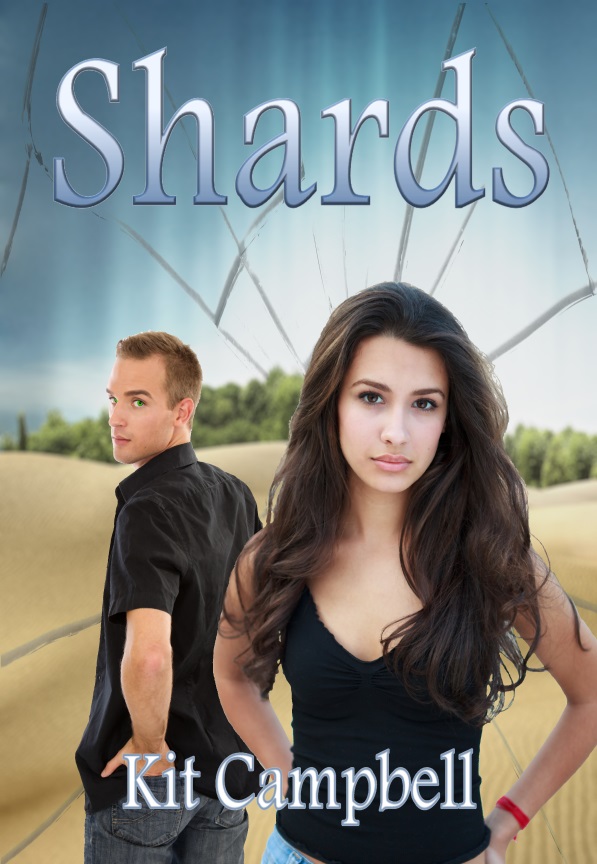
Shards cover
AmazonKoboSmashwordsBarnes%20and%20NobleiBookscustom
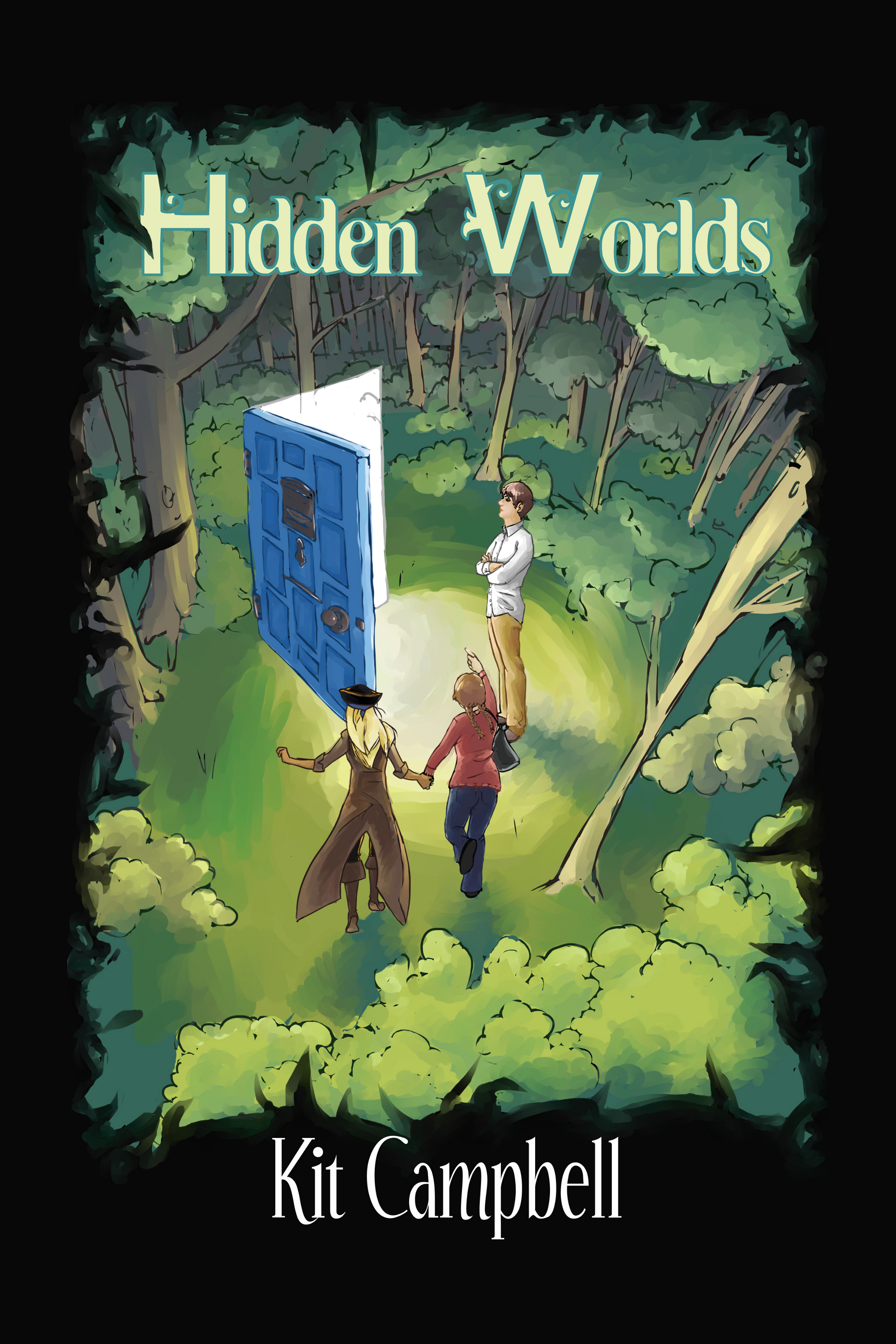
Hidden Worlds cover
AmazonKoboSmashwordsBarnes%20and%20NobleiBookscustom