When Your Brain is All Over the Place

I find myself kind of in a weird place at the moment, Squiders. Normally I am excellent at compartmentalizing my writing, at working on a single big project at a time (with some side smaller projects), and everything is fine and dandy and lovely and so forth.

But recently, I’ve been all over the place and I think I’m starting to go a bit mad.

As you guys know, I’ve been working on editing a YA paranormal novel. That’s actually going pretty well. I hit 25K on the edit this morning, which puts me about a third of the way done, and I think it’s more even in tone and plot flow than the original draft was. I don’t think this will be the final draft, in the end, but I do think it’s getting much better.

I’ve been working on a consistency challenge–making sure I get in at least half an hour every day on the edit–which is definitely helping.

So all’s quiet on the Western Front.

I’ve also been attempting a short story a week this month, which is going though less swimmingly, but I was admittedly a little overambitious. Probably shouldn’t be attempting a full short story outline/draft/edit in a week’s time frame while also editing/rewriting a novel, but so far I have written something every week. The first week I wrote a novel-related drabble. Last week I wrote a prompt-response short that I promised my sister for her writing blog about two months ago. This week I wrote a novel-related drabble AND finished up a short story I started in February of 2012.

The drabbles are not related to my YA paranormal novel, however. Which leads us to probably the most frustrating aspect of my sudden inability to focus like I normally do.

Do you remember earlier in the year, when I was finishing up the first draft of the third book of a high fantasy trilogy? Well, I sent that sucker out to betas, and in some cases I sent all three books out to people. And I asked everyone to have it done by October and then went off to work on my YA paranormal novel.

But the issue is that I haven’t been able to get the high fantasy trilogy out of my head since then. I’ve read over the drafts myself multiple times, and every time I get comments from someone else, I read through their comments and tend to get sucked into the draft myself. I’ve started an editing document where I’m keeping track of things I want to change, from character names to new scenes to tweaks to existing scenes. I’ve pondered what the characters did after the end of the third book, or what they did before the first book. I’ve had character arc discussions with anyone who would let me. I have a non-standard “hero” who does bad things at the beginning before he reforms, and everyone has different things they dislike about him, so I’ve been trying to figure out if and where things are too bad (but they are literally different for every single person and I am going to go insane).

Do you know how distracting it is to work on an edit when your brain is trying to edit something else? Normally I might follow my brain’s lead and switch edits, but there’s no reason to do so until I get all my comments back from my various betas. And that’s still months out.

Any advice, Squiders? About any of it?

Betas’ Memory (and How Trappings Color Readers’ Experiences)

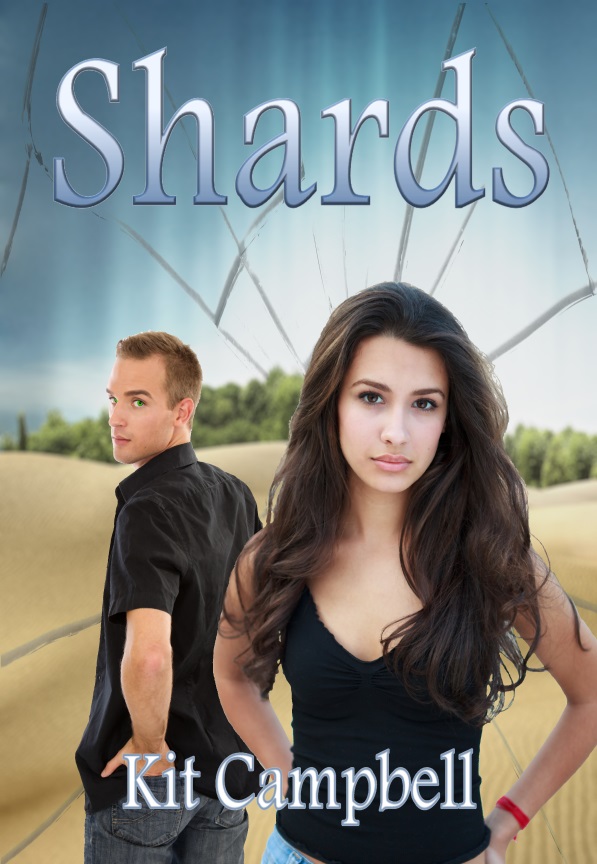
My family seems to be very slowly making their way through ShardsIt seems like every week a different cousin or aunt or uncle is reading it, which is honestly a bit flattering, that everyone’s bothering.

Last week my mother told me that she’d read it, and she said that she was really glad I’d added Thor into the story, that she had really liked him.

The weird thing is–Thor’s been there the whole time, and my mother read the first draft of the book. In fact, I barely touched him at all in my edit, aside from adding an epilogue scene (which of course has other characters in it as well and isn’t focused on him) and having a few other characters mention him before he actually shows up so it wasn’t out of the blue.

It’s interesting being a beta, and then reading the same story in later drafts or after it’s released. You have a memory of how the story went, but most of the time specifics don’t stick unless they either annoyed or pleased you more than usual. You spend a lot of time kind of peering at the text, remembering something slightly different, or wildly different.

But it’s also weird how much you forget, and how much changes in the story can change a readers’ perception of what’s happening. A few paragraphs of description can change the feel of an entire scene, or moving dialogue from one character to another can give the words different meaning.

In this particular case, apparently a few mentions and a new scene–no changes to the original scenes or dialogue–made a character much more memorable for my mother.

Have you ever come across a situation, either in your own writing or through reading something in multiple stages, where an easy change made things wildly different?

Why I Like Dual Viewpoints

In the modern day trend of first person or single third person narratives, I sometimes feel left out because I tend toward dual viewpoints. (Sometimes I do write single third person. Sometimes I write first person. Sometimes I write more than two viewpoints. But dual is my favorite.)

And even within dual viewpoints, I feel a little left out, because I would say a majority of dual viewpoints are romantically inclined, and mine are all mixed up. I do a lot of friends, or sometimes siblings. Sometimes I do lovers, but not a lot.

So! What’s the appeal of dual viewpoints?

Well, there’s a couple. Staying in a single viewpoint of course limits your ability to show anything that happens outside that person’s field of view. That’s kind of personal preference, however. Some people like to give a fuller view of all the events in a story. Others prefer their readers to find things out with their protagonist.

It can allow you to add more depth to a story because you have multiple people, each with their own goals and plans, affecting the plot.

(And involved in their own subplots.)

But why I tend to like them is because I love exploring relationships. And yes, everyone has relationships, even in first person or single third person narratives. But having two people, involved with each other (in whatever manner), and watching how their relationship grows and changes over time–that intrigues me. Because people aren’t the same. And even if they’re two halves of the same relationship, they’re not going to approach it the same. Likewise, people will not react to the same event in the same manner, and it’s also interesting to see how that affects a relationship.

What viewpoint combinations do you like as a writer/reader? Are there any that you just can’t stand?

Double U Tee Eff, Amazon

I’m writing this over the weekend, so no doubt by the time it goes up Tuesday this will all be old news (and probably out of date) but this is by far the silliest and also slimiest thing I’ve yet to come across in my publishing career.

So, by now you’ve probably heard about the letter that Amazon sent out butt early Saturday morning (if not, you can find it here). In summary, Amazon and Hachette have been pulling each other’s hair over contract disputes. I don’t know all the details and won’t pretend to, but it’s been going on for a while.

And, apparently, Amazon decided that the best way to get ahead in said fight was to email all their KDP authors and ask them to email Hachette and tell them to stop being jerkfaces.

What.

What.

I have very rarely actually spluttered, but there you are.

First of all, I don’t care about the Amazon/Hachette dispute that much because it does not directly affect me. Also, at this point it has reached such levels of ridiculousness that it feels unreal.

Second of all, Amazon doesn’t do much for its KDP authors unless they’re enrolled in KDP Select (where the book is available exclusively through Amazon, so the author can’t offer their book through multiple channels), and even then, the benefits are not great.

It’s entirely possible that Amazon expects (and maybe some people do) indie and self-published authors to think that they owe Amazon a huge deal because Amazon allows them to sell their ebooks on Amazon. Never mind that Amazon takes at least a 30% cut from each sale for doing nothing except providing a little bit of real estate (and, by some accounts, undercuts KDP books so it makes it harder for them to go up in the ranks or show up in searches. I don’t know if either of those have ever been proven, however).

KDP authors do not work for Amazon. They will not get any benefits if Amazon “wins” their dispute with Hachette (and, as some people point out, will probably lose out by Amazon forcing more ebooks–and those by bigger publishing houses–into the cheaper categories that indies and self-published books tend to hang out in).

KDP authors are not Amazon’s minions.

This move is just so wildly unprofessional that I don’t even know what to say. So here’s some other smarter, more knowledgeable people to say it for me:

John Scalzi

Chuck Wendig

Four Moons Press

And here is Hachette’s response to this whole debacle, which, unlike a certain email, looks like it was actually run by someone with a brain before they let it out the door.

To reiterate, I, like most people who sell ebooks on Amazon, have no say in the Amazon/Hachette thing because I am not involved. And it was uncool for Amazon to try and force me into the middle. So, if anything, now I am slightly on Hachette’s “side” purely because they haven’t tried to put me into a fight that I have absolutely nothing to do with.

Badly done, Amazon, badly done.

General Geekery

I hope everyone’s having a lovely summer and getting to see all the movies/TV shows and read the books they want.

As for as what I’ve been up to lately:

1) Guardians of the Galaxy
I don’t get out to many movies these days (and, to be honest, I’m not really a movie person–they take up so much time) so I try to make them count. The Marvel movies are pretty high up on my list, though, and I really enjoyed this one. It’s different in feeling from the Avengers movies and aside from some crossover characters, I wouldn’t have pegged it as a Marvel movie if I didn’t know it was beforehand. But I recommend it, along with 95% of the rest of the Internet. (I did, however, cry in the first five minutes. So beware.)

2) Avatar: The Last Airbender (and Legend of Korra)
I didn’t watch ATLA when it was on TV, but I’ve always meant to, because it seemed like something people really enjoyed. And its something I don’t mind the small, mobile one watching. (Actually, he really likes it. He doesn’t talk much, but he has learned the order of the elements.) It wasn’t quite what I expected–I didn’t realize the episodes were so short, and it was occasionally extremely silly. But I enjoyed the characterizations and the character arcs. We started Korra after we finished ATLA but it feels very different, like it’s meant for an older audience (and I’m sure it was–appealing to the original audience for ATLA, who’d grown up in the meantime). It’s very interesting (and holy industrial revolution) but it’s not quite as family friendly and we haven’t gotten terribly far into it.

3) Current Reads
I’m currently reading Boneshaker by Cherie Priest and Master of the Five Magics by Lyndon Hardy. Boneshaker is a combo of steampunk and zombies, but I’m having a hard time slogging through it. I’m not sure why. I’ve read other stuff by Cherie Priest, and I always want to love it a little more than I do. Master of the Five Magics is 80s fantasy, but less transition-y than a lot of the other high fantasy I’ve read from the same time period. And it’s kind of horribly sexist, sigh.

4) Recent Reads
I’ve been kind of all over the place. Out of the last five books I’ve read, there was scifi noir, high fantasy, urban fantasy, historical fiction and Christian literature (which I thought was a mystery or I would not have picked it up). Of those five, my favorites were Hornblower and the Hotspur by C.S. Forester (Age of Sail books always read a little scifi-y to me, which is probably why I like them), Nolander by Becca Mills (very interesting fantasy concept thus far–first book of a trilogy, probably, because everything is a trilogy), and Assassin’s Apprentice by Robin Hobb, which hit all my fantasy feel-good spots and now I shall forever be dedicated to her.

What have you been reading/watching, Squiders? Anything you loved? Hated? Anything you’d recommend I check out?

The Mountain Won (and a ROW80 Check-in)

Time for more mountain analogies, Squiders. I think we’ve compared writing to climbing mountains before, but the fact of the matter is that you have a lot of time to think while you’re trudging uphill.

So, last Friday, my family and I decided to attempt Mount Evans, one of Colorado’s famed fourteeners (mountains higher than 14,000). My husband and I were supposed to go by ourselves, but babysitting fell through. By ourselves, my husband and I would have owned that mountain so hard.

But we weren’t by ourselves, and people didn’t like the altitude, or wanted to be carried, or climb rocks, or play in alpine lakes (very cold, fyi). And eventually we were forced to retreat (we did make it to 13,800 feet) and it hailed and snowed on us.

But climbing mountains, like writing novels, isn’t all about the end goal. Yes, summiting (and finishing a novel) is an awesome high. But part of climbing (and writing) is the journey.

We may not have made it to the top of the mountain, but we saw some awesome vistas. Mountain lakes with steam curling off of them, their surfaces as flat and still as glass. Alpine meadows with a myriad of wildflowers, yellow and white and purple. Rocks covered in moss and lichen, and the sharp, jagged peaks looming into the sky. And we literally hiked up into a cloud. (Or the cloud came down to meet us.)

There’s something very interesting about being inside a cloud, where the landscape on either side of you drops off into empty, white space.

Writers write. And sometimes stories don’t work. Sometimes stories get dropped in the middle, never to be picked up again. And that’s okay. Writing–any writing–is good, even if it never goes anywhere.

And next time, who knows? Maybe the mountain gets conquered. Maybe the story gets finished. But you don’t know if you don’t try.

On the ROW80 front, I’m participating in an August consistency challenge, doing 30 minutes a day on my editing. Thus far this has really helped, and the story is finally moving. I’m probably about 20% done at the moment. I’m also trying a short story a week challenge. I haven’t really started that yet, but it should be an interesting exercise.

It’s Okay to Slow Down

It’s already been a very long week, and my brain is tired, so I was commissioning ideas from my various writing peoples, and the Word Ninja over at Full Coverage Writers suggested I write about why a quill and ink is better than pen and paper.

And then someone else, who goes by the name Kami (which I have new appreciation for, after being in Japan), said she misread that as “quails and inks” and had momentarily gotten very offended on behalf of the quails.

To which the Word Ninja replied that quails could write too, if they really wanted to.

But I did ask him why a quill and ink was better, because I couldn’t think of a single reason why it would be. Writing with a quill, or a brush, is extremely frustrating, in my opinion. The ink spreads unevenly. It gets all over everything (invariably your hands, and then everything you touch forever because the ink also does not come off). It can smear before it dries.

And he said that it forces you to slow down and think about what you’re doing.

You know what? He’s right. I mean, I don’t think you need to resort to a quill and ink, but even switching to handwriting is a much slower process.

(Also, it is really hard to find a decent quill. Just throwing that out there.)

It seems like so much of writing these days is output. How many words you can crank out in a month. How many books you can write a year. And everyone gets bogged down on this, and if their output is slower, people get depressed. Feel like they’re not a real writer because they can’t keep up.

But you know what? I’ve found that a lot of the most prolific people don’t ever truly finish anything. They’re great at writing, but they don’t edit. They look at what they’ve written, declare it a mess, and move on to the next thing.

There is something to having a little bit of a plan, to paying attention to what you’re doing and where you’re going and making sure that it makes some semblance of sense. Makes for less work later. And as many smart people over the years have said, there is always joy in the journey as well.

When we were in Japan, we had the opportunity to go to Saiho-ji, which is a temple on the outskirts of Kyoto. It’s known as the Moss Temple because it has what is probably the best moss garden in the world. To protect the moss, they closed it to the public. To get in to see the gardens, you have to mail a postcard at least a month in advance asking for entrance on a specific day. Then, assuming there’s room (as they only accept a certain number of people each day), when you arrive you need to copy some Buddhism sutras (using a brush and ink, so same concept) and participate in some Buddhism prayers with the monks. And THEN you can go see the garden.

My Japanese calligraphy and/or skill with using a brush are both terrible, apparently. It took me about an hour and a half to copy my sutras. My husband and I were literally the last people done.

But you know what? It was kind of fun. And we got the gardens to ourselves because everyone else had already left.

(And the gardens were totally worth the complication of admission.)

So don’t forget that it’s okay to take things slow, to enjoy the process and the journey. We write because we want to, because we need to. And it’s all right to do that in whatever way works best.

Under Her Protection Cover Reveal and Announcement

I am pleased to announce Turtleduck Press‘s newest anthology, Under Her Protection, being released on August 1. Under Her Protection is the longest anthology TDP has ever produced, and contains stories about men in danger and the women who rescue them.

Under Her Protection cover

Sometimes men are the ones trapped in a tower, or bound by a curse, or doomed to stay in the underworld. Damsels or not, they need rescuing too. And these are just the women to do it…

A swordswoman and a scholar.

A grim reaper and a dead man.

A maidservant and an inventor.

A new university grad and a prince.

Fantasy romance stories from four indie writers about strong women…and men who need their help.

Under Her Protection will be released on all ebook platforms, and will also be available in print. Pick it up when it comes out next week!

So Far, So Good

Well, squiders, we’re into week 2 on my class (and Lord of the Rings Online) and I have yet to get completely sucked into the game.

Part of this may be because I’m in the Shire at the moment, and the hobbit quests are about the most aggravating things ever. I mean, MMOs are kind of repetitive at best because you’ve got to complete quests, and a lot of times that consists of running around, killing a bunch of the same things. The hobbits want you to take things places, and they time you, and there are other hobbits that can walk out in front of you and ruin your quest after you’ve been running around for five minutes with the dang thing.

Normally I like hobbits as a species. But the game kind of makes me want to light the whole Shire on fire.

Anyway, so there’s a level of frustration that is helping me play for a reasonable amount of time. And thus far, the in-game class requirements have been more about exploring the gaming experience. I was a bit worried that we were going to have to be at a certain level each week, or something, but that’s not true as of yet.

I’m really enjoying the non-gaming content of the class as well. We’re talking about mythologies, hero’s journey, remediation of different mediums–all things that interest me. And the reading thus far has involved both Lord of the Rings and a bunch of epic poetry, which has been neat. Yesterday I downloaded a bunch of classic fantasy books onto my Kindle that we talked about in class (just kind of off-hand) to read when I get the chance.

So I’m happy with the class, and LOTRO doesn’t seem to be eating my soul, and I finished re-outlining my edit, so things seem to be all good in this neck of the woods.

How are you, squiders? (Also, if you’re interested in the above, you might jump in on this class too.)

Books by Kit Campbell

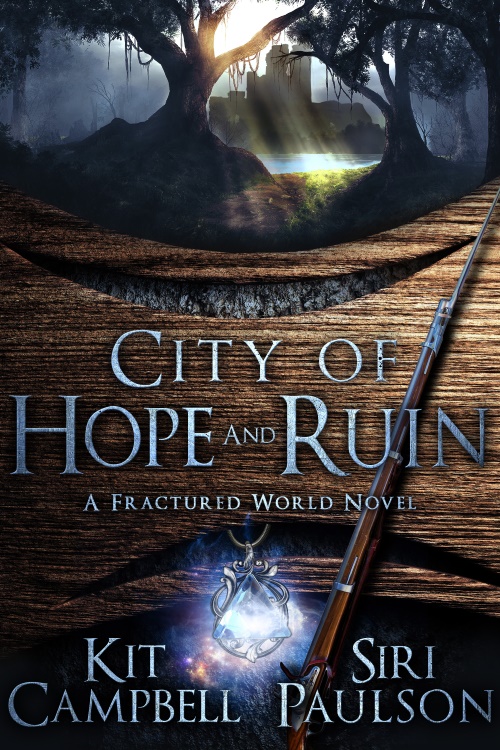
City of Hope and Ruin cover
AmazonKoboBarnes%20and%20NobleiBookscustom
Shards cover
AmazonKoboSmashwordsBarnes%20and%20NobleiBookscustom
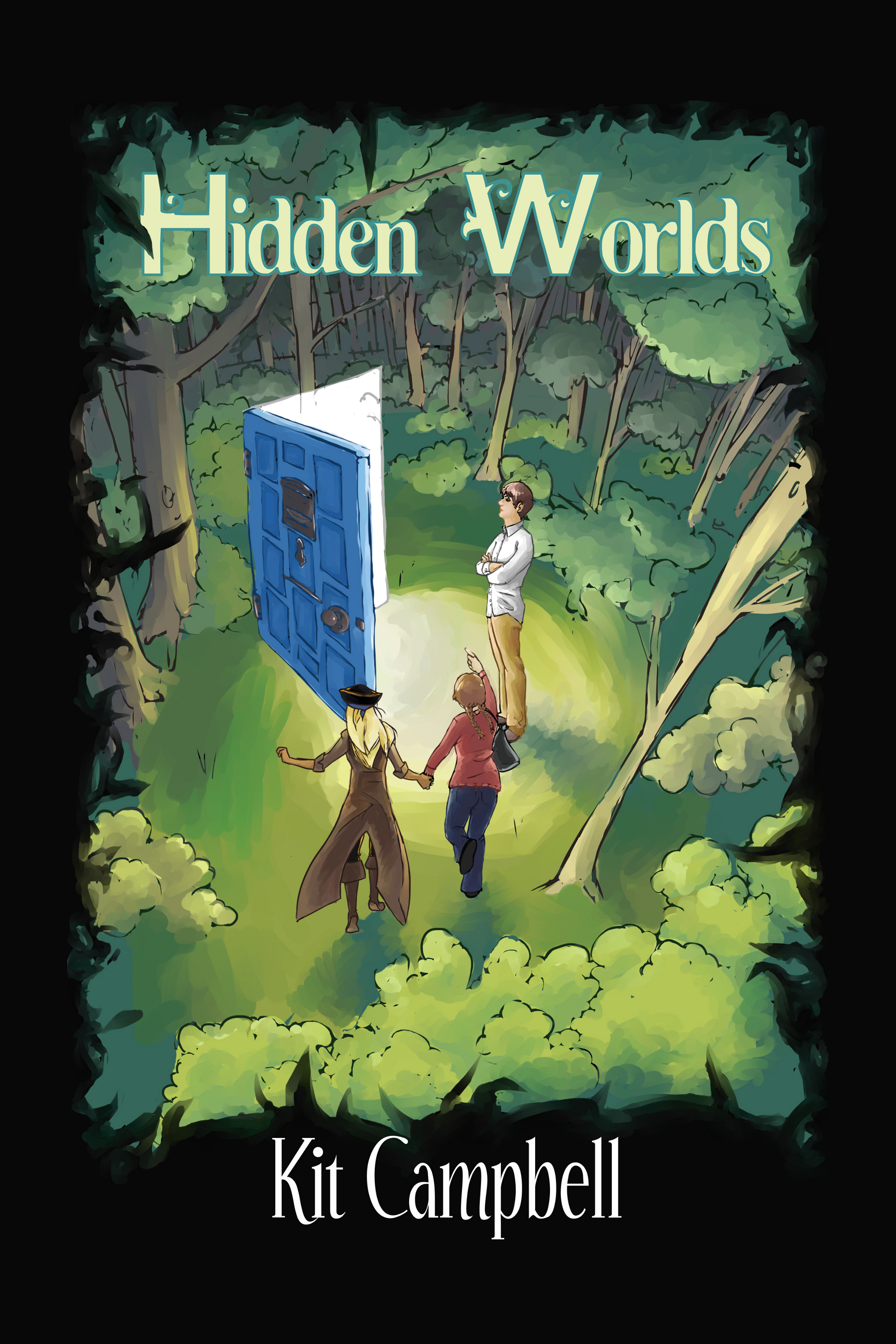
Hidden Worlds cover
AmazonKoboSmashwordsBarnes%20and%20NobleiBookscustom