Why It’s Important to Hire an Editor

You hear this advice all the time, but a lot of people seem to wonder why. And this is especially important for people who are self or indie publishing their work, where the press you’re working with may not have an in-house editor or copyeditor who looks at things before they go out the door.

But the fact of the matter is, especially when you’ve been working on something for a long time, that you start to miss things. You memorize bits of your story and don’t read it that closely when you go back through. And, no matter how we try, humans just simply aren’t perfect.

So a second set of eyes always help.

(I hear some of you guys out there saying, “Kit, you’re only posting this because you yourself are an editor.” While that is true, I always have my work edited by someone else before it goes out. My very first story, back in the day, I didn’t, and it showed.)

If you’re not as sure on structure, pacing, characterization–things of those ilk–it can help to hire an editor to make sure your story is meeting the conventions of your genre and good stories in general. Depending on who you have, your betas can do some of this for you, but this only works if your betas are fairly professional writers/editors in their own rights.

Luckily, in this day and age, it’s not that hard to update an ebook or print file if you’re the one controlling them, but it’s additional work after a story was, in theory, done, and your product may go offline for a time or you may find more fastidious readers leaving poor reviews because of the quality of your book. Voracious readers tend to be fairly attentive to grammatical errors, and errors can pull them out of the narrative.

And you never want your readers pulled out.

If you’re trying to go the tradition publishing route, hiring an editor for copyediting and proofreading is probably not necessary as the publishing house will provide those services for you.

On the nonfiction side, if you’re trying to present yourself as an expert, or trying to explain how your business is the best, errors are going to undermine your efforts.

So why not hire an editor? A good one will make your product/story/ad/paper better, and that’s always a good thing.

Do you use an editor, Squiders? Do you have one person you work with exclusively, or do you shop around each time you need one?

Denver Comic Con, Cosplay, and Miscellany

So! It’s Denver Comic Con (or, as I shall refer to it from now on, DCC) this weekend and I’m of two minds.

1) I am really excited because it’s been a long time since I’ve gotten to really do a con.
2) I am a little annoyed because I applied for a vendor table for Turtleduck Press the instant the applications went live, and they fed me some line about not fitting the mission of the convention when what they really meant was “We got too many authors and small/indie presses and just kind of picked the ones we liked the best and/or who had already paid because they had a table last year, and we can’t have too many authors/publishers because we are a comic convention.”

Rargh.

Anyway, obvious not annoyed enough to not go, so here we are.

AND I am going to cosplay! I am excited because I haven’t cosplayed in four years. (Oh, geez.) I haven’t even made a costume since then except for a generic steampunk outfit for AnomalyCon 2011 and a uniform shirt I use when we play Artemis. Admittedly, I didn’t make anything for this costume because I am going as Amy Pond, but it’s still something.

(Let us take bets on how long it takes me to get annoyed with and abandon the wig. I have successfully worn this particular wig an entire con day before, but it was cooler then. Summer has come early this year.)

In other news, we did a test for putting Shards out as an audiobook, which actually went quite well. So that might be a thing that happens in the near future. We might do Hidden Worlds first, however, since it’s shorter, to try out the audio format and test out marketability and other things.

That’s it from me, for now! Hope you have a lovely weekend, Squiders!

Is it Worth it to Know About Sub-genres?

If you’ve been around here for awhile, Squiders, you remember we spent about a year going through different science fiction and fantasy subgenres. As might be expected from going through such an activity, I sometimes find myself being really particular about subgenre.

Last week I was at a working group with several other speculative fiction writers, and I don’t quite remember how we got onto it, but we were talking about subgenre, and I’m afraid I probably got a little lecture-y (“this is space opera, and this is why”). I had this conversation with one of the other writers.

Other Writer> I know that if it has elves, it’s fantasy, and if it has spaceships, it’s science fiction.
Kit> What if it has elves on spaceships?
OW> I read those books, and they were crap.

But it was obvious that subgenre wasn’t a big concern for them, and it didn’t really matter to them that they couldn’t tell contemporary fantasy from urban fantasy, and it made me wonder if it was worthwhile that I could.

(Well, for a certain definition of “could.” If you were around for the Subgenre Studies, you’ll remember that a lot of this is open to personal interpretation and author intent.)

Knowing subgenre isn’t really useful as a marketing tool because most people don’t know what subgenres are or what subgenres they like. It doesn’t seem to be until someone has issues finding things they like that they delve into subgenre at all, and then mostly out of desperation. (And even so, a lot of people will still use a book as an example rather than a particular subgenre. “I’m looking for books like The Island” rather than “I’m looking for dark fantasy.”)

It doesn’t help for selling books because most people will stare at you when you tell them your latest novel is mythic fantasy.

Plus there’s a wide variety of books within subgenre, even. G.R.R. Martin’s A Song of Ice and Fire and C.S. Lewis’s Narnia books are both high fantasy, but that doesn’t mean that people who read one are going to like the other.

From that standpoint, it seems like it’s not really worth it to know anything past the difference between scifi and fantasy (itself a bit fluid) and maybe major subgenres, like urban fantasy or steampunk. Maybe the rest of it all comes down to academics and there’s no real world application of knowing the difference between dystopian and apocalyptic fiction.

What do you think, Squiders? Is there a reason to be able to break down subgenres? Or is it all a waste of time?

Interesting Notes on Japanese Religion

Here we go, as promised.

So, as I mentioned on Tuesday, the Japanese people tend to be both Buddhist and Shinto(ist?). Shinto is the native Japanese religion, founded 2000+ years ago, and is a ritualistic system that believes in a series of nature spirits, or kami. (There is also some aspect of ancestor worship involved, but I am less clear on that.) Buddhism reached Japan in the 6th century AD and, as the Japanese were already polytheistic, they pretty much just incorporated Buddhism in without really worrying about it.

It’s really very interesting, to see the two religions (or ways of life, because as one of our guides explained, most Japanese don’t see themselves as religious) next to each other. Almost every temple has a Shinto shrine on temple grounds or immediately next door, so the kami can guard the temple.

Oh, Buddhism has temples and Shinto has shrines. Shrines can be to one kami or several, or may also be to important people of the past or ancestors. Aside from the guarding shrine, Buddhist temples also use a lot of Shinto protection imagery, such as rope and strips of paper in lightning shapes.

Shinto has a number of different kami, including some that are considered “main” ones, such as Amaterasu and Inari. Some kami have specific messengers that apply to them. Inari is in charge of the harvest, and business prosperity (and seemingly anything you want to pray to him/her for), and it has foxes (or kitsune) for messengers, though they are special white foxes. Major kami also have main temples, or taisha. We had the opportunity to visit Inari’s just south of Kyoto, called Fushimi Inari Taisha. There are over 10,000 toriis (sacred gates) there, mostly donated by businesses hoping Inari will bless them.

The pure white animals tend to be a trend in Japanese mythology, often associated with different deities or spirits. In Nara, myth says that a Shinto deity arrived on the back of a white deer to protect the (then) capital. To this day, deer are considered sacred in the city and allowed mostly free reign as long as they stay in a massive park in the middle of town. (The deer are also known for eating anything they can manage.)

It really was very fascinating. We visited a ton of temples and shrines throughout our wanderings, and passed quite a few more–shrines, especially, seem to be everywhere, alongside roads and trails, both small and large. We stayed in a Buddhist monastery our last night, and they had a tiny shrine in their garden.

And both were very welcoming. As long as you were polite and respectful, no one seemed to mind your presence. And everyone encouraged us to take part in the rituals (or a Buddhist ceremony we got to attend) or try out different fortunes or charms. So that was nice as well, not only to see them in action but get to experience them as well.

The Land of the Rising Sun

Well, Squiders, I am back from two weeks in Japan! If all went well you got regular updates and didn’t notice anything weird (aside from the posts being on time).

Japan was very nice and not as much of a culture shock as I thought it might be. (There was a bit. We went to a maid cafe. That was…not honestly something I needed to experience, in retrospect.) And most signs in airports and train stations (and even street names) are labeled in English, so it was pretty easy to get around.

We did kind of a whirlwind tour of the main island of Honshu, hitting Tokyo, Matsumoto, Tsumago/Magome (and the Nakasendo), Kyoto, Kanazawa, Osaka, and Koyasan. I don’t really recommend stuffing all that into 13 days, but we got a little overambitious. We also averaged 8 miles a day walking, with our easiest day having only five and a half miles and our longest day being almost 12 miles. By the end of the trip, I was looking forward to sitting on a plane for twelve hours.

(But then it was only nine and a half hours back. And we flew on dreamliners both ways which are lovely planes and I would like to fly them all the time. And they came with amazing built-in entertainment options so I didn’t really need the video games or movies I’d prepared.)

(I also don’t really recommend Kanazawa. The ninja temple–or Myoryu-ji, as it’s really called–was pretty cool, but not exactly worth the trip out of the way.)

The Japanese have a very interesting mix of Buddhism and Shintoism, which I shall talk about on Thursday–some very interesting mythology there. I find Shintoism especially fascinating. More on that later.

Also, it is surprisingly hard to find sushi. But if I ever have to eat soba noodles again, I may hit someone. Soooo many noodles. Noodles all the time! Noooodles.

*clears throat*

We saw a lot of temples and shrines, and poked our heads into a handful of castles. It’s very interesting because very few of the buildings are the original buildings–the Japanese build everything out of wood, so it apparently used to burn down all the time. Matsumoto Castle is one of–of not the–oldest castle in Japan, and it was only built in 1597 or something like that. Osaka Castle, for example, was rebuilt in the 1930s. And Kanazawa Castle is in the process of being rebuilt as we speak. Same with the temples.

If there’s interest, I could probably do a series of posts about various aspects of the trip. Let me know. Otherwise I shall probably do the mythology on Thursday and call it good.

Fandom Aspects: Cosplay

Cosplay is perhaps the most visible of the ways people show their love for something. And I don’t mean that in the way that means “the most people are aware of it,” but in the way where, while most fandom activities allow you to hide behind your anonymity on the Internet, you can’t really hide your cosplay. Oh, sure, you don’t have to tell your friends, family, or coworkers about it, and you can wear things that cover your face, but there is a whole other level of commitment that comes with creating a costume and then wearing it out in public where other people will see it.

Hirako Shinji from Bleach

Cosplay is short for costume play, and the term has been around since the 80s. Cosplay consists of selecting a character from a movie, TV show, comic, book, etc. and dressing up as them, usually for conventions or Halloween.

Cosplay also is interesting in that despite the time and money that goes into creating a character, the person making/wearing the costume may not be as interested in that character as, say, fanfiction writers would be. Some people cosplay because they like the costumes, or because they look like a character, whereas other people may go as a character they are less or not familiar with to match their friends.

A lot of cosplayers will belong to a cosplaying community, where they can find other people cosplaying from the same series, get advice on new techniques, and share their results. If you’re interested in looking at people’s costumes, several websites allow their users to upload in progress and finished photos of their costumes. Cosplay.com is probably the largest.

Cosplay can run the gambit from “found clothes” costumes, where people take clothes from their closet that best match their characters, to complex costumes made completely from scratch that may include wig styling, armor and weapon creation, embroidery, and even making shoes. Many conventions give people an opportunity to show off their handiwork at costume contests. Some contests may also allow skits, which allow cosplayers a chance to act out a scene as their character. (Or just be silly. This is one of my favorites. Also this one.)

Have any favorite cosplays, Squiders? Have you cosplayed yourself? Have anyone you’ve ever thought about dressing as?

Fandom Aspects: Memes and Gifs

psyduck

I feel like this has really only become a phenomenon in the last five years or so, probably because of the prevalence of digital images and video which make it easy to make a screen capture of something and stick some text on it. And then websites like Tumblr and Cheezburger make it easy to share them with the world.

I would say if this isn’t the fastest growing area of fandom, it certainly feels like it. Things pop up on Twitter and Facebook, on Pinterest. People send me links in chat or email.

Mal Dance

In some ways, I really enjoy the trend. It’s fun to see something witty or something that reminds me of my favorite part of something, and it doesn’t take much time for creator or recipient.

On the other hand, it’s really easy to get eaten by these things, and then, when you look back at the time, you find that you have accomplished nothing and feel unsatisfied. So.

(But I do love them in small doses.)

How about you, Squiders? Got any favorites you’d like to share?

Fandom Aspects: Fanart

Fanart is probably the second thing people think of when they think of fandom.

Star Trek - LOLNarwhal by YoukaiYume
Star Trek – LOLNarwhal by YoukaiYume

As is probably obvious, fanart is when people take (usually) characters from stories, games, movies, etc. and create art around them. Drawings are probably the most common, but there’s also jewelry, textile art like knitting or cross-stitching, stuffed toy versions, etc.

I personally rather like fanart. There’s a lot of really talented people out there and I like to see what they come up with.

If you’d like to peruse some fanart as well, I recommend DeviantArt. Their search function is excellent and there’s a lot of excellent artwork up on there.

In general, fanart is less controversial than fanfiction, probably because people feel like it messes less with the core of the characters, excepting NSFW fanart which you know exists because this is the Internet. And while I am not an artist, it seems to me like fanart creators are less looked down upon by “real” art creators than fanfiction writers tend to be by “real” writers. (I may be completely off-base there. Let me know if I am.)

Are you a fan of fanart? (Har har.) Have a favorite piece or artist you’d like to pimp? (Please make sure you credit the original artist if at all possible. Poor people have enough Internet piracy on their hands.)

Fandom Aspects: Fanfiction

Well, Squiders, we’ve talked about fandom a bit in the past, but I’ve had a rather worrying bout of it recently. (Not even about anything specific. Just…stuff.)

You see, I am going to a con in mid-June and not only do I not get to them nearly as often as used to, but this also the first one in a few years where I will not have to wrangle family as well, so I got a little overzealous about things, and have had to resort to bizarre measures to stop myself from putting together fifteen cosplays in the next few weeks.

So for this week and next, we’ll be looking at the creative aspects of fandom, and perhaps the one people think of first is fanfiction. Heck, Amazon is even publishing fanfiction now, so there you are.

Fanfiction, for those of you have been living under a rock, is where a writer takes a world and/or characters that are not theirs and writes a story in it. Wikipedia tells me that the first known work of fanfiction was written in the 1400s by Robert Henryson (based off of one of Chaucer’s works). And apparently the Bronte sisters wrote real person fanfiction back in the day.

The modern era of fanfiction was started by Star Trek fans (no one is surprised) back in the ‘60s.

The world of fanfic can be kind of a scary place. I think my first journey in was back in the ‘90s when I found Pokemon fanfiction. (Don’t judge me, Pokemon is awesome.) And without knowing what things like genfic or slash or AU mean, you can stumble onto some things you wish you hadn’t.

If you’re interested in reading some fanfiction, you can try a site like Fanfiction.net, which is a repository for several different fandoms. Many fandoms also have their own websites. Be aware, before diving in, that the quality of story can vary widely, from things that sound like a five-year-old dreamed it up to epic tales that may, in some ways, be better than the source material.

Fanfiction may also be the most controversial of ways people show their love of things. Some creators don’t like the idea of other people messing with their characters, especially in situations that may involve more sex or violence than the source material had. Even among writers, there’s arguments about whether or not writing fanfiction can help you hone your writing skills.

I know we’ve talked specifically about fanfiction here before, but feel free to let me know any thoughts you have on the matter, whether you like it or not, read or write it, and if you have any examples of truly awesome stories to share.

Premise vs Plot vs Structure

Some time ago, Squiders, we discussed Premise and Plot. (That’s a fairly short post, but for those too lazy to click through, the basic gist is that a premise is the idea of the story, whereas the plot is the series of events in a story.)

Today we’re going to expand this a little and talk about structure. What is structure? The structure of a story is how the plot is presented. It’s chronology, viewpoints, tense. It’s when certain events happen in a story.

The plot doesn’t necessary vary based on structure, but the structure can make for very different stories with the same plot.

For example, let’s say we have a plot with plot points A, B, C, and D.

Story 1 is presented in a linear fashion, so A, B, C, and D are presented to the reader in the order they happen.

Story 2 is presented in a nonlinear fashion, so we start with C, go back to B, then back to A, and finish up with D.

Story 3 has multiple viewpoints, so character 1 presents their side of the story, and then character 2 presents their side.

Story 4 intertwines A, B, C, and D with a separate story of plot points E, F, G, and H, alternating between the two plots.

The plot points don’t change because the structure changes. The events still happen in the order they happen. What changes with the structure is merely the presentation.

Your story has a structure whether you think about it or not. Some people plan their structure out in advance, whereas others just happen.

Perhaps the most common structure in story-telling is the Three-Act structure, which consists of a beginning inciting incident, a middle section where conflict builds, and a final concluding section. There are, of course, other structures, and even Three-Act structures can vary, based on when the turning points in between acts fall. (Some people say the inciting incident should occur about 10% of the way through the story, while others say 25%, for example.)

A common variation of the Three-Act structure  looks more like an increasing sine wave (sorry, engineer, don’t know how else to explain it) where a series of mini-climaxes accompany the act transitions, leading up to the final climax at the end of the story.

So.

Premise = idea

Plot = series of events

Structure = presentation of plot

Books by Kit Campbell

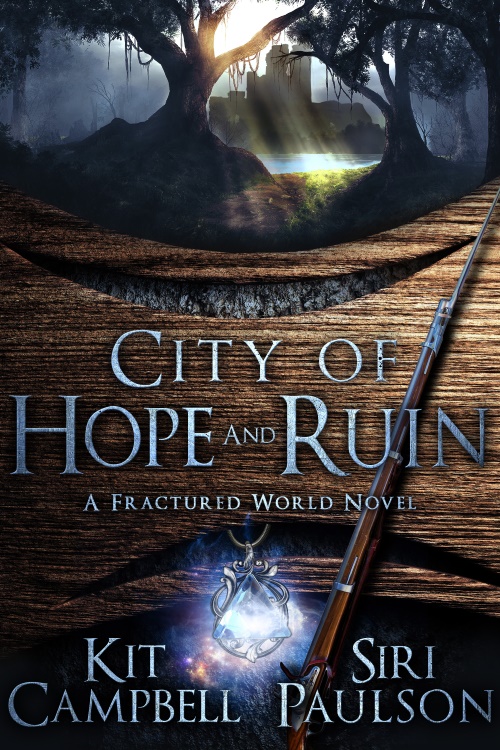
City of Hope and Ruin cover
AmazonKoboBarnes%20and%20NobleiBookscustom
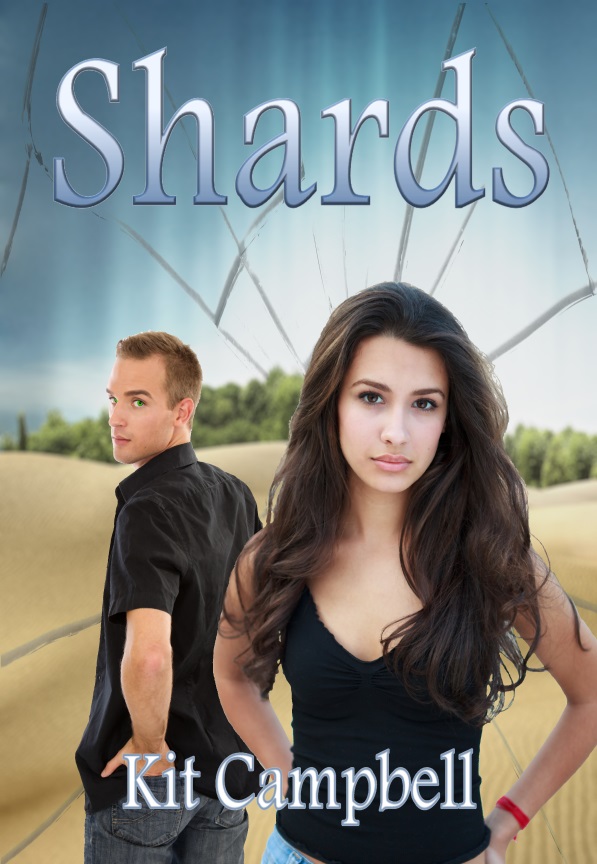
Shards cover
AmazonKoboSmashwordsBarnes%20and%20NobleiBookscustom
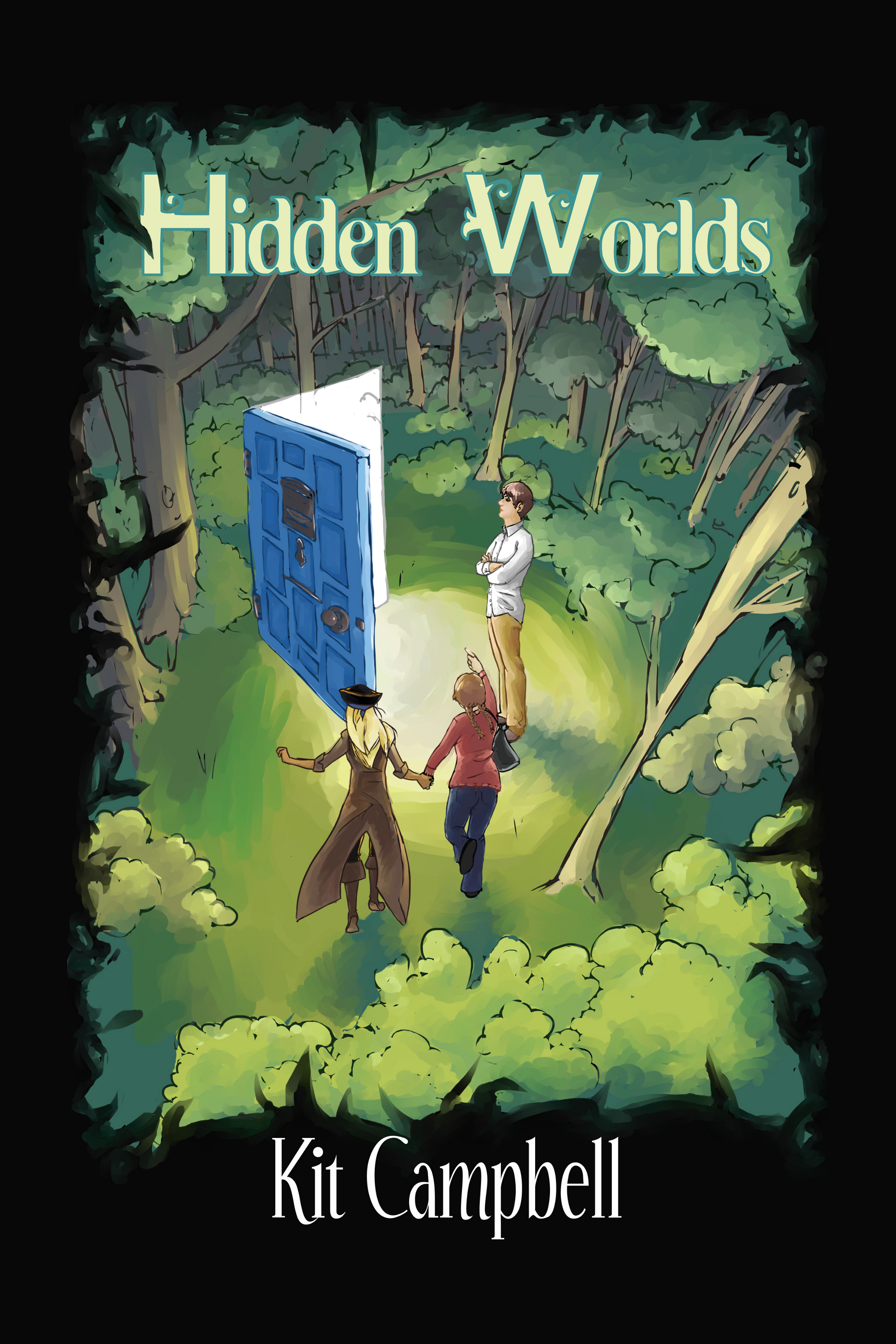
Hidden Worlds cover
AmazonKoboSmashwordsBarnes%20and%20NobleiBookscustom