Antagonist and Protagonist

Craft post today, Squiders.

Protagonist, antagonist. Self-explanatory, right?

Well, to some extent, yes. But let’s talk nuances.

Your protagonist is the main driving character of your story. It is the person whose dilemma we care about the most. In most cases, this is the main, viewpoint character but not always. (A “main” character may play a narrator or sidekick role instead.)

Additionally, scenes and subplots can have a different protagonist from the overall work.

In simple terms, the protagonist is the person trying to accomplish something in any particular scene, plot, or work. In more general terms, the protagonist is usually the main character, the one who readers identify with and stay with throughout the story.

An antagonist, by definition, is someone or something that stops or tries to prevent the protagonist from getting what they want. In many cases, especially in a clear good vs evil plot, this tends to be what is referred to in the writing world as a Big Bad. (Or maybe it’s a TVTrope that we writers have just stolen. I am unsure.) The Voldemort to Harry Potter, the Empire to the Rebel Alliance, the Maleficent to whichever prince it is, the Ganondorf to Link–you get the point.

But ANYONE who acts in opposition to the protagonist is an antagonist. To continue with the Harry Potter example, because that’s probably the most univeral, both Snape and Draco would be considered antagonists as well. But so could Hermione in some cases.

Have I lost you?

There’s places in the narrative throughout the series where Harry (our protagonist) wants to do something, and Hermione actively tries to stop him from doing whatever it is. Since she’s acting in opposition, she counts as an antagonist in those scenes.

Protagonist and antagonist are highly subjective and depend on the point of view. Flip viewpoint character in a scene and who’s the protagonist and who’s the antagonist can swap.

And an antagonist doesn’t need to be a person. It can be an object, a force of nature, even a character’s own thoughts and feelings. Whatever is preventing the main character from getting what they want counts.

But almost everything will have both, in some form. Because without both, you lose conflict, and without conflict, a story isn’t interesting.

Know any really interesting interpretations of protagonists and antagonists, Squiders? Share them with the class.
To Word Count or Not to Word Count

So, after last Thursday’s post I got to thinking. And I realized that word count is a major indicator of progress to me.

And I also realized that this is probably because I didn’t start finishing novel drafts until I started Nanowrimo, and, of course, Nanowrimo is all about quantity over quality, not spending too much time thinking, just doing.

And it made me a little uncomfortable, honestly. I got to wondering whether “real” authors keep track of their progress in word counts. Like, say, does John Scalzi sit down when he starts a draft and calculate how many words he thinks it’ll be? Does he keep track of how many words he’s written in a day, and how many days he will need to write to get to that proscribed number? Does Brandon Sanderson? Did Anne McCaffrey? Isaac Asimov?

Part of me wonders if my writing process has been infected with this concentration on word count, and whether I am a lesser writer because of it.

Of course, most of me realizes it doesn’t really matter, and if keeping track by word count works for me, what do I care what other people do?

But there’s a little bit that whispers, “Maybe you’re so focused on your word count that you don’t let the story flow naturally. Maybe you add too much in, or leave too much out. Maybe your stories would be better if you focused on the progression whether than what your word count is versus where you think it should be.”

And the rest of me worries that that little bit is right.

And if it is? I don’t know how to judge progress without word count. Do I outline the whole thing, and then just judge progress against that?

I feel all befuddled. I mean, I’ve never forced a story to a word count if it wasn’t going to go, but I can’t help but feel like I’ve lost something of the craft in the way I work.

Do you also write, Squiders? How do you judge your progress in a draft? If you don’t use word count, what do you do? How does it work for you?

Now What?

Happy May Day, Squiders! (The expression in of itself amuses me. I am easily amused.)

Well, April went quite well. I got all four projects done (including my novel draft which I am apparently still hung up on) and wrote over 35K, which means it might be worth it to go for Nano again this year. Depending on what November brings. And I realized I’m over 85K for the year already, which isn’t too shabby.

But now I find myself with a conundrum. What do I do now? The trilogy can’t be touched until I get beta comments back (and I got betas crawling out of the woodwork, which was a bit of surprise but gratifying) and I don’t want to start a new novel (I’m trying to not have a giant backlog of first drafts even though I got the best idea yesterday).

I should go into editing, but I am doing something later this month that will essentially eat half this month and make it impossible to edit (writing might be doable if I take a notebook along and handwrite) and I hate to leave off in the middle of an edit. Editing requires so much focus, and you have to keep track of everything, and I almost feel like I’ll have to start all over again if I start now and then take a two week break.

I have my scifi serial that I suppose I could get ahead on, but that kind of defeats the purpose, which is to make sure I’m writing regularly at least once a month.

So what do I do with myself? I don’t want to just waste the first two weeks here, because I’ve been so productive thus far this year. Do I start a new novel knowing I’m going to drop it come June? Do I do nothing and go mad? Do I do some sort of short story challenge?

Suggestions would be highly appreciated. It’s only the first and I’m already going insane from inaction.

Twitter Book Clubs

So, a week or so ago, I was talking to Siri, and she mentioned that she and some people she’d been talking to on Twitter were going to read a book I had expressed interest in, and she invited me to join in.

(The book in question is The Thirteenth Child by Patricia Wrede.)

So the four of us hunted down the book, started reading on the 20th, and have been chatting on and off since then about our impressions of the story, other books that have similar or contrasting premises, other authors in the same genre, if we want to do this on a monthly basis, and what our hashtag should be because we picked up another person (as tends to happen in Twitter conversations) and now there’s way too many @s to have if one wants to add anything meaningful to the conversation.

(Also, I finished the book yesterday and am the first one done, so now I’m finger twiddling because I don’t want to ruin anything for anyone else.)

The whole thing is driving my husband crazy. This has definitely been one of the more active Twitter conversations I’ve been apart of, and when it really gets going, the frequency of new tweet notifications can get to be overwhelming. Apparently he has low phone notification tolerance.

“Why can’t you guys talk on a chatboard?” he keeps asking.

(He says this on purpose. My husband does not do the Internet, and so, while I have explained in the past that there as message boards or chat rooms, but not chatboards, he does this now because he knows it annoys me.)

“That’s not the point,” I say. “Besides, I don’t know these people outside of Twitter.”

What the point is, I’m not quite sure, but I did get to read a book I’ve been meaning to read since it came out, make some new friends, have some interesting conversations about things I like, and there’s the promise of doing it again next month, so I shall call the whole thing a success.

Ever tried to hold a lengthy, in-depth conversation on Twitter, Squiders? Or a book club? Any tips?

Origins and Interlude

Well, squiders, I’m still in sort of a weird mood due to finishing my draft.

I get kind of bogged down at the end of a project, and weirdly nostalgic, and I read through all sorts of things–story notes, the book itself, related books (which is taking me a while, because not only are there three books in the trilogy, but Hidden Worlds is remotely related), notes on other stories in the same universe, etc.

And, in the case of this high fantasy trilogy, because the main characters were originally role-play characters of mine from when I was a teenager, I went through and reread a lot of my old logs and stories from the role-play as well.

(It was a Star Trek role-play.)

So I’ve been highly unproductive lately, and don’t really have much to say, but I thought I’d link you guys to a post I wrote over at Turtleduck Press last week which is directly related.

(Also, purely FYI, I blog over at TDP once a month, generally the second Tuesday of each month.)

Do you guys find yourselves retracing your steps at the end of a big project? Or is this something weird onto myself?

I Finished My Draft!

Well, Squiders, I’ve finished the first draft of the third book of my high fantasy trilogy.

Now, I don’t know how you guys work, but when I close to the end of a draft, I get all fidgety and restless, and all I can think about is the story, and my friends all get sick of me because I essentially just say variations of “Oh my God, I’m almost done with my book!” instead of regular conversation.

And then, when I finish the draft, there’s this feeling of, well, depression, almost. Because you don’t get to work with those characters anymore, or follow their adventures, and it’s somewhat sad.

But it’s worse this time. I invented these characters when I was 15. I laid out the trilogy (though not admittedly in a form that resembles the current project) at 16. I started writing the first draft of the first book at 22.

I’m 31 now.

I’ve literally been working with these characters for over half my life.

And the whole project has had its ups and downs, and there were a few years in there where we hit some major snags and nothing of any real consequence got done, but I’ve been thinking about and working on it for a long time now. And it’s weird to now that I’ll never sit back down and explore their world with them again.

I mean, I’m obviously not done. I’ve got to figure out how to edit a trilogy, where each book is intricately connected, rather than a single book, and then I need to, you know, actually do it. And I’d like, for these books, to go the traditional route. So I’ll get to work with them some more.

But the plot is done, and I don’t foresee any major changes to it unless my betas find something major that I’ve missed, so their story is essentially set.

And while I’ve always known how the story ends, it’s still very weird to have actually gotten there, to have written “The End.”

Any trilogy editing tips, Squiders? (Or tips in general about whatever you want?) What do you do when you finish a major project to combat the finishing depression?

Online Education and Story Research

I’m going to tell you guys about this, because apparently this is a well-kept secret.

You can take college-level courses for free on the internet.

Kit, I hear you say, what does this have to do with writing and/or reading?

Well, I’ll tell you.

I use Coursera mostly. Coursera partners with universities across the world, and they have tons of classes in all sorts of subjects. (There’s also tons of classes offered by MIT.) Not sure how the other ones work, but Coursera doesn’t really care if you complete all the class requirements or not.

Again, you say, what’s your point, Kit?

Well, guys, you know how you sometimes need to do research for your stories? Wha-hey, here’s a good research area. I’m currently taking a class called Soul Beliefs: Causes and Consequences, which is from Rutgers. It’s not for any specific story but just for inspiration. (I was hoping we’d focus more on cultures and mythologies, which we did in the beginning, but we’ve moved more into biology and neuroscience, which is still very interesting, but not quite what I was looking for.)

Aside from that, it’s your opportunity to take classes in whatever you want. Things you wanted to do in college but didn’t because it would mean you wouldn’t graduate on time. Things you’ve become interested in since. I think, as a writer, you need to always be learning new things and having new experiences, and this is just another venue to help you do that.

As for me, my class ends on Monday, so it’s probably time to go searching for a new class. Coursera recommends Comic Books and Graphic Novels (from my alma mater, haha) and Video Games and Learning from UW-Madison.

Have you tried one of these online college courses, Squiders? What’s you take, and how did you like it?

The Foundation Trilogy Readalong: Foundation and Empire

Moving on in our Foundation readalong, today we’re going to discuss the second book, Foundation and Empire. Last time, with Foundation, I speculated about how Asimov had written the book, and the answer was given to me in a forward that Asimov wrote in my edition of this book. (I have the 1983 version, which has some truly horrific front cover art.)

And essentially, Asimov says that the entire original trilogy was made up of (increasingly longer) short stories, originally published in magazines, which is probably why it reads like it does. Foundation had four stories; Foundation and Empire has two.

And someone remind me–was the Second Foundation mentioned at all in the first book? I feel like it’s suddenly become a fairly major plot point out of nowhere.

So, Foundation and Empire is made up of two distinct stories, two distinct crises. For those who are reading this but not reading along, the basic plot here is that the Galactic Empire was falling apart, and Hari Seldon, who was a psychohistorian (and I am taking an online psychology course, and the professor said something about psychohistory and I did a double-take), uses math to predict the course of human society and to come up with a plan to lower the dark ages between empires from 30,000 years to 1,000 years. And so he engineers a Foundation, which will manage this, though purely through Seldon’s manipulations and predictions.

The first book covers the founding of the Foundation, as well as the first three “Seldon crises.” Society automatically changes so that the Foundation endures and grows in power, according to Seldon’s predictions.

The first half of Foundation and Empire focuses on the fourth Seldon crisis. I found this one a little unsatisfying, honestly, because in previous stories the viewpoint characters were directly working to change society so that the Foundation survived the crisis. The viewpoint character here, though he tries, accomplishes nothing, and the crisis is automatically resolved without him. The only thing that seems to be of note is that this is a direct confrontation between the remains of the Empire and the Foundation. (Hence the name of the book, I assume.)

The second half is more interesting. An external crisis, one that Seldon didn’t account for in his calculations, ruins the whole thing. The Foundation falls. The Empire falls. It sets up nicely for the third book, and I’m interested to see what the Second Foundation is like.

Also of note, in the discussion for Foundation, Ian brought up how sexist the book was. And he was absolutely right. The first book has exactly two women in it, both of who are easily distracted by fashion. In the second half of Foundation and Empire, one of the main viewpoint characters–the most main, I would say–is a woman. And while there are the occasional throw-away comments that kind of made my eye twitch, she’s actually presented quite well, considering the time period (late ’40s for the original short story publication). In fact, she figures out the plot twist, saves the entire thing, and is probably the strongest character in that part of the book. So good on you, Mr. Asimov.

Reading along, Squiders? What did you think of the book? How did Bayta’s characterization strike you?

Discussion for Second Foundation will go up in early May.

When Things You Love Betray You

Have you ever really loved something, only to have that thing/person/band/television show/etc. do something that so completely turns you off you have to just cut them out of your life?

And you feel silly about it, because it’s just a band/movie/fandom/etc. and in the great scheme of things it’s not really all that important, but at the same time you’re really upset, because you put a lot of time and effort into whatever, and even though you know it has absolutely nothing to do with you, you can’t help but feel a sense of betrayal.

I was ditzing around with my trilogy playlist again this morning, and I came across some Nightwish music. You guys have probably heard me talk about Nightwish before. They’re a symphonic metal band from Finland, and they were the first band I truly loved. I knew all the members’ names and stalked every new single and album. (Of which I own a lot.)

Nightwish has been since 1999 or something. I found them in 2006, while they were between singers. They’d apparently asked the first one to leave, had an open letter explaining why on their website, and they’d yet to announce a replacement. So I found them and fell in love with them in this lull, and then they hired a new singer and released a new single and I loved her and I loved the song and I loved everything.

I saw them in concert every time they swung through the States. The latest time was in October 2012. I’d talked some friends into going to the concert, but the whole thing turned out to be a whole mess. Apparently the singer had had to go to the hospital because she was so sick, so they decided to play the set without her, recruiting the back-up vocalists from the opening band to sing. Now, these girls are excellent singers in their own rights, but they didn’t know the music (and at one point weren’t even singing the right song). It was painful. And I was embarrassed, because it was honestly the worst concert I’d ever been to, and I’d dragged my friends along and they will probably never go to a concert with me again.

One bad night doesn’t equal betrayal. But the next day, after she recovered, the singer expressed some disappointment that they’d decided to go on without her or without even asking her, and the band fired her.

It’s entirely possible that they were already having issues, but that was what did it for me. Firing one singer might have been a fluke, but two seems like just part of a horrible trend. I was so appalled at their behavior that I haven’t been able to listen to them since without this horrible feeling sinking into my stomach.

(I did listen to a couple of songs this morning and damn if the music isn’t amazing. Still upset about it, though.)

Has anything/anyone who’ve really loved ever done something that’s turned you off?

Are Bloggers Beholden to the News?

So, to continue from last Friday’s musings, I was going back through my RSS feeds and going through some articles that I’d put aside, because it seemed like I should actually read them and I didn’t have time earlier while I was catching up.

Every now and then, some controversy comes up in the scifi/fantasy community–someone does or says something sexist or racist, whether it’s an author or something at a convention, or everyone hate-tweets someone they don’t agree with hosting something or other, or someone insulted something they’d never read and received fandom backlash because of it, and I read a whole bunch of posts on the matter (usually a week or two after they happen, because I am always late to the party) from a bunch of other writers, all of whom have excellent points and are witty and brilliant.

And I almost never say anything (because, again, late to the party), but part of me wonders if eventually I’ll have to. Like, if someday, when I (hopefully) become a best-selling fantasy author, will I need to comment on the latest sexist thing that’s popped up in medieval-based fantasy or hard science fiction? (I’ve noticed people really only talk about things that directly relate to them. Probably for the best.)

I have John Scalzi’s blog on my feed, and on his blog, he’ll have controversy-related posts, and a lot of times they’ll start out something like “Well, a lot of you have asked me about x-controversy (some not even scifi-related), and so here’s a post about it.” And maybe he answers them because he’s also president of SFWA and feels some sort of social and/or political necessity to do so.

And I suppose it’s my blog and I don’t have to talk about anything I don’t want to, and it’s entirely possible that everyone else rambles about their current projects and writes alpaca poetry when they’re not writing insightful posts about the state of things.

But part of me wonders, if the day ever comes, if I’ll be able to express myself as elegantly as everyone else seems to be able to.

Books by Kit Campbell

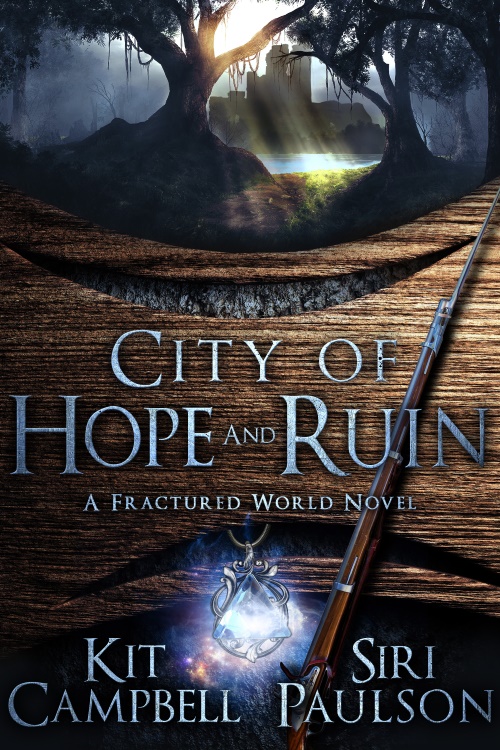
City of Hope and Ruin cover
AmazonKoboBarnes%20and%20NobleiBookscustom
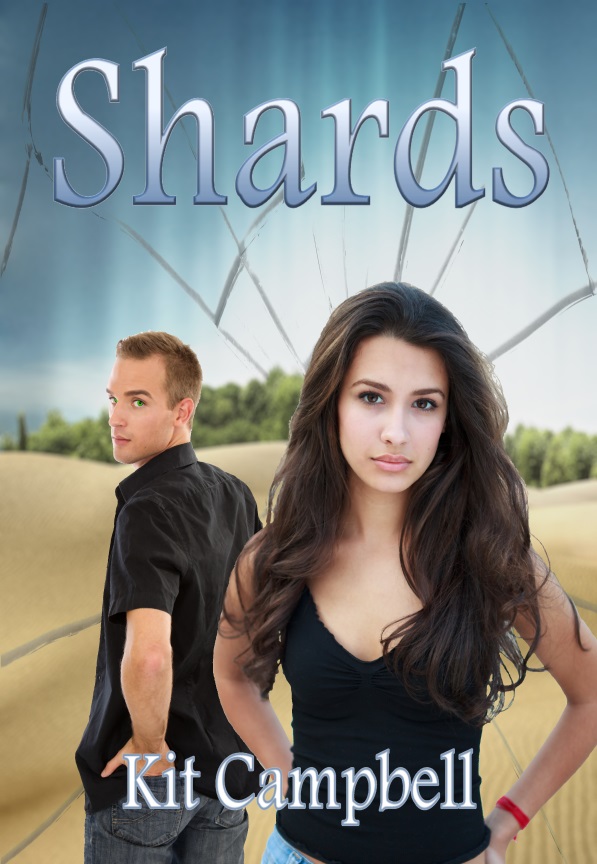
Shards cover
AmazonKoboSmashwordsBarnes%20and%20NobleiBookscustom
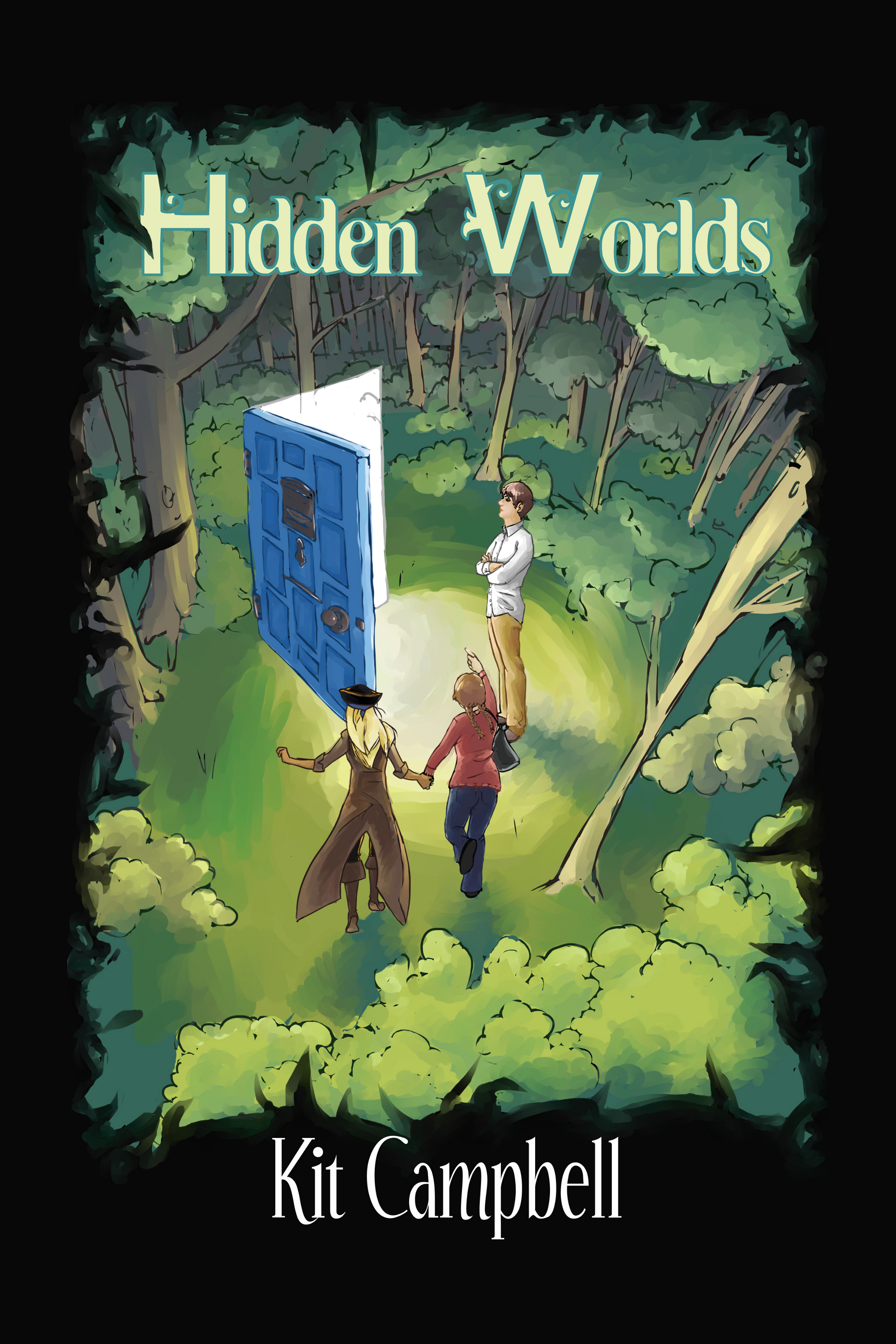
Hidden Worlds cover
AmazonKoboSmashwordsBarnes%20and%20NobleiBookscustom